
The challenges of photographing during golden hour in the mountains
Nature photographers always seek the best light for their photos, often during golden hour, when the sun’s low angle casts long, dramatic shadows, and the light changes to orange and red colors as it diffuses through more of the atmosphere.
The golden hour is the hour after sunrise and the hour before sunset, and for many scenes, you only need to photograph during that hour to take advantage of the sweet light. But when you are close to the mountains or photographing deep canyons, your scene may already be in shadow during golden hour. We’ve had many experiences where the scene remains in shadow for two or more hours after sunrise or before sunset. While the light on the scene is diffuse during these times, the benefits of golden hour are no longer available for your photos.
Understand the terrain
Golden hour photography often doesn’t work in the mountains because the sun is blocked well after sunrise or before sunset. The higher the surrounding terrain and the closer you are to the mountains, the worse the problem.
Mountain ranges
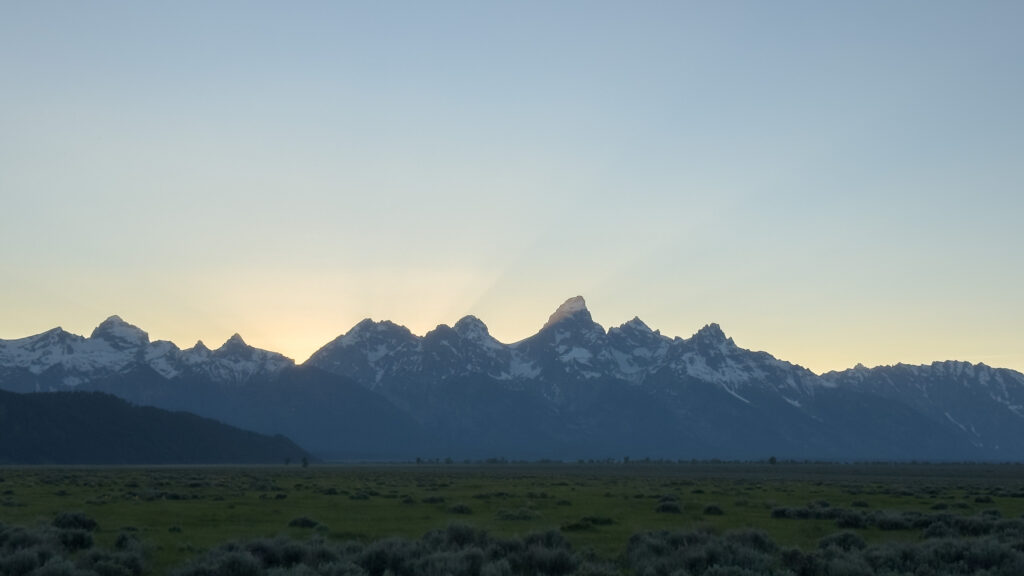
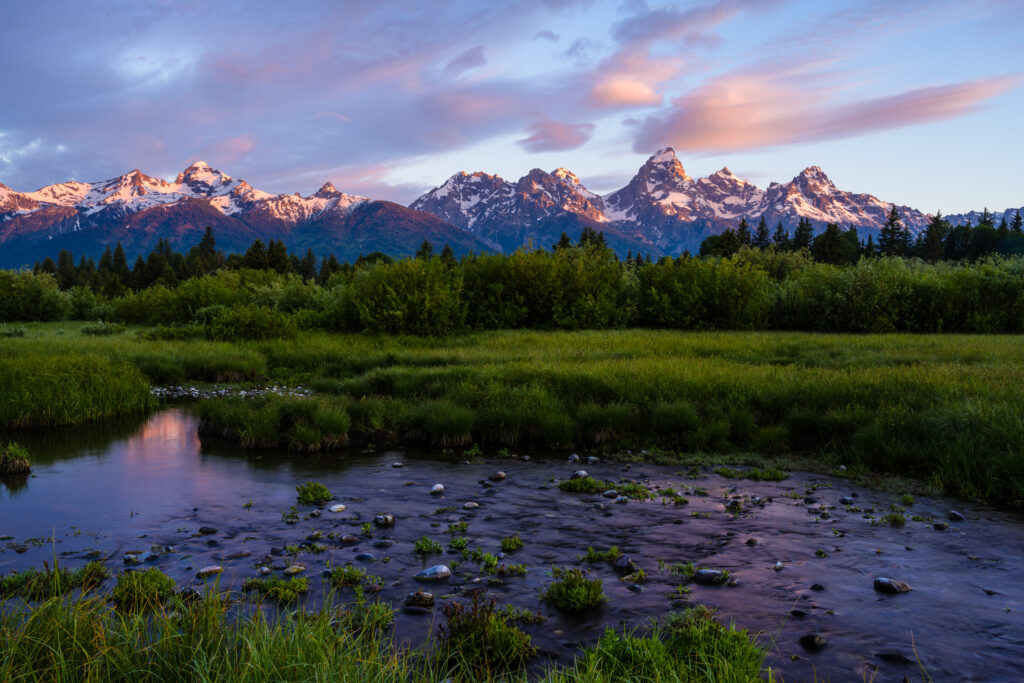
When photographing in front of a mountain range that runs north to south, the sun is often not obscured on one side of the mountains. For example, when photographing the Teton Range in Wyoming, the sun sets behind the mountains, creating a backlit scene with the mountains in shadow well before the golden hour. However, at sunrise, the range is well-lit by golden light.
Mountain valleys
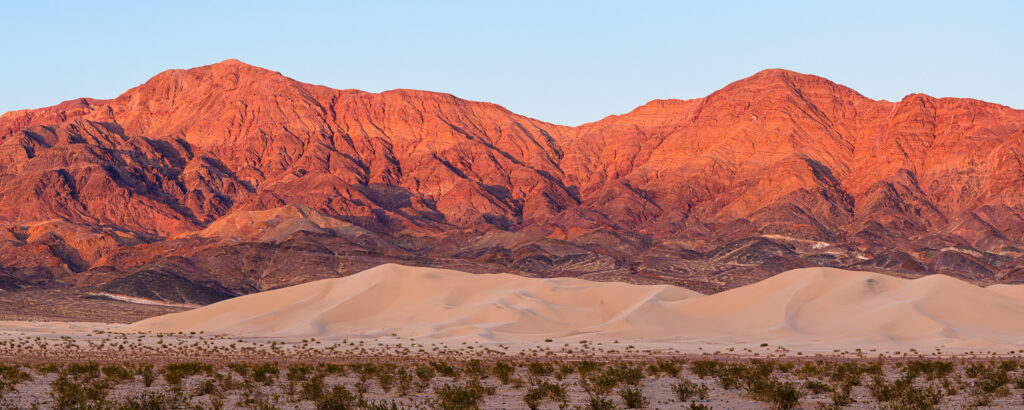
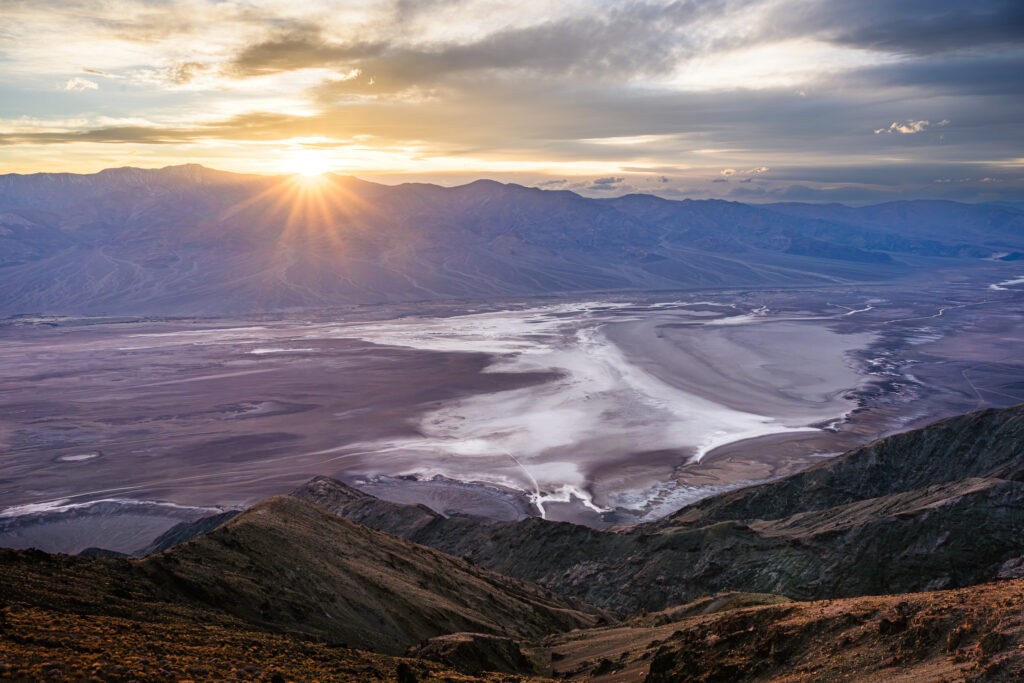
When photographing in a valley with mountains on both sides, the mountains may block the golden hour during sunrise and sunset if the valley runs north to south. Death Valley National Park is an example of this topography. When the light finally turns golden on the mountain peaks, most of the scene is in shadows.
In the mountains
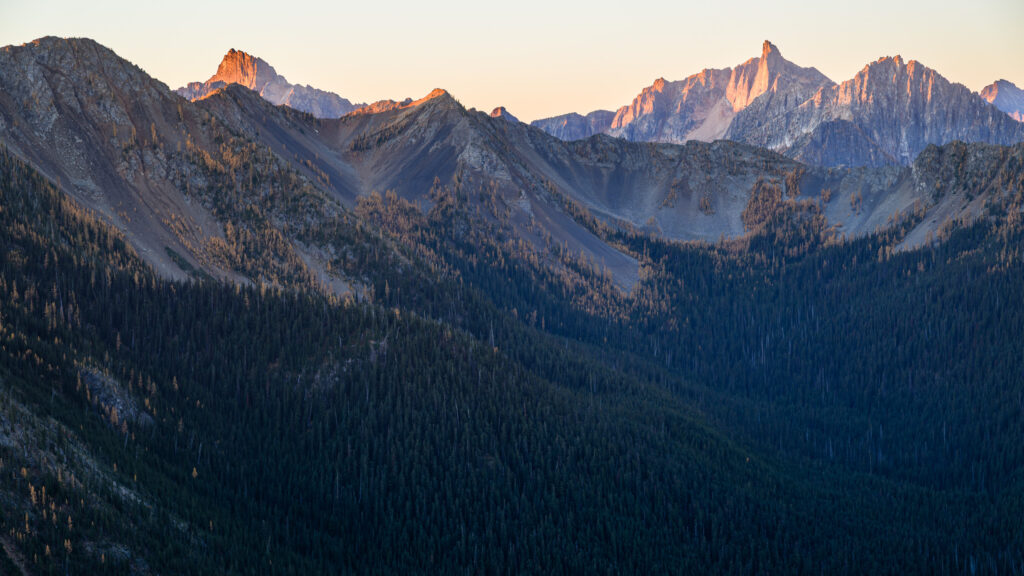
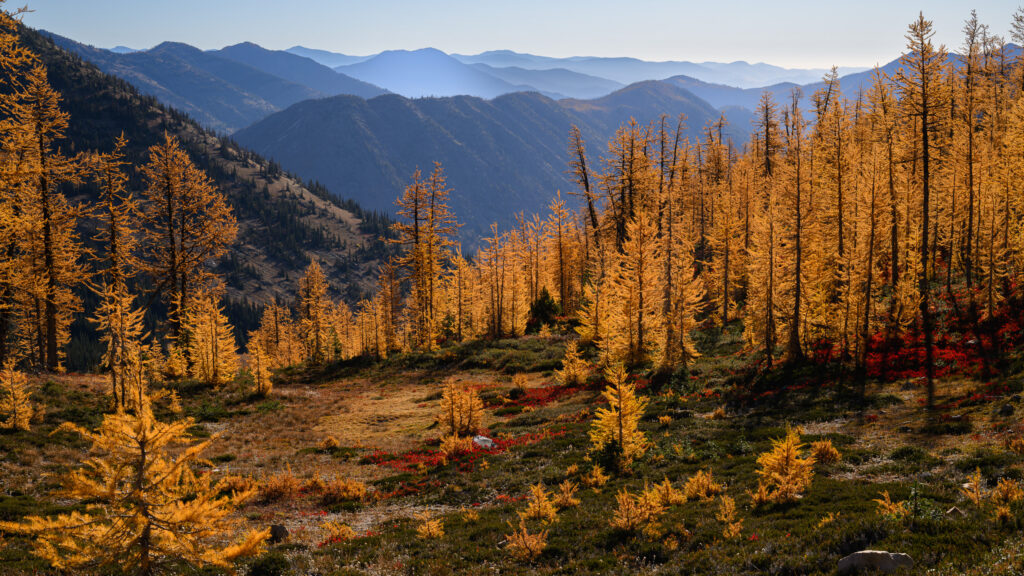
When hiking in the mountains, mountains are in all directions, often blocking sunlight on the lower elevations until well after sunrise and before sunset.
Managing the light in the mountains
During mountain photography, you may feel disappointed after arriving early for sunrise or sunset to find that your preferred scene is deep in shadow. Here are a few ways to photograph around mountainous or canyon areas successfully.
Move to a higher elevation
Heading to a higher elevation minimizes the angle between you and the mountains and gives a better chance for golden light in your scene.
Use the clouds
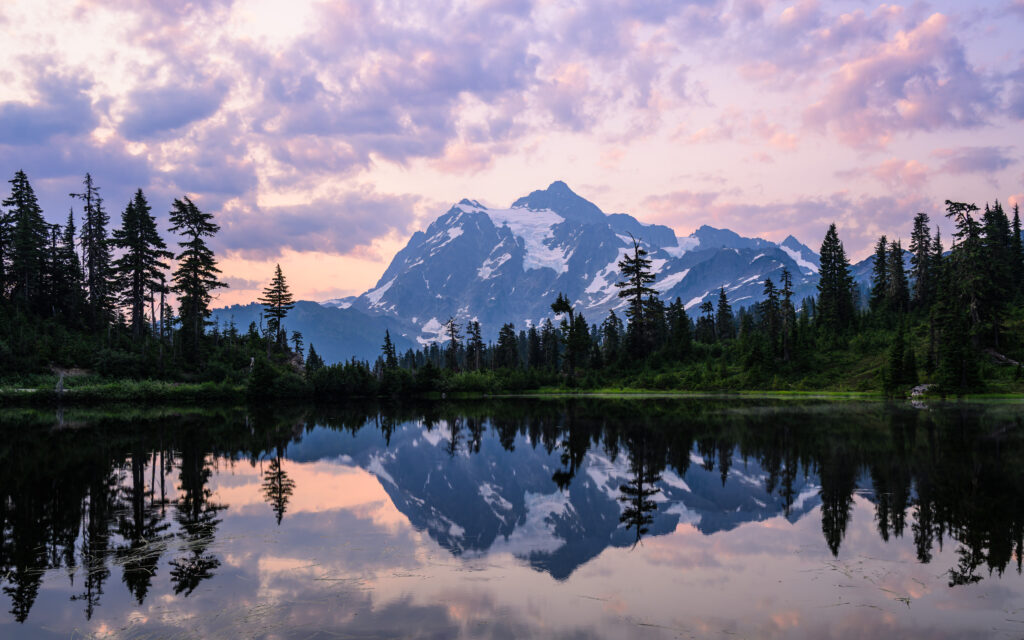
When there is partial cloud cover in the sky, there is usually a short period just after sunrise or before sunset when the sun lights up the clouds from an angle below them. This brief window where the clouds are lit from below can produce fantastic and quickly changing colors, even when photographing behind mountains.
Calculate when sunlight will hit your scene
You could wait longer after sunrise or arrive earlier before sunset to catch the light at its lowest angle for the scene, though this technique requires time and patience.
You can also use apps or online resources to calculate shade in a scene. One site called ShadeMap does precisely this. Apps like PhotoPills and The Photographers Ephemeris also allow you to estimate when the sun will crest over mountains and obstacles.
Another simple approach is to use Google Maps’ terrain view. Locate the scene you plan to photograph on the map and check if the terrain is blocking the sun from the west or the east.
Photograph streams and waterfalls
Waterfalls and moving streams can be challenging to photograph in direct sunlight due to the excessive highlights on the moving water. Use the time while they are in the shade to photograph them.
Adjust the white balance for shadows
When the mountains obscure golden hour light, you may still photograph a scene in shadow. The color temperature of the sky will be warm, with golden hues. The shaded land will be quite blue, as it is only lit by light reflected off the sky.
When editing the photos of scenes lit this way, it helps to select the shaded land and warm up its color temperature to bring it closer to that of the sky.