Trip Report: 2024 Mongolia Eagle Hunters and Gobi Desert Photo Tour
By Kevin Pepper |
Our two 2024 Mongolia Eagle Hunter Tour just finished back in Ulaanbaatar, where the comforts of the Best Western Premier Tuushin Hotel softened the edges of a long, photographically rich journey. Say what you will about Mongolia being remote and rugged, but the 5-star Tuushin is a decadent little oasis—thick robes, hot showers, and more pillows than you know what to do with. It was the calm before and after the glorious chaos of the countryside.
This year we had a group of 7 and a group of 6 on our Mongolia Eagle Hunters and Gobi Desert Photo Tours. We’ve learned that six to eight is the magic number. Not because it’s lucky—though in Mongolia, a little luck never hurts—but because anything larger just doesn’t work when you’re trying to photograph an eagle hunter on the side of a mountain, or catch the angle of this rising sun when the camel herders is on the dunes. I’ve taken groups of 10, even 12-14, and while we made it work, the reality is someone always ends up at the tail end of the line, getting the “over-the-shoulder of another photographer” shot. With six to eight, we stay nimble, we can all find the angle, and no one feels like they drew the short straw.
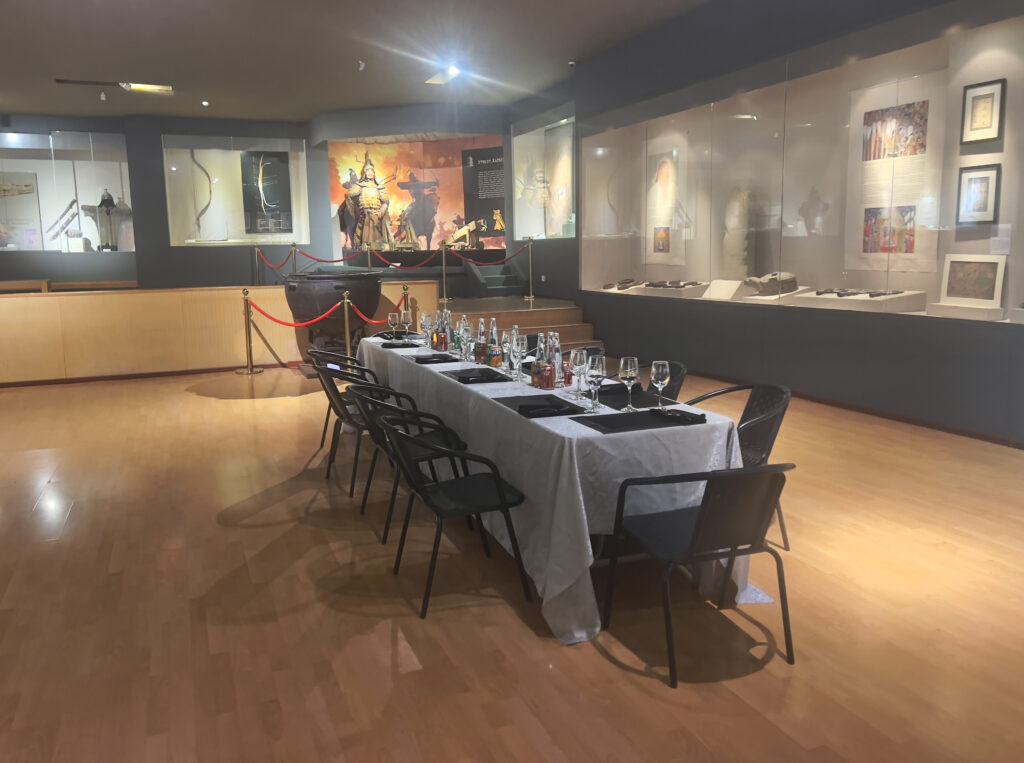
Plus, let’s be honest… there’s only so much room in those cozy gers and, more importantly, at some of our favorite boutique hotels and 5-star restaurants. Try reserving a table for twelve at one of the better restaurants in Ulgii—might as well ask for a unicorn steak while you’re at it. Small groups let us travel smarter, shoot better, and ensure everyone comes home with the kind of images they dreamed of when they booked the trip.
Speaking of chaos and unicorns… if you’ve never experienced Ulaanbaatar’s traffic, let me paint you a picture. Imagine a game of Tetris, but every block is a Toyota Prius, and they’re all honking at the same time. Getting across the city takes patience, a sense of humor, and the acceptance that traffic lights are more of a suggestion than a rule.

Once both of our groups escaped the city’s embrace, the open spaces of the Gobi Desert unfolded like a canvas. We explored the towering dunes, wandered through fossil-rich canyons, and spent time with camel herders whose stories and faces became as much a part of our photography as the sweeping landscapes. This is where Akari Photo Tours shines. While others snap a few distant shots from the side of the highway, we are welcomed into these communities. We share tea. We listen. And we laugh. This year, the largest laughter was at all the other tour leaders bringing my photos to the camel herder and asking him to take them where I photograph him in the dunes… I am flattered, actually. I guess I have been doing a few things write over the years.
At night, the desert skies put on a show for one of the groups. We spent hours photographing the Milky Way arching over the dunes, the only sounds being the hush of the wind and the occasional snort from a nearby camel. Out there, with no cities for hundreds of kilometers, the stars are so sharp they almost hum.
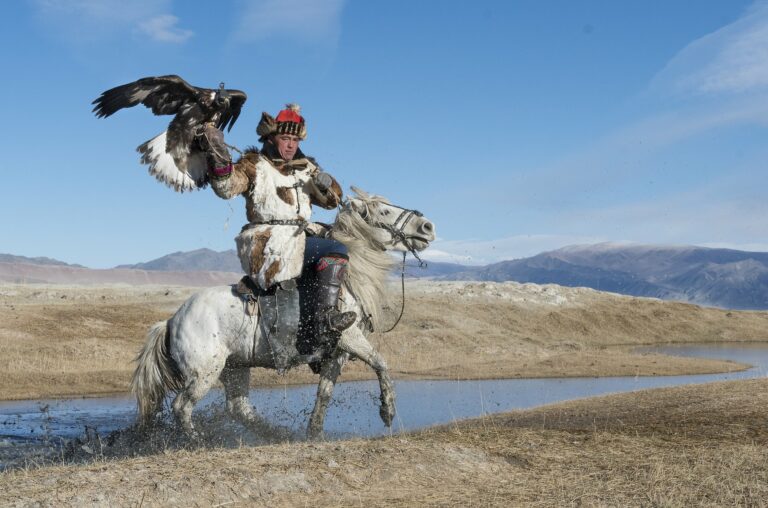
Then we made our way west, far from the festival crowds of the Altai Mountains. While the eagle festivals are a spectacle, they aren’t the authentic, quiet moments you get when you’re invited into the homes of the eagle hunters themselves. That’s the Akari difference. We sat in their gers, shared stories, and photographed them training their birds without an audience of tourists pointing cameras over our shoulders. These moments? You can’t schedule them. You earn them by showing up year after year, building trust, and giving as much respect as you take photographs.

We balanced the action with wide-angle landscapes at dawn, the soft alpenglow on the peaks, the vast emptiness stretching out in all directions. It’s this blend—intimate culture, grand wilderness, and night skies that look ripped from a planetarium—that makes Mongolia such a soul-filling place to photograph.
When both of our Mongolia Eagle Hunters and Gobi Desert Photo Tour groups were out in the countryside, we didn’t chase the shot—we settled into it. We let the land breathe, and I think everyone began to notice the subtleties: the way the dust hangs in the air behind a galloping horse, how the light traces the curve of a cheekbone inside a ger at sunrise, or how a young eagle shifts its gaze just before launching from its perch. They learned to scan the horizon like an eagle, not searching, but observing. Waiting.
It’s a different kind of photography muscle. One built not on speed, but on attention.
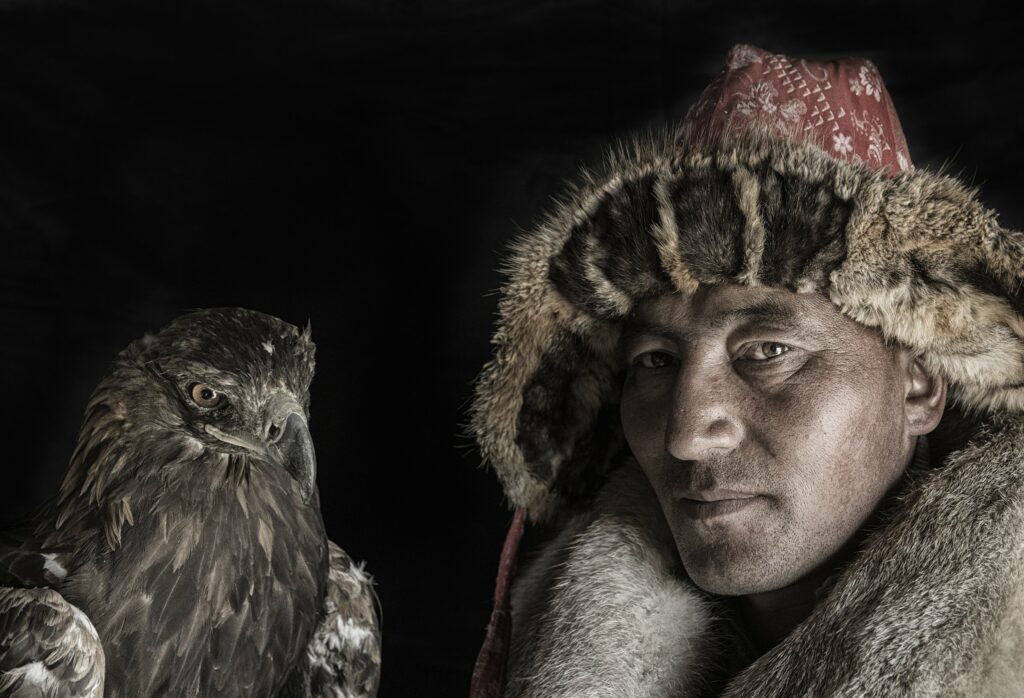
This isn’t a place of spectacle. It’s not designed for Instagram, although plenty attempt it when they show up for a quick shoot with the Eagle Hunters, looking to recreate an image they’ve already seen online. But Mongolia isn’t interested in repeating itself. The magic here only shows up for those willing to slow down and earn it.
There are no fences. No queues. No platformed stages with guides shouting into headsets. It’s just you, a handful of my local friends, a camera, and a horizon so wide it feels like you’re standing at the edge of the world.
You should join us on one of our Mongolia Eagle Hunters and Gobi Desert Photo Tour. I have been travelling there for over a decade, and will keep going for as long as I can.