
Trip Report: Our Naadam Festival Photo Tour in Mongolia
By Kevin Pepper |
Every July, Mongolia throws one of the most vibrant cultural celebrations on the planet: the Naadam Festival. For locals, it’s a time of pride, heritage, and national spirit. For photographers—especially those who crave authenticity over spectacle—Our Naadam Festival Photo Tour in Mongolia is an all-access invitation to step into a living tradition.
I’ve photographed this festival for over a decade, and I still get goosebumps every time I return. There’s something about the clash of old and new—a herder scrolling on his phone while his eagle sits on his arm, or a child in traditional deels sipping a Fanta at the wrestling matches. Mongolia doesn’t perform its culture for tourists; it just lives it. And that’s what makes it so powerful to photograph.
So, what’s our Naadam Festival Photo Tour in Mongolia really like?
It starts in Ulaanbaatar—yes, the traffic is as legendary as the throat singers—but there’s a buzz in the air that you can’t ignore. Flags fly from every building, and the streets fill with color. But we don’t linger long on the main roads like tourists. This trip isn’t about shooting from the sidelines of a parade. It’s about getting out where the real stories live.
Front Row at the Heart of It All: Photographing On Our Naadam Festival Photo Tour in Mongolia
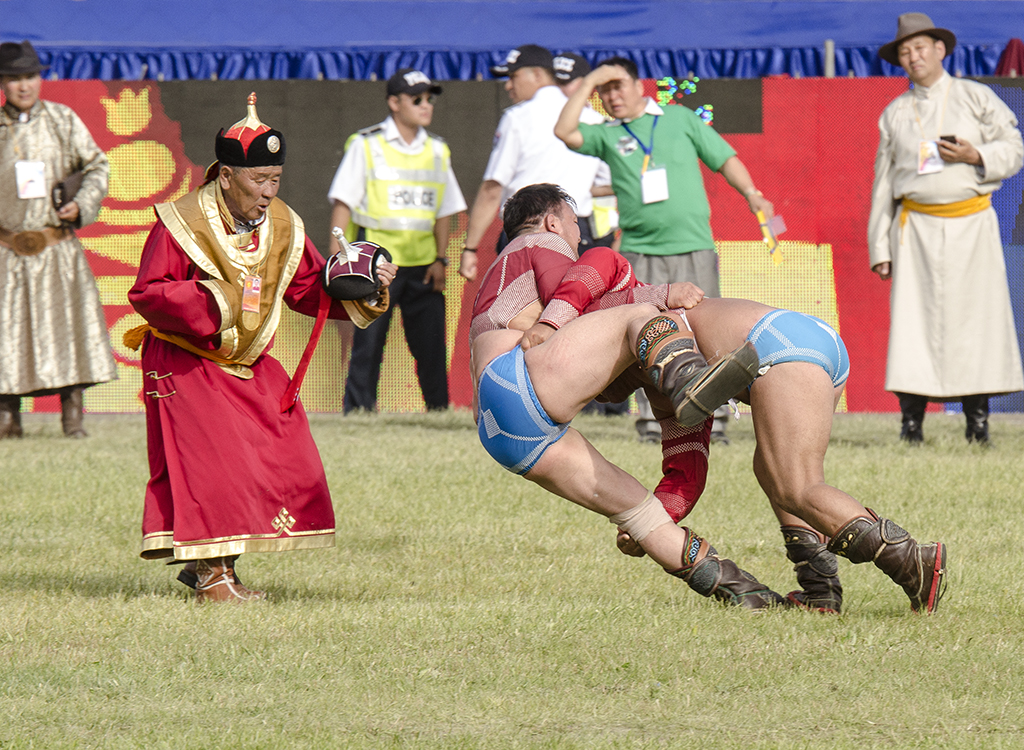
While the countryside Naadams are raw, intimate, and deeply personal, there’s nothing quite like the energy of the national celebration in Ulaanbaatar. This is Mongolia’s biggest stage, and we weren’t in the stands. We were on the field, thanks to press passes that gave us ground-level access to the heart of the action.
When our group stepped into the stadium with cameras around our necks and press tags on our chests, the experience shifted. We weren’t just spectators—we were part of the pulse of the country.
The opening ceremony is always a spectacle. Mongolian horsemen storm across the field like a scene from ancient history. Military bands march with precision. Dancers swirl in technicolor motion. Flag bearers raise the symbol of a proud, independent nation. We watched the president deliver the opening address, and the roar of the crowd reminded us we weren’t just witnessing a festival—we were witnessing identity.
Everywhere we looked, people were dressed in their finest deels. Some were modern and brightly patterned, others passed down through generations. We photographed families posing for portraits, children practicing their archery form, and elders sitting proudly in the shade, happy to have their photo taken. It’s a living tapestry of Mongolia’s many ethnic groups—Buryat, Kazakh, Tuvan, and more—all represented, all proud.
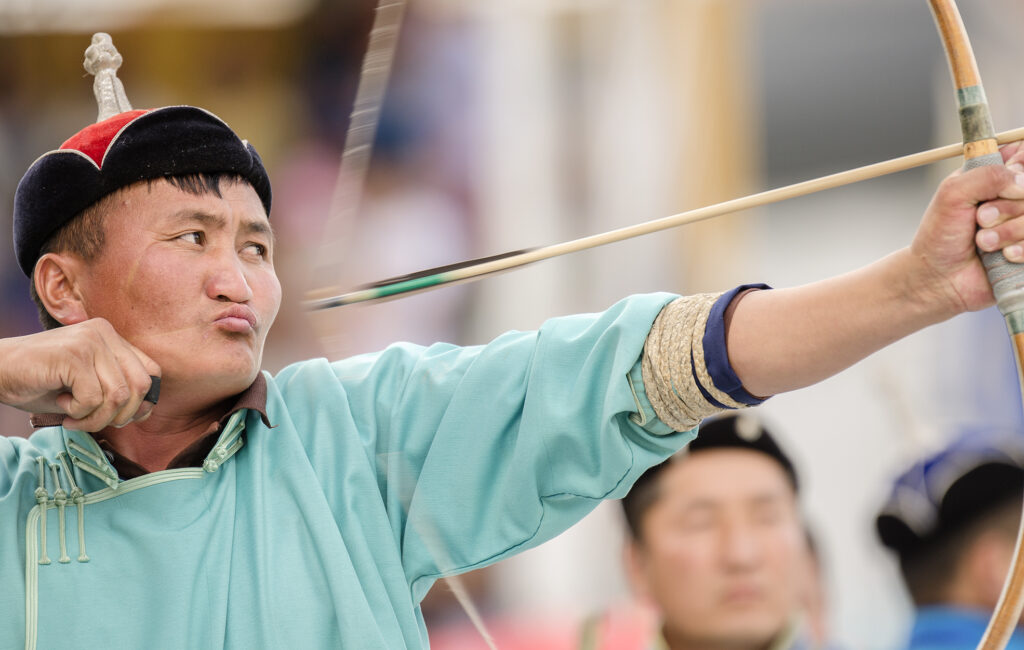
Then came the events. Traditional wrestling, where competitors enter the ring with an eagle dance and leave with the honor of a nation. Archery competitions that are quiet, precise, and filled with reverence. And of course, the horse races—a nod to the nomadic roots of this land. In the city, the races are held outside the stadium, but the excitement begins right here with the ceremonial start.
Photographically, it’s both a dream and a challenge. Harsh light, fast action, and unpredictable moments. That’s where I come in—helping my guests dial in exposure on the fly, read the scene, and catch the little moments of connection that elevate their images.
By the end of the day, their memory cards are full, their shutter fingers sore, and their hearts a little fuller with an experience no internet image can truly convey.
Our Naadam Festival Photo Tour in Mongolia When We Are In The Countryside
We head into the countryside, where Naadam is celebrated in villages much the same way it has been for centuries. No grandstands. No souvenir vendors. Just locals gathering on wide, grassy plains to cheer on their neighbors in wrestling, archery, and horse racing. And as photographers, that’s where the gold is.
We crouched in wildflower fields as a pack of young horse riders—some as young as five—thundered toward our lenses. We followed the dusty boots of a wrestler walking out to challenge a champion. We captured the delicate hands of an archer pulling back a hand-carved bow under a wide-open sky, just feet from the action.
We weren’t behind rope lines. We were in it. That’s what I focus on during this workshop—helping guests move past postcard shots and find the soul of a moment. I’m there beside you the whole way, helping you anticipate action, see the light, and connect with the people you’re photographing. Respect first. Photos second. Always.

It’s Not Just the Festival… It’s the Culture Around It
Outside of Naadam, we spend our days photographing daily life in the steppes—families in their gers, herders bringing animals to water, eagle hunters training their birds in the highlands. We don’t barge in with cameras; we’re invited guests. That trust opens doors. Some of the most memorable images come from quiet moments: a grandmother pouring tea, a child helping with the goats, a laugh shared around a fire.
Photographing Mongolia’s Eagle Hunters: A Collaboration, Not a Shoot
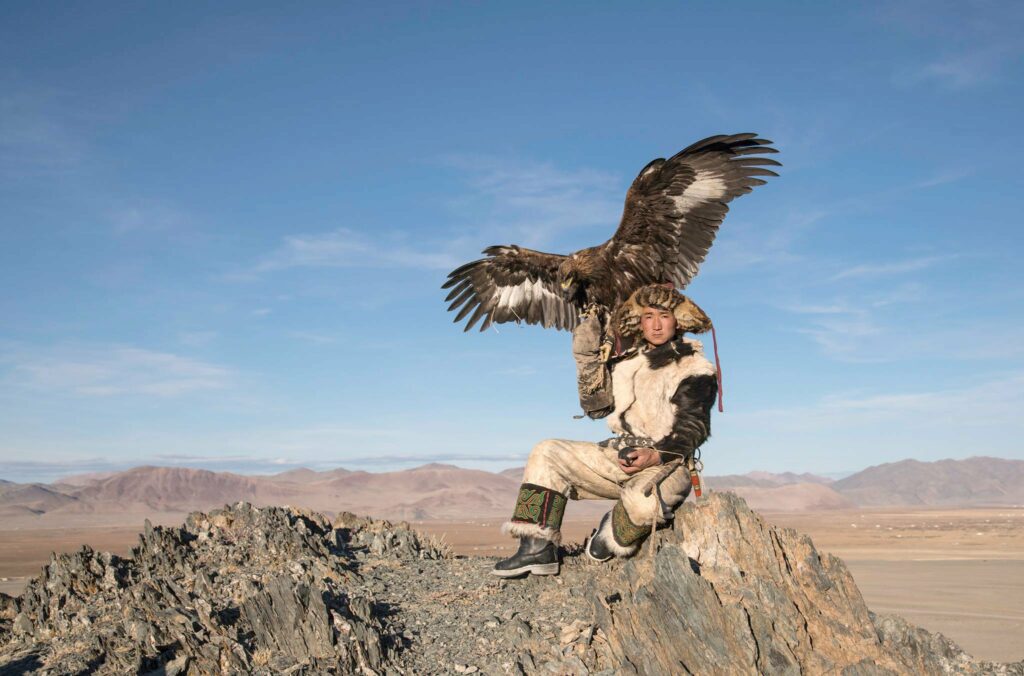
If there’s one subject that stops every photographer in their tracks, it’s the eagle hunters. And rightfully so. A Kazakh man on horseback, clad in fur, holding a golden eagle—it’s the kind of image that belongs on the cover of National Geographic. But what most people don’t realize is that getting that image isn’t about gear or angles. It’s about relationships.
I’ve worked with the same eagle hunter families for years. They know me, they know what kind of experience I want to create for my guests, and—most importantly—they trust that we’re not just here to take something. We’re here to help tell their story with care.
We spend time in their homes, shared meals, and watched them interact with their birds long before a camera coame out. When we do start shooting, it’s a collaboration. We talk through poses, movements, and light. They know how to work with us—not as models, but as proud keepers of a tradition.
You’ll photograph them on ridge lines at sunrise, against mountains that look like they belong to another century. You’ll capture the quiet intensity in a hunter’s eyes, the subtle connection between man and bird, and the raw power of an eagle launching into flight.
I work with each guest to understand the light, frame the story, and anticipate the action. We review images together in the evenings, adjust approaches, and push past the expected into something more meaningful.
You’ll leave not just with stunning images, but with a sense that you’ve witnessed something ancient, alive, and deeply real. That’s the heart of this experience.
Wild and Ancient: Photographing the Przewalski’s Horses of Hustai
After Naadam, we headed west to Hustai National Park—a rolling landscape of grasslands and low mountains that feels like it belongs to another era. And in many ways, it does.
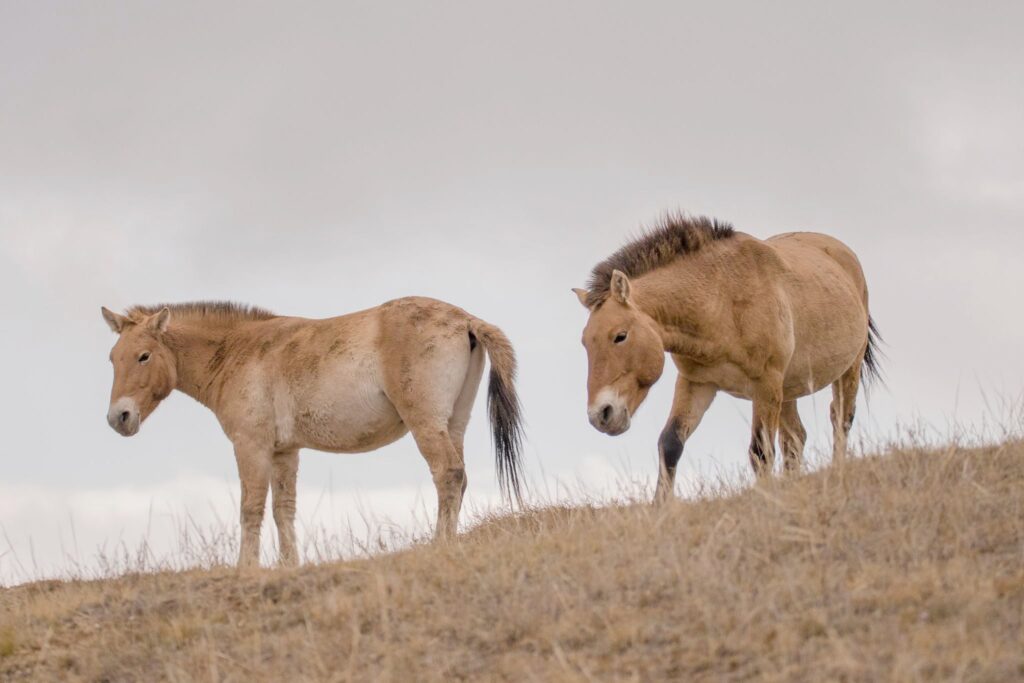
This is where we photographed the last truly wild horse on Earth: the Przewalski’s horse, or takhi, as the Mongolians call it. Stocky, rugged, and with a mane like a windswept mohawk, these horses aren’t descended from domesticated lines. They’re a separate, ancient species that Mongolia brought back from the edge of extinction.
We typically arrive in the late afternoon, when the light softens and the horses begin to move down from the hills to graze. Golden-hour light wraps around them beautifully, backlighting dust and wildflowers.
We hiked short distances to find the right angles without disturbing the animals. Sometimes we waited as herds approach. Other times, we positioned ourselves near a ridge and let the moment unfold. No rush. No stress. Just us, the steppe, and one of the rarest animals on the planet walking into our frame.
I help guests think through light, composition, and camera settings. We talk about depth, movement, and storytelling. If you’re used to photographing wildlife in fenced reserves, this will feel different. Wilder. More real. Because it is.
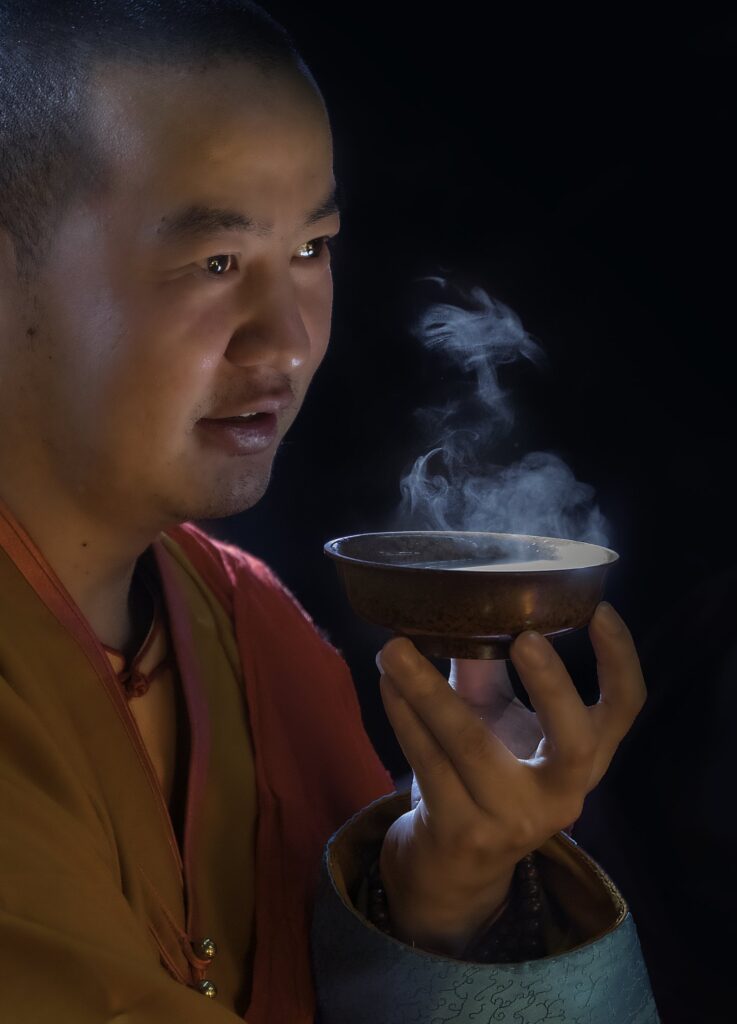
Inside the Monastery: Exclusive Access to Photograph the Monks of Gandan
In Ulaanbaatar, just beyond the city’s noise and bustle, is Gandan Monastery—Mongolia’s spiritual center. And thanks to long-standing relationships, we have exclusive early-morning access to photograph the monks as they begin their day.
Before the tourists arrive and the rituals begin, we step quietly inside with our cameras. We’re not spectators. We’re welcomed guests. That access isn’t from permits. It’s from trust.
The monastery hums with low chants and the occasional bell. Young novices sweep the stone courtyard. Elder monks light incense. Prayer wheels turn as sunlight streams through temple windows. It’s soft, warm, golden light—the kind portrait photographers dream about.
Nothing here is staged. We don’t direct, we observe. I guide my guests on how to photograph respectfully in these sacred spaces, how to work with available light, and how to create quiet, powerful images.
We also have private access to a few monks in a quieter space, where we can pose and compose a few frames more deliberately. Later, we may be invited inside the main prayer hall, where rows of monks sit cross-legged, reciting sutras in a deep, rhythmic cadence. It’s low light and high ISO territory—but the images? They’re full of soul.
Photographing here is more than an opportunity. It’s a privilege. And we treat it that way.
Our Naadam Festival Photo Tour in Mongolia is more than a travel experience. It’s the result of decades of relationship-building, cultural respect, and deep knowledge of Mongolia’s people and rhythms. That’s why it’s a once-in-a-lifetime opportunity—because access like this isn’t bought. It’s earned. You can see our next photo tour to Naadam here.


