Yukon Fall Workshop Trip Report: From Tombstone to Kluane, with Color Everywhere We Stopped
By Kevin Pepper |
Some photography workshops are built around one destination. This one became a journey through the Yukon at its absolute best.
During this photo workshop, the weather aligned in a way that gave us something rare: peak fall color in the north, beautiful conditions in the south, and aurora along the way. Rather than focus only on Tombstone or only on the Whitehorse and Kluane region, we followed the season from one end of the Yukon to the other, chasing red tundra, yellow valleys, mountain light, wildlife, and dark northern skies with a small group of four photographers, one trusty SUV, and not nearly enough sleep.
This was not our usual Yukon fall workshop, and that is exactly what made it so special.
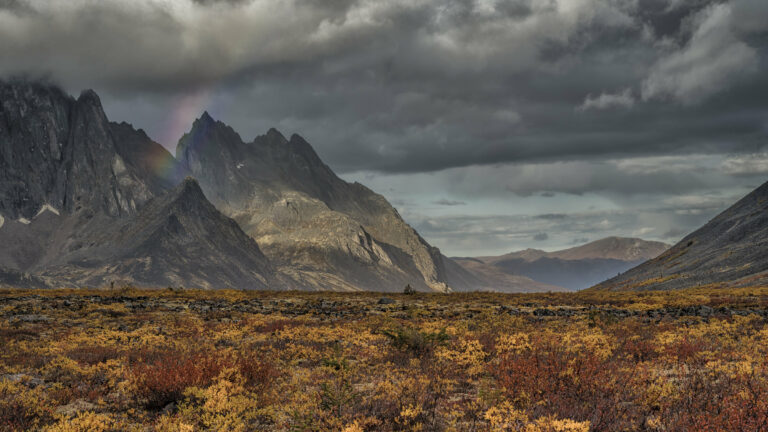
Normally, our Yukon fall trips focus on either Tombstone in the north or the southern regions around Whitehorse, Haines Junction, and Kluane. But this year, the conditions lined up so perfectly that we were able to enjoy both. The north was glowing with fall color and under active aurora skies, and as we made our way south, the season seemed to travel with us. We followed yellows and reds all the way down through Whitehorse, Carcross, Emerald Lake, Haines Junction, and into Kluane National Park.
It felt less like a fixed workshop and more like a proper Yukon chase.
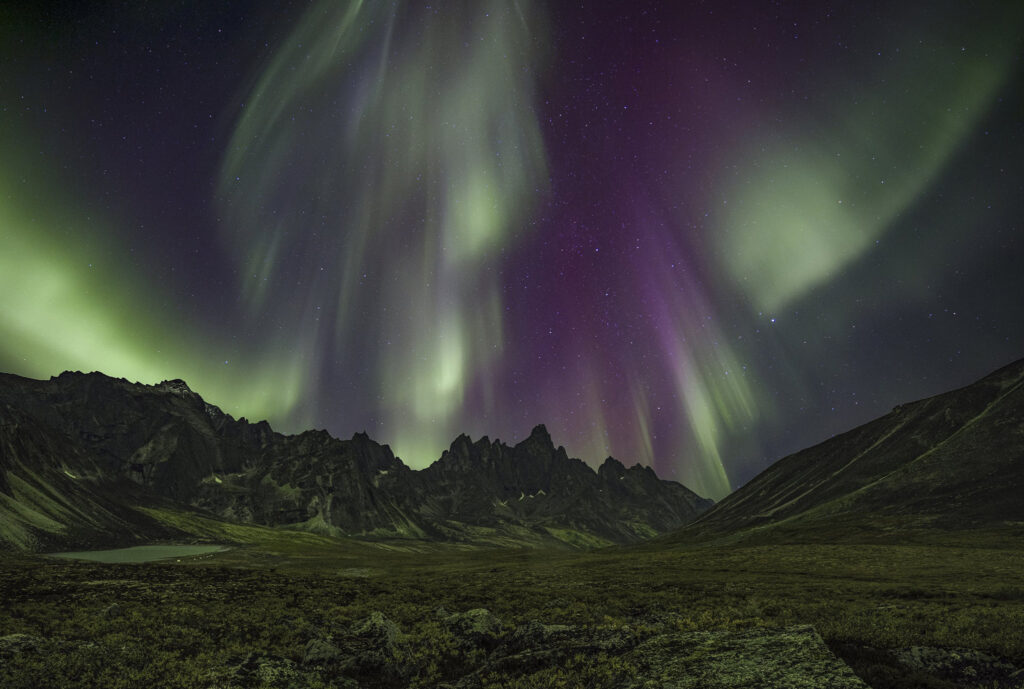
In the north, we camped beneath wide skies and dramatic peaks, right in the kind of country that makes photographers stop talking for a minute. We also took helicopter rides into what many would consider one of the most beautiful places in Canada, and I would have a hard time arguing otherwise. The views were immense. The tundra was alive with color. The mountains felt endless. It was wild, raw, and deeply photographic in every direction.
The north also gave us one of the things every photographer hopes for on a Yukon fall trip: aurora. After long days of shooting, evenings had a familiar pattern. Eat quickly, keep an eye on the sky, and prepare to ignore your better judgment if the green starts to show. The phrase “sleep when we get home” was heard often, usually from people already running on fumes.
One of my favorite moments came in the middle of the night at camp. There is nothing quite like crawling out of your tent to go to the bathroom, only to realize the ground is reflecting a faint green glow. Then you look up, and the aurora is blazing overhead. There are not many places in the world where a simple bathroom run suddenly turns into a front-row seat to one of nature’s greatest performances. Nothing like having the heavens light up your most private moment. The Yukon has a wicked sense of timing.

As we headed south, the beauty never let up. Around Whitehorse and the Haines Junction area, it felt like the landscape was trying to outdo itself at every turn. The yellows and reds spread through the green like veins across the land, and every valley, hillside, and roadside pond seemed to be holding onto a photograph.
Carcross was especially beautiful during this stretch of the trip. The hillsides and forests around the area were lit up with rich autumn tones, and the drive itself felt like a moving gallery of gold. There is something about that part of the Yukon in fall that feels both grand and intimate at the same time. One minute you are taking in broad sweeping views, and the next you are pulled in by small pockets of color, soft layers of forest, and the kind of quiet roadside scenes that can make for some of the most rewarding images of the whole trip.
And then there was Emerald Lake.

It is a remarkable location at any time of year, but with fall color around it, the place felt almost unfair. The water had that famous vivid tone, and the surrounding slopes and trees added even more life to the scene. It was one of those places where photographers start with the obvious wide shot, then stay longer because every shift in light reveals something else worth working with. Reflections, color contrast, intimate details, shoreline compositions—Emerald Lake gave us all of it.
Further west, Haines Junction and Kluane National Park delivered the kind of broad mountain drama that makes the Yukon so unforgettable. Kluane always has presence. The mountains rise with authority, the valleys feel open and untamed, and the scale of the place reminds you quickly that you are working in real wilderness. Add strong fall color to that setting, and it becomes something even more special. We spent our time photographing the big views, watching light move across the land, and doing what photographers do best when the conditions are this good: pulling over often and pretending we had not already stopped ten minutes earlier.
That really became the theme of the workshop.
Drive a little. Stop a lot.
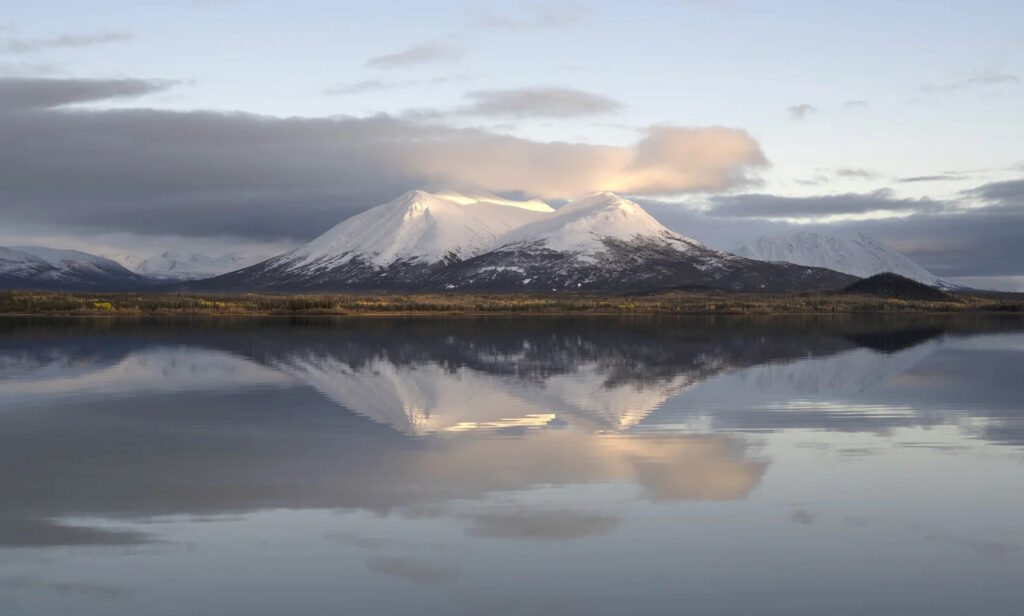
This was a long adventure with many hours on the road, but that is the Yukon in fall. There is a photo stop every fifteen minutes if you are paying attention, and we were definitely paying attention. There was never a shortage of reasons to stop. Grand landscapes. Soft color in the trees. Mountain layers. Reflections. Unexpected pockets of light. At one point, I even noticed some of the guys trying to manage photos with their smartphones during a roadside bathroom break because the scenery was just too good to ignore. That tells you everything you need to know. In the Yukon, even the most practical stops can turn into a photography session.
One of the standout experiences in the south was our special behind-the-fences visit at the Yukon Wildlife Preserve, something I have really grown to love on my Yukon trips. I usually think of those animals in winter, surrounded by snow and soft cold light, but seeing them in fall added a completely different mood. The color in the grasses and trees gave the scenes warmth and richness, and it made the wildlife feel even more connected to the landscape. It was a reminder that familiar subjects can become fresh again when the season changes around them.

What made this workshop so memorable was the full range of it. Tombstone in the north. Camping and helicopter access into spectacular country. Aurora overhead. Then south through Whitehorse, Carcross, Emerald Lake, Haines Junction, and Kluane, where the fall color kept going and the landscapes kept widening. Add in wildlife at the preserve, a small group of four, and one SUV that earned every mile, and it became one of those trips that photographers remember for a long time.
For me, that is what made this workshop so rewarding. It was not about one iconic stop. It was about the whole experience of moving through a landscape in transition and being willing to follow the light, the color, and the moment wherever they led. It was long days, late nights, too many memory cards, not enough sleep, and that steady feeling that the next bend in the road might hold another image worth pulling over for.
And in the Yukon, it usually does.

This return trip of mine was a reminder that the Yukon in fall is one of the finest photography experiences in Canada. It offers scale, variety, wildlife, color, mountain drama, dark skies, and the kind of raw beauty that never feels overly polished. It still feels wild. It still feels earned. And when everything lines up the way it did on this photo workshop, it is hard to imagine wanting to be anywhere else.
The days were long. The nights were late. Common sense took a few well-deserved breaks. But when the aurora is dancing overhead, the tundra is glowing in the north, Emerald Lake is shining in the south, and every stretch of road seems to offer another reason to stop, sleep becomes less of a priority.
You just keep going.
And during this tour in the Yukon, every mile was worth it.
Contact us if you are interested in going to the Yukon in the fall.