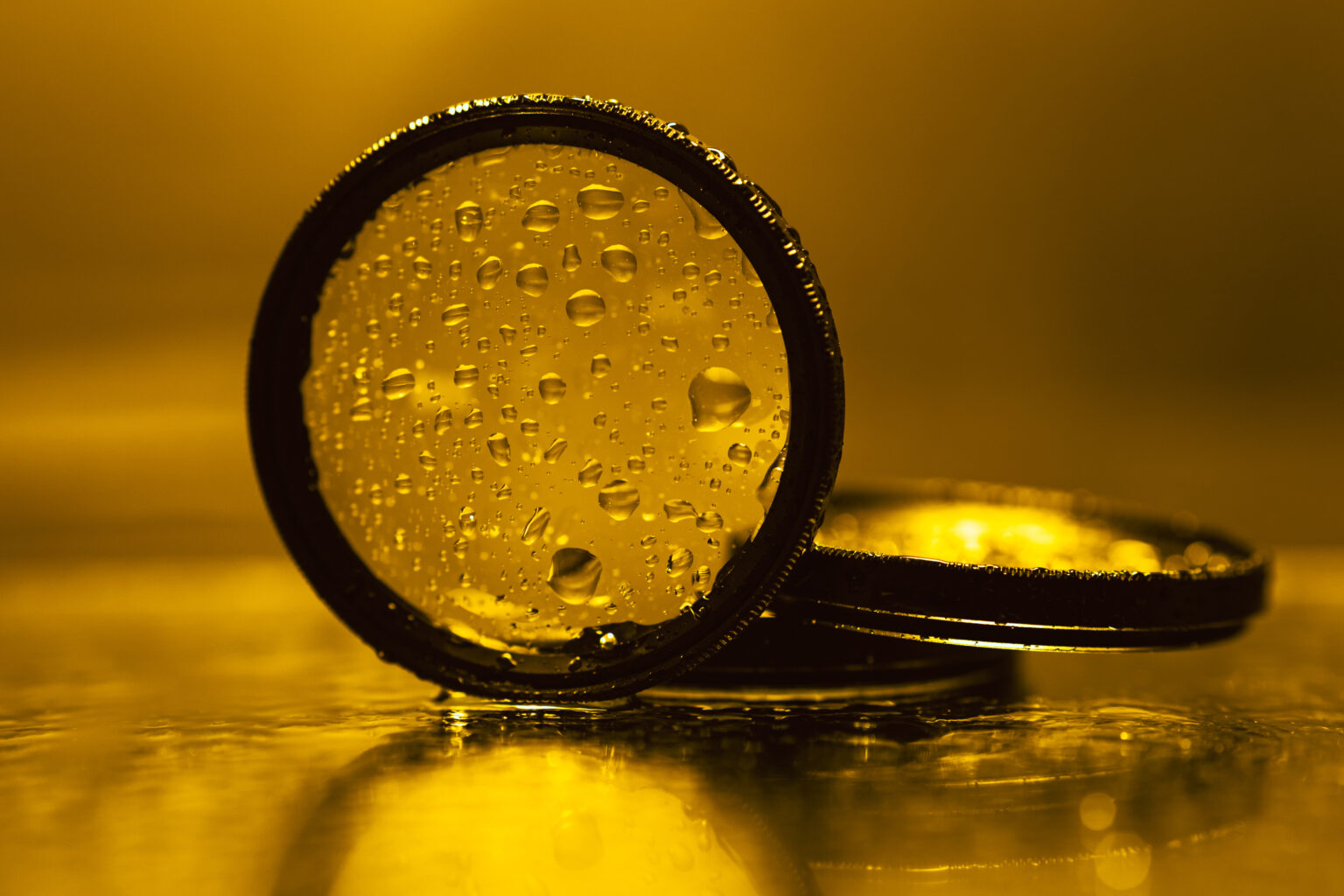
How to avoid condensation on your lens during night photography
Photographing the night sky is one of our favorite types of photography. However, when moisture is present, condensation on the front of your lens can ruin your photos.
Dew point
The dew point is the temperature at which air becomes saturated with water vapor. When the air temperature dips below the dew point, liquid water condenses on solid surfaces. When photographing at night, these surfaces include the front of your lens.
The chance of dew is directly related to the relative humidity. The humidity is low in desert environments, and dew is not an issue. However, dew condensation at night is frequent in humid, tropical environments. In temperate climates, some nights will reach the dew point, and others will not.
Preventing condensation on camera lenses
When dew begins forming at night, the front of your lens will become wet, and your pictures will be blurry and ruined. Because your lens is at air temperature, condensation will continue no matter how many times you wipe it off, and your night photography session may come to a premature end.
Preventing condensation on your lens requires warming it to a temperature above the dew point. There are a few methods for achieving this.
Lens heater
The best method for preventing condensation on your lens is using a lens warmer/dew heater. Astrophotography enthusiasts will pack one in their kit for their telescope or camera in humid environments.
Dew heaters include a heating strap that you wrap around the lens, as close to the front element as possible. These straps get power from a USB cable that you plug into a small portable power bank. When using a dew heater, charge your power bank before your night photography session and bring a Velcro strap or gaffer tape to attach it to the legs of your tripod.
Various lens heaters are available, and they are not expensive. We like the MSM lens heater.

Hand warmers
Combining chemical hand warmers and a rubber band can keep your lens warm and prevent condensation. Activate two or three hand warmers. Use an elastic band to fix them around the perimeter of your lens, as close to the front element as possible, without affecting the photograph. Attaching the hand warmers to your lens will likely bump the focus ring. Reconfirm your focus after you install the hand warmers.

Jacket pocket
Remove your lens and place it close to your body in a jacket pocket to warm it up. This method can work well if you swap two lenses back and forth. However, you must constantly monitor the lens for condensation. If you only have one lens, this method is impractical, and you’ll miss long photography periods. Swapping lenses also means you may have to recompose and refocus your scene in the dark.