
Bird photography composition guide: perched, in flight, action, and more
Birds make beautiful subjects for photographers. The camera highlights coloration, feather patterns, and behaviors that can be difficult to appreciate with the naked eye.
Composition is often the difference between a good and a great bird photograph. Composition is the arrangement of the bird and its surrounding elements in the photo. An excellent composition shows context about where the bird lives or highlights interesting behaviors and beautiful postures. Here are our tips for creating bird photos that stand out.
Perched birds
When photographing a bird on a perch or nest, pay attention to the following: First, look for clean backdrops that are free of distractions. When faced with a busy backdrop, use a wide-open, large aperture to blur the background and minimize distractions. Large aperture refers to the lowest f-stop number on your lens, such as f/2.8 or f/4. Also, adjust your position if possible to better manage the background of your images.
Second, allow the shape and size of the branch or perch to dictate the composition and, ultimately, the placement of the bird. Photos should show enough of a branch, nest, or perch to make it easy for the viewer to identify, but not so much that it dominates the photo. Be conscious of where you crop the perch or nest. Sometimes, you’ll crop a branch at the edges of the frame, but other times, it makes sense to include the entire branch.
Third, note the bird’s posture and gaze. If the bird is looking to the right, allow more room on that side of the photo.
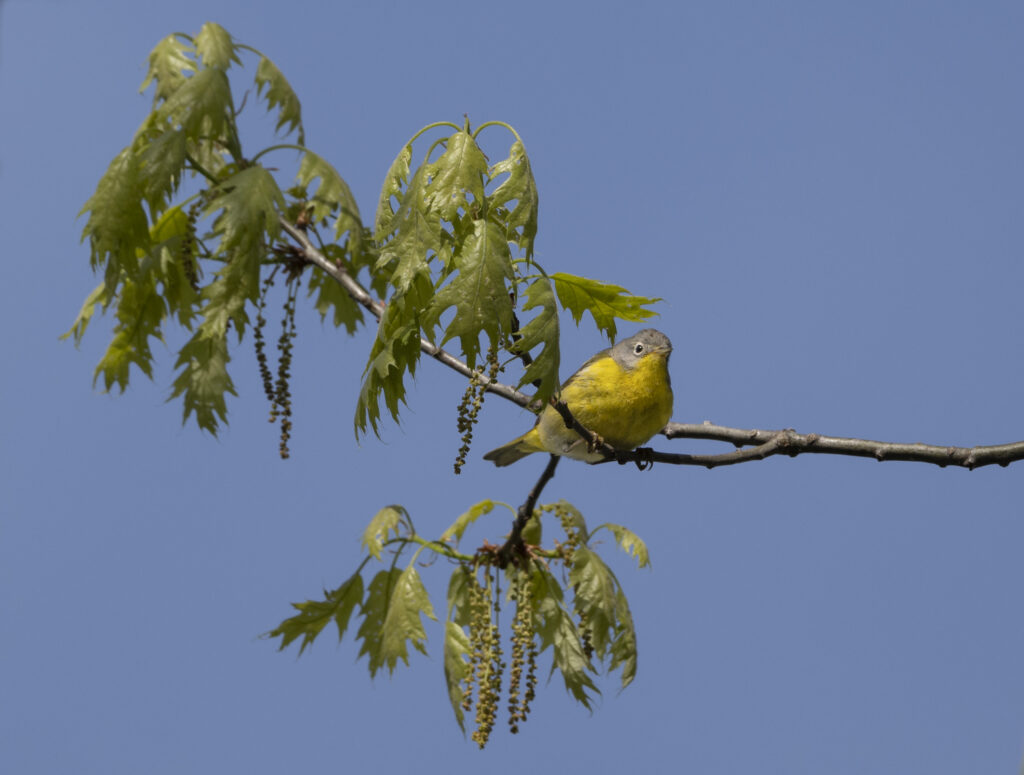

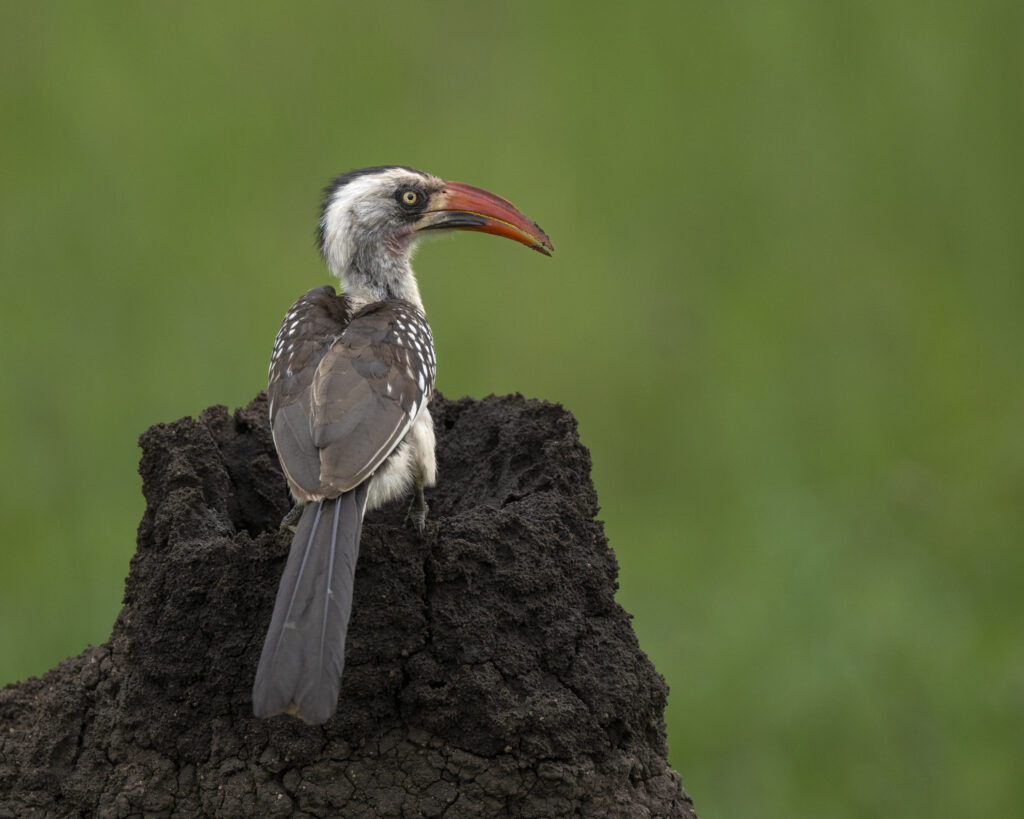
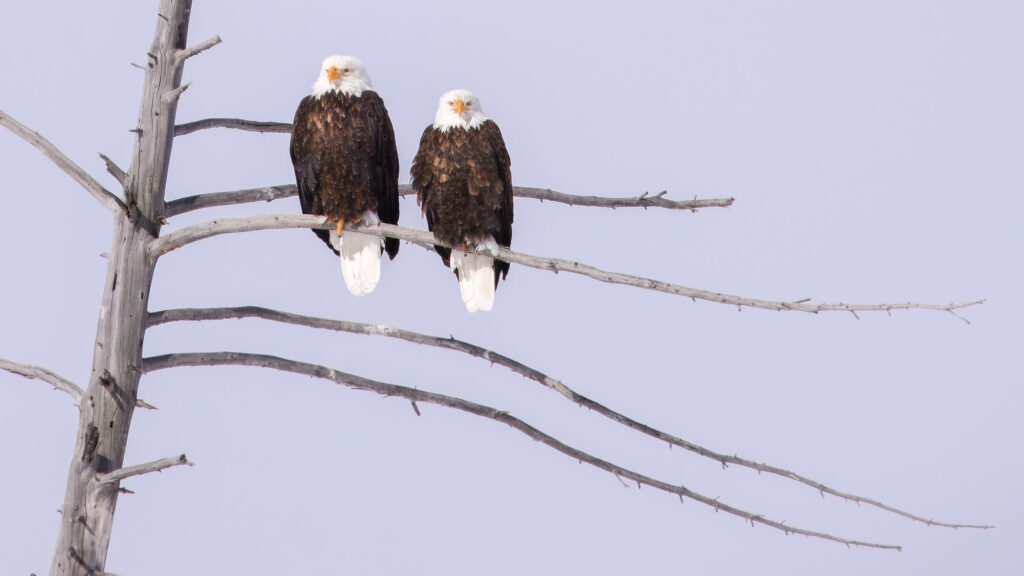
Be conscious of how branches and foliage in the scene intersect with the bird, and avoid unwanted intersections (tangencies) when possible.


Birds in flight
Photographing birds in flight can be straightforward for large, gliding birds, but borders on the impossible for small, fast birds with erratic flight patterns. For birds with erratic flight patterns, identify takeoff and landing spots to which they’ll likely return for better results.
When photographing birds in flight, focus on a few things:
- Allow more room in your photo in the direction of flight, giving them space to “fly into” and implying the direction of motion to your viewer.
- Choose wing postures representing the bird’s most beautiful colorations and patterns.
- Be aware of the bird’s angle of approach. The most desirable compositions are when the bird is approaching the camera or directly parallel to it. Photos are less attractive when they pass by and veer away.

This sequence of Bald Eagle photos shows the various wing positions at takeoff. The first stroke is fully extended, directly above its head. Be sure to photograph at a wide enough angle so that wing tips aren’t cropped off. The up-and-down strokes of its wings feature more feather and wing detail than when the wings are pointed directly out. Larger birds also have a “TIE fighter” posture during the upstroke, where the wings are bent.


Takeoff and landing
Takeoff and landing are two of the most dramatic moments of bird flight. At takeoff, the wing positions are more pronounced, and if positioned correctly, a photographer can show off both the top and bottom of the wings. When they take off, birds flex their muscles and extend every feather on their wings, with their primary, secondary, and tertiary feathers on full display.
It can be easy to anticipate when larger species will take flight. Also, for many species, takeoff is often preceded by defecation.


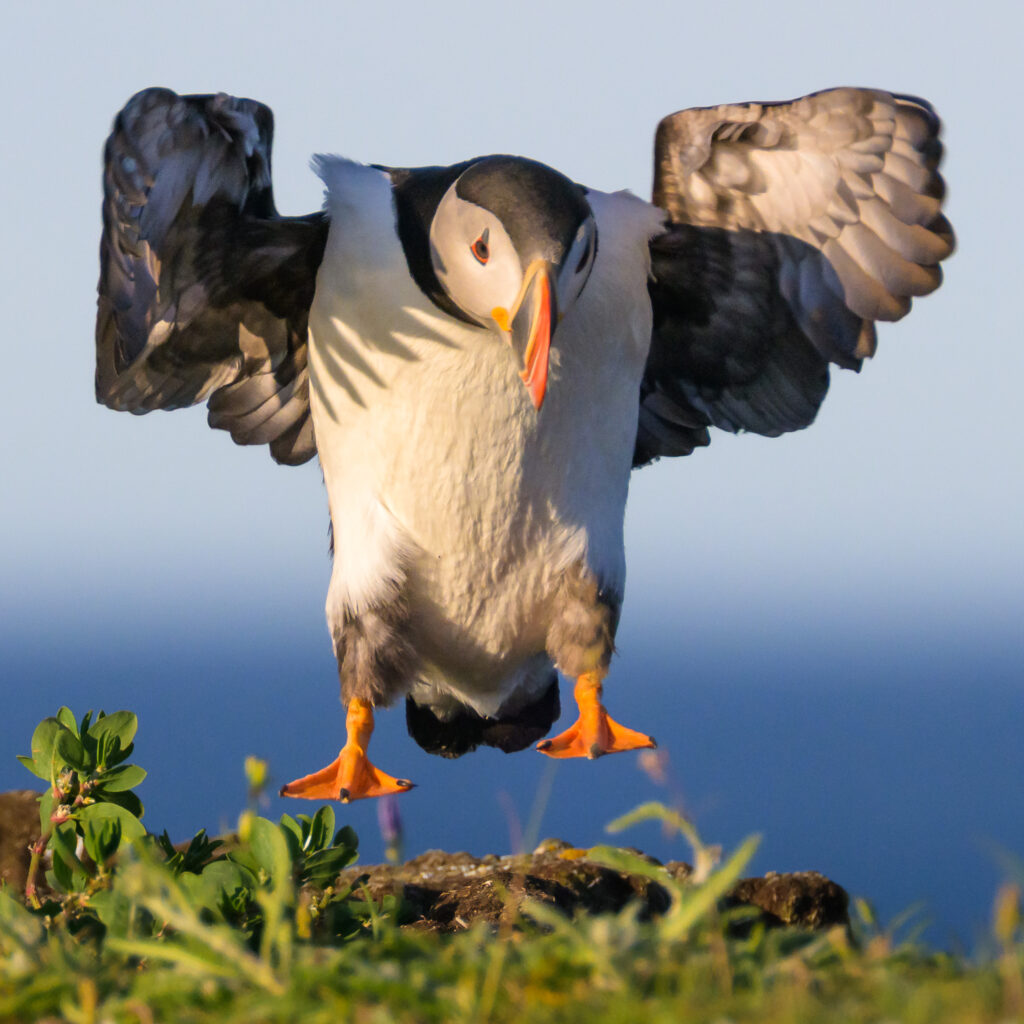
Landings present another unique moment in bird flight when the bird concentrates and extends its talons. Often, landings involve unique wing positions, and the bird makes last-second adjustments using its wings as flaps to slow and guide it to its landing spot.


Bird action
Bird action photos are some of the most challenging to capture in wildlife photography, but often the most compelling, as they reveal details that escape the human eye. Their motion is fast, with exciting moments happening in the blink of an eye. One reason avid bird photographers buy expensive camera gear is to capture fast action, since more expensive cameras offer higher frame rates and better autofocus systems.
Pay attention to birds’ behavior and anticipate their timing. Feeding, hunting, and fighting occur quickly, so use a high frame rate of at least ten frames per second or faster, plus a fast shutter speed of at least 1/1600–1/2000 second to capture the right moment. You may capture tens or hundreds of frames and discard all but one to get the exact frame you want.


Focus on the eyes
As in any form of wildlife photography, eyes play a critical role in forming a bond between the subject and the viewer. Birds have some of the most unique and striking eyes in the animal kingdom, so be sure to feature them. Ensure that the closest eye is in focus.
In typical mammal photography, both eyes looking directly at the camera is desirable. Because of the placement of their eyes and a desire to show a profile of their beak, birds are most often photographed using a side profile, not looking directly at the camera. (Owls are an exception to this.)
Rule of thirds
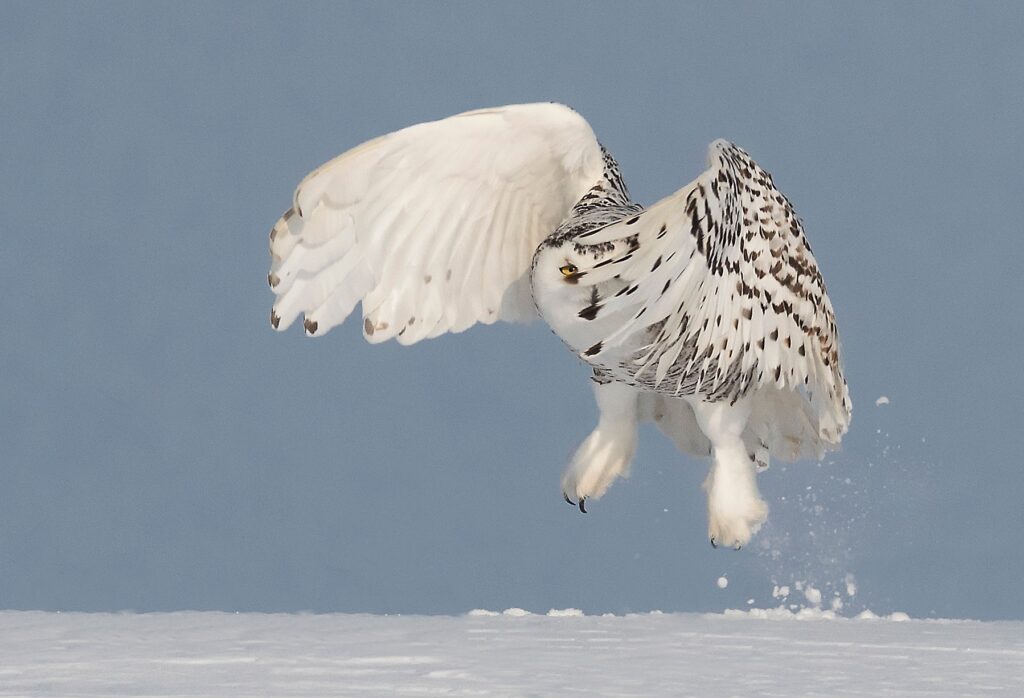
The rule of thirds is a widely used compositional principle in photography and other art forms. It is a “rule of thumb” that discourages placing the subject at the center of the image, thereby making images more visually engaging. An image is divided into nine equal parts, with two vertical and two horizontal lines. The subject is aligned with these lines or their intersections.
The rule of thirds is useful and can provide a good guide or starting point when thinking about your final composition. However, it is merely a suggestion, and you should experiment based on the contents of your image.

Lighting
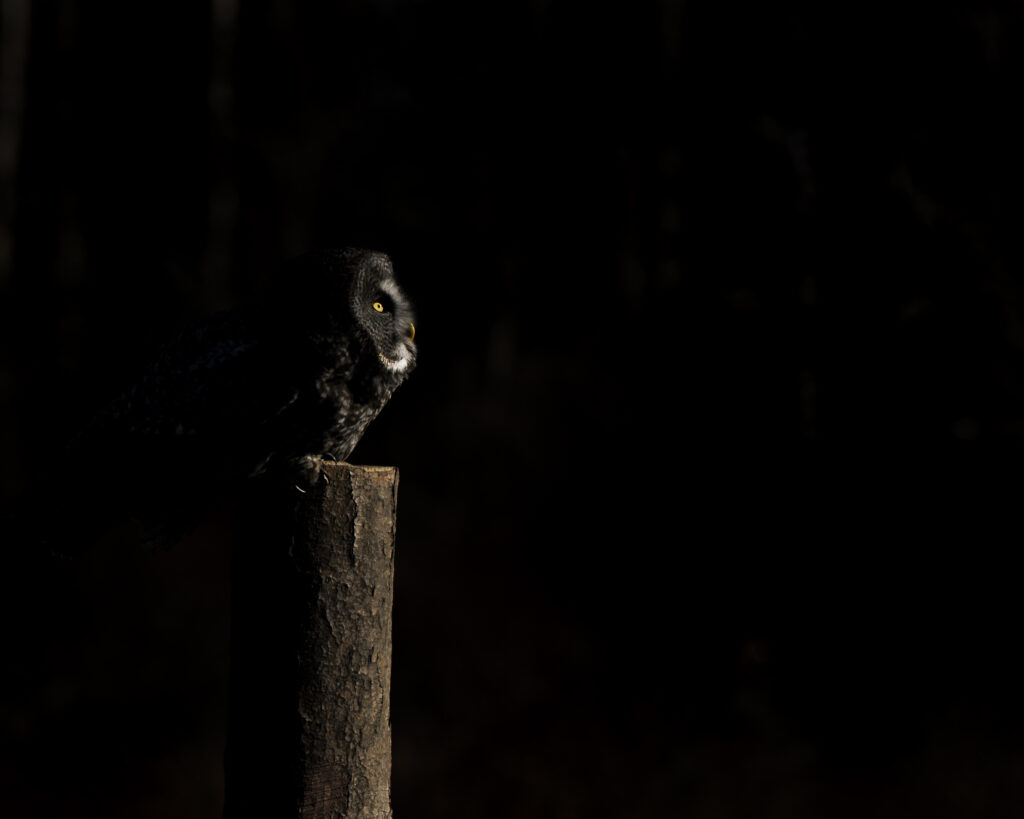
Birds are frequently in dark, forested areas where photography can be challenging. However, a dark forest often has dappled light, and the lighting can be pretty dramatic when a patch of light falls on a bird, especially if it is a catch light on the eye. Also, take advantage of side light or backlight to highlight the feathered outline of the bird.


Take advantage of reflections
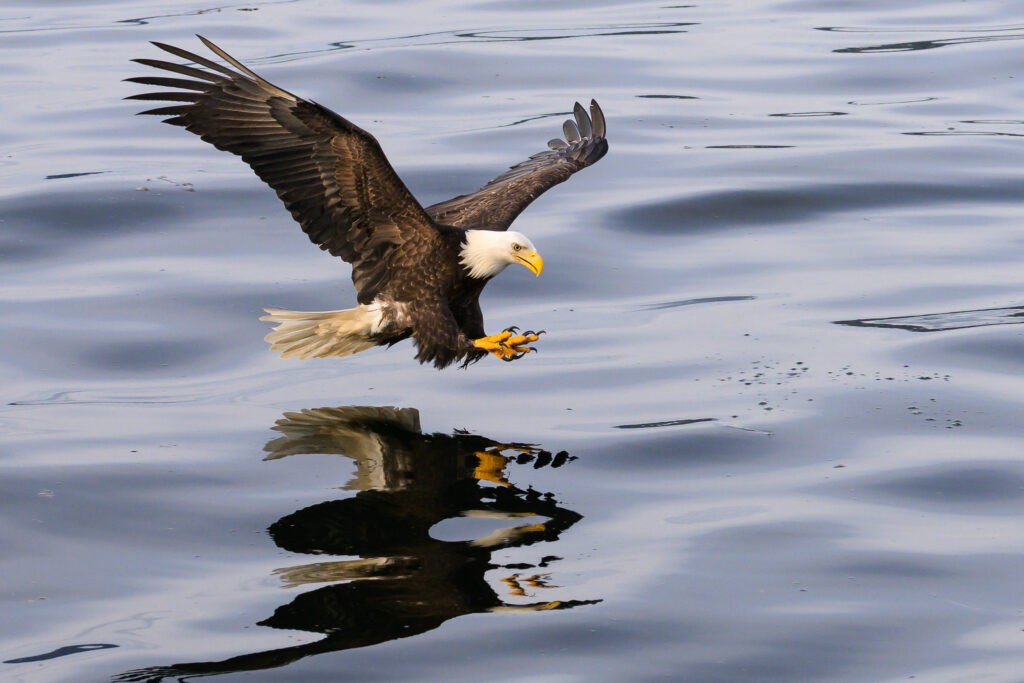
Birds are often found in and around bodies of water. Their reflections are a compelling addition to the composition, and make sure that your crop includes the bird’s reflection.

Flocks of birds
When a flock of birds is flying in formation, check to ensure separation between the birds and that they all have similar postures.


When there is a large, chaotic flock of birds, fill the frame with the chaos. In scenes like this, you usually have to crop off parts of some birds at the edge of the frame. Where possible, look for a crop where you don’t have to crop off parts of birds, favoring the leading edge over the trailing edge of the flock.

When photographing a large group of birds with a large depth of field, you won’t be able to have them all in focus, even using smaller apertures. Focus on the birds in the front, allowing the focus on the ones in the back to be softer.

Birds against a bright sky
When photographing birds in flight, the bird often flies through a bright blue or white sky. While not directly related to composition, it is essential to recognize that your camera will make exposure errors in such scenes. The camera’s exposure meter reads a scene as too bright, lowering the exposure and underexposing both the bird and the sky. When photographing against a bright sky, use exposure compensation to increase exposure by 2/3 to 1 stop. But be careful. When the bird flies in front of a landscape, your exposure will be too bright.
You can also brighten the image in post-processing. Bring the sky to the appropriate brightness to show a natural sky-blue color. Even after the scene is brightened, the bird’s underside usually needs to be brightened by raising the shadows to reveal more detail.


Creative blur
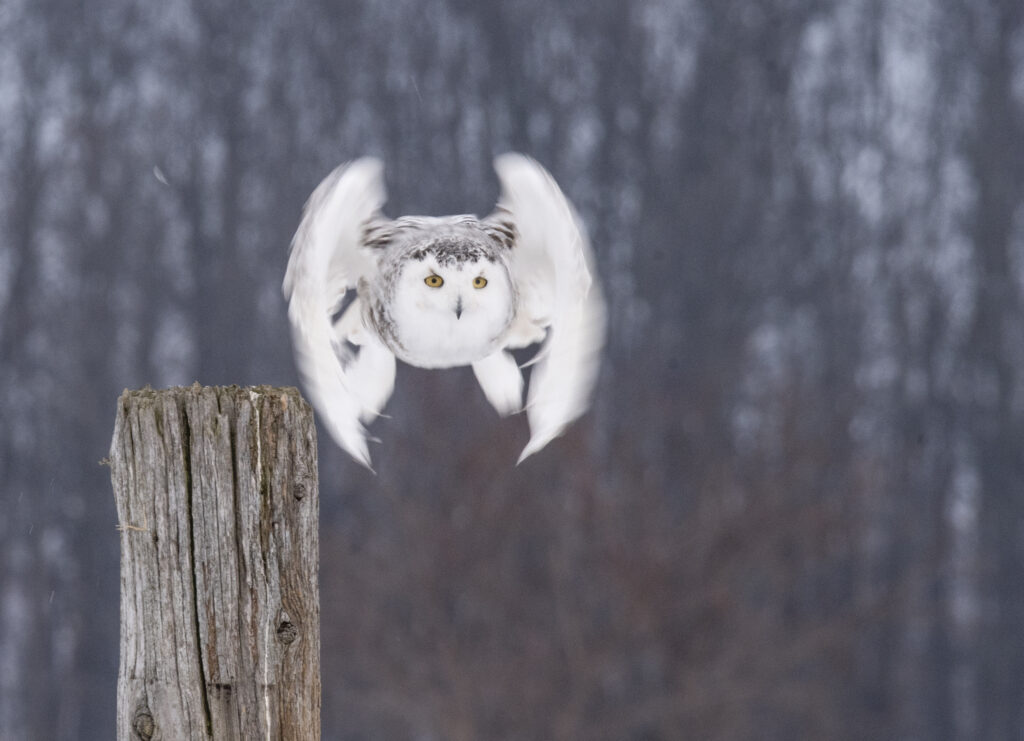
Unlike video, it can be challenging to represent bird-in-flight motion. Photographers typically use fast shutter speeds to freeze the motion of birds’ wings in flight. However, slow shutter speeds can impart motion blur in the wings and imply motion and action to the viewer.
Tell a story
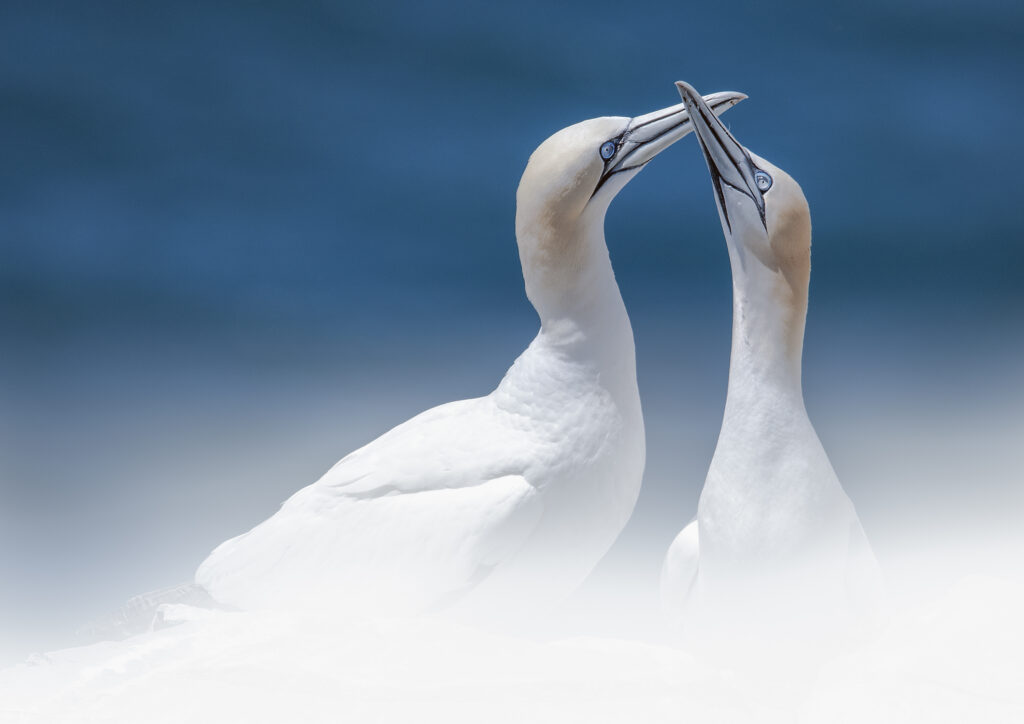
Birds play an important role in ecosystems, sometimes as carrion scavengers or predators. Courtship, nurturing, and fighting also help tell a story. Certain behaviors help birds adapt to their environment and regulate body temperature, such as drying their wings or standing on one leg. Find opportunities in your bird photography to tell these stories.



Birds in the landscape
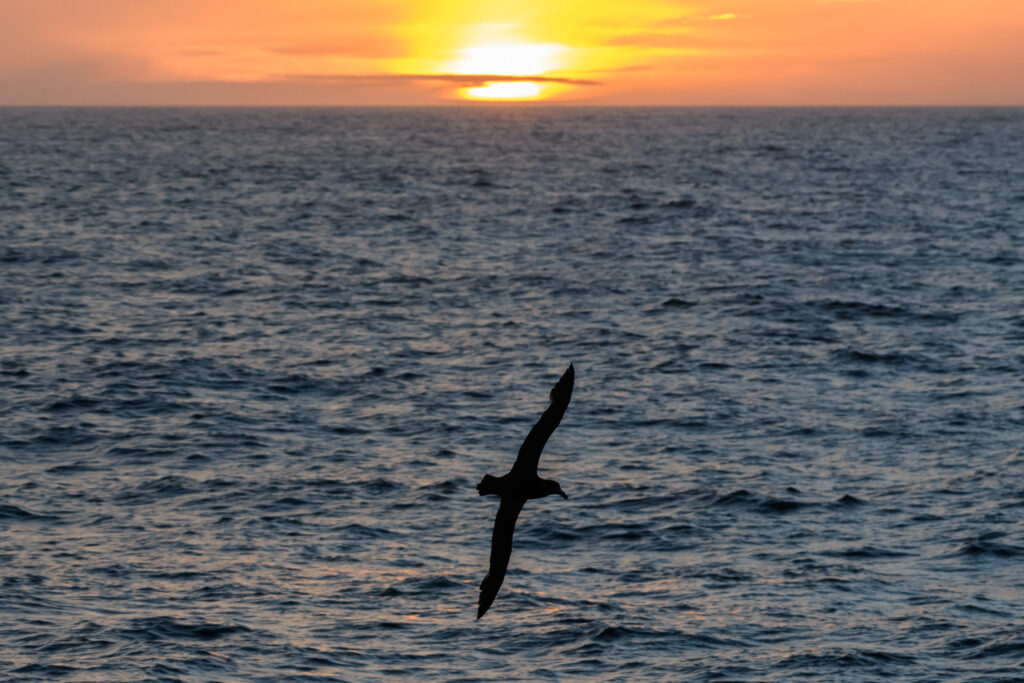
Don’t let faraway birds discourage you from photographing them if they are in a grand landscape. A small bird in a large landscape gives context about where it lives and tells a story about its habitat.
When composing birds in a landscape, first focus on framing the landscape, then determine how best to incorporate the bird. This may involve changing your position or waiting until the bird flies into your preferred scene.
South Georgia Shag
The snow-capped mountains provided a stunning backdrop from our exhibition ship in South Georgia. Many South Georgia Shags were flying between our boat and the mountain range. It was essential to capture the entire height of the mountains, plus some water and sky. With a relatively featureless ocean and sky, we included only small amounts in the composition.


Tawny Eagle
This Tawny Eagle was perched in front of a beautiful acacia tree in Kenya, with Mt. Kenya looming in the background. While the bird is small in this scene, it is nicely isolated. The composition is framed relative to the tree and the mountains in the background.

Bald Eagle
The snow-covered forest dominates the right two-thirds of the scene, framing and isolating the Bald Eagle in the sky and providing a strong diagonal line that mirrors the eagle’s flight path.

Focus on bird details
A bird photo doesn’t always have to show the entire bird. Unique feathers, features, or talons can make for interesting closeup photos.

Mastering bird composition
When photographing birds, observe their posture, background, and surroundings. Take photos with elements that help tell a story or enhance the composition’s visual appeal. During flight, photograph with the direction of flight in mind and take enough frames to feature optimal wing positions. When the action is fast, use fast frame and shutter speeds to obtain that perfect moment.
Mastering composition in bird photography takes practice, but one of the joys of digital photography is the ability to experiment endlessly. Happy birding!