Behind the roar: What it’s really like to photograph big cats in the Africa
By Kevin Pepper |
There’s a moment—a hush, a pulse, a sharp breath—when you first lock eyes with a big cat in the wild after you’ve traveled thousands of miles to see these predators in their natural habitat.
Whether it’s a lioness lounging under an acacia tree, a leopard draped in dappled sunlight across a branch, or a cheetah scanning the plains with predator precision, it stops you in your tracks. And for a wildlife photographer, it also kickstarts a thousand mental calculations: What’s the light like? How should I compose this photo? What settings should I use? Is someone’s lens hood going to be in my photo again?
Photographing big cats in the wild is exhilarating and sometimes chaotic. But here’s the truth—it can also be frustrating if you’re unprepared. This is a once-in-a-lifetime experience for many photographers, and showing up without the right gear, mindset, or support can turn excitement into missed opportunities.
But when it all comes together—when you are mentally and physically prepared, your gear is ready, and your guide knows exactly how to position you for the perfect image—it’s magic.
The photo before the chase
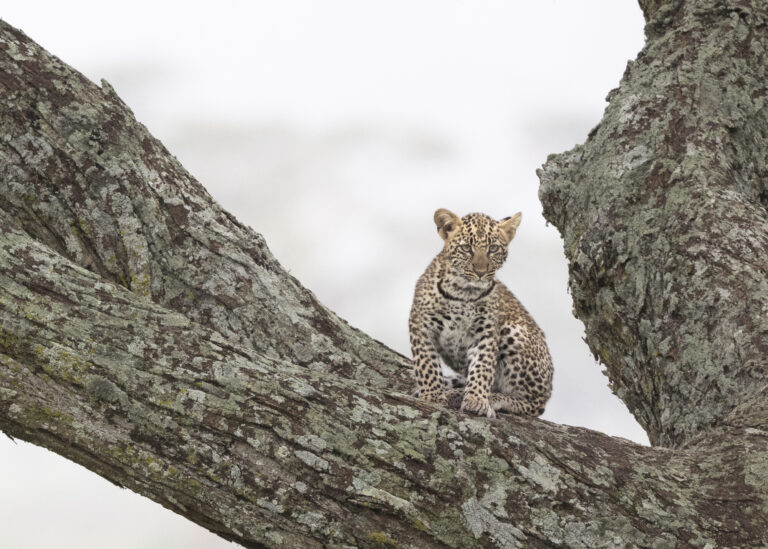
Tracking a leopard isn’t like spotting a giraffe from 400 meters away. These cats are shadows—stealthy, elusive, and maddeningly photogenic when you can find them.
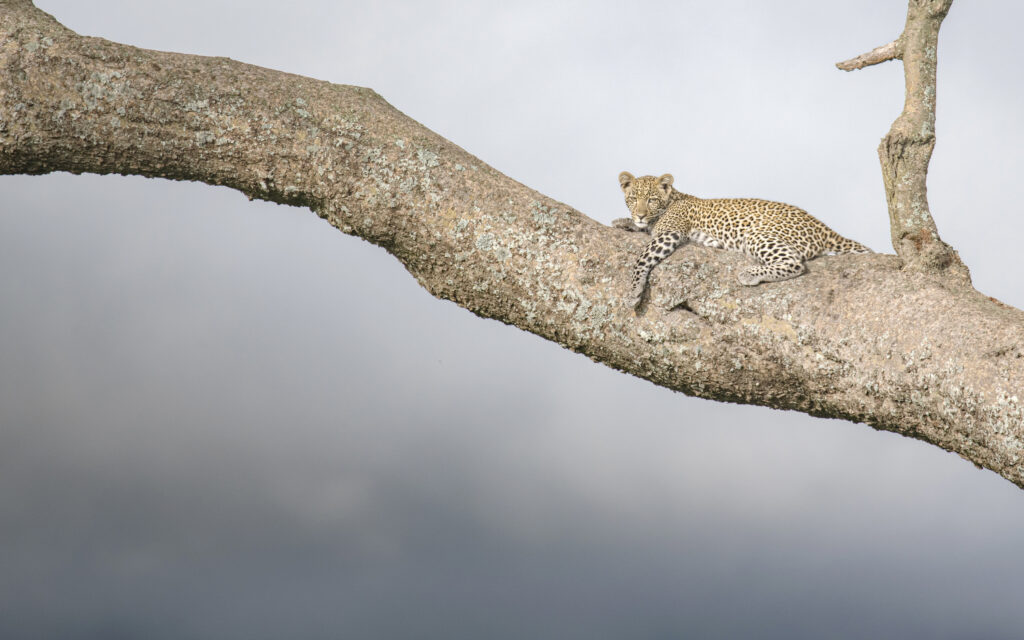
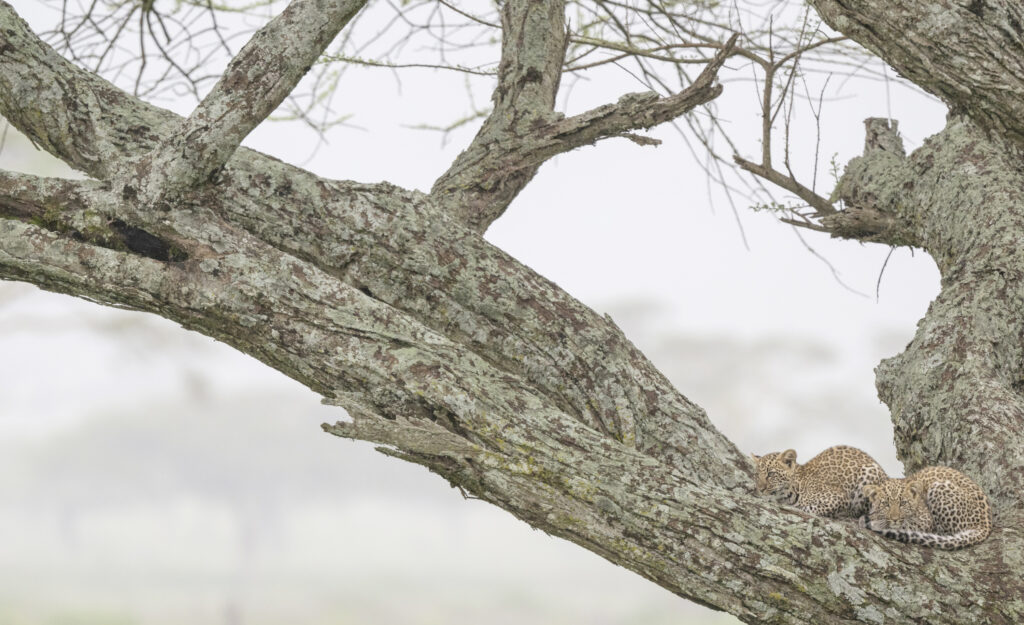
I once spent a frustrating two days in the Serengeti following word-of-mouth whispers from guides and scanning trees like a caffeine-fueled hawk. Finally, we found her—a female leopard lounging in a tree just after a huge rainstorm. The light kissed her fur, and I knew I had a few seconds, maybe, before she vanished.
I photographed wide first (using a 70-200mm), then quickly switched to a 400mm for a tighter frame—heart racing, fingers steady. And then she paused—one paw extended, eyes locked with mine.
Click.
That image is still one of my favorites.
Life in the safari vehicle jungle
The romance of African safaris is real—but so is the challenge of photographing from a vehicle with six other people and three other vehicles pulled up alongside you, all jostling for the same view of a pride of lions.
In the Serengeti, I’ve had to maneuver around awkward angles, elbow-to-elbow with eager tourists wielding tablets (yes, tablets), while guides tried to angle the Land Cruiser just right. Sometimes, your angle is partially blocked by a mirror, a person’s head, or the antenna of another truck three feet away.
Three things help here: Choose the right tour, have patience, and use a bean bag.
Patience lets you wait for the crowd to clear (or for the cats to move on to a less accessible location). A bean bag steadies your long lens against the vehicle’s frame—no tripod is needed, just gravity and good posture. The right tour can be the difference between success and failure. Book private vehicles for photography-focused safaris like we do at Akari Photo Tours if you can. Having the flexibility to position the vehicle for light and composition is a game changer. And, go with someone who understands what life is like on safari, has researched, and has picked locations where an epic photo op doesn’t feel like the beginning of a Formula One race.
When the moment happens
After hours—sometimes days—of waiting, listening, and scanning the bush, when the moment finally arrives, your brain shifts into overdrive.
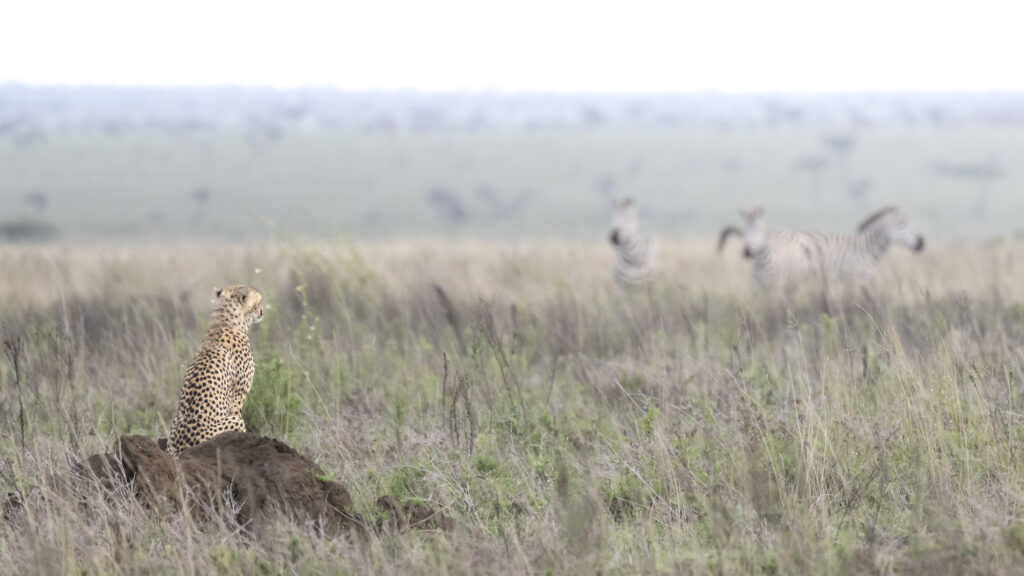
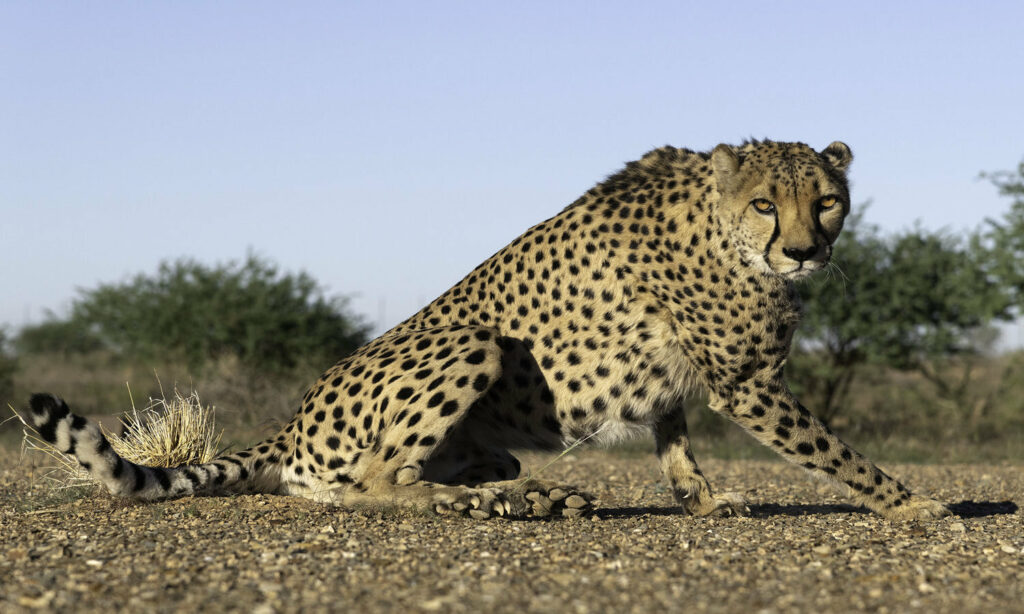
With cheetahs, the action can go from 0 to 100 in seconds. I’ve seen them climb termite mounds, scout a herd, and explode into a blur of speed. That’s when burst mode, fast shutter speeds (1/2500 or faster), and pre-visualizing the chase path become critical.
But the emotion—that’s the part that hits after the shutter stops. After the cat walks off into the grass. Sometimes, I sit with it. Camera down. Breathing returned to normal. Grateful.
Getting inconsistent or inexperienced guides
Not all African safari guides are created equal. Some are incredible trackers but have little understanding of photographic needs. They might park with the light behind the subject, block your view with the vehicle itself, or move on too quickly from a scene you’re still working on. Your frustration will be that you miss photos not because of your mistakes but because the local guide doesn’t understand how to position you for great photography.
Dealing with crowds and conservation
The surge of vehicles that follows a big cat sighting can be disheartening. Sometimes, you arrive early, have a beautiful moment with just your group—and ten minutes later, you’re boxed in by ten vehicles.
It’s a reminder of the balance we walk as photographers and nature lovers. These cats are wild. They deserve respect. A good guide will read the situation and pull back if the crowd becomes too much.
Unrealistic expectations vs. reality
Instagram makes it look like you’ll always have a cheetah posing on termite mounds in golden light every 15 minutes. The reality? Safaris involve a lot of downtime, tracking, and patience. First-timers can get discouraged when the action isn’t nonstop, or conditions aren’t “perfect.”
The frustration: Disappointment or discouragement when the experience doesn’t match their imagined mental highlight reel.
You brought the wrong gear for big cats
One of the most common safari frustrations? Realizing—too late—that you packed the wrong gear.
You did your research, watched videos, and even listened to advice from professional photographers… who may be excellent shooters but not necessarily teachers or used to helping others adapt to photographing from a moving safari vehicle.
So, you show up with a 600mm f/4, no bean bag, or a wide-angle zoom, thinking it’ll “cover everything.” Or worse—just one camera body and a mid-range lens that leaves you stuck when the action kicks off at a distance.
Here are a few gear mistakes I’ve seen in the field… and truth be told, I’ve made these mistakes early in my career:
- 📸 Bringing only a 24-70mm lens—great for landscapes, terrible for that lion 60 feet away.
- 🧱 Lugging a giant prime lens with no flexibility or backup—it’s incredible if the animal lands in the perfect spot. But when it doesn’t? You’re stuck.
- 🔁 Relying on a single camera body and trying to swap lenses mid-safari while a leopard is halfway down a tree. (Trust me, that moment will be long gone by the time your sensor finishes catching dust.)
- 🪵 Forgetting support gear like bean bags or stabilizers for long lenses in a bumpy vehicle.
- 🪫 Underestimating battery drain—especially with big glass and fast burst shooting.

How does Akari Photo Tours help you with these potential safari frustrations?
Let’s face it—getting an incredible image of a big cat in the wild requires more than just a good eye and a fast shutter. You need the right environment, the proper setup, and the right team behind you. That’s where Akari Photo Tours makes all the difference.
✅ Private or limited-occupancy vehicles
We get it—nothing ruins a perfect wildlife image faster than someone else’s elbow in your frame, a stray side mirror stealing the spotlight or cramming too many photographers into a single vehicle just to cut costs. That’s a fast track to frustration.
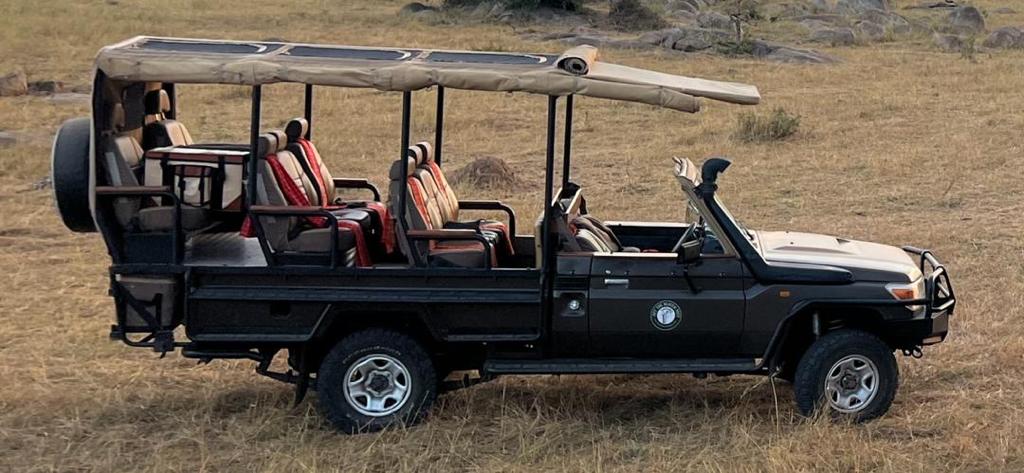
That’s why we limit the number of photographers per vehicle on every safari. You’ll have the room you need for your gear, the flexibility to move freely, and unobstructed views from both sides — because every angle counts when the action happens fast.
Our local guides aren’t just experts in spotting wildlife — they’re trained to think like photographers. They know how to position the vehicle for the best light and background, not just a checklist sighting. They work closely with Akari Photo Tours leaders to ensure you’re in the right spot at the right time to capture the images you’ve always dreamed of.
✅ Experienced photo leaders who put you first
Every Akari Photo Tour safari is led by seasoned photographers who’ve spent decades in the field. We know the sting of missing a once-in-a-lifetime image by just seconds — and we’re here to ensure that doesn’t happen to you. From anticipating animal behavior to dialing in your settings before the action starts, we’ll help you stay one step ahead, not one beat behind.
Your preparation starts long before your boots hit the ground. We’ll connect with you, share sample images from the exact location and species you’ll photograph, and offer one-on-one calls to answer questions and build your confidence. So you’re ready to go from the first dinner to the final farewell.
And here’s our promise: you come first. We’ll never step in front of you to get our photo. Our goal? To help you return home with the portfolio of a lifetime—and the stories to match.
✅ Hand-picked locations at the right time of year
We take the guesswork out of wildlife photography travel. Every Akari Photo Tours safari is meticulously timed to align with peak wildlife activity and the best possible photographic conditions — whether that’s the dry season when big cats linger near dwindling waterholes or calving season when predator-prey interactions are at their most dramatic. We also handpick reserves and conservancies that offer exceptional sightings without the chaos of overcrowded vehicles.
Sure, many tour companies say that, but let me show you what that means behind the scenes.
We’re planning a safari in South Africa… for two years from now—and the work has already started. I’ve spoken with two local contacts to get sample itineraries and pricing and contacted friends who’ve traveled there to get honest, firsthand insights.
I’ve had several calls with the lodge, signed a confidentiality agreement, and scheduled a scouting trip for next year — all at our expense. I’ll spend a week fully immersed in the location: learning about the local wildlife and plant life, testing out safari vehicles, checking the lighting in every photo blind, and sampling the food (tough job, but someone’s gotta do it).
I’ll also capture marketing photos so you’ll know exactly what to expect. By the time I leave, I’ll have everything I need to create an unforgettable photo safari — including local knowledge on how to get you there smoothly from anywhere in the world, with as few travel headaches as possible.
Before a new safari appears on our website, we’ve probably invested 40–80 hours of research and planning—not to mention thousands of dollars in scouting and flights. And that’s just for the new workshops. Some destinations have been fine-tuned over more than a decade of return visits, hands-on experience, and continual improvement.
When you join us, you’ll benefit from years of behind-the-scenes work to ensure your photography safari is seamless, rewarding, and unforgettable—right from day one.
✅ Education, support, and camaraderie
Not sure whether to use f/4 or f/8 at that moment? Want help reviewing your images back at camp? We’re there—teaching, encouraging, and creating a collaborative, friendly environment. You’ll learn new techniques, grow your confidence, and connect with fellow photographers who share your passion.
✅ Pre-trip gear consultations that match your goals and budget
Not everyone needs a $20,000 lens to capture jaw-dropping wildlife photos—and we won’t try to convince you otherwise. Before you even step on the plane, we’ll work with you one-on-one to figure out the best gear for you—based on your goals, experience level, and budget.
From crop-sensor DSLRs to the latest mirrorless setups, we help you fine-tune your kit so you bring what you need—and leave what you don’t. No guesswork. No stress. Just the tools to help you feel confident when that big cat steps into the perfect light. At Akari, we don’t just guide safaris—we guide photographers.
✅ A focus on ethical wildlife viewing
We don’t chase wildlife or crowd them for photos. Our guides are trained to respect the animals’ space, and we actively avoid contributing to the safari “circus” that can erupt around sightings. Your best images will come from calm, respectful observation—not chaos.
Ready to experience an African photo safari for yourself?
If you’ve dreamed of photographing big cats with no distractions, no drama, and all the expert support you need, it’s time to stop scrolling and start packing.
An Akari Photo Tour isn’t just a safari—it’s a photographic experience tailored to help you grow, create, and capture the kind of images you’ve always imagined.
Because when that leopard locks eyes with you… you want to be ready. And we’ll make sure you are.