Learn about types of safari accommodations in East Africa
By Kevin Pepper |
If you’ve never been on safari in East Africa, the words “camp” and “lodge” might trigger the wrong mental images. “Camp” might bring to mind a flimsy tent, cold showers, and eating beans out of a tin. And “lodge” might sound like an outdated log cabin with flickering lights and creaky floors.
Let me assure you—safari lingo is a world unto itself, and reality couldn’t be more different.
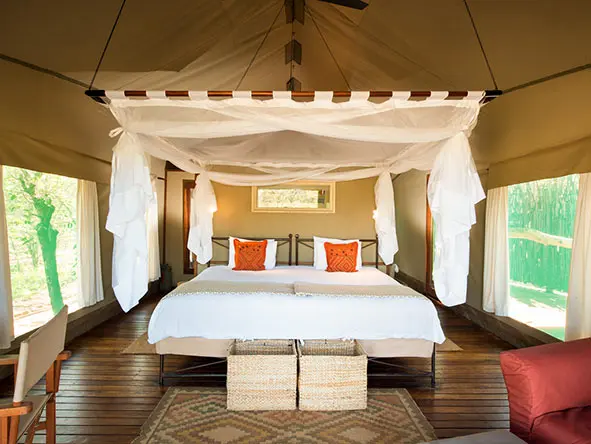
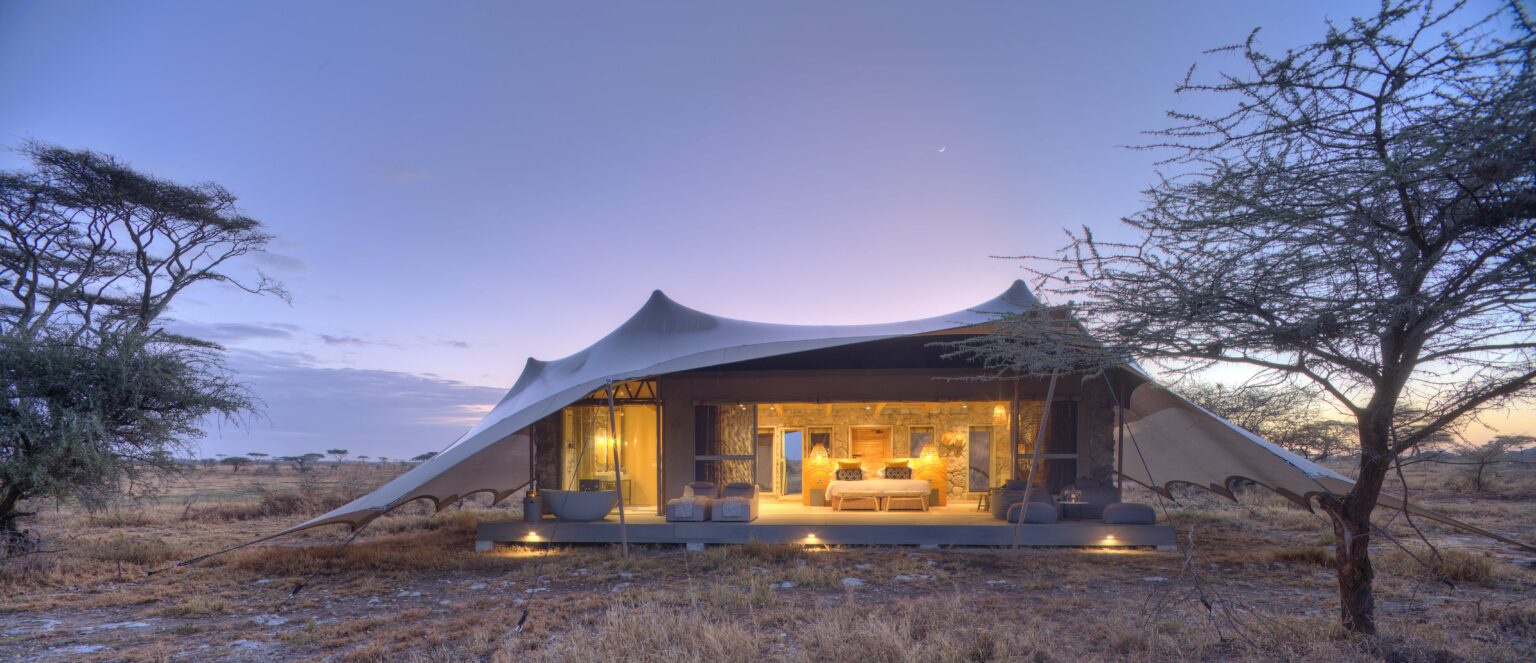
In the safari world, “camp” usually means a luxury-tented experience. Yes, you’ll sleep under canvas, but we’re talking king-sized beds, en-suite bathrooms with flush toilets and hot showers, personal verandas, and meals that rival what you’d find in a boutique hotel. These camps are designed to give you the thrill of being immersed in nature—often just steps away from wildlife—without sacrificing comfort.
On the other hand, “lodges” refer to permanent structures, often built with a blend of local materials and luxury finishes. These can range from mid-range bush lodges to high-end properties with infinity pools, spa treatments, wine cellars, and views of watering holes right from your balcony.
Both offer unique experiences. Camps get you closer to the wild, often in remote areas with fewer tourists. Lodges tend to offer more amenities and can be a great base if you’re staying in one place for several nights. Some safaris even combine both, giving you the full range of what East Africa has to offer.
At Akari Photo Tours, we hand-pick accommodations not just for comfort and service but also for location and access to the best photography opportunities.
Our goal is to keep you close to the action, rested, and ready—with just the right mix of wilderness and luxury.
In the next section, I’ll break down the different types of safari accommodations you might encounter, what they include, and how we choose the best ones for our tours.
Classic Tented Camps
These tented camps are your classic African, “Hemmingway-style” accommodation. Expect big canvas tents furnished with beautiful fittings and ensuite bathrooms. These tents are the closest you can feel to the wild while still in luxurious comfort.
Your sleeping tents are spacious with tiled floors, a large comfortable bed, a sitting area, charging capabilities, running water, heated showers, and a full ensuite bathroom.
The lounge tent in these camps refers to the communal area where you’ll find stunning views, comfortable couches, delicious food, books, and games. In the lounge tent, you can chill out and enjoy evening drinks while watching the sunset. It’s also where we conduct our image reviews at the end of the day.
The dining areas are spacious, and the three-course meals are delicious and unexpectedly decadent.
Permanent Tented Camps
These camps will not move from season to season and are in great locations year-round. When staying at a permanent camp, you usually have larger rooms, indoor and outdoor bathroom options, heated showers, and some even have bidets. They will also have more space in the lounge area and may have amenities like a spa and a pool. The dining areas are spacious, and the three-course meals are fantastic.
Mobile Tented Camps
These small tented camps are semi-permanent or move season to season to stay close to events like the Great Migration. They might sound simple, but these more intimate camps are perfect for an exclusive safari feel and a proper safari bush experience. Your sleeping tents are very comfortable and have a sitting area, charging capabilities, and an en-suite bathroom.
The lounge area is comfortable and spacious, with charging capabilities and a dining area with fantastic meals.
Safari Lodges
Safari lodges are usually more permanent structures built into the surroundings and have a more homely feel. Think of Africa-themed resorts. They have more amenities like oversized bathrooms, larger dining areas, and indoor fireplaces. Lodges are a step up in comfort and luxury while keeping the feeling of being in the wild.
My Advice After Years in the Field
Since 2013, I’ve led photography workshops across East Africa, staying in everything from remote bush camps with canvas walls to high-end lodges that overlook migration routes. I’ve experienced the crowded hotspots, the hidden gems, the overhyped, and the truly exceptional. That firsthand knowledge is what guides every decision we make at Akari Photo Tours.
When we design our safaris, we don’t just look at a map—we think like photographers. We prioritize locations that put us close to the action at the right time of year, while also making sure our accommodations offer comfort, safety, and a little room to breathe after a long day in the field. It’s a fine balance between proximity to wildlife, personalized service, and a level of comfort that lets you recharge, review your images, and be ready for the next shoot.
Our workshops are kept intentionally small, so you’re not just another face in a crowded vehicle. You’ll have space for your gear, a guide who knows your shooting style, and accommodations that cater to early departures and late returns.
And whether you join us on an Akari trip or plan your own adventure, we’re always happy to share recommendations on where to go and where to stay. It’s not just about the beds—it’s about the experience you’ll wake up to each day. If you are looking for advice on African safari accommodation or want to start planning your safari, please get in touch with me. You can also check out our current list of African safaris.