Mongolian eagle hunters and their Golden Eagles
By Kevin Pepper |
In 2012, I found myself journeying through the expansive Mongolian countryside, heading toward the majestic foothills of the Altai mountains. The modern world seemed to fade away as we traveled along roads with nomadic families emerging from their winter refuges. Vehicles gave way to horses, and ger tents replaced homes, transporting me to a bygone era without a time-traveling DeLorean from “Back to the Future.”
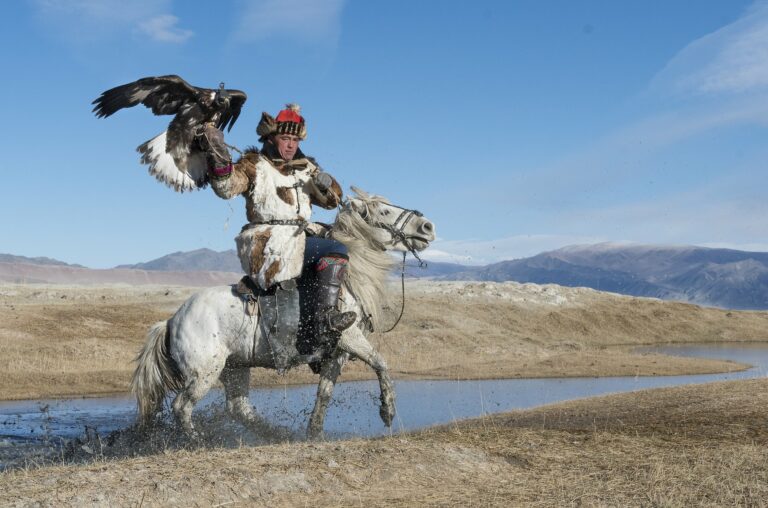
My destination was a family of eagle hunters deeply rooted in the ancient tradition of eagle falconry on horseback. Upon arrival, Buybelot, the head of this remarkable family, welcomed me. I marveled at their bond as I watched him work harmoniously with his majestic golden eagle. How could such a connection form between a wild bird, taken shortly after birth, and a human hunter? Was it a skill they honed together or a blend of the eagle’s instincts and the hunter’s training?
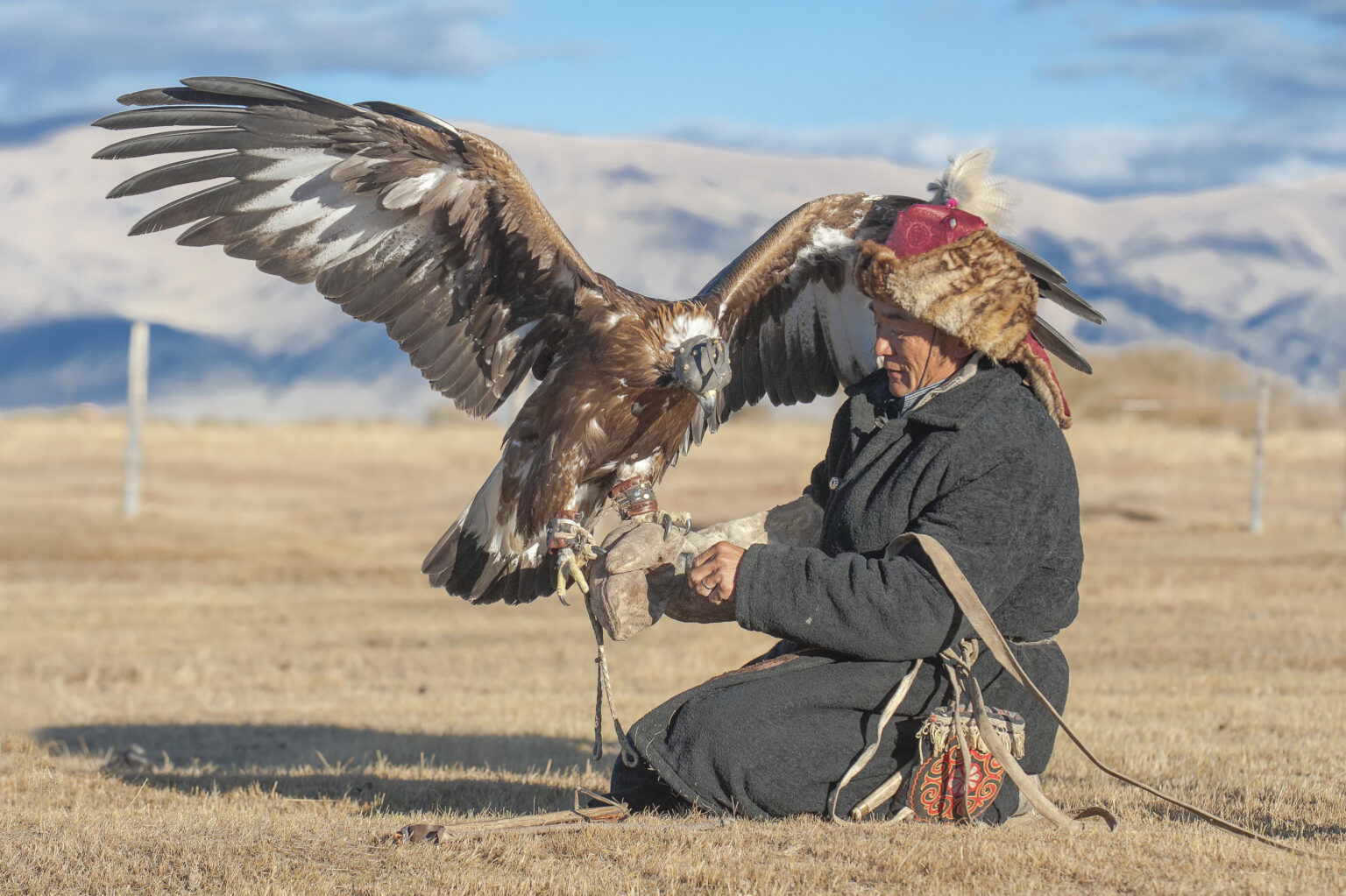
Living with this Kazakh family in Western Mongolia, I observed countless moments of profound connection between man and bird. It became clear that this bond did not stem from the eagle’s need to hunt or from training alone. It was forged from a deep, mutual respect. The man would command, the eagle would listen, hunting with instinct honed over centuries, and then patiently wait for the hunter to retrieve the prey from its talons.
In this timeless dance of nature and tradition, I witnessed the extraordinary relationship that can exist between humans and animals, a testament to the enduring power of respect and harmony in our world.
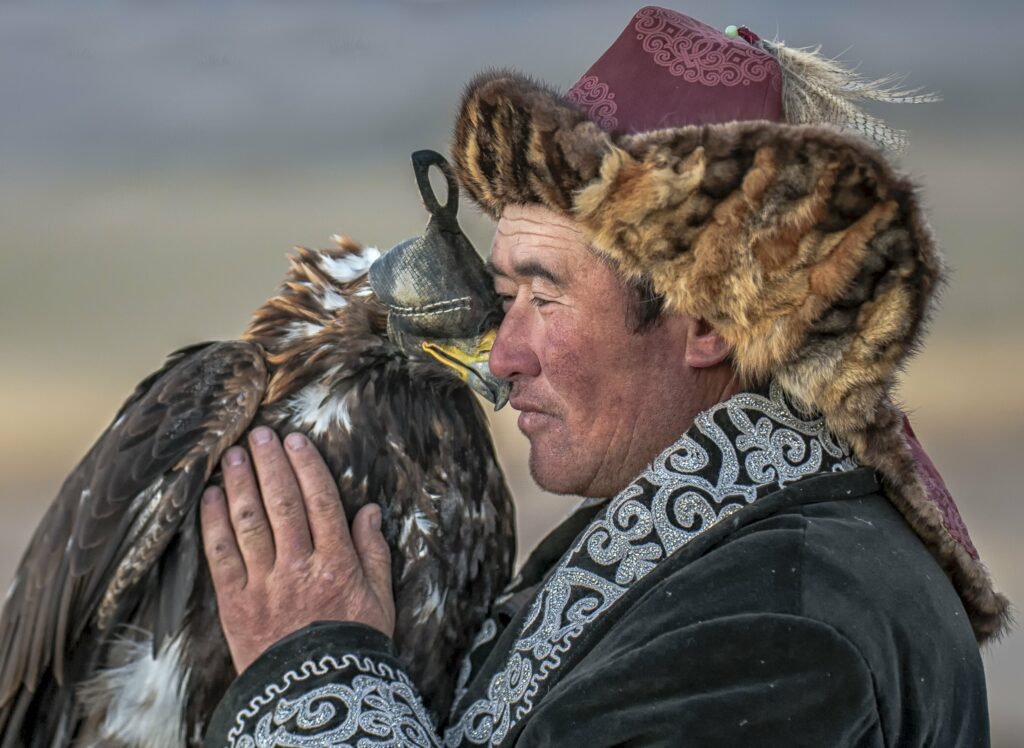
That tender moment between an eagle and a man transformed my trip into something far more profound than a simple cultural visit. It became an eye-opening revelation that two beings, typically competing for survival, can join forces to create a better life for both.
Over a decade has passed since that first journey. I’ve returned to Mongolia more than twenty times. What started as an exploration of the unknown has evolved into a heartfelt homecoming, with strangers turning into cherished friends.
I want to share the incredible world of Mongolia’s eagle hunters and invite you to experience this remarkable journey through my eyes, offering insights and inspiration from a land where tradition and nature intertwine in the most extraordinary ways.
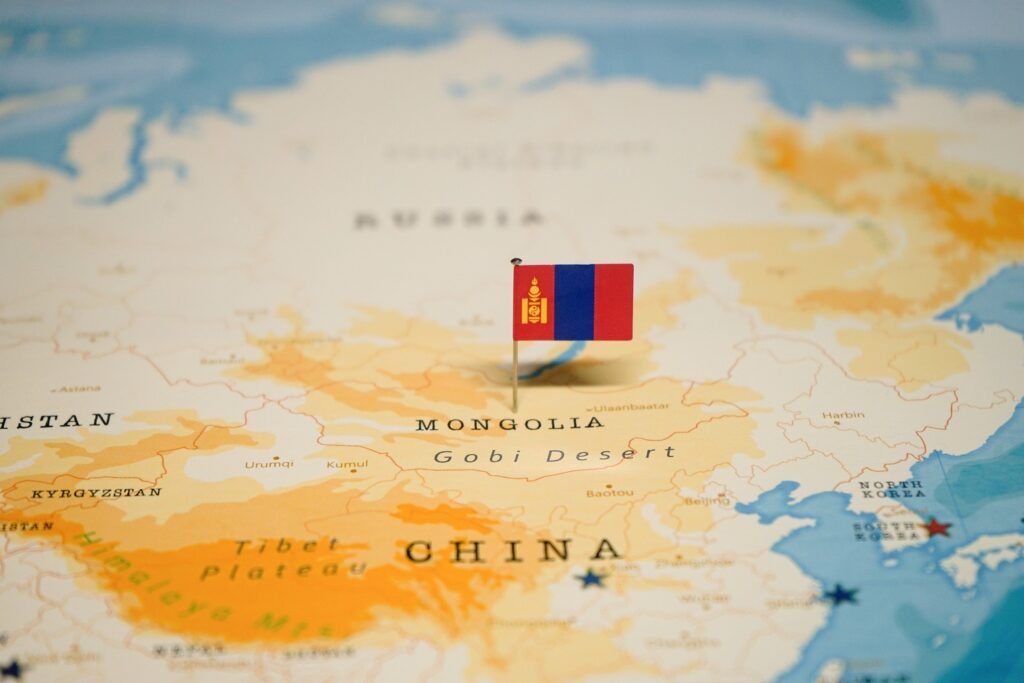
Introduction to Mongolia
Mongolia, a land of vast steppes and rugged mountains, has been home to a unique tradition stretching over a thousand years—the art of eagle hunting. Once essential for survival, this tradition has evolved into a revered cultural practice showcasing the deep bond between humans and the Golden Eagle.
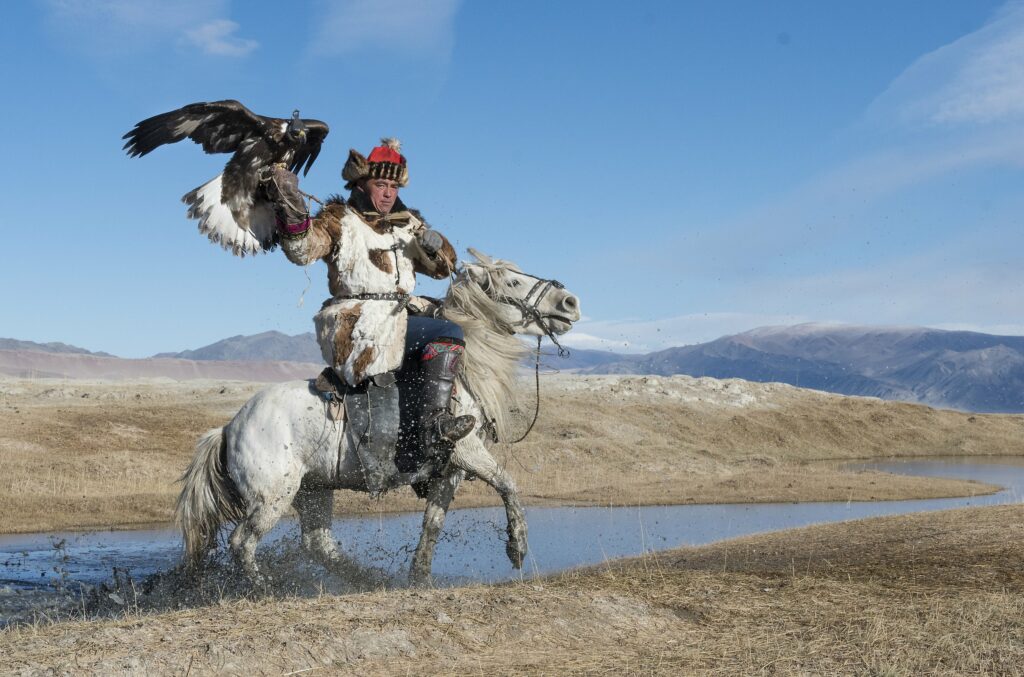
The legacy of eagle hunting in Mongolia
Eagle hunting in Mongolia traces its roots to the migrating nomadic tribes of Central Asia, particularly the Kazakhs and Kyrgyz.
These migrations occurred over centuries. Political upheavals and the pursuit of better pasturelands for livestock drove them. The Turkic nomadic tribes traditionally practiced falconry and hunting with eagles as part of their lifestyle. This skill and tradition were passed down through generations and adapted to different environments as they migrated.
Over time, some of these Turkic tribes settled in western Mongolia, particularly in the Altai Mountains and Bayan-Ölgii Province. Here, they continued their nomadic way of life, herding livestock and adapting their hunting practices to the local fauna.
Eagle hunting was, and to this day, about acquiring food and fur, demonstrating skill, and establishing a deep connection with nature. Golden Eagles, revered for their strength and keen eyesight, were prized hunting companions. The eagle hunting tradition exemplified the resourcefulness and adaptability of the nomadic peoples of Mongolia, embodying the spirit of survival and cooperation with the natural world.
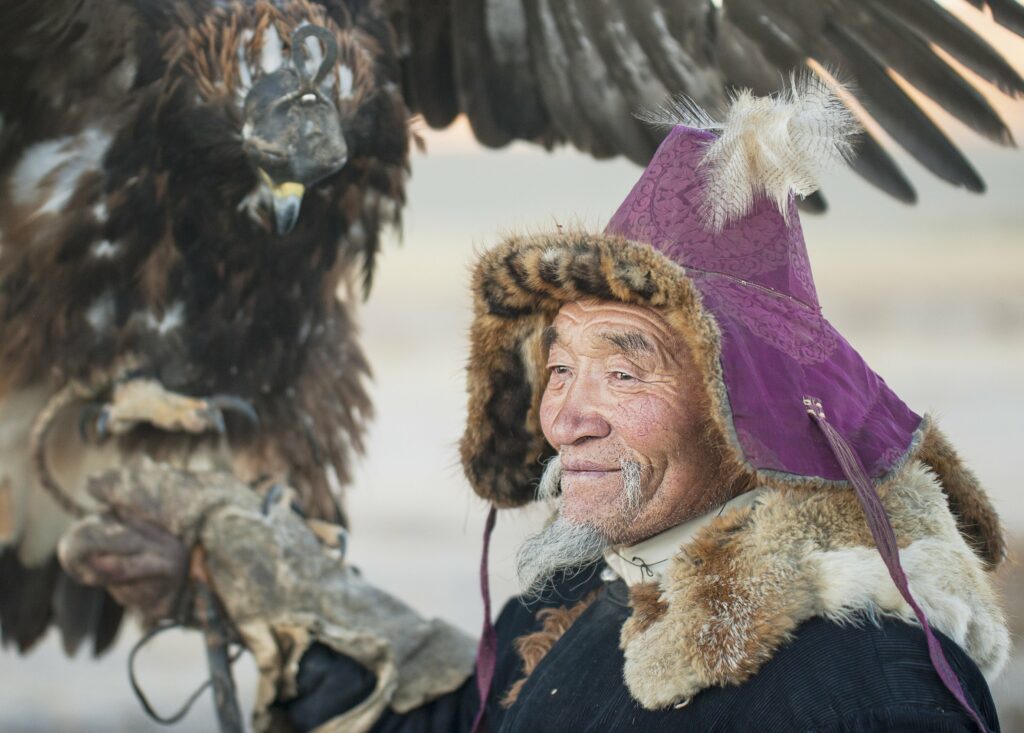
The Golden Eagle
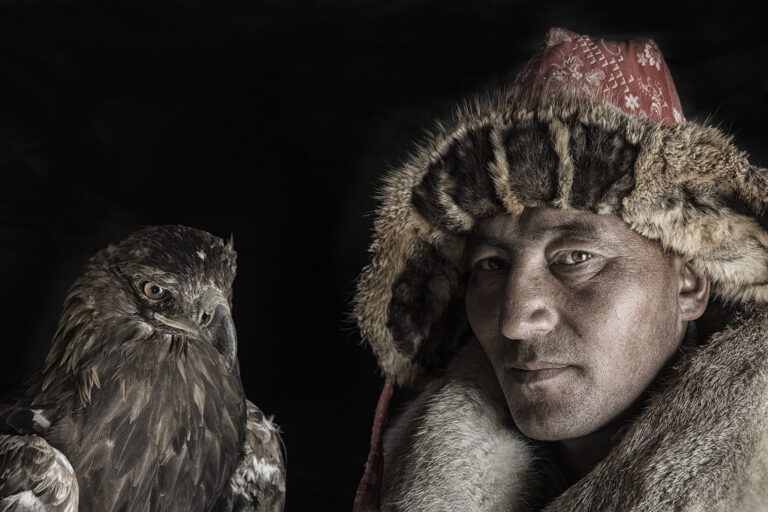
The Golden Eagle (Aquila chrysaetos) is central to Mongolia’s eagle-hunting tradition. Revered for its strength, keen eyesight, and majestic appearance, the Golden Eagle is the largest bird of prey found in the region. Eagle hunters meticulously train their eagles from a young age, forging a unique partnership built on trust and mutual respect. The bond between hunter and eagle is foundational to the success of eagle-hunting expeditions.
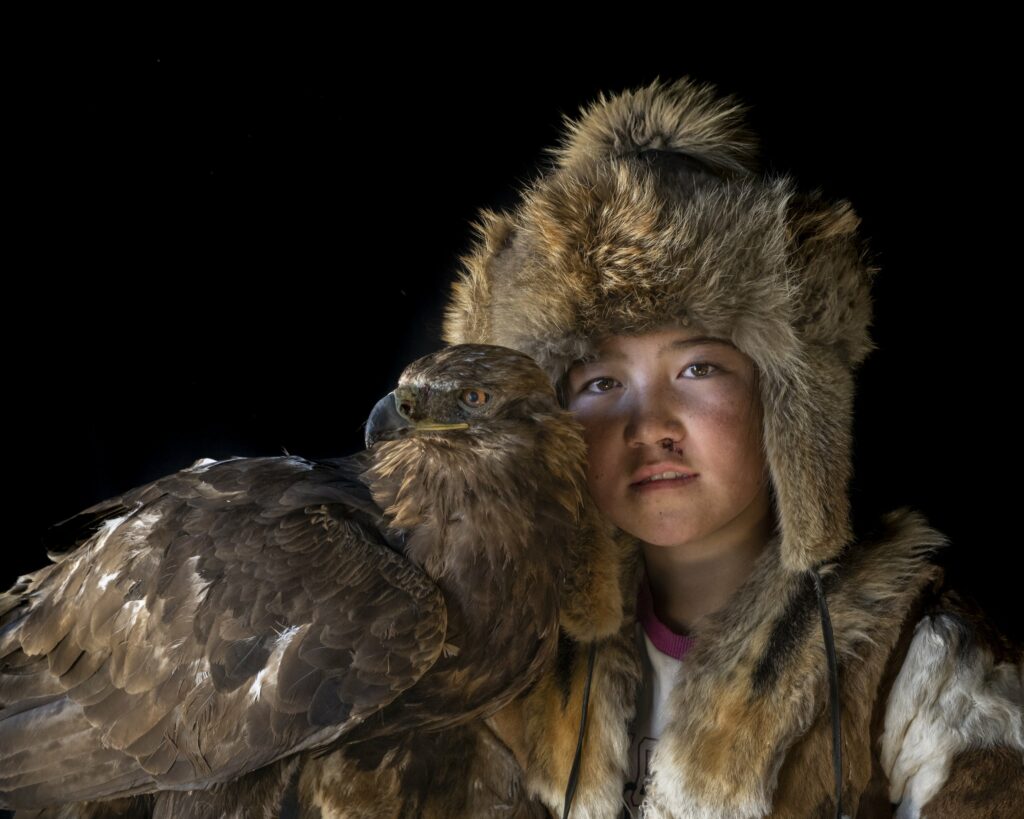
The selection and training of a Golden Eagle are intricate processes that require patience and skill. Typically, eagle hunters capture young female eagles from nests high in the mountains, carefully selecting individuals with the right temperament and physical attributes. The training involves acclimating the eagle to human presence, teaching it to perch on the hunter’s arm, and gradually introducing it to hunting techniques. This mutual training period strengthens the bond between hunter and eagle, establishing a practical and meaningful partnership that lasts years.
Females are taken from their nests before they fledge. They will remain with the eagle hunter for 9-12 years. At this time, the eagle is released back into the wild to live out the rest of its life.
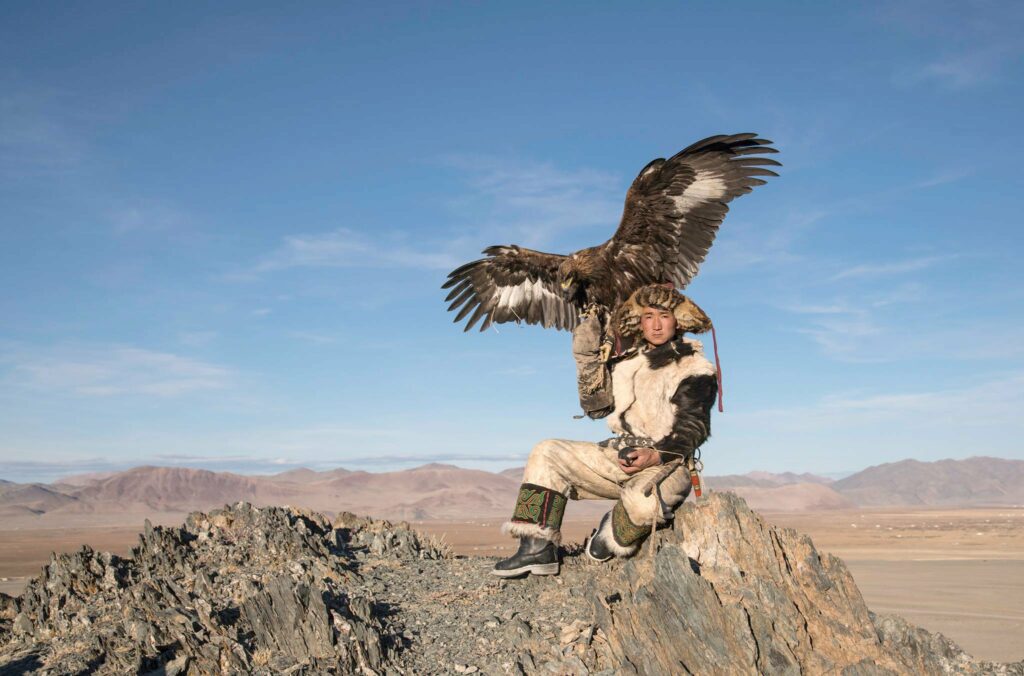
On average, the wingspan of a Golden Eagle ranges from about 1.8 to 2.34 meters (6 to 7.7 feet). The eagles can weigh between 3.6 and 6.35 kilograms (8 to 14 pounds). However, larger females can weigh even more, sometimes reaching up to around 7 kilograms (15.4 pounds) or slightly more. Their weight can vary depending on age, diet, and habitat.
Where eagle hunters live
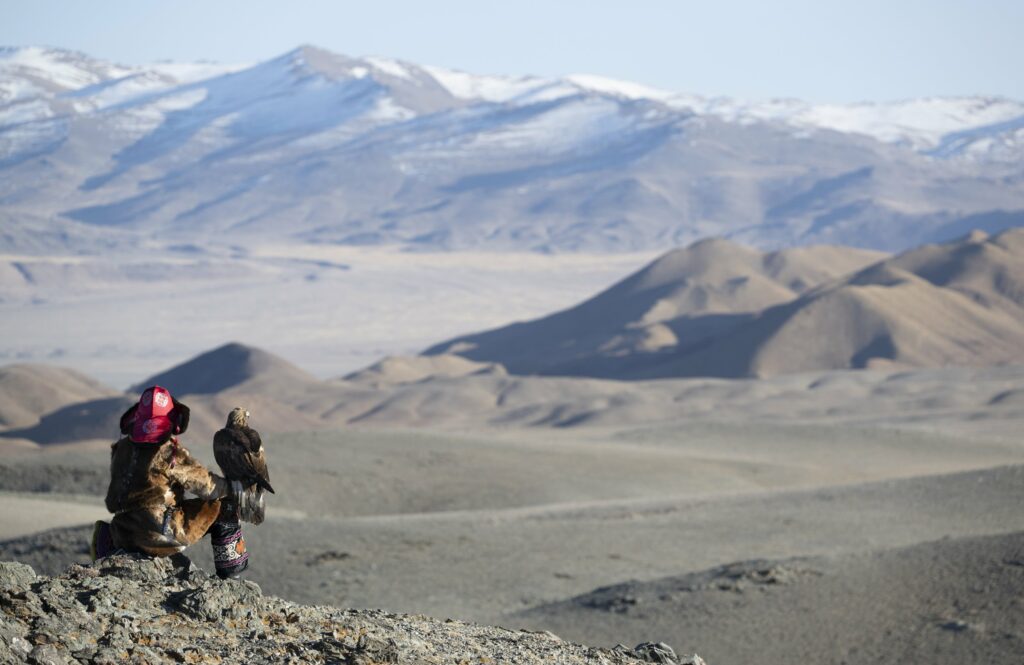
Eagle hunters in Mongolia are predominantly found in the western part of the country, particularly in the Altai Mountains region and surrounding areas. Here are some specific locations and regions where you can see eagle hunters practicing their ancient craft:
- Bayan-Ölgii Province: This province, located in the far west of Mongolia, is known as the heartland of eagle hunting. Bayan-Ölgii is home to a significant population of Kazakh nomads who have practiced eagle hunting for centuries. The rugged terrain and vast open spaces of Bayan-Ölgii provide ideal conditions for eagle hunting expeditions.
- Sagsai and Ulgii Districts: Within Bayan-Ölgii Province, the districts of Sagsai and Ulgii are renowned for their concentration of eagle hunters. Local families often pass down the tradition of eagle hunting from generation to generation, with many skilled hunters residing in these areas.
- Altai Tavan Bogd National Park: Situated near the borders of Mongolia, China, and Russia, Altai Tavan Bogd National Park is a scenic area within Bayan-Ölgii Province that attracts tourists interested in experiencing eagle hunting and nomadic culture. Eagle hunters often conduct demonstrations and participate in cultural events here.
- Other Western Provinces: While Bayan-Ölgii Province is the primary region associated with eagle hunting, you may also encounter eagle hunters in other western provinces of Mongolia, such as Khovd and Zavkhan. These regions share similar landscapes and cultural traditions with Bayan-Ölgii.
Eagle hunter clothing
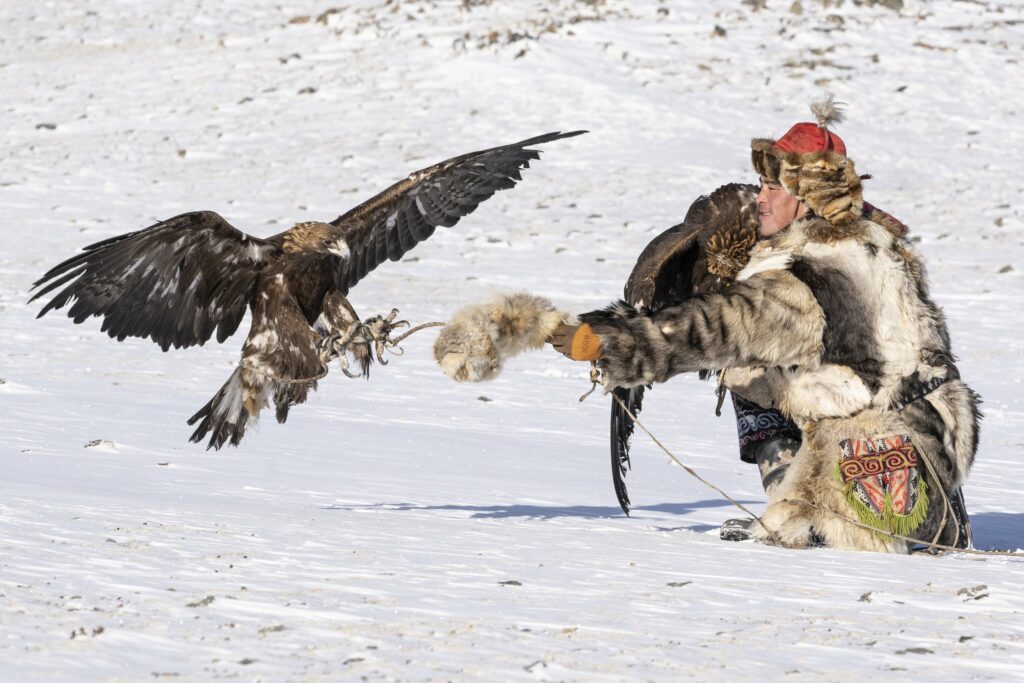
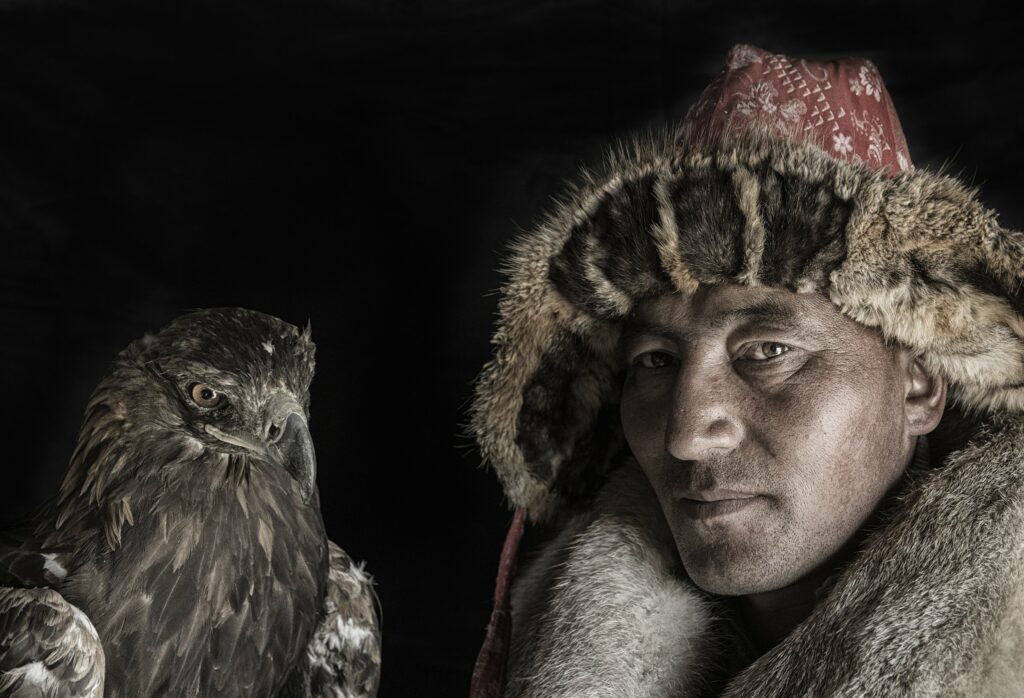
The eagle hunters’ red hat is more than a fashion statement; it is a traditional hat worn by eagle hunters, particularly among the Kazakh people of Central Asia. The bright-colored hat worn by eagle hunters holds cultural significance and serves practical purposes. Here are some key points about the eagle hunters’ hat:
- Cultural symbolism: In Kazakh culture, red is a significant color representing bravery, strength, and vitality. Therefore, the eagle hunter’s red hat is not just a piece of clothing but a symbol of the hunter’s prowess and courage.
- Practical use: The hat is typically made from fox fur and often has ear flaps lined with fur to provide warmth in the harsh, cold climates where eagle hunting occurs. It’s designed to withstand the biting winds of the mountains and steppes.
- Distinctive design: The hat’s design can vary, but it commonly includes elements like a pointed crown and ear flaps that can be tied under the chin to keep it secure in windy conditions. Some hats also have decorative elements such as tassels or beads.
- Ceremonial role: In addition to everyday use, the red hat may have ceremonial significance, worn during important events or rituals within the eagle hunting community.
- Cultural heritage: Eagle hunting and its associated attire are deeply embedded in the cultural heritage of the region’s Kazakh people and other nomadic groups. The red hat and other traditional garments reflect a way of life passed down through generations.
- Thus, the eagle hunters’ red hat is more than just a piece of clothing; it represents a connection to nature, tradition, and the unique lifestyle of the nomadic peoples of Central Asia. It’s a powerful symbol of identity and resilience in a challenging environment.
Other Traditional Clothing – Traditional eagle hunter clothing among the Kazakh people and other nomadic communities in Central Asia is designed to provide warmth, protection, and functionality in harsh mountainous and steppe environments. Here are some key elements of traditional eagle hunter clothing:
- Deel (or Chapan)—The deel is a long, loose-fitting robe worn by both men and women. It is typically made from thick wool or felt to provide insulation against the cold. Deels often have a sash or belt around the waist to secure the garment and provide a fitted look. The design of the deel can vary by region, with some featuring elaborate embroidery or patterns.
- Fur-lined coats and vests – In colder climates, eagle hunters wear coats and vests lined with fur, such as fox, wolf, or sheepskin, to provide extra warmth. Depending on the weather, these garments are often worn over the deel and can be removed or added as needed.
- Boots – Eagle hunters wear sturdy leather boots with thick soles to navigate rugged terrain and protect against cold and moisture. The boots may be lined with fur or wool for added insulation.
- Traditional jewelry, such as silver bracelets, rings, and necklaces, may be worn as adornments and symbols of status within the community.
The overall design of eagle hunter clothing emphasizes functionality and durability. Garments are often made from natural materials that can withstand the demands of a nomadic lifestyle. Each element of traditional eagle hunter clothing reflects the cultural heritage and nomadic traditions of the Kazakh people. The attire is practical and symbolic of the close relationship between humans and nature in these rugged landscapes.
The clothing worn by eagle hunters is a testament to their adaptation to and mastery of the challenging environments they inhabit. It embodies a lifestyle deeply rooted in tradition and shaped by the necessity of surviving and thriving in the wilderness.
The life of an eagle hunter
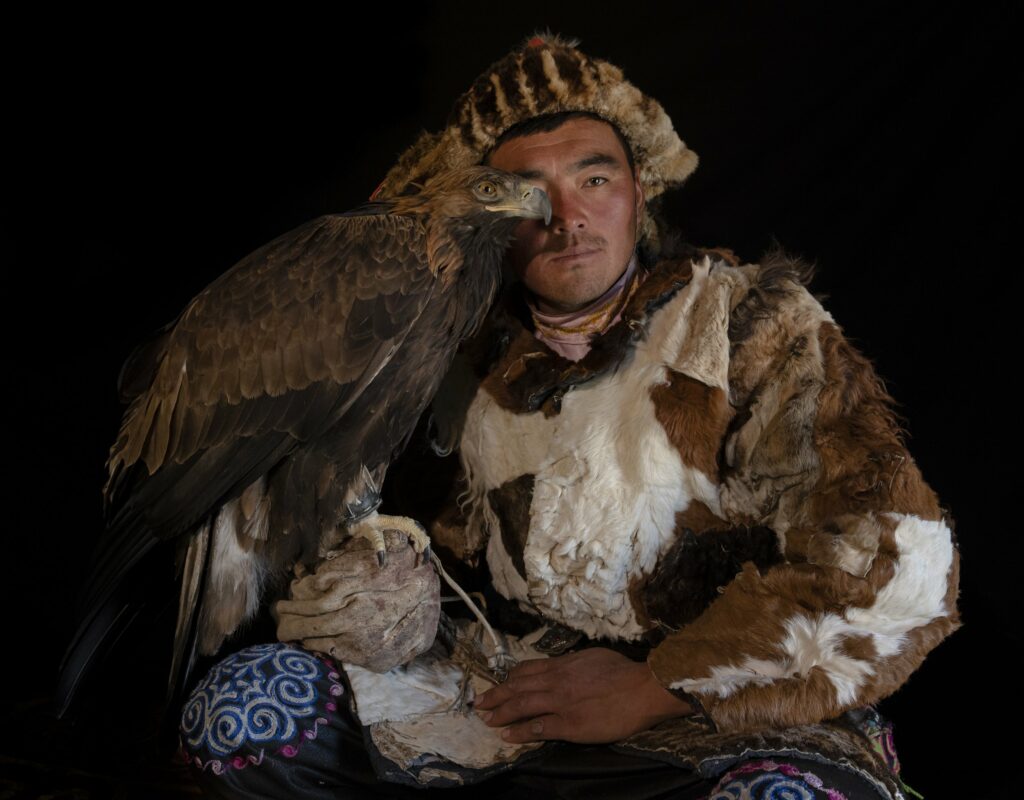
Becoming an eagle hunter is a rigorous and lifelong journey. Young boys and girls often start their training under the mentorship of seasoned hunters, learning the skills needed to handle, train, and hunt with eagles. This training involves understanding eagle behavior, mastering falconry techniques, and cultivating patience and dedication. As they grow, eagle hunters become respected figures in their communities, embodying the spirit of Mongolia’s nomadic heritage.
The life of an eagle hunter is defined by a profound connection to nature and deep respect for the Golden Eagle. Hunters develop keen observational skills, learning to read the landscape and anticipate the behavior of their prey. They gain specialized knowledge of eagle behavior, understanding the unique characteristics of their birds. Eagle hunters are not merely practitioners of a craft; they are stewards of an ancient tradition, preserving a way of life that reflects the resilience and ingenuity of Mongolia’s nomadic people.
The art of eagle hunting
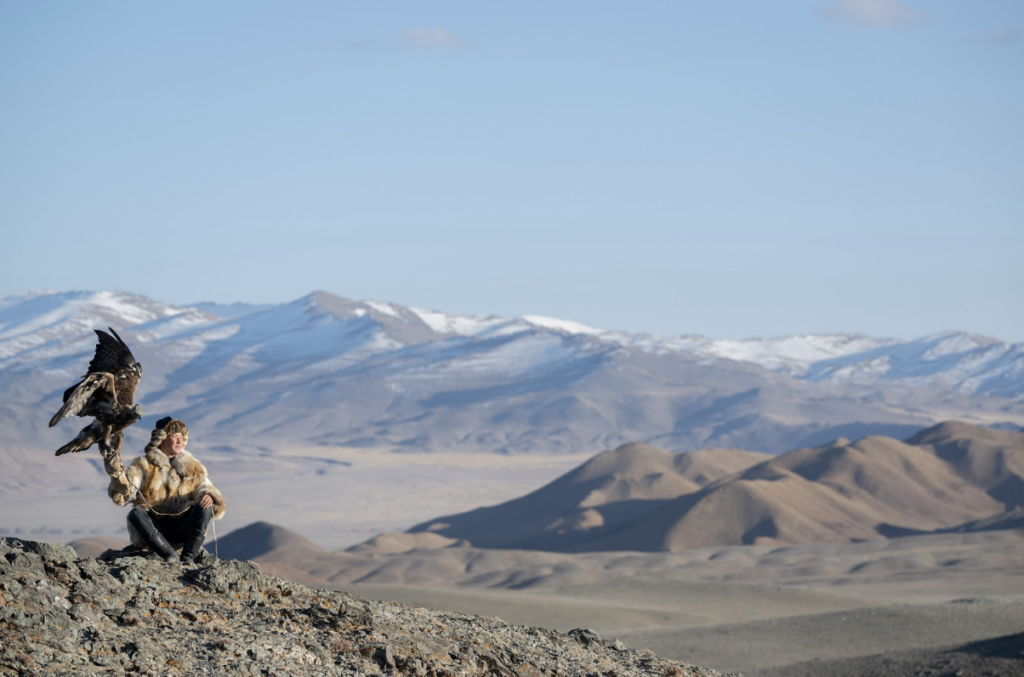
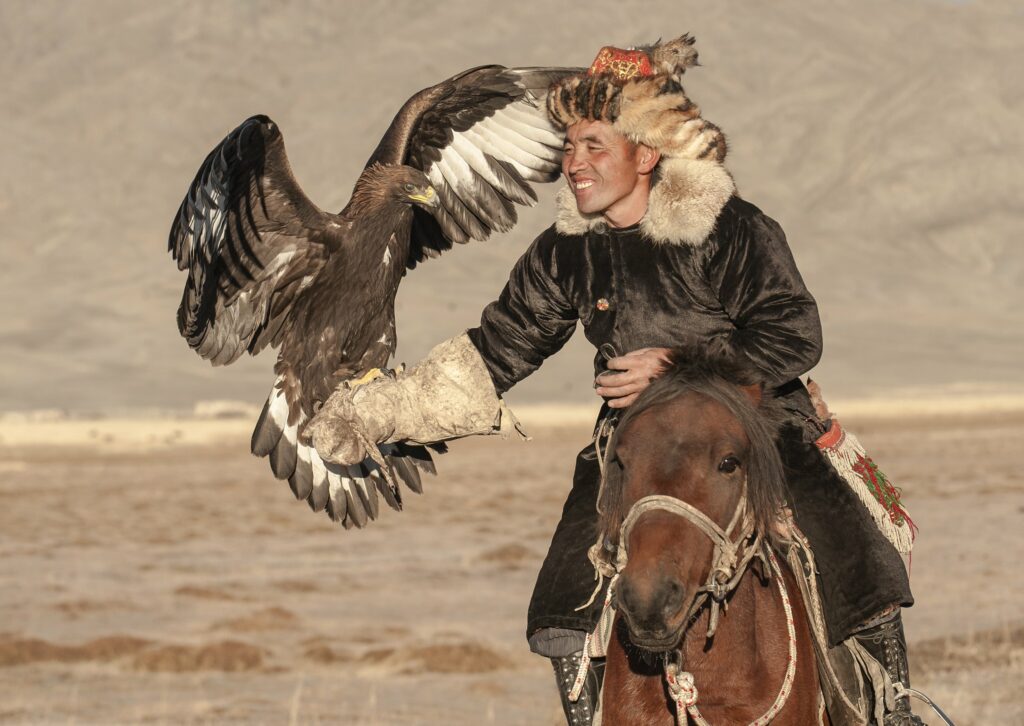
Eagle hunting is a masterful craft that demands skillful technique and deep cultural wisdom. Hunters don specially designed leather gauntlets to protect their arms from the eagle’s formidable talons. They use a variety of calls and signals to communicate with their eagles during hunts, orchestrating intricate strategies to locate and capture prey. Each hunting expedition is a testament to the profound harmony between hunter and eagle, showcasing the culmination of years of dedication and tradition.
The art of eagle hunting transcends the practical aspects of capturing prey; it embodies a holistic understanding of the environment and the interdependence of all species. Hunters navigate vast landscapes, often on horseback, using their intimate knowledge of the terrain and animal behavior to maximize their success. Each hunt is a dynamic interaction between hunter, eagle, and nature—a dance of skill and intuition that exemplifies the mastery of a timeless tradition.
In Mongolia’s vast steppes, eagle hunting becomes a symphony of life, where the bond between human and bird is forged in the crucible of nature’s challenges. This ancient practice is not merely about survival; it celebrates the intricate relationship between man and the natural world. Each moment in the hunt reflects the resilience, ingenuity, and spirit of Mongolia’s nomadic heritage, inspiring awe and reverence for a way of life that has endured through the ages.
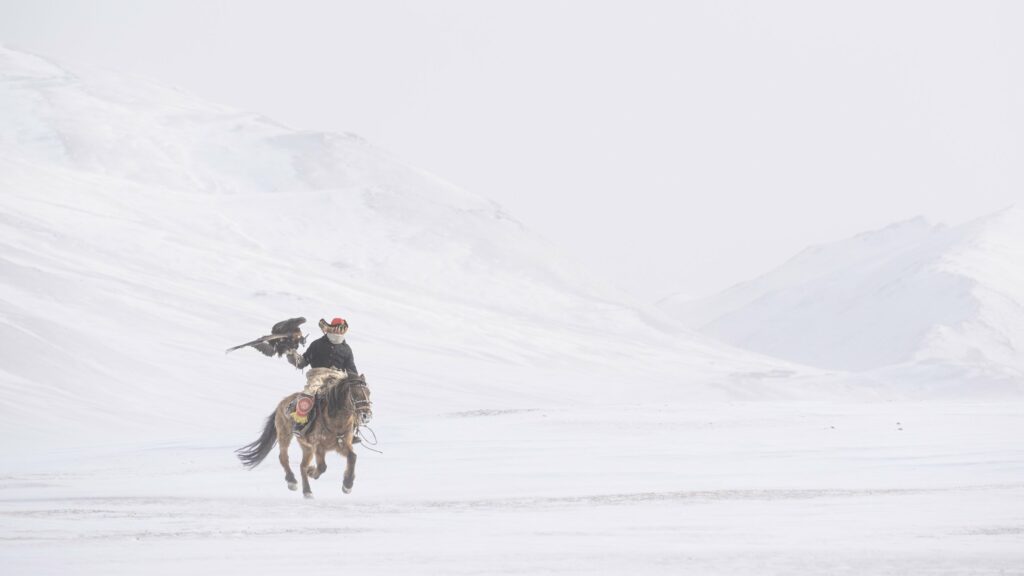
The eagle hunting seasons in Mongolia
Eagle hunting in Mongolia typically takes place during the winter months. This timeframe aligns with the natural hunting season of Golden Eagles and the behavior of their prey species. Here is a breakdown of the hunting season for eagle hunters in Mongolia.
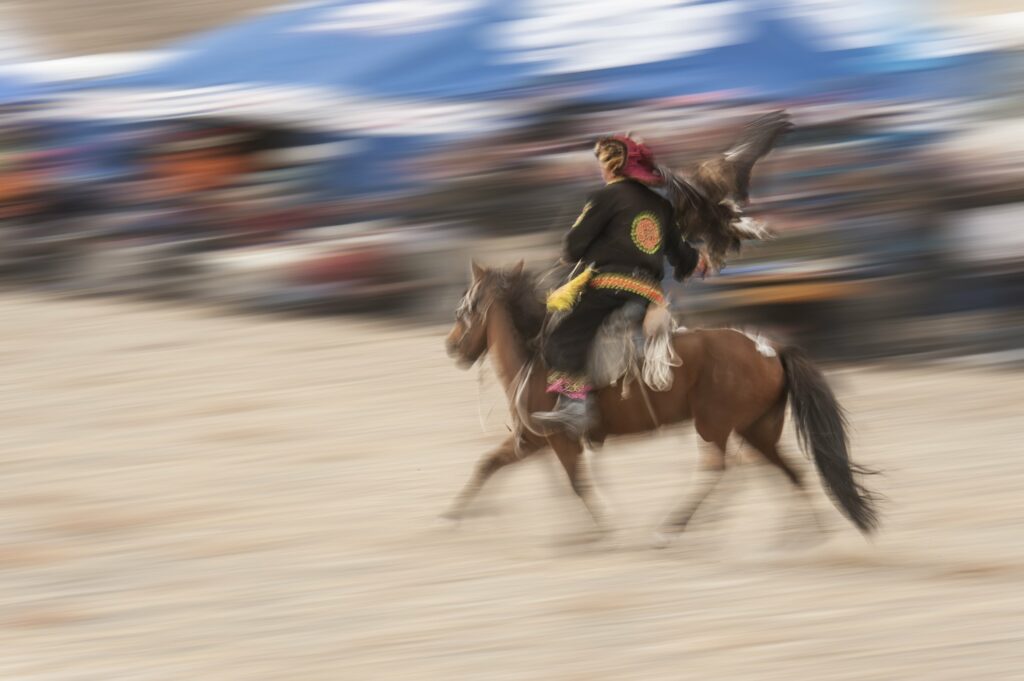
Late Autumn (October–November)
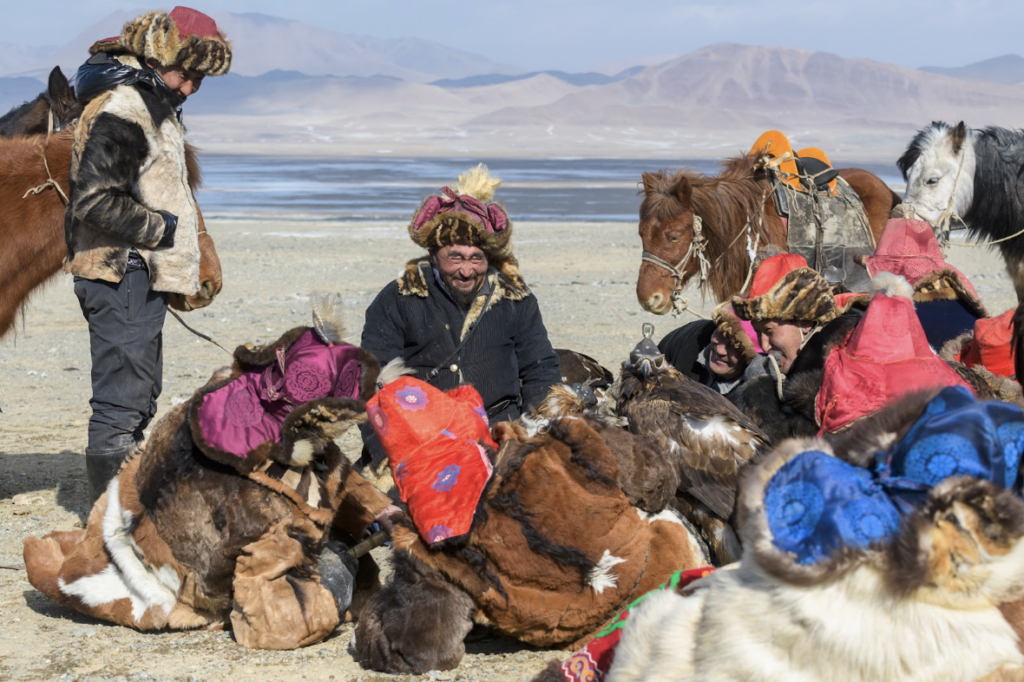
Eagle hunters prepare for the upcoming hunting season by training and conditioning their eagles. This period involves strengthening the bond between the hunter and the eagle and practicing essential hunting techniques. This is also the time of festivals for the eagle hunters. The Eagle Hunter Festival is a traditional event held annually in Bayan-Ölgii, a province in western Mongolia. This festival celebrates the ancient art of eagle hunting. During the Eagle Hunter Festival, participants showcase their skills in contests and competitions centered around eagle hunting.
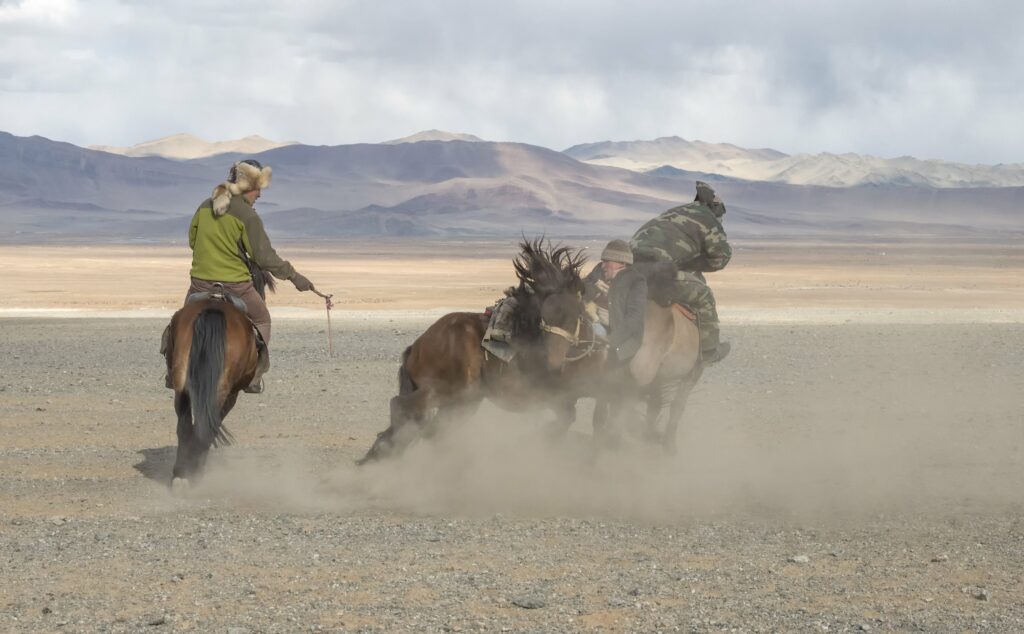
These contests typically include:
- Eagle calling: Participants demonstrate their ability to call their eagles from a distance and have them land on their arms.
- Eagle training and handling: Eagle hunters display their techniques for training and handling these majestic birds of prey.
- Traditional costume parade: Competitors wear traditional Kazakh attire, often adorned with intricate embroidery and jewelry.
- Horse riding and games: Alongside eagle hunting, horse riding is essential for nomadic life, and horseback competitions are typical during the festival.
- Cultural performances: The festival often includes performances of traditional Kazakh music, dance, and other cultural displays.
- Feasting and celebration: Attendees can enjoy local cuisine and immerse themselves in the nomadic lifestyle.
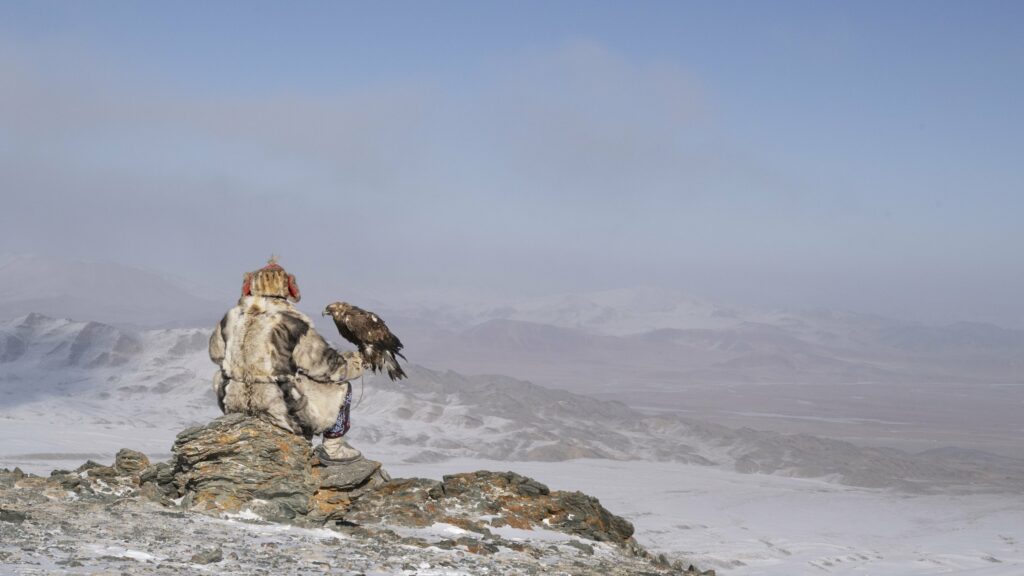
Winter (December–February)
The peak of the eagle hunting season occurs during the winter months when temperatures drop, and the landscape is covered in snow. This time of year is ideal for hunting because:
- Prey species such as foxes, hares, and marmots are more visible against the white snow, making them easier for eagles to spot.
- Eagles are more active during colder weather, which enhances their hunting abilities and stamina.
- The harsh winter conditions challenge prey animals, making them more vulnerable to eagle attacks.
Early Spring (March–April)
As winter transitions into spring, the hunting season gradually ends. Eagle hunters may continue to practice and train with their eagles during this time, but their focus shifts away from regular hunting expeditions. They focus more on moving their herds and families to their summer homes in the valleys of the Altai Mountain range.
Rituals and ceremonies of eagle hunters
Eagle hunting is steeped in many rituals celebrating the spiritual connection between humans and nature.
Before each hunting season, eagle hunters participate in ceremonies that invoke blessings for a successful hunt and ensure the safety of both hunters and eagles. These ceremonies often include offerings to the spirits and prayers for prosperity and good fortune. The rituals surrounding eagle hunting are a testament to Mongolian nomads’ profound reverence for their environment.
A more culturally significant ceremony is the release of a Golden Eagle back into the wild once it reaches the age of 9-12. This ritual reflects the deep respect and reverence that eagle hunters have for their eagles and symbolizes the completion of a successful hunting season. The ceremony also honors the eagle’s role as a companion and provider while acknowledging its intrinsic connection to the natural world.
Before the ceremony, the eagle hunters prepare themselves, their family, and the eagle for the event. This involves cleaning and decorating traditional attire, such as deel (Mongolian robe), and gathering ceremonial objects, such as offerings and symbolic items like eagle feathers.
The ceremony typically involves the participation of the local community, including family members, fellow eagle hunters, and sometimes neighbors or villagers. The gathering may occur in a communal or open area that is significant to the community.
The ceremony begins with opening rituals that may include prayers, invocations, or offerings to the spirits of nature and ancestors. These rituals seek blessings for the eagle’s journey back to the wild and express gratitude for the successful partnership between the eagle and the hunter.
The hunter approaches the eagle, which may be perched on a unique stand or held on the hunter’s arm. The hunter expresses gratitude and says farewell to the eagle, acknowledging its strength, companionship, and contribution to the hunter’s life and livelihood. The hunter may also offer gifts or symbolic items to the eagle as a gesture of appreciation.
The ceremony’s climax is the eagle’s release back into the wild. The hunter carefully removes the jesses (leather straps) from the eagle’s legs, symbolizing the end of the hunting partnership. The eagle is then encouraged to take flight, signifying its return to freedom and the natural world.
After the eagle is released, the community may celebrate with music, dance, and shared meals. The ceremony is an opportunity to reflect on nature’s cycle, the interconnectedness of all beings, and the importance of preserving traditions that honor wildlife and the environment.
The emotional ceremony concludes with closing blessings and expressions of hope for the eagle’s well-being in its natural habitat. Participants may offer final prayers or words of encouragement as they witness the eagle’s graceful departure.
Rituals and ceremonies are integral to the eagle hunting tradition, reinforcing the cultural significance of this ancient practice. By honoring the spirits of the land and seeking divine protection, eagle hunters demonstrate a deep sense of gratitude and humility. These rituals serve as a reminder of the interconnectedness of all living beings and the importance of preserving the balance between humanity and nature.
Challenges and modernity
Modernization and changing societal dynamics have challenged eagle hunting in terms of sustainability and continuity. Economic shifts and urbanization have led to declining numbers of eagle hunters, threatening this ancient tradition with extinction. However, efforts are underway to preserve and promote eagle hunting as a cultural heritage, emphasizing its significance as a Mongolian identity and resilience symbol.
Transitioning from a nomadic lifestyle to settled communities has also posed significant challenges for eagle hunters. Economic pressures and changing social norms have altered the traditional fabric of Mongolian society, impacting the practice of eagle hunting. Younger generations are increasingly drawn to urban opportunities, leaving behind the rural landscapes where eagle hunting thrives.
The future of eagle hunting in Mongolia
Looking ahead, the future of eagle hunting in Mongolia is at a precarious crossroads. While this ancient tradition captivates the world, its survival is increasingly uncertain. The delicate balance of preserving its essence while adapting to contemporary realities is a formidable challenge. Now, more than ever, is the time to witness this remarkable practice before it faces the threat of extinction.
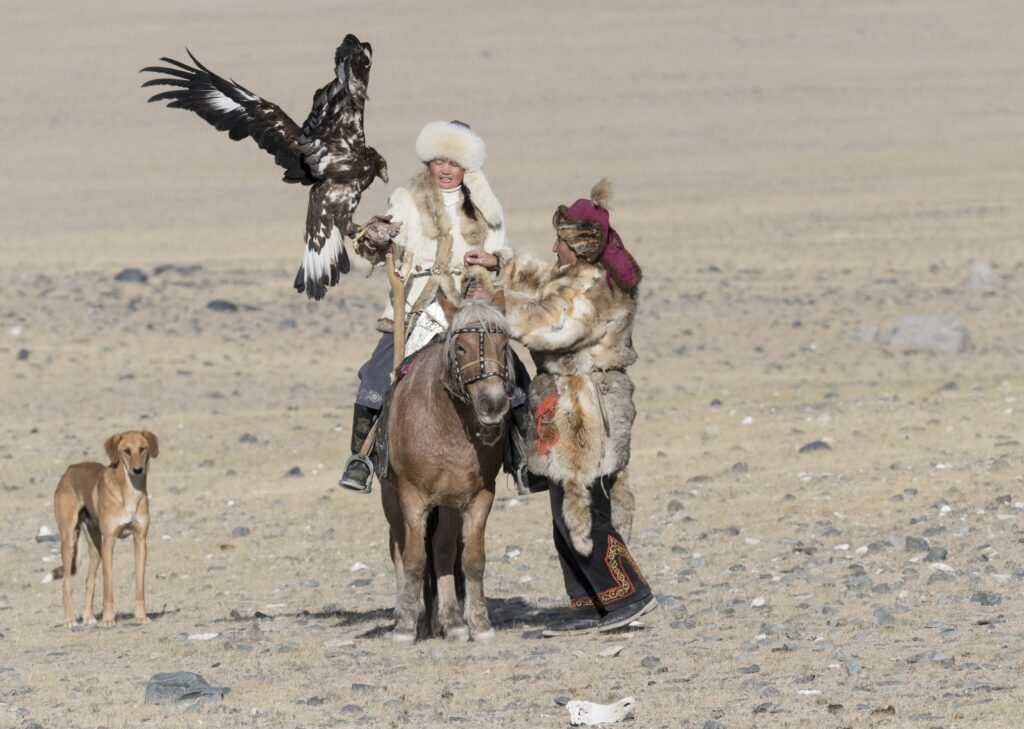
The preservation of eagle hunting necessitates a comprehensive approach addressing economic, environmental, and cultural dimensions. Efforts to foster partnerships between local communities, government agencies, and international organizations are just beginning to take shape. These initiatives aim to protect and promote this age-old tradition through education, conservation, and cultural exchange. Educational programs and outreach efforts are crucial in raising awareness about the importance of eagle hunting and inspiring future generations to embrace their cultural heritage.
However, climate change is casting a long shadow over Mongolia’s future of eagle hunting. The changing climate is affecting the natural environment and disrupting the traditional practices of eagle hunters. Altered landscapes, shifting temperatures, and unpredictable precipitation patterns wreak havoc on prey species and Golden Eagles’ habitats. As traditional hunting territories become less predictable and accessible, eagle hunters struggle to locate prey and conduct successful hunts.
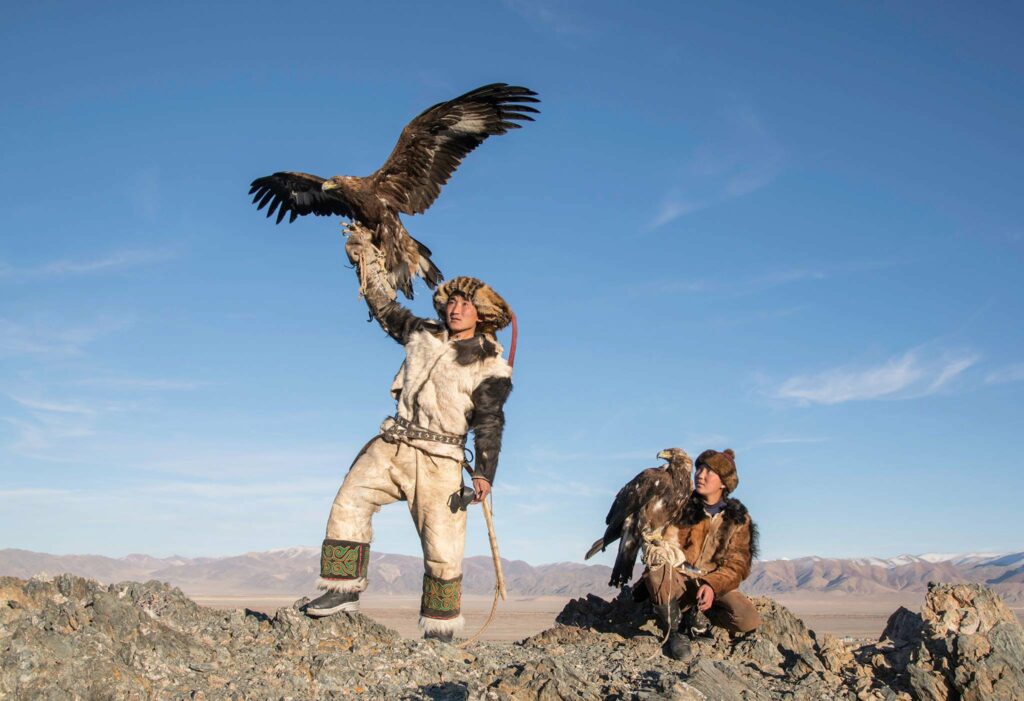
Mongolia’s vulnerability to extreme weather events such as droughts, storms, and harsh winters (dzuds) further exacerbates the situation. These increasingly frequent and severe events directly impact nomadic communities’ livelihoods and Golden Eagles’ well-being. Severe weather can disrupt hunting activities, endanger hunters and their eagles, and worsen challenges related to food security and animal health.
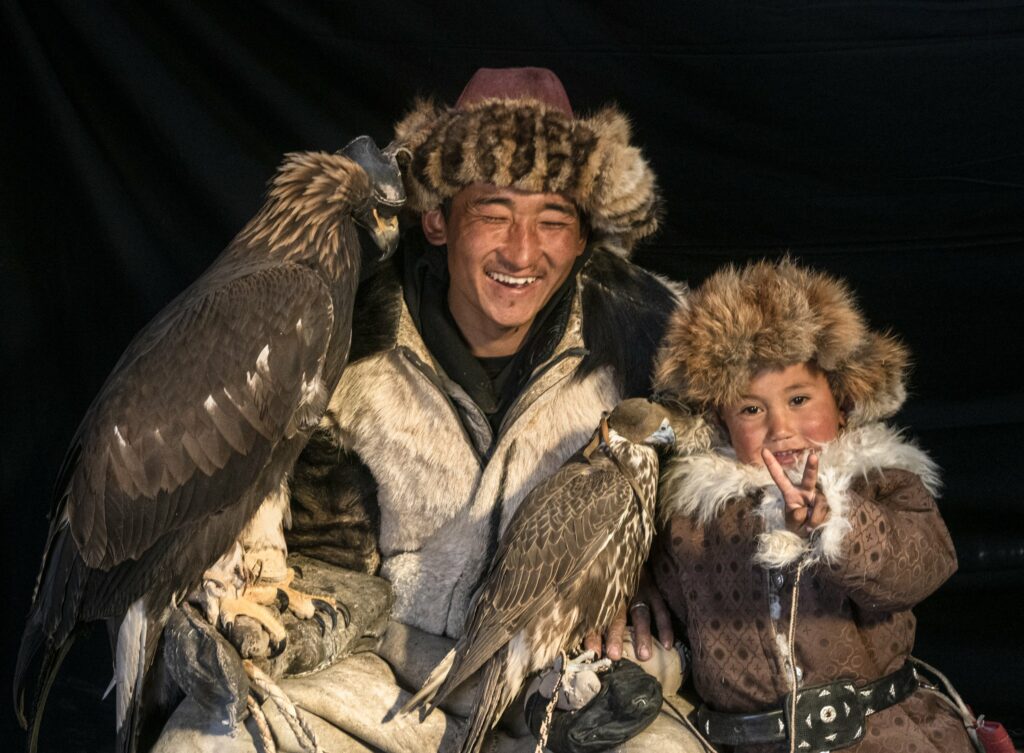
As climate change reshapes Mongolia’s landscapes and ecosystems, eagle hunters must adapt their traditional practices to new environmental realities. This adaptation may involve exploring alternative hunting techniques, adjusting hunting seasons or locations, or diversifying livelihood strategies to cope with changing conditions. The ability of eagle hunters to innovate and preserve their cultural heritage in the face of climate change will be crucial for the continuity of this ancient tradition.
Witnessing the art of eagle hunting now, before it potentially fades into history, offers a unique and urgent opportunity to experience a living tradition that exemplifies the resilience and ingenuity of Mongolia’s nomadic people. Don’t miss the chance to be a part of this extraordinary legacy while it thrives against the odds.
Some of my favorite images from Mongolia
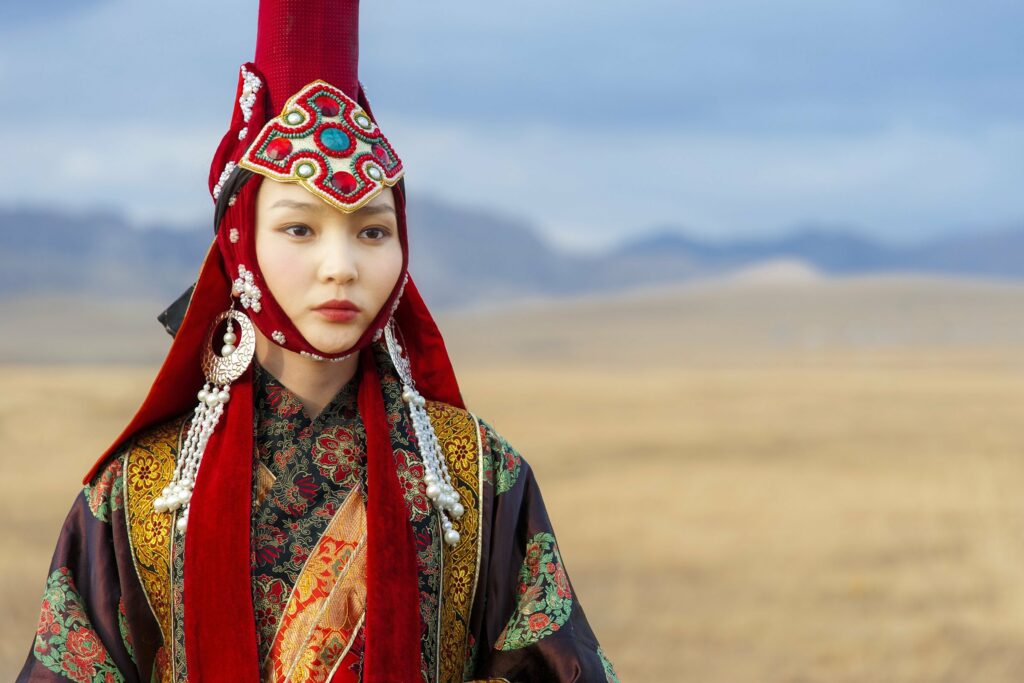
Camera: Nikon D3
Lens: Nikkor 24-120mm f4
Aperture: f4
Shutter Speed: 1/125th of a second
Lighting Sources: Natural lighting from her right side late in the day
Composition Notes: I used f4 to mute the background and make sure she was in focus. I also offset her to my left and have her gaze off into the space to my right so the entire group could get the same photo. Having her look at one person at a time would have us lose the diffused light produced by a cloud.
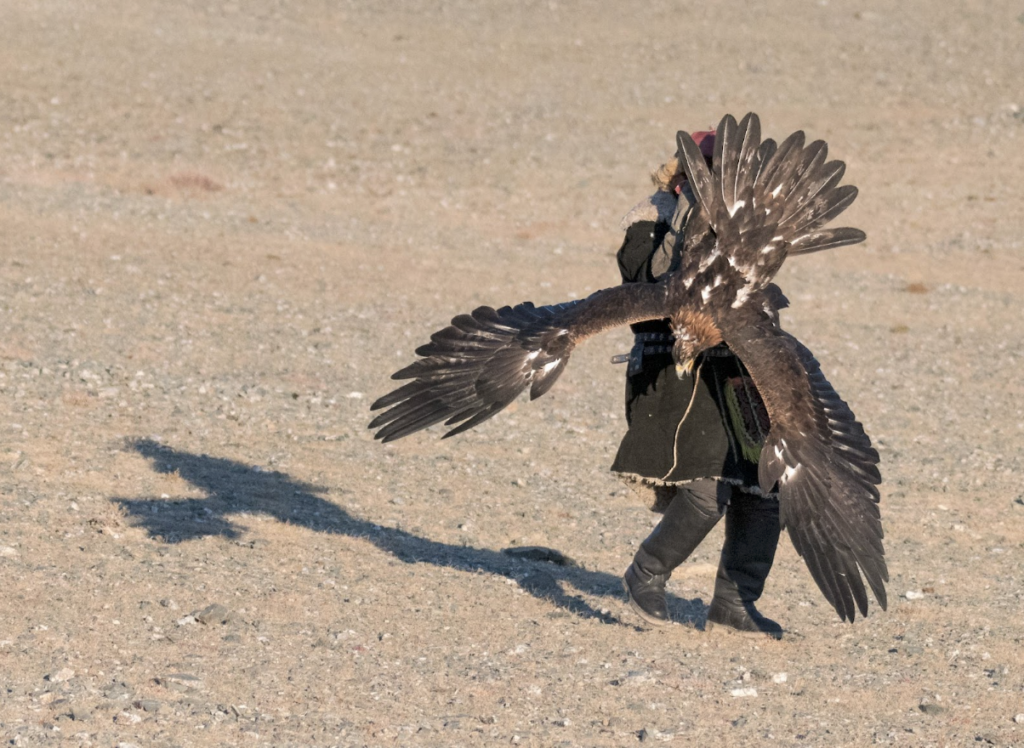
Camera: Nikon D500
Lens: Sigma 150-600m f5.6-6.2
Aperture: f5.6
Shutter Speed: 1/3000th
Lighting Sources: Natural lighting from the sun that was coming from my back right side
Composition Notes: The eagle hunters were calling their eagles from a cliff. I wanted to convey just how giant these female golden eagles were compared to a man. This photo shows the eagle’s 8-foot wingspan and 2-foot-tall body in full display.
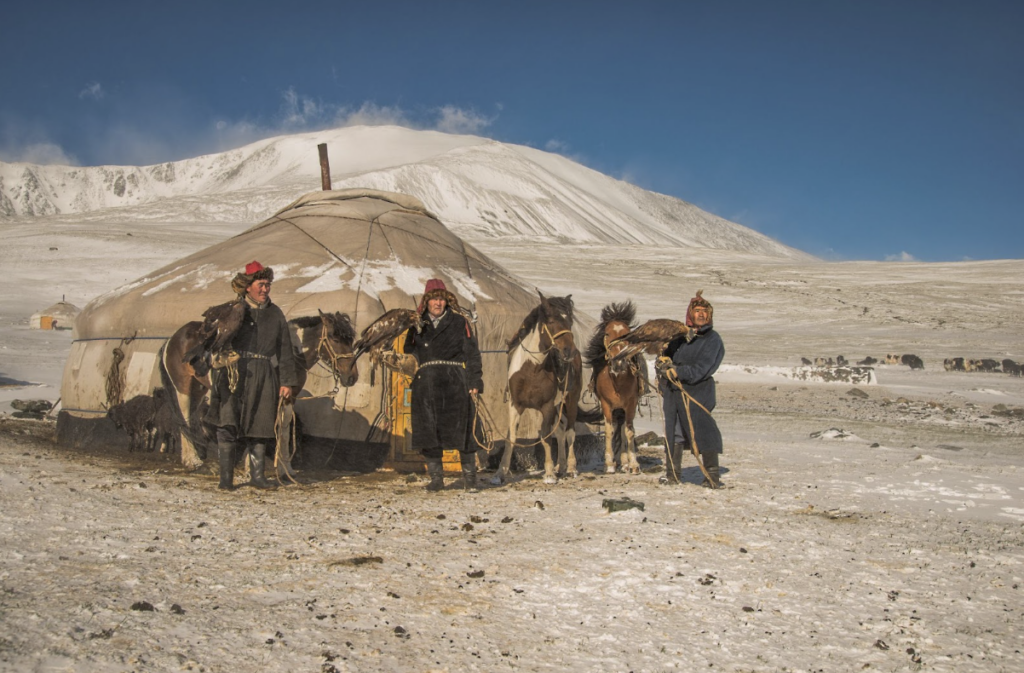
Camera: Nikon D4s
Lens: Nikkor 24-105mm f4
Aperture: f11
Shutter Speed: 1/250th of a second
Lighting Sources: The Sun was to my back, so their faces would be lit up
Composition Notes: I framed the eagle hunters and ger tent with the mountain behind them. I waited until the wind picked up to produce clouds over the mountains.
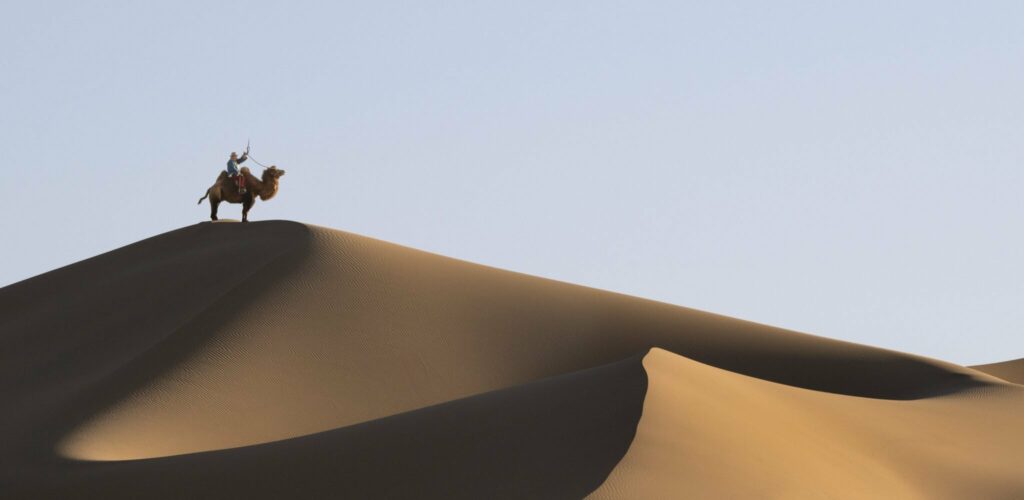
Camera: Nikon z9
Lens: Nikkor 70-200mm f2.8
Aperture: f11
Shutter Speed: 1/800th of a second
Lighting Sources: Early morning light coming from the right side
Composition Notes: I used the leading lines in the sand to draw the eye toward the camel herder on top of the dunes. I went out into the dunes before sunrise to create a high contrast and have the sun expose the leading lines in the sand.
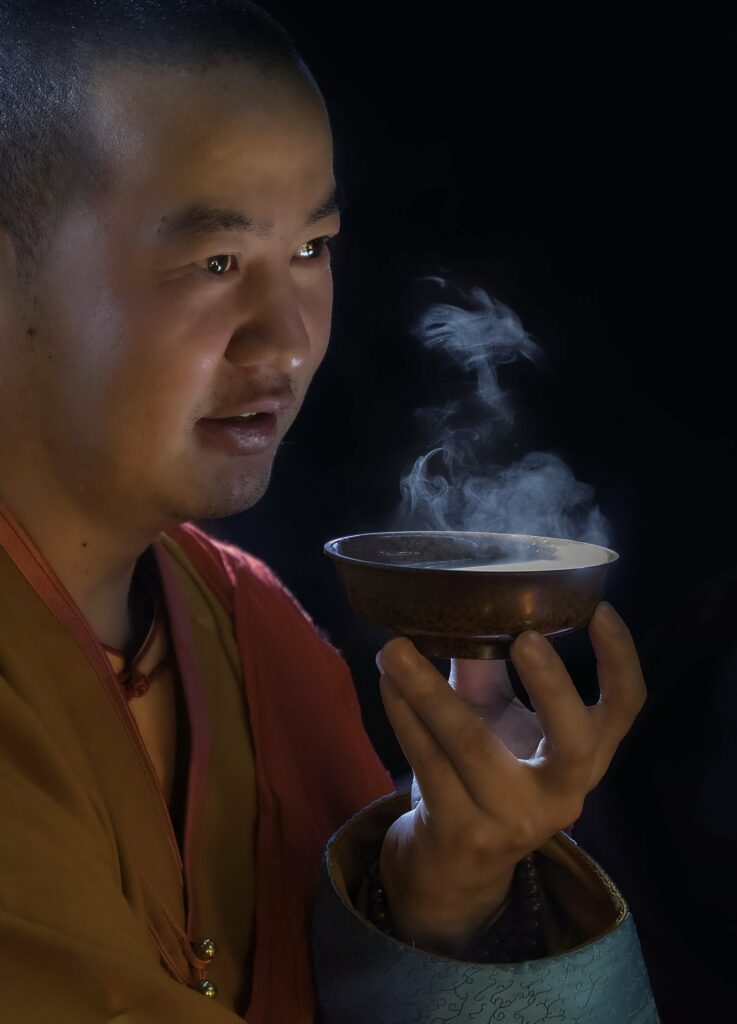
This image resulted from that decision to allow me access. While I love how this photo turned out, far more important to me is the memory of my dedication and the willingness of the Mongolian people to share their culture with me and my groups.
Camera: Nikon D850
Lens: Nikkor 24-105mm f4
Aperture: f4
Shutter Speed: 1/250th of a second
Lighting Sources: Behind him, we used natural light from a window to illuminate the mist coming off the tea. We used a gold reflector placed in front of him to illuminate his face.
Composition Notes: I ensured a black backdrop behind him so the focus would be on the monk. The photo is more about the tea-drinking ceremony, so I placed him off to the left of the frame, featuring the tea against the dark background.
Conclusion
What have I learned after my time in Mongolia? Eagle hunting in Mongolia represents far more than a mere hunting technique—it embodies the enduring spirit of a people deeply intertwined with their environment and heritage.

Each journey into the world of eagle hunters reveals new insights into a timeless tradition that honors the profound bond between humans and nature. The friendships I have forged within the eagle-hunting community offer me a deeper glimpse into Mongolia’s soul. In this land, ancient traditions flourish amidst the ever-changing currents of the modern world.
My connections have transcended the photographer/subject dynamic. These proud people have become cherished friends, and my time in Mongolia is now about rekindling these bonds and continuing a personal journey that has spanned over a decade. It’s a journey of discovering their families, embracing their way of life, and celebrating the rich tapestry of their culture.
Join me on this extraordinary adventure, where every visit feels like a homecoming and each experience leaves an indelible mark on your heart. Let us explore Mongolia’s majestic landscapes and timeless traditions together, forging unforgettable memories and connections that will inspire you long after you return home. See our Mongolia tours here.