Beyond the Photograph: The Eagle Hunter Friends Who Keep Calling Me Back to Mongolia
By Kevin Pepper |
The first time I travelled to western Mongolia, I was thinking mostly about photographs.
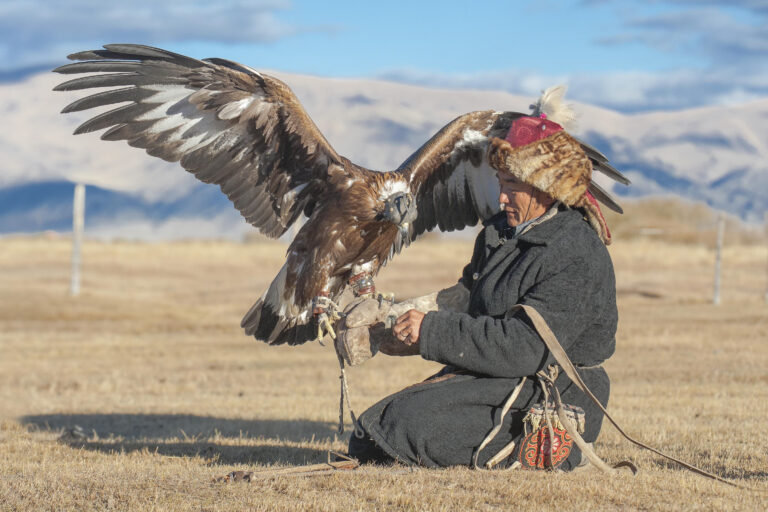
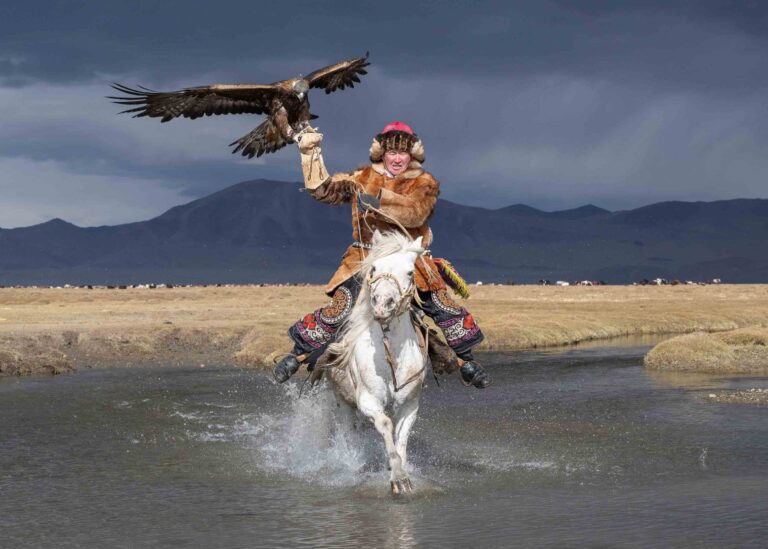
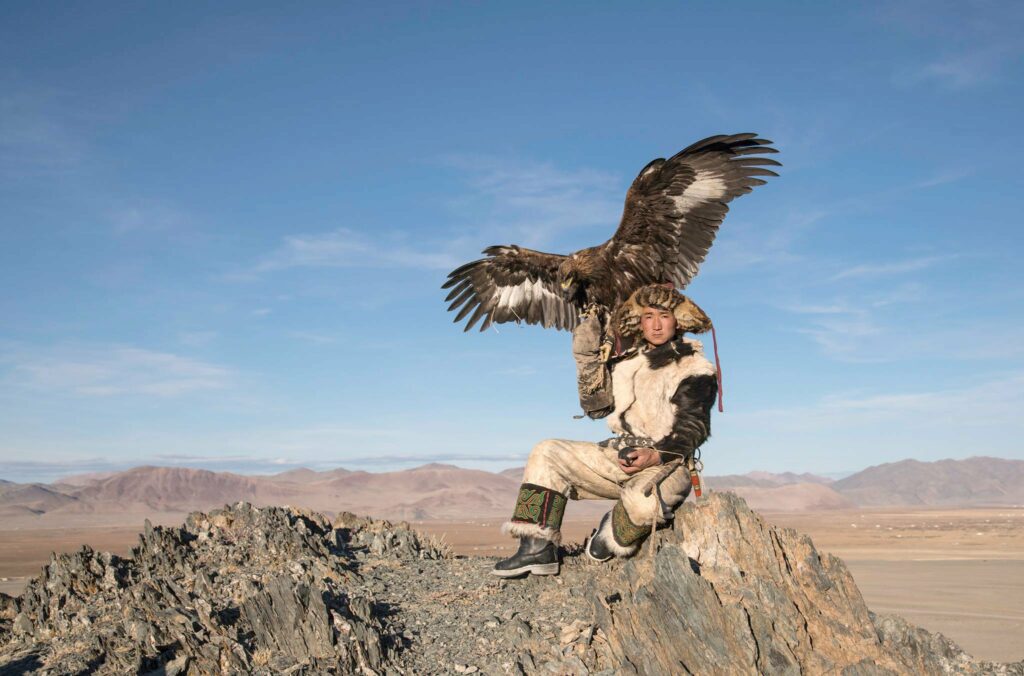
I wanted to photograph a golden eagle spreading its wings against the Altai Mountains. I imagined hunters on horseback, traditional clothing, weathered faces and great clouds of dust rising from the steppe.
I found all of that.
But after more than a decade of returning to Mongolia, those are no longer the first things I think about.
I think about the friends waiting for me.
I think about walking into a family ger and being welcomed with tea. I think about stories shared through interpreters, laughter that needs no translation and young eagle hunters I first met years ago who are now husbands and fathers.
The photographs brought me to Mongolia.
The friendships are what keep calling me back.
Arriving as a Stranger
My first experience with Mongolia’s eagle hunters was in 2012, when I travelled to western Mongolia to photograph the Golden Eagle Festival.
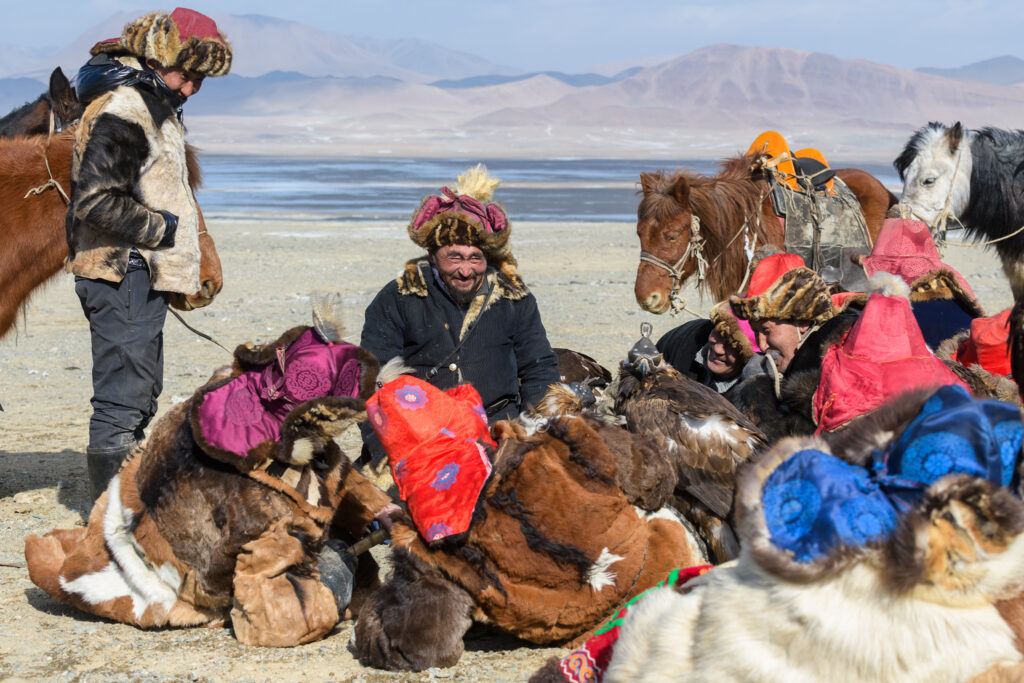
Like most photographers arriving for the first time, I was immediately drawn to the visual power of the tradition. The heavy fur clothing, handmade saddles, horses, mountains and magnificent golden eagles looked as though they belonged to another century.
The eagle hunters were everything I had hoped to photograph.
What I did not understand yet was that the best photographs would not come from simply standing in front of them with a camera.
They would come from returning.
They would come from listening, remembering names, keeping promises and spending time together when nobody was taking photographs.

Watching a Young Eagle Hunter’s Life Unfold
I first met Serik Jenisbek during that 2014 visit.
He was one of the eagle hunters who spent time with my group before the festival. When I returned the following year, he joined us again.
I noticed that Jenisbek and his brother shared some of the traditional clothing they wore while competing. My guests and I wanted to help, so we gave the family money that allowed their mother to make new outfits for her sons.
It was a small gesture, but it became the beginning of a friendship.
Each year I returned, Jenisbek made time for us. We photographed together, shared meals and slowly became part of one another’s lives.
In 2022, Jenisbek married. He invited my entire group to his family home in Ulgii for dinner.
Recently, I photographed him the day before he became a father.
That portrait means more to me than it did when I pressed the shutter. It is no longer simply a photograph of an eagle hunter. It is part of the story of a young man I have watched grow, marry and begin a family of his own.
Maybe one day I will return and photograph his child learning the traditions that Jenisbek learned from the generations before him.
I hope so.

You Can Arrange Access. You Cannot Book Trust.
The word “access” is used often in photography travel.
It usually means getting closer, entering somewhere private or photographing something tourists do not normally see.
Access matters. But access and trust are not the same thing.
A tour company can hire an eagle hunter for an afternoon. A photographer can be driven to a location, arrange a pose and return to the hotel with an impressive photograph.
Trust takes years.
It is built by returning to the same families. It comes from treating people as friends rather than subjects. It means supporting the community, respecting the tradition and remaining part of people’s lives after the cameras have been packed away.
Those relationships are why our guests can spend several days alongside an eagle hunter family instead of arriving for a quick demonstration. They are also why we can create private sessions with hunters in the Altai landscape, away from crowds and the frantic atmosphere of a festival.
The opportunity may be organized for photography, but the people are not props.
They are our hosts and our friends.
That difference matters.

The Moments Between the Photographs
There are certainly dramatic moments during our Mongolia workshops.
A golden eagle launches from a rocky ridge and flies toward its hunter. Horses charge through shallow water. A group of hunters rides beneath the mountains as dust hangs in the evening light.
Those moments get everyone’s heart racing—and their cameras firing at a speed that would make a memory card nervous.
But some of my favourite moments happen when very little appears to be happening.
A hunter adjusts the leather straps around his eagle’s legs.
A father helps his son prepare a saddle.
Tea is poured inside a ger.
An eagle settles quietly on its perch while conversation fills the room.
Someone laughs at my attempt to speak Kazakh. I would like to say my pronunciation has improved over the years. My friends in Mongolia might offer a different assessment.
These quieter moments are when guests begin to understand what they are photographing.
At first, most people naturally concentrate on the obvious images—the eagle in flight, the hunter on horseback and the formal portrait.
Then they begin to slow down.
They notice the light falling across a face inside the ger. They see the relationship between a hunter and his eagle. They watch how family members work together. They start photographing gestures, details and expressions that tell a deeper story.
The photographs become less about what someone is wearing and more about who that person is.

Portraits Inside the Ger
One of my favourite parts of our time with the eagle hunters is creating portraits inside the family ger.
We work slowly, with only one photographer and one eagle hunter at a time. This gives each guest room to concentrate, communicate and create a real connection with the person in front of the camera.
I usually remain inside throughout the sessions.
I am not there to take photographs. I am there to catch up with friends I may see only once or twice a year.
We talk, joke and share news from the months since my last visit. That familiarity helps everyone relax, including the photographer whose turn it is to make a portrait.
The resulting photographs feel different.
The expressions are more natural. The moments are less hurried. Instead of photographing a stranger in traditional clothing, guests begin creating a portrait of someone they have spent time with.
The camera becomes part of the conversation rather than a barrier between two people.

A Tradition That Is Still Living
It is tempting to describe Mongolia’s eagle hunters as figures from the past.
Their clothing, horses and centuries-old falconry traditions certainly create that impression.
But eagle hunting is not a museum exhibit.
It is a living tradition carried forward by families.
Knowledge is passed from parents to children. Young hunters learn how to care for their eagles, read the landscape and work in an environment that demands patience and resilience. Older hunters pass down skills developed over a lifetime.
I have watched young boys I first met years ago grow into eagle hunters themselves. I have photographed different generations of the same family and seen children begin learning the skills their fathers once learned.
That is what makes returning so meaningful.
I am not photographing something frozen in history. I am watching the next chapter being written.
More Than Eagle Hunters
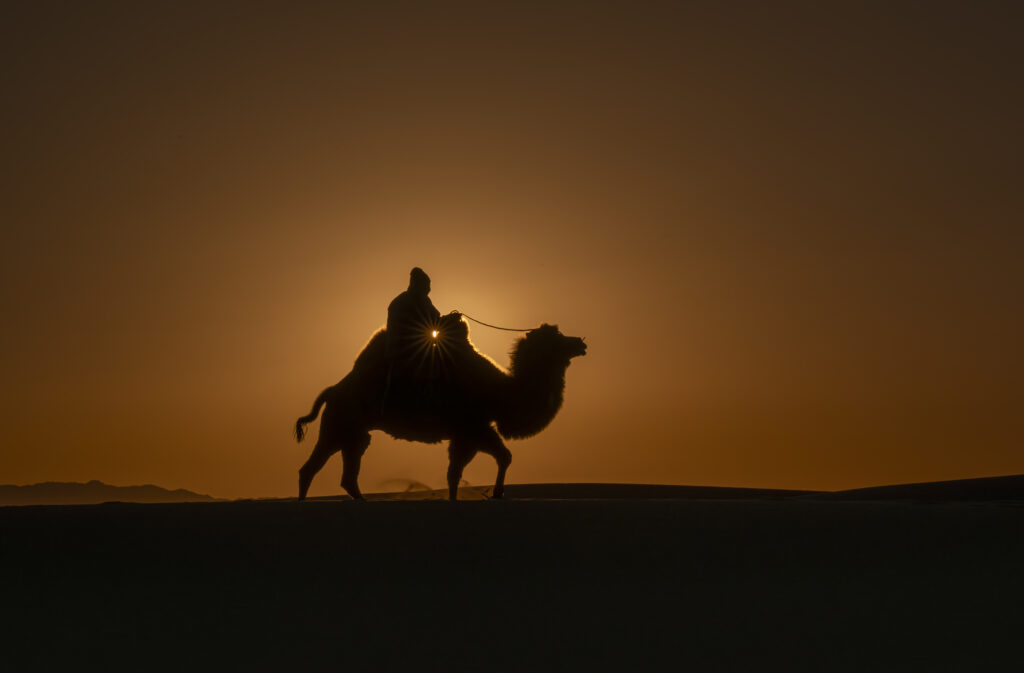
Our Mongolia workshop also takes us from the Altai Mountains to the dunes of the Gobi Desert.
We photograph camel herders at sunrise and sunset, horses moving across open country, traditional performers, mounted archers and landscapes so wide that they make you reconsider your relationship with the horizon.
The photographic variety is extraordinary.
Yet the heart of the journey remains the people.
The camel herder family that welcomes us into their home. The drivers who somehow find a road where I remain convinced no road exists. The local guides who have become friends. The eagle hunters who rearrange their lives to spend time with us when we return.
Mongolia is vast, but our experience there has become deeply personal.
What Mongolia Has Taught Me
When I began leading photography workshops, I thought my job was to put people in front of great photographs.
That remains part of it.
But Mongolia has reminded me that the greatest travel experiences cannot be measured only by the number of strong images on a memory card.
Photography gives us a reason to travel. It encourages us to pay attention and introduces us to people whose lives may be very different from our own.
Then, occasionally, something greater happens.
A subject becomes a friend.
A location begins to feel familiar.
A yearly journey starts to feel like returning home.
The photographs still matter. I am a photographer, after all. I have been known to become slightly overexcited when an eagle flies through perfect light.
But the photographs are no longer the whole story.
They are reminders of friendships, shared meals, changing families and the privilege of being welcomed back.
Why I Keep Returning
People sometimes ask how many more times I plan to travel to Mongolia.
I do not have an answer.
As long as I am able to return, and as long as my friends continue to welcome us, I will keep going.
There will always be another photograph to create. The light will be different. A young hunter will have grown older. A child may be holding an eagle for the first time. A familiar face will have another story to tell.
And somewhere along the way, one of my Mongolian friends will laugh at my pronunciation again.
That part is almost guaranteed.
When our guests join us in Mongolia, they will photograph golden eagles flying beneath the Altai Mountains. They will photograph horses, camel herders, portraits, movement and some of the grandest landscapes I know.
But what I hope they carry home is something more.
I hope they remember sitting inside a ger while tea was poured. I hope they remember lowering their cameras and listening. I hope they remember the laughter, hospitality and quiet moments that happened between the photographs.
Because those are the moments that stay with you.
The photographs may be what bring you to Mongolia.
The people are what will make you want to return.
Learn more about our Mongolia Eagle Hunters and Gobi Desert Photography Workshop and join us as we return to the friends, families and landscapes that have kept calling me back for more than a decade.