
Species Spotlight: Musk Ox
By Kevin Pepper |
Introduction to the Musk Ox
The Musk Ox is a relic of the Ice Age—built for wind, snow, and survival. Seeing one on the tundra is like spotting a living fossil. With their massive wooly coats, sweeping horns, and steady, deliberate movements, they command a quiet sort of respect. And for photographers, they offer the perfect combination of power, texture, and primeval presence.
Physical Description
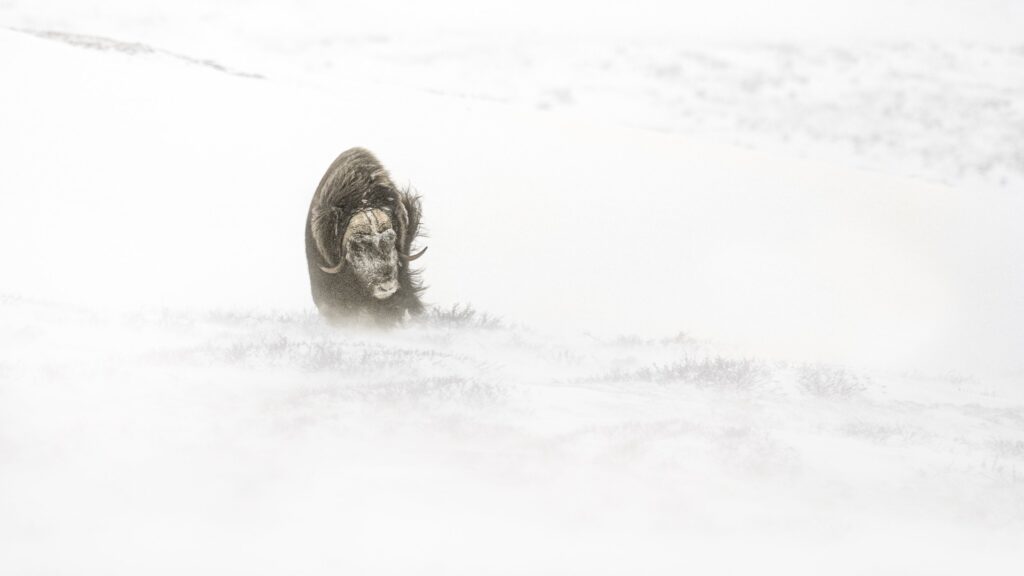
Musk Ox (Ovibos moschatus) are large, shaggy mammals that resemble a cross between a bison and a long-haired tank. Adult males can weigh up to 900 pounds (400 kg), with females slightly smaller. Their most distinctive feature is their long, thick outer coat of guard hairs—some up to two feet long—covering a dense undercoat of qiviut, the finest and warmest wool in the Arctic.
They have short legs, a humped back, and broad heads capped by curled horns that sweep out and down before turning upward. Both sexes have horns, though males’ are heavier and often worn from head-butting during the rut.
Physical Variations Amongst the Species
Musk Ox are relatively uniform in appearance, with only minor size and coloration differences across regions. Calves are born smaller and fluffier, with darker coats. The most noticeable variation comes from age and sex—older bulls appear bulkier, with more pronounced horns and weathered facial features, which can add drama and character to portrait shots.
Native Habitat Around the World
Today, Musk Ox are found in:
- Northern Canada (including Nunavut and the Northwest Territories)
- Greenland
- Alaska
- Siberia and parts of Arctic Russia
- Norway (Dovrefjell National Park, reintroduced)
They inhabit Arctic tundra ecosystems—windswept plains, rolling hills, and valleys with sparse vegetation. In summer, they move to higher ground; in winter, they descend to lowlands where snow cover is shallower.
Who Preys on the Musk Ox
Natural predators include wolves, grizzly bears, and occasionally polar bears. Calves are especially vulnerable. In defense, Musk Oxen form a defensive circle or line—horns facing outward and calves in the center—an ancient tactic that creates dramatic tension for both predator and photographer.
Food/Eating Habits of the Musk Ox
Musk Oxen are herbivores. They graze on grasses, sedges, mosses, and lichens in summer, and paw through snow in winter to reach roots and dried vegetation. Their low metabolic rate and specialized rumen allow them to extract nutrients from sparse Arctic forage. Photographing them while they feed—frost clinging to their coats—is a study in patience and subtle detail.
Known Lifespan of a Musk Ox
In the wild, Musk Oxen typically live 12–20 years, depending on climate, predation, and food availability. Bulls often have shorter lifespans due to the stress of fighting during the rut and defending the herd.
Join Us on a Wildlife Workshop
We’ll help you anticipate their movement, shoot silently, and compose images that capture the Musk Ox’s stealth, beauty, and story—all while respecting distance and behavior. Join us and add this iconic predator to your wildlife portfolio. See all of our wildlife photography workshops here.
Read Other Species Spotlight articles
If you’re as passionate about wildlife as we are, take a moment to explore our Species Spotlight series. Each article dives into the fascinating lives of the animals and birds we love to photograph on our workshops—whether it’s a puffin perched on a cliff in Newfoundland, a leopard draped across a tree in Tanzania, or an Adelie penguin waddling through the snow in Antarctica. It’s a growing library of stories, facts, and inspiration for anyone who dreams of capturing the wild through their lens. Come see the world the way we do—one species at a time.


