
Species Spotlight: Dalmatian Pelican
By Kevin Pepper |
Introduction to the Dalmatian Pelican
The Dalmatian Pelican is one of the standout subjects on our Romania photography workshops. Watching one glide across the Danube Delta in early morning light is enough to make you pause—just don’t forget to press the shutter. From quiet reflections to splashing landings, these birds give photographers plenty to work with.
Physical Description of the Dalmatian Pelican
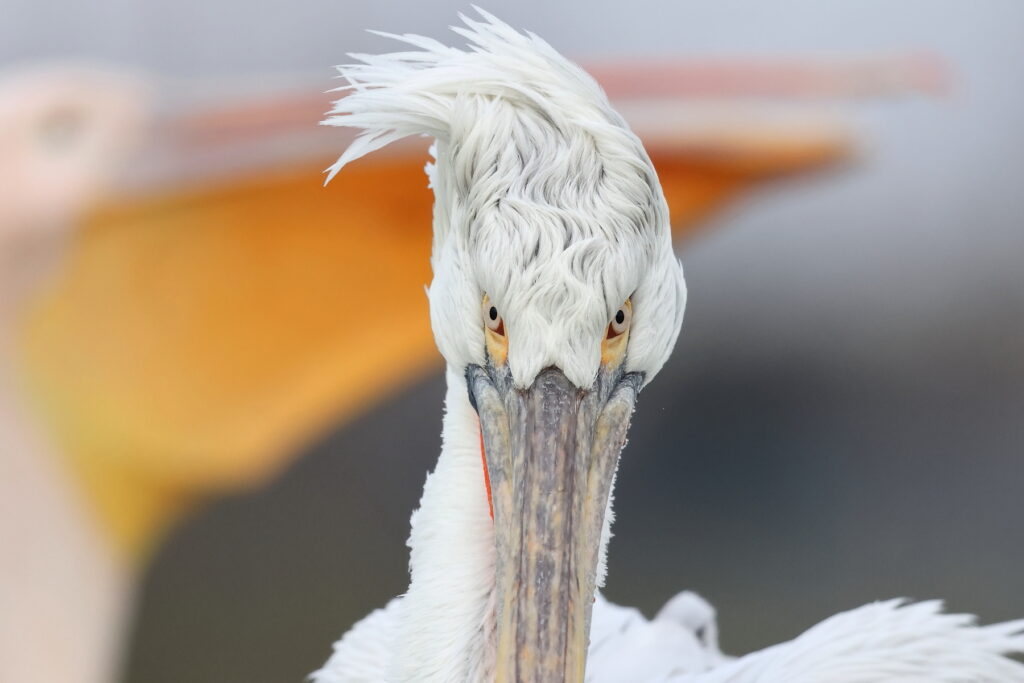
With silvery-white plumage, curly feathers on the back of its head, and a wingspan that can exceed three metres, the Dalmatian Pelican is among the world’s heaviest flying birds. Its long bill and expandable throat pouch are unmistakable. During breeding, that pouch turns orange-red before fading as the season progresses.
Native Habitat of the Dalmatian Pelican
Dalmatian Pelicans inhabit lakes, wetlands, river deltas and sheltered coastal waters across parts of Europe and Asia. Romania’s Danube Delta provides feeding and breeding habitat, with open water, reed beds and secluded nesting areas. For photographers, those surroundings offer the chance to create both close portraits and wider images that show the bird in its environment.
Migration Patterns in Europe
Their movements vary by population. Some remain relatively close to their breeding grounds, while others travel to warmer wetlands for winter. Access to fish and unfrozen water helps determine where they spend the colder months. In southeastern Europe, movements are generally shorter than those of populations breeding farther inland in Asia.
Food/Eating Habits
Fish make up almost their entire diet. Dalmatian Pelicans feed while swimming, dipping their heads beneath the surface and scooping prey into their bills. They may fish alone or in small groups. Watch closely during feeding: a sudden head movement or splash can turn a peaceful scene into an action photograph in a fraction of a second. Feeding behaviour
Known Lifespan
Dalmatian Pelicans are long-lived birds, although published lifespan estimates vary and do not always distinguish wild birds from those in human care. Their continued survival depends on healthy wetlands, reliable food supplies and breeding colonies protected from disturbance.
Join Us on Our Romania Photography Workshops
Photographing a Dalmatian Pelican is about more than fitting a large bird into the frame. It’s about catching the light in its feathers, anticipating a landing and finding an angle that brings you into its world.
On our Romania workshops, we work from boat blinds in the Danube Delta, with time to observe behaviour and develop your photography. We’ll help you manage exposure on pale plumage, track birds in flight and use the surrounding water to create cleaner compositions. Join us to photograph these birds and discover the variety of wildlife Romania has to offer.
Read Other Species Spotlight Articles
Get to know more of the wildlife we photograph through our Species Spotlight series. Discover where each species lives, how it behaves and what makes it worth spending time behind the camera.


