Species Spotlight: Squacco Heron
By Kevin Pepper |
Introduction of the Species
At first glance, the Squacco Heron can appear modest. Sitting quietly beside the water, its buff and brown plumage blends easily into reeds and wetland vegetation.
Then it takes flight.
Suddenly, broad white wings and a white tail appear, transforming a well-camouflaged little heron into one of the brightest birds over the marsh. It is one of nature’s better wardrobe changes, and photographers rarely see it coming the first time.
Physical Description
The Squacco Heron is a small, compact heron measuring approximately 40 to 49 centimetres in length. It has a short neck when resting, a thick appearance, and a pointed bill suited to catching aquatic prey.
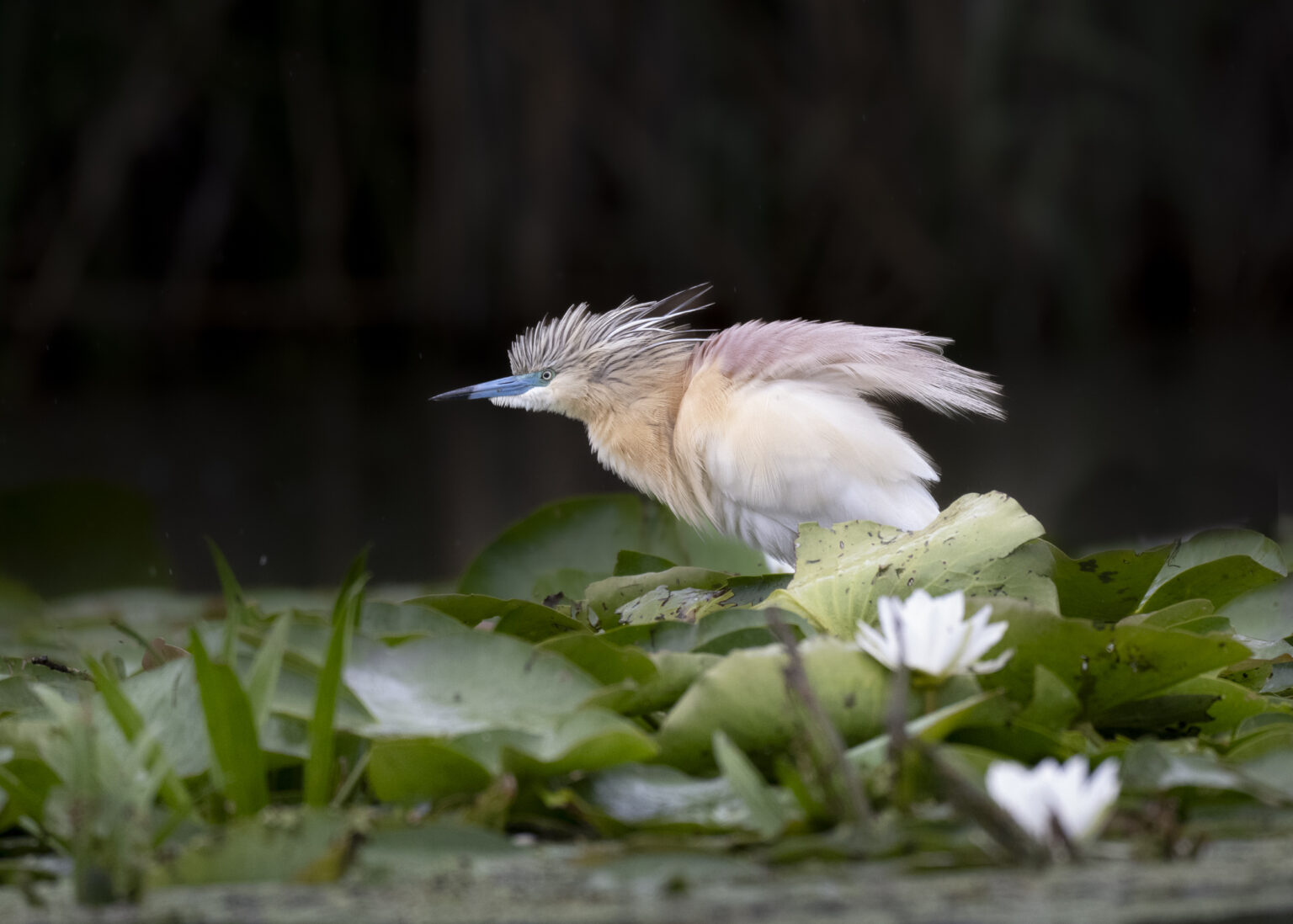
Breeding adults develop rich golden-buff feathers across the head, neck, and back, along with long decorative plumes extending from the rear of the head. The bill may become blue near its base, while the legs can take on reddish tones.
Non-breeding adults and young birds are browner and more heavily streaked. Regardless of plumage, the white wings and tail become obvious when the bird flies.
Native Habitat
Squacco Herons inhabit freshwater wetlands with abundant aquatic vegetation. They are commonly associated with marshes, lakes, ponds, slow-moving rivers, flooded fields, reed beds, and channels bordered by willows or low shrubs.
They favour shallow water where they can stand near the edge and search for prey without exposing themselves too much.
The Danube Delta provides ideal habitat. Its maze of channels, floating vegetation, reed beds, and shallow wetlands creates feeding and nesting areas for Squacco Herons and many other waterbirds.
Where They Are Found
The Squacco Heron occurs across parts of southern Europe, Africa, the Middle East, and western and central Asia.
European populations are generally migratory, travelling south to Africa after the breeding season. During spring and summer, the wetlands of southeastern Europe become important breeding areas.
Romania’s Danube Delta is one of Europe’s great wetland systems and provides photographers with opportunities to see Squacco Herons alongside pelicans, egrets, kingfishers, terns, and numerous other species.
Behavior in the Wild
Squacco Herons often hunt from the edge of the water, standing nearly motionless with their bodies held low and their necks partially withdrawn. They may remain still for long periods before making a quick strike.
They also walk slowly across floating vegetation, using lily pads and dense aquatic plants as hunting platforms. Their long toes help distribute their weight, occasionally making them look as though they are walking on water.
When flushed, they usually fly low across the wetland before dropping back into the vegetation. At rest, they can disappear surprisingly well. In flight, those white wings make hiding considerably more difficult.
Food and Eating Habits
Squacco Herons feed on small fish, frogs, tadpoles, insects, crustaceans, and other aquatic animals.
They hunt visually, waiting for prey to move within range before extending the neck in a rapid strike. They may also shuffle their feet or move slowly through shallow water to disturb potential prey.
For photographers, the best moments often come just before and after the strike. The bird becomes alert, stretches forward, focuses on the water, and then launches its head toward the prey.
A successful capture, particularly with a small fish or frog, tells a much stronger story than a bird standing motionless beside the reeds.
Nesting and Breeding
Squacco Herons often breed in colonies, sometimes alongside other herons, egrets, ibises, and cormorants.
Their nests are generally built from sticks and placed in trees, shrubs, reed beds, or dense wetland vegetation. Both adults participate in raising the young.
During the breeding season, the richer colours and long head plumes make adults especially attractive photographic subjects.
Why Photographers Love Them
Squacco Herons provide photographers with variety. A quiet portrait among the reeds can show their camouflage, while a flight image reveals the brilliant white wings that remain hidden when the bird is perched.
Their slow hunting behaviour also allows photographers to anticipate movement. Once a bird begins leaning forward and concentrating on one point in the water, it is time to prepare for the strike.
They are also beautifully suited to environmental photography. Floating vegetation, reflections, reeds, and calm channels can all become part of the composition.
Join Us in Romania
During our Romania Birds and Bears Photo Workshop, we explore the Danube Delta from specialized boats that allow us to photograph birds close to water level.
This lower perspective can turn a simple sighting into a much stronger photograph. Instead of looking down on the bird, we can work with reflections, distant vegetation, soft backgrounds, and the changing light across the wetland.
The Squacco Heron may not have the size of a pelican or the speed of a kingfisher, but it rewards patient photographers with colour, behaviour, and one of the best disappearing acts in the Delta.