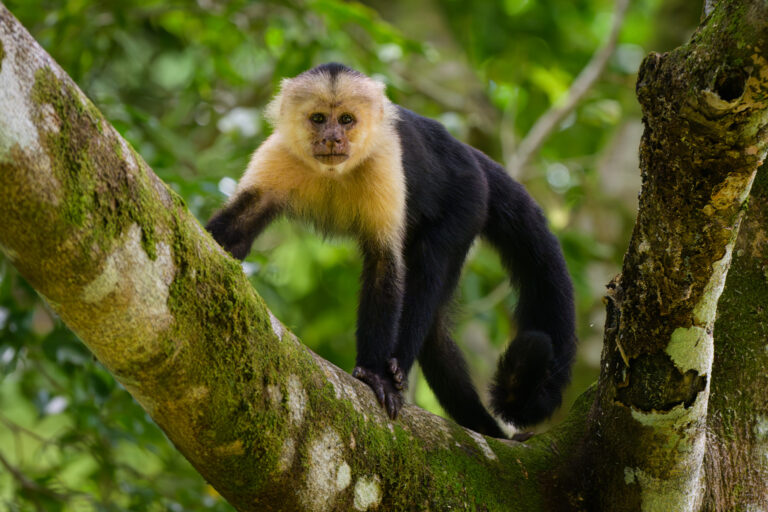
Species Spotlight: Golden Snub-nosed Monkey
By Kevin Pepper |
Introduction to the Golden Snub-nosed Monkey
Golden Snub-nosed Monkeys have the kind of faces that make you stop scrolling. Seeing them in person gives you a reason to stop moving, too.
Golden fur, pale blue facial skin, and a small, upturned nose make them unmistakable. But their appearance is only part of the attraction. For photographers, the relationships between animals can be just as rewarding: grooming, young monkeys playing, or members of a group sitting close together.
A portrait introduces the animal. An interaction begins to tell its story.
Physical Description of the Golden Snub-nosed Monkey
Golden Snub-nosed Monkeys have thick coats combining golden-orange, brown, and darker tones. Their pale blue faces contrast with the surrounding fur, and adult males are larger than females, with particularly long hair across the back and shoulders.
Those colours work well in soft light. Rather than relying on dramatic sunshine, we can use an overcast sky to reveal the texture of the coat and detail around the eyes.
Native Habitat and Where They Are Found
This species is native to China, inhabiting mountain forests that include deciduous and coniferous trees. It is adapted to a much colder environment than many people associate with monkeys, including forests that experience winter snow.
Groups may move between elevations seasonally as conditions change.
Our China wildlife workshop includes time devoted to photographing these monkeys, with opportunities to look for portraits, behaviour, and compositions that include their forest surroundings.
Food and Eating Habits
Their diet changes with the seasons and includes lichens, leaves, buds, fruit, seeds, and bark. Lichens can be especially important during winter, when other foods are less available.
For photographers, feeding offers more than a record of what an animal eats. Watch the hands, the direction of the gaze, and how the monkey positions itself among the branches. These details can give a portrait context.
Known Lifespan
Golden Snub-nosed Monkeys have lived beyond 23 years in human care. Their lifespan in the wild is less firmly documented, so captive records should not be treated as a typical wild lifespan.
Why Photographers Love Golden Snub-nosed Monkeys
Their social lives give us a reason to keep watching after the first portrait. They live in smaller social units that can associate in larger groups, creating opportunities to observe relationships and interactions.
The photographic challenge is deciding what belongs in the frame. One face may call for a tight composition. Two animals interacting may need more space and enough depth of field to keep both faces sharp.
We’ll watch for gestures, eye contact, and moments when the background becomes less distracting. It is easy to keep photographing the nearest monkey. Often, the better image comes from watching what is happening beside it.
Join Us on Our China Wildlife Workshop
Our time with Golden Snub-nosed Monkeys will focus on creating photographs with expression and a sense of connection. We’ll help you work through exposure, focus, and composition while leaving room to enjoy what is unfolding in front of you.
These are the encounters that remind us why we travel with cameras: to spend time with wildlife we cannot experience at home and come back with stories worth sharing.
Read Other Species Spotlight Articles
Explore our Species Spotlight series for more introductions to the animals and birds featured on our photography workshops.