Species Spotlight: Prothonotary Warbler
By Kevin Pepper |
Introduction of the Species
Catching sight of a Prothonotary Warbler at Point Pelee feels like winning the spring migration lottery. With its brilliant yellow plumage glowing like a lantern in the forest shadows, this bird is a favorite among photographers and birders alike. It’s not just a splash of color—it’s a story of swamps, migration, and persistence.
Physical Description of the Prothonotary Warbler
The Prothonotary Warbler is small but striking. Males are an eye-popping golden yellow on the head and chest, with blue-gray wings and back. Females share the same palette but in softer hues. Unlike most warblers, they have a stout, pointed bill and a longer body, giving them a slightly different profile when perched.
Native Habitat of the Prothonotary Warbler
These warblers nest in hardwood swamps, flooded bottomlands, and wooded wetlands—places often teeming with bugs and dripping with humidity. In migration, they’ll sometimes venture into less saturated woodlots, but their preference is always low, wet, and tangled. In Point Pelee, keep an eye on the marsh edges and quiet forest hollows where they like to forage close to the ground.
Migration Patterns in North America
Prothonotary Warblers winter in Central America and northern South America, especially in mangroves and lowland forests. Their journey north takes them through the Gulf states, then up into the eastern U.S. and southern Ontario. At Point Pelee, they arrive in early to mid-May—often later than many other warblers, but always worth the wait.
Food/Eating Habits
Their menu includes insects, spiders, snails, and other invertebrates they glean from low branches and foliage. They’re methodical foragers, hopping from branch to branch with a deliberate pace—giving you enough time to frame a clean, classic warbler shot if you’re patient. Occasionally, you’ll catch them flitting through cattails or foraging in shallow water.
Known Lifespan
On average, Prothonotary Warblers live about 4–5 years, though banding records show some surviving up to 8 years in the wild. Their reliance on specific wetland habitats makes them especially vulnerable to habitat loss, which has placed them on the radar for conservation in parts of their range.
Join Us on Our Point Pelee Photo Workshop
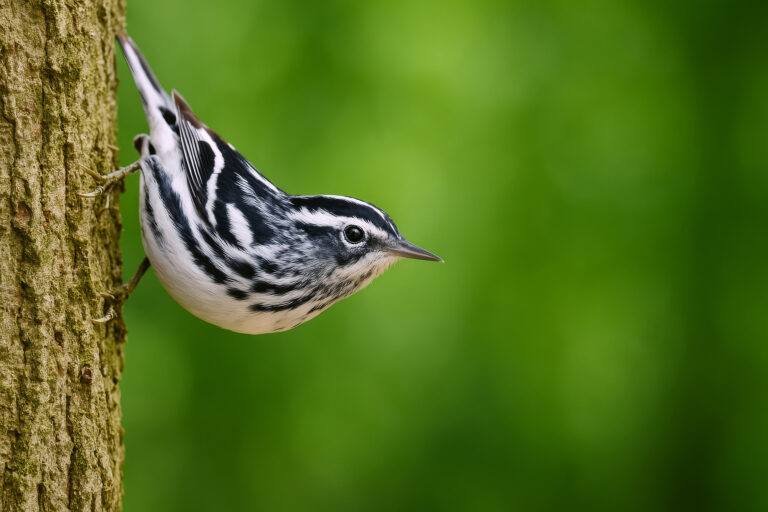
Every May, we’re in the heart of the action at Point Pelee—Canada’s southernmost tip and a magnet for migrating warblers. With its narrow peninsula and concentrated habitats, it funnels birds like the Black-and-white Warbler right past your lens. On our photo workshop, you’ll learn how to anticipate their movement, track them through the undergrowth, and capture their unique behaviors in sharp, compelling frames.
Whether you’re building your warbler portfolio or just want to experience the electric energy of spring migration, Point Pelee delivers. And we’ll be right there beside you, guiding every shot.
Read Other Species Spotlight articles
If you’re as passionate about wildlife as we are, take a moment to explore our Species Spotlight series. Each article dives into the fascinating lives of the animals and birds we love to photograph on our workshops—whether it’s a puffin perched on a cliff in Newfoundland, a leopard draped across a tree in Tanzania, or an Adelie penguin waddling through the snow in Antarctica. It’s a growing library of stories, facts, and inspiration for anyone who dreams of capturing the wild through their lens. Come see the world the way we do—one species at a time.