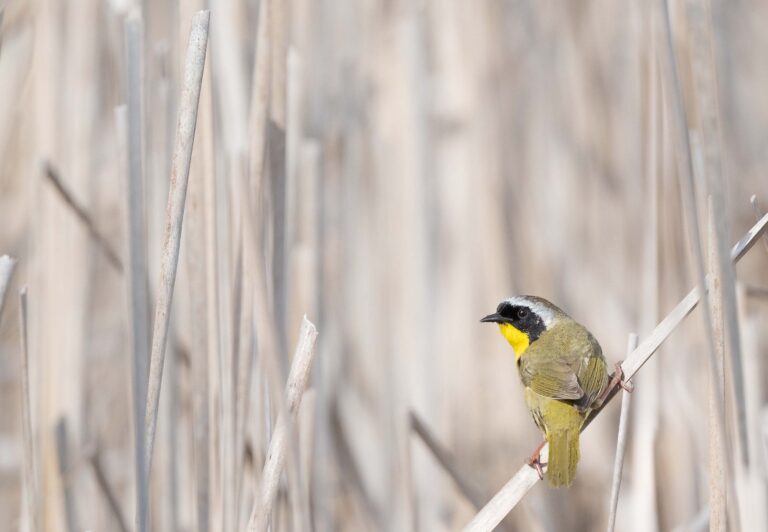
Species Spotlight: The Village Weaver
By Kevin Pepper |
Introduction of the The Village Weaver
You hear them before you see them—a buzzing chatter, like a hundred sewing machines gone rogue in a tree. Then you spot the action: flashes of yellow, dangling nests, and birds weaving with the precision of tailors. The Village Weaver is nature’s architect, and for photographers, it’s a masterclass in motion, color, and behavior.
Physical Description
The Village Weaver (Ploceus cucullatus) is a medium-sized songbird with dramatic, high-contrast colors. Males in breeding plumage have bright yellow bodies, a black mask, and a dark, conical bill. Their backs and wings show olive or dark streaks, while their eyes glow a striking red.
Females and non-breeding males are duller, with more olive and brown tones and pale underparts—but still unmistakable in both voice and behavior.
Physical Variations Amongst the Species
Village Weavers are highly variable across their wide range, with over a dozen recognized subspecies. Some populations have full black hoods; others have only facial masks. The base yellow tone can range from lemon-bright to more mustard-hued, depending on region. For photographers, this means each location brings its own version of the bird—perfect for variety in your portfolio.
Native Habitat Of The Village Weaver
Village Weavers are found throughout sub-Saharan Africa, especially in:
- Kenya
- Uganda
- Tanzania
- South Africa
- Botswana
- Gambia
- Ghana
- Nigeria
They thrive near villages, farms, wetlands, and open woodland—anywhere with trees or reeds for nesting and open areas for feeding. They’re also expanding their range, introduced in parts of the Caribbean and Indian Ocean islands.
Their comfort near human settlements makes them one of the most accessible African bird species for photographers.
Who Preys on the Village Weaver
Nest predators like snakes, monkeys, and raptors pose the biggest threat, especially to eggs and chicks. Weaver colonies often choose thorny trees or nest over water to deter ground-based predators, and their group nesting offers some safety in numbers. Adults remain vigilant and vocal at the slightest disturbance—great behavior for action shots.
Food/Eating Habits of the Village Weaver
Village Weavers are primarily granivorous, feeding on seeds, grains, and cereal crops—hence their tendency to linger near farmland. They also consume insects, especially during breeding season, and are frequent visitors to feeders and fruiting trees.
They forage in noisy flocks, often alongside other weaver species or sparrows, giving plenty of opportunities to capture interaction, flight, and feeding behavior.
Known Lifespan Of The Village Weaver
In the wild, the Village Weaver live 5–7 years, though some have been known to live longer in captivity. Their high reproductive output balances their short life spans and frequent predation, making them one of Africa’s most abundant and resilient birds.
Join Us on a Wildlife Workshop
On our African photo safaris, Village Weavers often become our warm-up act—especially in Botswana, Kenya, and Uganda. Whether we’re photographing elephants or leopards, these bright, busy birds are never far away, especially at camps and lodges where they build their nests in drooping trees overhead.
We’ll help you capture the nest-building rituals, territorial disputes, and the delicate balance of light and texture that brings these birds to life in a frame. High shutter speeds, patience, and good angles are key—and we’ll be right there helping you make the most of the moment.