If you enjoy photographing birds, think Africa as a destination for bird photography
By Kevin Pepper |
Beyond the Big Five: Africa is a hidden gem for bird photography

When people think of East Africa, they often picture the fabled Big Five, dramatic predator-prey interactions, vast herds of wildebeest on their annual migration, and elephants silhouetted against breathtaking mountain backdrops. A safari in Africa conjures up visions of iconic wildlife encounters—but did you know East Africa is also a paradise for bird photographers?
Whether you’re an avid birder or simply looking to make the most of your downtime between wildlife shoots, Kenya and Tanzania offer incredible opportunities to capture stunning images of birds in their natural habitats. Here’s why bird photography in Kenya and Tanzania should be on your radar:
1. Unmatched Bird Diversity
With over 2,400 bird species, Africa is a true avian paradise. From majestic raptors like the African Fish Eagle to the dazzling colors of the Lilac-breasted Roller and elusive forest dwellers like turacos and broadbills, the variety is astounding.
2. Diverse Habitats = Endless Photo Opportunities
Africa’s varied ecosystems—savannahs, woodlands, rainforests, mountains, wetlands, and coastal areas—each support unique bird species. This allows photographers to capture birds in a range of environments, from lush greenery to golden plains.
3. World-Class Birding Hotspots
My favorite location is Tanzania. Some of Tanzania’s best-known wildlife destinations are also birding meccas. You’ll find exceptional bird photography opportunities in Serengeti National Park, Ngorongoro Crater, Lake Manyara, Tarangire National Park, and the Eastern Arc Mountains, to name just a few.
4. Witness the Spectacle of Migration
Tanzania is part of the East African Flyway, and from October to April, migratory birds from Europe and Asia arrive in droves. This seasonal influx adds rare and colorful species to your shot list, making it a prime time for bird photography.
5. Easy Access to Prime Locations
One of the reasons why Tanzania is my favorite location are well-maintained roads and park infrastructure make it relatively easy to access top birding areas. Many reserves allow for close-range photography, ensuring you get detailed shots without disturbing the birds.
As I mentioned, there are over 2,400 species of birds in Africa, 1,100 species of birds in Tanzania and 1,200 species of birds in Kenya. I have my favorite birds that one can see, and photograph in Africa, and here is a list of species that we commonly are looking for on our safaris.

Sunbirds
East Africa is home to several beautiful species of sunbirds, which belong to the family Nectariniidae. Sunbirds are small, colorful birds known for their iridescent plumage and their habit of feeding on nectar from flowers. They are often found in gardens, woodlands, savannahs, and forest edges where flowering plants are abundant. Here are some sunbird species that you might encounter in East Africa:
- Variable Sunbird (Cinnyris venustus): This sunbird species is widespread in Tanzania and is known for its variable plumage colors, which can range from green to purple depending on the light. The male has a metallic green throat and chest, and it often hovers around flowers to feed on nectar.
- Collared Sunbird (Hedydipna collaris): Recognizable by its iridescent green and purple plumage, the Collared Sunbird is commonly found in woodland and forest edges. The male has a distinctive white collar across its chest.
- Olive Sunbird (Cyanomitra olivacea): This sunbird species has a more subdued plumage with olive-green colors. It’s often found in montane forests and gardens with flowering plants.
- Purple-banded Sunbird (Cinnyris bifasciatus): This species has a striking plumage with metallic green and purple colors, separated by a distinct purple band across its chest. Purple-banded Sunbirds are often seen in woodlands and savannahs.
- Beautiful Sunbird (Cinnyris pulchellus): As the name suggests, the Beautiful Sunbird is known for its stunning plumage with a mix of metallic green, blue, and purple colors. It’s found in a variety of habitats including woodlands, gardens, and coastal areas.
- Copper Sunbird (Cinnyris cupreus): This sunbird species has a coppery-orange throat and chest, making it easily identifiable. It’s commonly seen in savannahs, woodlands, and gardens.
- Hunter’s Sunbird (Chalcomitra hunteri): Endemic to Tanzania and neighboring countries, the Hunter’s Sunbird has a distinctive black head and bright green and yellow body. It’s often found in forested areas.

Shrikes
In East Africa, you can find several species of shrikes, which are predatory songbirds known for their sharp bills and habit of impaling prey on thorns or spikes. Shrikes are often found in a variety of habitats including woodlands, savannahs, and scrublands. They primarily feed on insects, small birds, and other small vertebrates. Here are some shrike species that you might encounter in East Africa:
- Long-tailed Fiscal (Lanius cabanisi): Also known as the Common Fiscal, this is one of the most widespread shrike species in Tanzania. It has a distinctive black and white plumage with a long tail and a hooked bill. Long-tailed Fiscals are often seen perched on exposed branches or wires, scanning for prey.
- Tropical Boubou (Laniarius major): Although more closely related to bush-shrikes, the Tropical Boubou is sometimes classified as a shrike. It has a black head and back with a white belly and red eyes. Tropical Boubous can be found in forests, woodlands, and gardens.
- Grey-backed Fiscal (Lanius excubitoroides): This shrike species has a grey head and back with a white belly. It’s commonly found in savannah and scrub habitats, often perching prominently to search for prey.
- Northern Fiscal (Lanius humeralis): Similar in appearance to the Long-tailed Fiscal but with shorter tail feathers, the Northern Fiscal is found in a variety of habitats including open woodlands, grasslands, and agricultural areas.
- Red-backed Shrike (Lanius collurio): A migratory species that visits Tanzania during the northern hemisphere winter, the Red-backed Shrike has a striking plumage with a reddish-brown back and black mask. It’s often found in open habitats with scattered trees and shrubs.
- White-rumped Shrike (Eurocephalus ruppelli): Although primarily found in eastern Africa, the White-rumped Shrike can be seen in parts of Tanzania. It has a distinctive white rump and black and white plumage.

Barbets
Barbets are a diverse group of colorful and distinctive birds belonging to the family Capitonidae. In Tanzania, you can find several species of barbets inhabiting various habitats ranging from forests and woodlands to savannahs and gardens. Barbets are known for their stout bodies, large heads, strong bills, and often vibrant plumage. Here are some barbet species that you might encounter in East Africa:
- Red-and-yellow Barbet (Trachyphonus erythrocephalus): This striking barbet species is characterized by its bright red head, yellow body, and black and white markings. It’s commonly found in woodlands, forests, and edges of savannahs.
- Black-throated Barbet (Tricholaema melanocephala): Recognizable by its black throat and head, this barbet has a yellow belly and green back. It’s often seen in wooded areas and forest edges.
- White-headed Barbet (Lybius leucocephalus): This barbet species has a distinctive white head and black body with white spots on the wings. It’s found in dense forests and woodland habitats.
- Yellow-rumped Tinkerbird (Pogoniulus bilineatus): Although smaller than other barbets, the Yellow-rumped Tinkerbird is still considered a barbet species. It has a yellow rump, green body, and distinctive red crown patch. It inhabits forests, woodlands, and gardens.
- Usambara Barbet (Tricholaema frontata): Endemic to the Eastern Arc Mountains of Tanzania, the Usambara Barbet has a striking black and white head pattern with a yellow belly. It’s found in montane forests at higher elevations.
- Red-fronted Tinkerbird (Pogoniulus pusillus): Another smaller barbet species, the Red-fronted Tinkerbird has a red forehead, green body, and spotted wings. It’s found in various habitats including forests and wooded areas.
- D’Arnaud’s Barbet (Trachyphonus darnaudii): This species is often considered a member of the tinkerbird genus (Pogoniulus) rather than the typical barbet genus (Trachyphonus). It has a distinctive black and white striped face and is found in savannah and open woodland habitats.

Rollers
Rollers are a colorful and charismatic group of birds found in Africa, known for their striking plumage and aerial acrobatics. Tanzania is home to several species of rollers, which can be spotted in various habitats including savannahs, woodlands, and open areas. Here are some types of rollers that you might encounter during a safari in East Africa:
- Lilac-breasted Roller (Coracias caudatus): Perhaps the most iconic roller species in Africa, the Lilac-breasted Roller is known for its vibrant plumage featuring shades of blue, green, and lilac on its breast. It’s commonly seen perched on exposed branches, hunting insects and small vertebrates from an elevated position.
- European Roller (Coracias garrulus): A migratory species that spends the winter in Tanzania, the European Roller is slightly larger than the Lilac-breasted Roller. It has a similar coloration but with a distinct pale blue patch on the wings.
- Racket-tailed Roller (Coracias spatulatus): This roller species is named for its distinctive long, spatula-shaped tail feathers. It has blue and green plumage and is found in woodland and savannah habitats, often perching conspicuously on trees and bushes.
- Purple Roller (Coracias naevius): Also known as the Rufous-crowned Roller, this species is identified by its purple-blue plumage and reddish-brown crown. It prefers open woodland and savannah with scattered trees.
- Broad-billed Roller (Eurystomus glaucurus): Although not technically a member of the Coraciidae family (true rollers), the Broad-billed Roller is often included with rollers due to its appearance and behavior. It has a colorful plumage with shades of blue, green, and yellow, and is commonly seen in woodlands and riverine areas.

Hornbills
Africa is home to several fascinating species of hornbills, which are known for their distinctive bills and often striking plumage. These birds are iconic and can be found in various habitats ranging from forests and woodlands to savannahs and even urban areas. Here are some types of hornbills that you might encounter in Africa:
- Southern Ground Hornbill (Bucorvus leadbeateri): This is the largest hornbill species in Tanzania and is recognizable by its large size, black plumage, and bright red facial and throat skin. Southern Ground Hornbills are often seen walking on the ground in savannah and woodland habitats, where they feed on insects, small mammals, reptiles, and birds.
- Crowned Hornbill (Lophoceros alboterminatus): Also known as the White-thighed Hornbill, this species is found in forested areas of Tanzania. It has a distinctive white belly, black back, and white markings on its face and wings.
- Silvery-cheeked Hornbill (Bycanistes brevis): This large and striking hornbill species is found in forests and woodland areas of Tanzania. It has a black body with white underparts and silvery-blue facial skin.
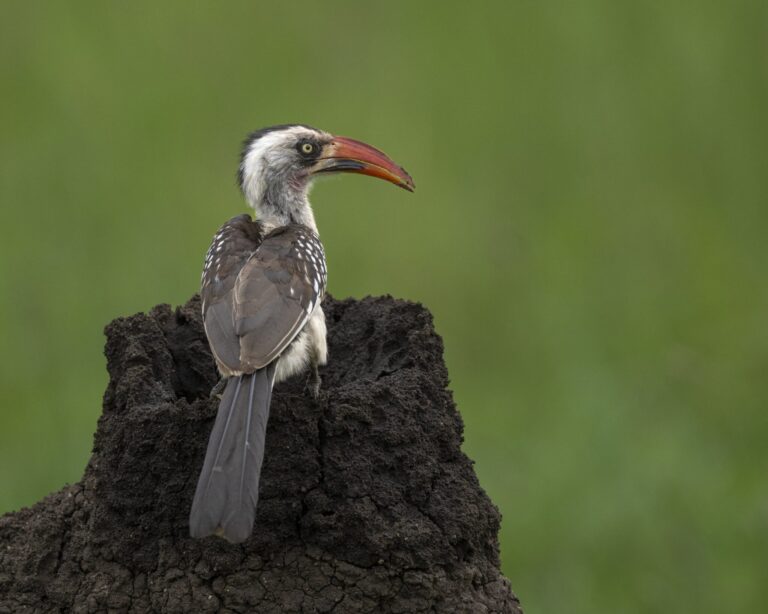
- Von der Decken’s Hornbill (Tockus deckeni): A smaller hornbill species often found in savannah habitats, including acacia woodlands. It has a black-and-white body with a striking red bill and face.
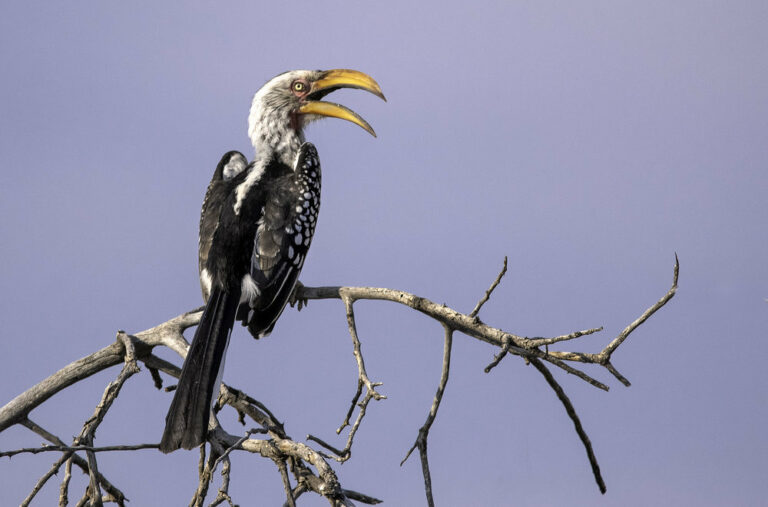
- Yellow-billed Hornbill (Tockus flavirostris): This hornbill species is widespread and common in savannah and woodland habitats of Tanzania. It has a yellow bill and face with a black-and-white body.
- Trumpeter Hornbill (Bycanistes bucinator): Found in forested areas, including riverine forests, the Trumpeter Hornbill has a distinctive loud call that resembles the sound of a trumpet. It has a black body with white markings and a large yellow casque on top of its bill.
- African Pied Hornbill (Tockus fasciatus): This hornbill species is found in woodlands and savannahs, often seen in pairs or small groups. It has a black-and-white body with a yellow bill and face.

Vultures
Africa is home to several species of vultures, which play a crucial role in the ecosystem by scavenging on carcasses and helping maintain a clean environment. However, like many parts of the world, vulture populations in Tanzania are facing significant threats such as habitat loss, poisoning, and persecution. Here are some of the vulture species that can be found in Africa:
- Lappet-faced Vulture (Torgos tracheliotos): This is the largest vulture species in Africa and can be identified by its large size, bare pink head, and distinctive lappet of skin hanging from its throat. Lappet-faced Vultures are often seen dominating carcasses and have a powerful bill for tearing tough hides.
- White-backed Vulture (Gyps africanus): One of the most common and widespread vulture species in Africa, including Tanzania. It has a dark brown body with a white back and is often seen in groups scavenging on large carcasses.
- Rüppell’s Vulture (Gyps rueppelli): A medium-sized vulture with a pale body and darker wings, Rüppell’s Vulture is adapted to arid and semi-arid habitats. It’s less common than the White-backed Vulture but can still be seen in parts of Tanzania.
- Hooded Vulture (Necrosyrtes monachus): A smaller and more delicate-looking vulture species with a pale grey head covered in feathers (not bare like other vultures). Hooded Vultures are often seen in urban areas and are more specialized in scavenging on smaller carcasses and refuse.
- White-headed Vulture (Trigonoceps occipitalis): This distinctive vulture species has a white head, dark body, and prominent bill. It’s found in woodland and savannah habitats, particularly in areas with large mammal populations.
- Egyptian Vulture (Neophron percnopterus): While not as common as the other vulture species mentioned, the Egyptian Vulture can occasionally be seen in Tanzania and Kenya, particularly in more open habitats. It has a striking appearance with a white body, yellow face, and hooked bill.

Songbirds
East Africa is rich in birdlife, including numerous species of colorful and melodious songbirds. These songbirds can be found in various habitats across the country, from forests and savannahs to wetlands and gardens. Here are some notable songbirds you might encounter during a birdwatching safari in Africa:
- Superb Starling (Lamprotornis superbus): One of the most striking and vocal songbirds in Tanzania, the Superb Starling is known for its glossy blue and orange plumage. It’s often found in savannah habitats and around human settlements.
- African Paradise Flycatcher (Terpsiphone viridis): This beautiful bird with long tail streamers is common in wooded areas and gardens. The male has stunning chestnut and white plumage.
- Northern Crombec (Sylvietta brachyura): A small and active songbird often found in acacia woodlands and scrub habitats. It has a distinctive thin, down-curved bill and sings a melodious song.
- Variable Sunbird (Cinnyris venustus): A colorful sunbird species found in various habitats including gardens, woodlands, and savannahs. Males have iridescent plumage that varies from green to purple depending on the light.
- Red-chested Cuckoo (Cuculus solitarius): Known for its distinctive repetitive call that resembles “Piet-my-vrou”, this cuckoo species is migratory and can be found in woodland and forested areas.
- Green-backed Camaroptera (Camaroptera brachyura): A small, olive-green bird with a distinctive call that is often heard in thickets and bushy areas.
- Brown-hooded Kingfisher (Halcyon albiventris): This striking kingfisher species has a chestnut-colored head and blue wings. It’s often seen perched near water bodies or in wooded areas.
- Yellow-crowned Canary (Serinus flavivertex): A small yellow finch commonly found in grasslands and savannahs. The male has a bright yellow crown.
- Black-headed Gonolek (Laniarius erythrogaster): A colorful bird with a black head and bright red belly, often heard singing from trees and bushes in wooded habitats.
- Grey-capped Warbler (Eminia lepida): A small warbler species found in forest edges and gardens, known for its melodious song.

Eagles
Africa is home to several impressive eagle species, ranging from large, iconic species like the African Fish Eagle to smaller but equally fascinating species like the Long-crested Eagle. Here are some of the eagles you might encounter during a safari in Tanzania and Kenya:
- African Fish Eagle (Haliaeetus vocifer): Perhaps the most iconic eagle of Africa, the African Fish Eagle is known for its striking appearance and distinctive call. It’s commonly found near water bodies such as lakes, rivers, and coastal areas, where it hunts fish and other prey.
- Martial Eagle (Polemaetus bellicosus): This is Africa’s largest eagle and one of the most powerful raptors on the continent. The Martial Eagle preys on a variety of animals, including birds, mammals, and reptiles. It’s often found in savannah and wooded areas.
- Tawny Eagle (Aquila rapax): A widespread and common eagle in Tanzania, the Tawny Eagle can be seen in various habitats, from open savannah to woodland. It feeds on a variety of prey, including small mammals, birds, and reptiles.
- Verreaux’s Eagle (Aquila verreauxii): Also known as the Black Eagle, this species is found in mountainous and rocky areas, particularly in the highlands of Tanzania. It preys on small to medium-sized mammals and birds.
- Long-crested Eagle (Lophaetus occipitalis): This smaller eagle species is recognized by its distinctive long crest of feathers on its head. It’s often seen perched on trees and poles in open savannah and grassland habitats.
- African Hawk-Eagle (Aquila spilogaster): A medium-sized eagle with striking plumage, the African Hawk-Eagle is found in wooded areas and hunts from perches, often preying on birds and small mammals.
- African Crowned Eagle (Stephanoaetus coronatus): Although more secretive and less commonly seen, the African Crowned Eagle is one of the largest forest eagles in Africa. It inhabits dense forests and preys on monkeys and other large birds.
- Ayres’s Hawk-Eagle (Hieraaetus ayresii): This is a small and agile forest-dwelling eagle found in montane forests and wooded areas. It primarily hunts birds and small mammals.

Weaver Birds
Weaver birds are a fascinating group of birds known for their elaborate nest-building behavior and often colorful plumage. East Africa is home to several species of weaver birds that can be found in different habitats across the country. Here are some prominent weaver bird species you might encounter in East Africa:
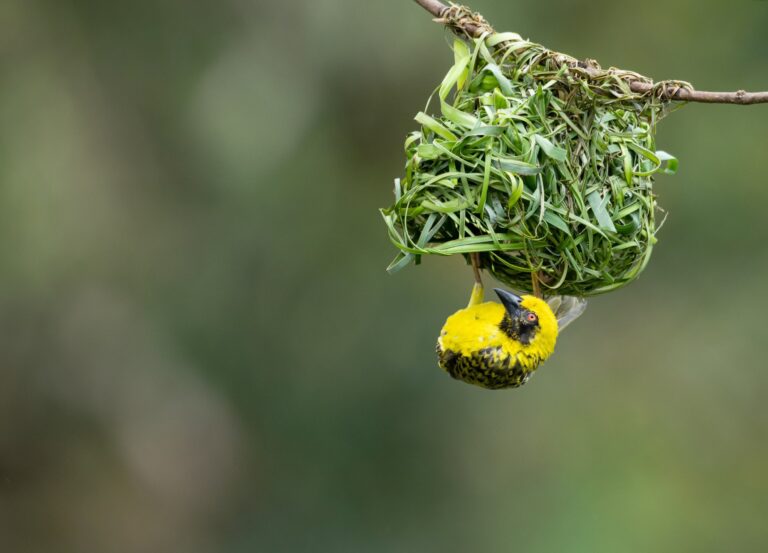
- Village Weaver (Ploceus cucullatus): One of the most widespread and common weaver birds in Tanzania, the Village Weaver is known for its bright yellow plumage (in breeding males) and its large communal nests that hang from trees near water bodies and in urban areas.
- Lesser Masked Weaver (Ploceus intermedius): This species is smaller than the Village Weaver and has a distinctive black face mask in breeding males. They are often found in open woodland and savannah habitats, nesting in trees and shrubs.
- Red-headed Weaver (Anaplectes rubriceps): Easily identified by the bright red head of breeding males, this weaver species is typically found in grassland and savannah areas, often near water.
- Golden-backed Weaver (Ploceus jacksoni): Named for the striking golden yellow plumage on its back, this weaver is common in woodlands and forest edges, building nests in trees and bushes.
- Baglafecht Weaver (Ploceus baglafecht): This weaver has a distinctive black-and-yellow plumage pattern and is commonly found in wetlands, reed beds, and along riverbanks.
- Spectacled Weaver (Ploceus ocularis): Named for its distinctive facial markings resembling spectacles, this weaver is found in wetland areas, particularly around swamps and lakeshores.
- Black-necked Weaver (Ploceus nigricollis): This species has a black neck and yellow body, often found in marshy areas and around water bodies where they build their nests in papyrus reeds.
- Thick-billed Weaver (Amblyospiza albifrons): Although not technically a weaver, this bird is often associated with weaver species due to its similar appearance. It has a stout bill and is commonly found in wetlands and grasslands.

Bee-eaters
You can find several species of bee-eaters, which are colorful and charismatic birds known for their habit of catching and eating insects, especially bees and other flying prey. Some bee-eater species you might encounter in Africa include:
- Little Bee-eater (Merops pusillus): This is one of the most common and widespread bee-eater species in Tanzania. It’s small, colorful, and often seen perched on branches or wires in open areas, frequently near water.
- Blue-cheeked Bee-eater (Merops persicus): This species is known for its striking blue and green plumage. It migrates to Tanzania during the breeding season and can be found in dry woodland areas.
- White-throated Bee-eater (Merops albicollis): Recognizable by its green and white plumage, this species is often found near water bodies, including rivers and lakeshores.
- Cinnamon-chested Bee-eater (Merops oreobates): A less common species, primarily found in miombo woodland habitats in central and southern Tanzania.
- Rosy Bee-eater (Merops malimbicus): Another colorful species with a rosy pink throat and green plumage. It’s found in savannah and woodland areas, often perched on exposed branches.
- Northern Carmine Bee-eater (Merops nubicus): While not as common in Tanzania as in other regions, this stunning bee-eater species can be found in some parts of the country, particularly near rivers and wetlands during the breeding season.

Flamingos
In Africa, you can primarily find two species of flamingos: the Greater Flamingo (Phoenicopterus roseus) and the Lesser Flamingo (Phoeniconaias minor). Both species are known for their striking pink plumage and distinctive feeding behaviors in alkaline and saline lakes. Here’s more information about each species:
- Greater Flamingo (Phoenicopterus roseus):
- Size: Larger than the Lesser Flamingo, with adults reaching heights of 3.9 to 4.7 feet (1.2 to 1.4 meters).
- Plumage: Pale pink to white feathers with pink wing coverts. The bill is pink with a black tip.
- Habitat: Greater Flamingos are commonly found in shallow saltwater lagoons, mudflats, and estuarine habitats. They can also inhabit saline lakes, where they feed on algae, crustaceans, and small invertebrates.
- Distribution: Greater Flamingos have a widespread distribution across Africa, southern Europe, Asia, and parts of the Middle East. In Tanzania, they can be seen at lakes like Lake Natron and Lake Manyara.
- Lesser Flamingo (Phoeniconaias minor):
- Size: Smaller and more slender compared to the Greater Flamingo, with adults reaching heights of 2.6 to 3.3 feet (0.8 to 1 meter).
- Plumage: Vivid pink plumage with a darker pink bill that has a distinctive downward bend. The legs are pink.
- Habitat: Lesser Flamingos are specialized in feeding on microscopic algae and cyanobacteria found in alkaline and saline lakes. They often inhabit highly alkaline waters.
- Distribution: Lesser Flamingos have a more restricted distribution compared to Greater Flamingos. They are found in eastern and southern Africa, including Tanzania, as well as parts of western India. They are commonly observed at Lake Natron and occasionally at Lake Manyara in Tanzania.
If you would like to check out the tours that we lead in Africa, you can visit those safaris here. We would love to show you one of our favorite safari and birding locations.