Trip Report: Namibia Photo Safari — A Photographer’s Journey Through One of Africa’s Most Surreal Landscapes
By Kevin Pepper |
Namibia has a way of surprising you, no matter how many times you’ve been. On our latest photography tour, we had a small group of passionate photographers—many visiting Africa for the first time. Over ten unforgettable days, we explored Namibia’s haunting ghost towns, star-filled skies, ancient cultures, and wildlife-rich plains. It wasn’t just a trip—it was an education in seeing the world differently, and in many ways, Namibia does that to you. i hope you enjoy our trip report on our Namibia photo safari
We began our adventure in Windhoek, the country’s capital, where we met the group and prepared for the journey ahead. We like to start our Namibia safaris at the Olive Grove Guesthouse, a peaceful boutique property tucked away in a quiet neighborhood of Windhoek. It’s the perfect place to shake off the jet lag before heading into the wilds of Namibia. With its cozy rooms, welcoming courtyard, and fantastic meals, Olive Grove offers a soft landing after a long journey—and the kind of quiet charm that sets the tone for the adventure ahead.
For our Namibia photo safari, we chose to drive 100% of the journey rather than using chartered flights. Namibia’s vastness is part of its beauty, and traveling by road allowed us to fully immerse ourselves in the ever-changing landscapes—watching the desert give way to mountains, and the salt pans stretch endlessly toward the horizon. The drive days became part of the adventure, offering spontaneous photo stops, surprise wildlife encounters, and time to soak in the solitude of Namibia’s open roads. More importantly, it kept the safari grounded, flexible, and gave us the freedom to explore off-the-beaten-path locations at our own pace—without worrying about fixed flight schedules. Plus, let’s be honest—it saved everyone the significant costs of internal charter flights, letting us invest more into the experiences and luxury lodges that truly make the trip memorable.

From Windhoek, we headed south to the surreal landscapes of the Quiver Tree Forest, where Namibia turns photographers into night owls. Under skies so dark they almost didn’t look real, we spent the evenings teaching night sky photography—capturing the Milky Way arcing behind the twisted silhouettes of ancient quiver trees. The silence, the stars, the group’s focus—it all set the tone for the days to come.

Next, we made our way to the coast and the haunting remains of Kolmanskop, the legendary diamond ghost town. This is where Namibia flexes its muscles as a photographer’s playground. Empty, sand-filled houses bathed in golden morning light, peeling wallpaper, broken doorways framing endless dunes. The group loved that we had early access, which meant no crowds—just the creak of the wind and the crunch of sand underfoot. Our base was the Lüderitz Nest Hotel, a cozy, oceanfront retreat perfect for unwinding after a day of crawling through sand-filled doorways and chasing the perfect shaft of light.
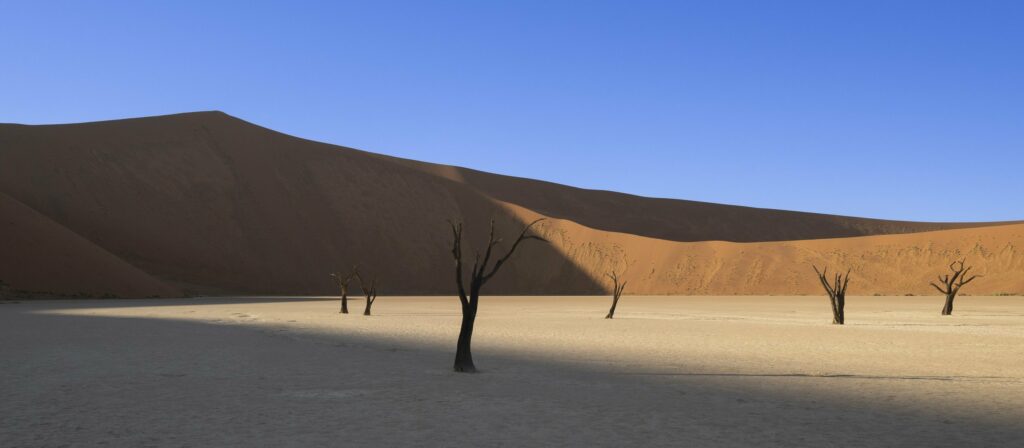
The next stop on our Namibia photo safari took us to the towering dunes of Sossusvlei and Deadvlei, where we stayed right inside the park gates at Dead Valley Lodge. This gave us the advantage of being the first into the dunes before the crowds. Dead Valley Lodge is where desert solitude meets quiet decadence. Nestled inside the Namib-Naukluft National Park, it offers one of the most privileged locations in Namibia—right at the doorstep of Sossusvlei and Deadvlei. You’re surrounded by nothing but endless desert vistas, towering red dunes, and the silence of a place that feels like the edge of the world. The air-conditioned tented chalets blend seamlessly into the landscape, each offering panoramic views of the desert from your private deck. Inside, the rooms are a fusion of canvas luxury and modern comfort—plush beds, elegant finishes, and thoughtful touches that feel more safari chic than rough camp.
After a long day of photographing the dunes, the lodge’s swimming pool and open-air restaurant are a welcome indulgence, where you can dine on Namibian-style cuisine while watching the colors shift across the desert sky. The feeling here is exclusive, remote, and unrushed—the kind of place where you might linger over a sundowner for just a little too long, because in a place like this, there’s nowhere else you’d rather be.
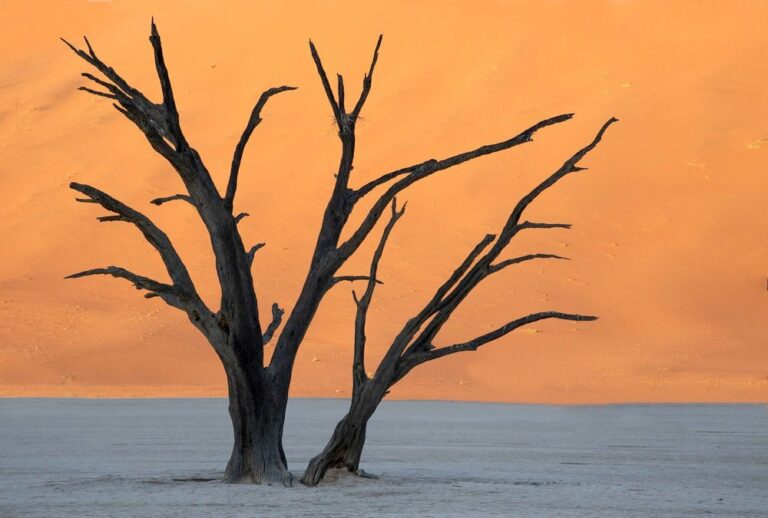
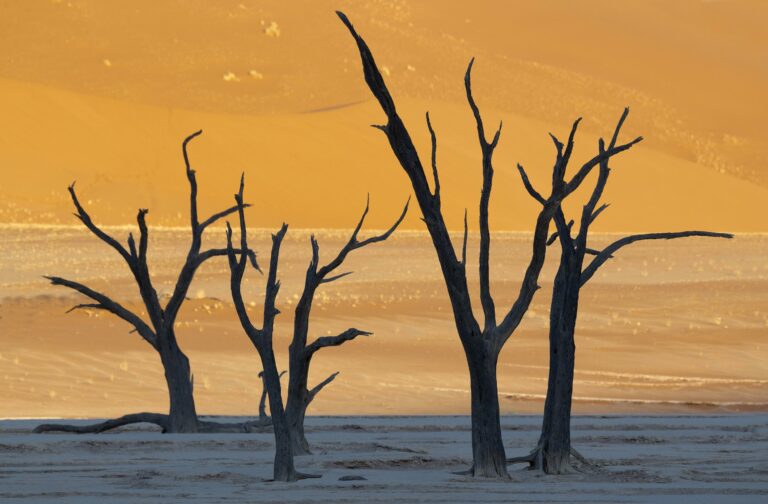
Each morning we arrived before sunrise, hiking into Deadvlei in the dark, waiting for that magical moment when the first light hits the dune crests and the ancient camel thorn trees cast long, graphic shadows across the pan. For those seeking a different perspective, a doors-off helicopter flight over the dunes at sunrise was the ultimate rush—layers of orange, red, and gold stretching as far as the eye could see. The abstract shapes, the textures—it’s what photographers dream about.

From the sands of Sossusvlei, we turned north, stopping to visit the Himba people along the way to Spitzkoppe. This wasn’t a staged cultural experience—it was authentic, heartfelt, and respectful. We spent time listening, learning, and when appropriate, photographing with care. It was a powerful reminder to our group that the best portraits aren’t just about the camera—they’re about connection and trust.

At Spitzkoppe, Namibia’s granite peaks and natural arches gave us yet another dramatic backdrop. We stayed at Spitzkoppe Lodge, one of our favorite desert hideaways, where the views from your chalet stretched endlessly into the horizon. Sunset here is an event in itself, and when the stars came out, we were ready—guiding the group in long exposures under the perfect night sky.
Spitzkoppen Lodge is a desert retreat that blends luxury with the raw beauty of Namibia’s granite peaks. Tucked among the iconic boulders of the Spitzkoppe massif—often called the “Matterhorn of Namibia”—this lodge offers a front-row seat to one of the country’s most photogenic landscapes. Each of the 15 tented chalets is perched on stilts and connected by elevated walkways, giving you uninterrupted views of the surrounding plains and mountains. The interiors are airy and elegant, with soft fabrics, natural wood, and wide glass doors that open onto private decks—perfect for watching the light change across the rocks at sunrise or sunset.
The main lodge area is equally impressive, with a lounge, restaurant, and bar all designed to showcase the views. A natural rock pool, carved into the sandstone, offers a refreshing dip with a panoramic backdrop. Evenings are best spent around the firepit, drink in hand, as the stars emerge over the desert. For photographers, hikers, and anyone seeking solitude with a touch of indulgence, Spitzkoppen Lodge delivers an experience that’s both grounding and unforgettable.

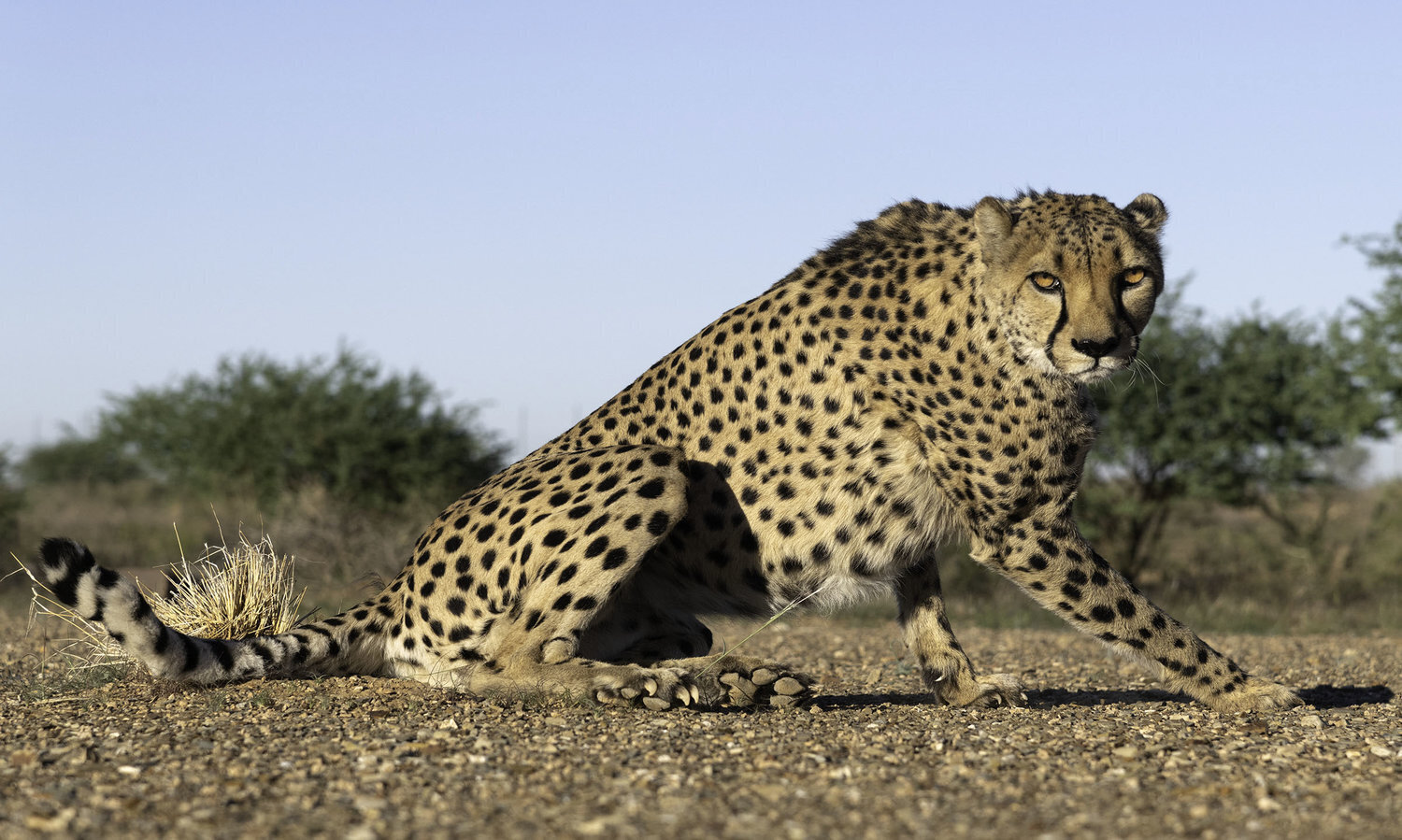
We finished our Namibia photo safari in Etosha National Park, where the pace shifted again. Wildlife photography here is different—wide open pans, stark landscapes, and dramatic encounters at the waterholes. Lions, elephants, zebras—and one magical encounter with a black rhino at sunset. We based ourselves at Andersson’s Camp, a tranquil and beautifully designed lodge right outside the park, where we ended each day with a cold Windhoek lager and a review of our images under the starry skies.
Our base at Andersson’s Camp, inside the private Ongava Game Reserve, gave us the best of both worlds—close access to Etosha National Park, but with the added bonus of being able to explore Ongava’s private lands, where we could drive off-road and enjoy wildlife sightings without the crowds. One of the highlights is their underground photography hide, built right at the edge of a busy waterhole. From inside, you’re at eye level with elephants, rhinos, and antelope—perfect for capturing intimate, low-angle shots in the soft early morning or golden afternoon light. It’s the kind of place where you might settle in for a quick peek and end up spending hours, waiting for that perfect moment when the light, the animal, and the setting all come together.
Throughout the tour, the balance of comfort and adventure was key. Our carefully chosen accommodations provided not only a great place to rest but also easy access to the action, with meals that were consistently a highlight—hearty Namibian game meats, fresh vegetables, homemade breads, and decadent desserts. Whether we were enjoying a picnic lunch under the shade of a camel thorn tree or dining under the stars at camp, the meals were a time to pause, share stories, and reflect on the images we created.
And of course, traveling with a small, nimble group made all the difference. By keeping our group small, we could fit into one vehicle with room to spare, access locations big buses can’t reach, and ensure every guest had space to shoot, learn, and never feel rushed. Namibia demands you slow down, look carefully, and embrace the unexpected. And on this tour, that’s exactly what we did.
After reading this trip report on our Namibia photo safari, please join us on one of our Namibia tours. We offer a couple flavors of tours to this country. One incorporates wildlife, the other has us chasing the night skies across the landscapes. You can see all our Namibia photo tours here.