
2023 Newfoundland Seabird Photo Tour Trip Report
By Kevin Pepper |
Newfoundland isn’t just rugged coastlines and salty air—it’s a place where Atlantic puffins can wander just feet from your lens, where gannets dive like missiles off windswept cliffs, and where whales share the same horizon. Our latest Newfoundland Seabird Photo Tour brought us back to this wild, windswept corner of Canada, where we spent a week chasing light, seabirds, and stories. From early mornings on the edge of a cliff to golden-hour puffins, here’s a look at what we experienced, what we photographed, and why we keep coming back.
Day 1 – Arrivals and Introductions in St. John’s
Everyone flew into St. John’s International Airport by mid-afternoon, eager to meet the group and get the week started. Over our welcome dinner, we dug into the essentials: gear checks, camera settings for fast-moving seabirds, composition tips, and how to prepare for long shooting days by the sea.
But before we handed out camera cleaning cloths and talked about wind direction, we addressed something even more important: how to understand a Newfoundlander. If it’s your first time on “The Rock,” you might need a moment (or three) to adjust your ear. Newfoundlanders speak with warmth, rhythm, and a whole vocabulary that sounds like it came straight out of an Irish pub and a sea shanty rolled into one.
So, we offered a crash course in Newfoundland English:
- “Stay where you’re to ’til I comes where you’re at” – Translation: Don’t move, I’ll come to you.
- “Yes, b’y” – Means everything from “Really?” to “You bet!” to “That’s amazing!”
- “Some shockin’ day, b’y” – Translation: The weather’s awful. (We heard this a lot when the fog rolled in.)
- “Long may your big jib draw” – A blessing of sorts: May the wind stay in your sails.
We always say, if you can photograph a puffin in flight, you can survive a Newfie conversation.
The group had a good laugh, and more than one guest jotted down phrases like they were part of a field guide. It’s all part of immersing yourself—not just in the land and wildlife, but in the local spirit too. By the end of the trip, most folks were throwing around “b’y” like they were born in Bonavista.

Days 2 & 3 – Gannet Heaven at Cape St. Mary’s
We made our way to Cape St. Mary’s Ecological Reserve, one of North America’s best locations for photographing Northern Gannets. The viewing area is perched above dramatic cliffs, giving us front-row access to thousands of birds soaring, squabbling, and tending nests.
To make the most of this location, we stay in charming accommodations close to the reserve. Cape St. Mary’s is remote, far from Newfoundland’s major towns—but that’s exactly the point. By staying in hand-picked hotels and B&Bs just minutes from the colony, we’re able to photograph in the soft early morning and golden evening light—something a long drive wouldn’t allow. The creature comforts don’t get sacrificed either. Our rooms had sweeping views of the Atlantic, warm hospitality from local hosts, and hearty breakfasts that powered us through full days on the cliffs. It’s peaceful, quiet, and incredibly photogenic—just like the gannets.
Photographers captured:
- Gannets in full wingspan launching into the wind
- Intimate moments between nesting pairs
- Cliffside compositions with ocean blue backdrops
- Murres, kittiwakes, and razorbills thrown into the mix
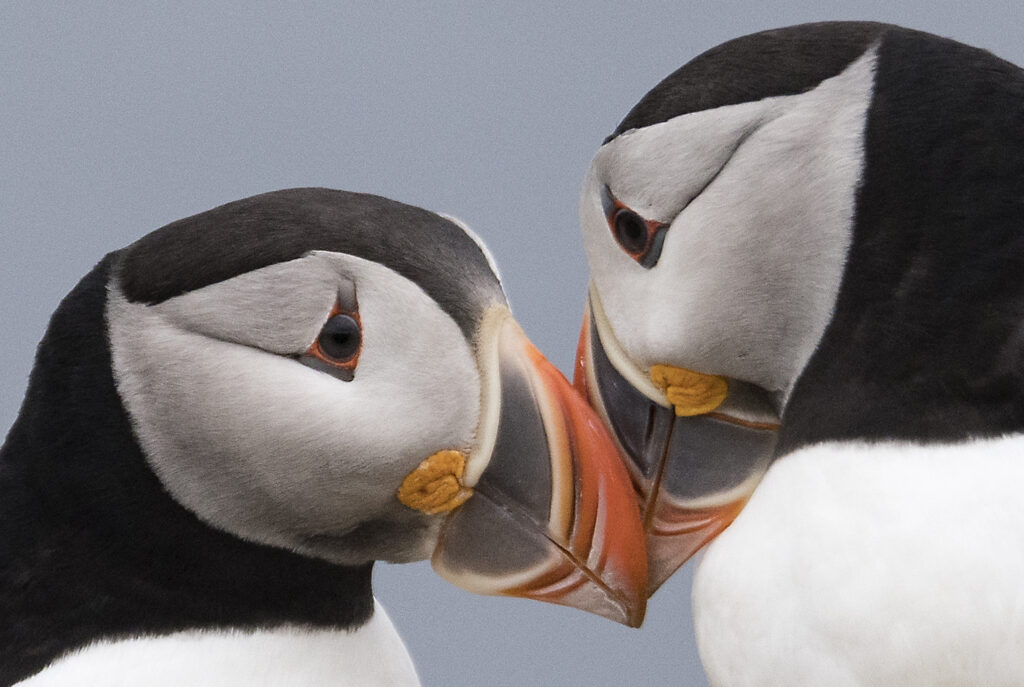
Days 4 & 5 – Puffins and Atlantic Drama in Elliston on our Newfoundland Seabird Photo Tour
We then transitioned to our base in Trinity, a beautiful coastal village that’s become one of our go-to hubs for puffin photography over the past decade. While there are no hotels right beside the Elliston puffin colony, we choose Trinity because of its proximity to not only the birds but also our whale tour partners and great local restaurants.
Trinity also offers photographers a slice of quintessential Newfoundland: vibrantly painted saltbox houses, colorful fishing boats bobbing in the harbor, and wildflowers spilling across open fields. Many of our guests spent downtime capturing these classic maritime scenes between puffin shoots.
Staying in Trinity also gives us the flexibility to prepare picnic lunches for long days in the field, and return to cozy, well-appointed inns where the beds are soft, the water’s hot, and the views out the windows are pure East Coast magic. The staff at our accommodations were incredibly welcoming, always ready with a hot drink, a local story, or a recommendation for the best chowder in town.
We photographed:
- Atlantic Puffins flying in with beakfuls of fish
- Puffin pairs perched near their burrows
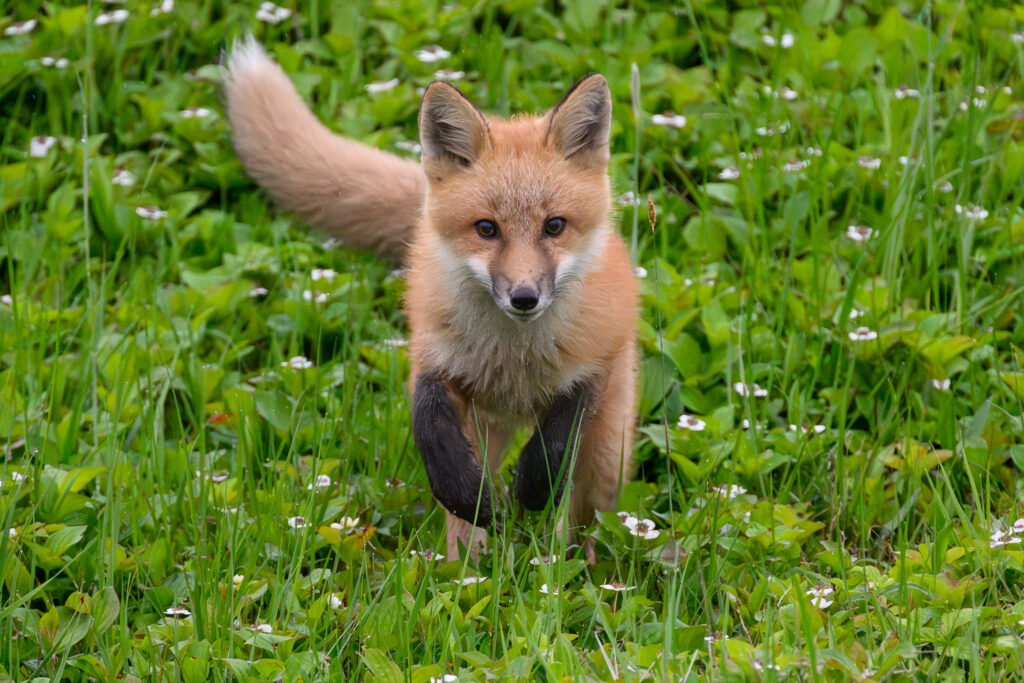
- Red foxes patrolling the area
- Seascapes dotted with whales from our private boat charter
Day 6 – Final Frames and Farewell Dinner
We returned to the puffin colony one last time at sunrise, making the most of soft light and active birds. After a final morning in the field, we packed up and made our way back to St. John’s, stopping for lunch and one more round of photo talk along the way.
Our final group dinner that night was filled with laughter, shared stories, and a healthy amount of “show and tell” from the week’s best images.
Day 7 – Departures and Reflections
By the time we left Newfoundland, memory cards were full and eyes were tired—in the best way. The week had been a blend of seabird action, remote coastal beauty, and the kind of camaraderie that only comes from time in the field with like-minded photographers.
Final Thoughts on our Newfoundland Seabird Photo Tour
This tour is the result of over a decade of experience in Newfoundland—and just as many lessons learned.
In previous years, we tried to do it all. We ran tours that combined landscapes and wildlife, thinking everyone would appreciate a bit of both. But truth be told, no one walked away completely satisfied. Wildlife photographers didn’t care much for getting up early to watch the sunrise behind a lighthouse. And landscape shooters? They’d have gladly chosen bamboo under the fingernails over spending three hours trying to nail a perfectly backlit shot of a Gannet coming in for landing.
So we listened. We adapted.
Now, we focus on what people really want: wildlife tours for wildlife photographers, and landscape tours for those chasing light and big views. This trip to Newfoundland is tailor-made for seabird lovers and wildlife shooters. Every location, every time slot, every choice of accommodation is designed to maximize your chances at portfolio-worthy shots—without sacrificing comfort, good food, or flexibility along the way.
Whether you came for Puffins, Gannets, or Whales, you left with all three… and probably a few images you’ll be proud to hang on a wall.
If you’re ready for a photography adventure that’s wild, rewarding, and rooted in East Coast charm, with a team that’s made all the mistakes so you don’t have to—then our Newfoundland Seabird Photo Tour should be next on your list.
We’ll see you there. Akari Photo Tours plans to lead a few Newfoundland Seabird Photo Tours each summer. Please check them out on our tour page.


