Species Spotlight: Northern Gannet
By Kevin Pepper |
Introduction of the Northern Gannet
Photographing the Northern Gannet feels like working in a live-action National Geographic special. With their six-foot wingspans, stunning eyes, and dramatic plunge-diving behavior, these birds are aerial athletes. And Cape St. Mary’s? It’s one of the best front-row seats in the world.
Physical Description
Adult gannets are large, streamlined seabirds with stark white plumage, black-tipped wings, and a soft golden hue on the head and neck during breeding season. Their eyes are pale blue, surrounded by bare black skin that adds intensity to their gaze. With long pointed bills and tapered bodies, they’re built for slicing into the ocean from great heights.
Native Habitat of the Northern Gannet
Gannets nest in massive colonies on sheer cliffs and sea stacks, usually on remote islands or rugged coastal outcrops. In North America, Cape St. Mary’s Ecological Reserve in Newfoundland is home to one of the most accessible nesting colonies on the continent, just a short walk from the trailhead to the edge of the sea.
Migration Patterns in North America
After the breeding season ends in late summer, gannets disperse widely across the North Atlantic. Some head as far south as the Gulf of Mexico, returning north to nest from March through August. Their presence at Cape St. Mary’s peaks in late spring and early summer—right when we’re there with cameras ready.
Food/Eating Habits
Northern Gannets are plunge-divers, dropping from as high as 100 feet into the sea at speeds nearing 100 km/h. They feed primarily on schooling fish such as mackerel and herring. Watching (and photographing) a group of gannets dive in synchrony is one of the most awe-inspiring scenes you’ll witness on the ocean.
Known Lifespan of the Northern Gannet
Gannets are long-lived seabirds, with lifespans reaching 30 years or more. They don’t begin breeding until 4–5 years of age and often return to the same nesting site annually.
Join Us on Our Newfoundland Seabird Workshop
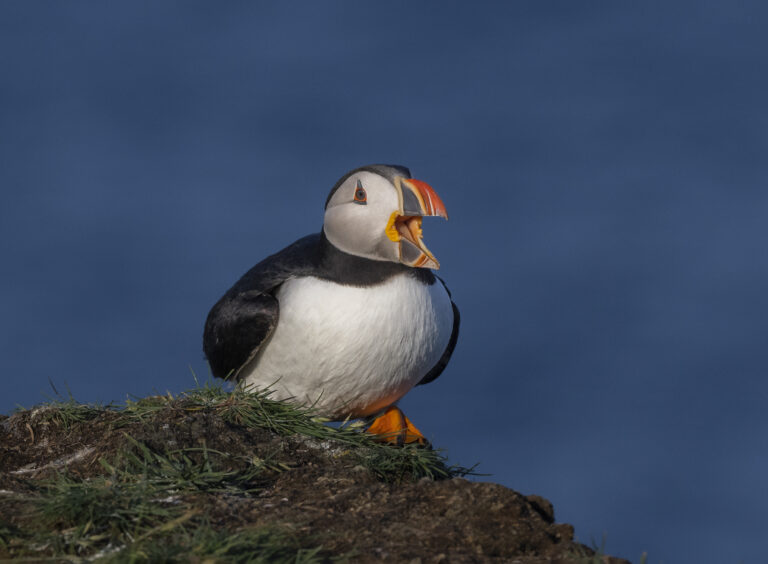
There’s nothing quite like photographing puffins on the rugged coast of Newfoundland—sea spray in the air, cliffs below, and hundreds of birds soaring past. On our Newfoundland Seabird workshop, we’ll take you to active colonies during the peak of breeding season, where you can capture intimate portraits, flight shots, and classic beak-full-of-fish moments with guided instruction and ideal light.
Whether it’s your first time seeing puffins or your tenth, the magic never fades. And we’ll make sure your images do them justice.
Read Other Species Spotlight articles
If you’re as passionate about wildlife as we are, take a moment to explore our Species Spotlight series. Each article dives into the fascinating lives of the animals and birds we love to photograph on our workshops—whether it’s a puffin perched on a cliff in Newfoundland, a leopard draped across a tree in Tanzania, or an Adelie penguin waddling through the snow in Antarctica. It’s a growing library of stories, facts, and inspiration for anyone who dreams of capturing the wild through their lens. Come see the world the way we do—one species at a time.