Why Small Group Namibia Photography Workshops Lead to Better Photos
By Kevin Pepper |
Namibia is one of those places that rewards photographers who slow down, spread out, and work with intention.
This is not a destination that feels better when you are packed into a large vehicle, waiting your turn, or following a crowd through the desert. Namibia is quieter than that. More personal than that. The light is too beautiful, the landscapes are too grand, and the photographic opportunities are too special to experience shoulder to shoulder with a busload of people.
That is one of the main reasons we keep our Namibia workshops small.
For us, small group photography workshops are not a marketing angle. They are a better way to experience the country. They lead to stronger images, less stress, more flexibility, and a much more enjoyable trip from beginning to end. In a place like Namibia, that difference matters every single day.
Namibia Rewards Space, Patience, and Position
There are some destinations where a larger group can still function reasonably well. Namibia is not one of them.
So much of what makes this country special for photographers comes down to access, timing, and room to work. Room to move around. Room to wait for the right light. Room to change your angle by a few feet and suddenly turn a decent shot into one that feels clean, graphic, and powerful.
That becomes much harder when too many photographers are trying to do the same thing at once.
In Namibia, the best images often come from subtle choices. A slightly different position in a dune field. A cleaner foreground in the quiver trees. One side of an old room in Kolmanskop instead of the other. A few extra minutes with wildlife. A bit more breathing room in the vehicle. Those little differences matter. Large groups usually take them away.
Small groups preserve them.
Kolmanskop Is Better When You Are Not Fighting for the Room
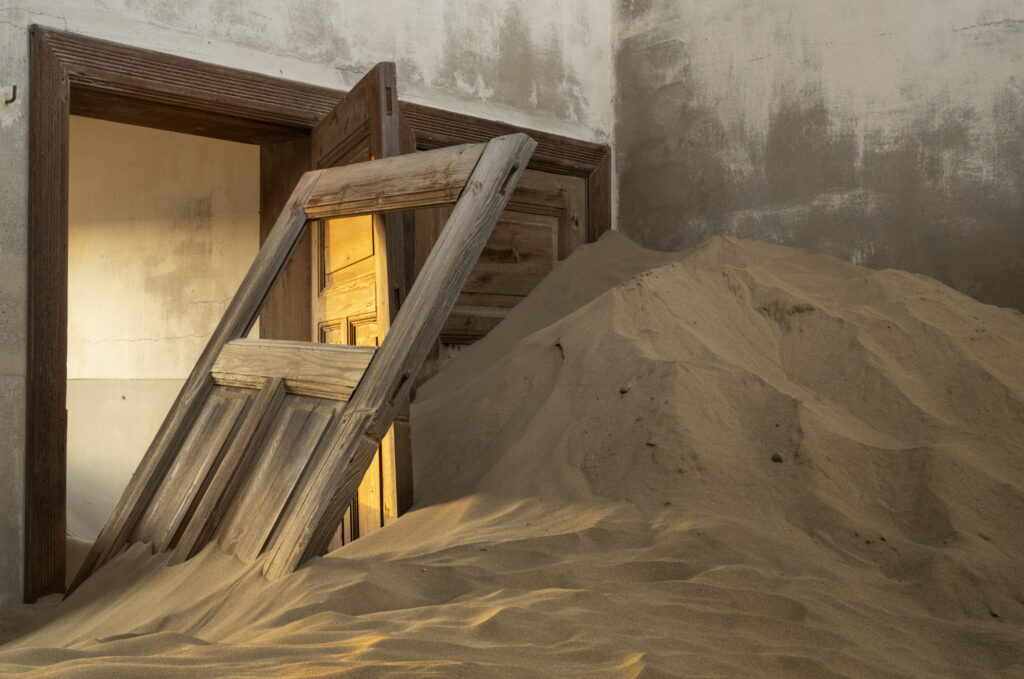
Kolmanskop is one of Namibia’s most iconic photography locations, and for good reason. The old diamond mining town is full of decaying buildings, drifting sand, peeling walls, and shafts of desert light that can turn a simple room into something extraordinary.
It is also a place where group size matters a lot.
Some of the best rooms at Kolmanskop are not large. They do not comfortably hold a crowd of photographers with tripods, backpacks, and the natural urge to stand in exactly the same place. With a large group, the problem starts immediately. Footprints pile up in the sand. People block doorways and windows. Clean compositions disappear. The best light arrives, and instead of quietly working the room, everyone is negotiating for space.
That is not a recipe for creative photography. That is a polite desert traffic jam.
With a small group, the experience is completely different. We can work through the strongest rooms without creating chaos. We can give people time to explore their own angles. We can keep footprints to a minimum. We can move more efficiently and spend our energy making photographs instead of waiting our turn like we are lining up for concert tickets.
Kolmanskop is one of those places where smaller groups do not just make things more comfortable. They make the photography better.

Spitzkoppe in the Middle of the Night Is No Place for a Crowd
Spitzkoppe has a way of making photographers feel very small, and I mean that in the best possible way.
The granite peaks, the open sky, the rock formations, and the silence all come together in a way that feels almost ancient. At night, when the stars come out and the desert settles into that deep stillness, it becomes one of the most memorable places to photograph in all of Namibia.
It also becomes very clear why small groups matter.
When you are moving across the rocks in the dark, setting up for night photography, the last thing you want is a long line of people stumbling around headlamps blazing like a prison break in the desert. Night photography at Spitzkoppe works best when the group stays compact, controlled, and respectful of the space.
With a small group, we can move carefully and stay close. We can work around arches, rock patterns, and foregrounds without turning the scene into a crowd management exercise. We can keep stray lights to a minimum. We can adapt quickly if clouds move, the stars shift, or someone finds a stronger composition just a little farther down the rocks.
That kind of photography is intimate. It takes trust, patience, and room to think. Large groups tend to flatten that experience. Small groups protect it.

The Quiver Tree Forest Deserves Quiet and Clean Composition
The quiver tree forest is another perfect example of why this style of workshop works so well in Namibia.
These trees already have so much character. Their shapes are elegant, strange, and unmistakably Namibian. Add warm late-day light, rocky foregrounds, and a dark sky overhead, and the location can be spectacular.
But once again, it does not take many people to disrupt it.
Too many photographers in a quiver tree forest means people in the background of your frame, tripods where you do not want them, and constant compromise in your compositions. You may still get photos, sure. But you are no longer working with the sense of solitude that makes the place feel so special in the first place.
With a small group, we can spread out. We can give each photographer space to build a composition that feels personal. We can shoot different trees, different layers, different foregrounds, and different skies without stepping into each other’s images every few minutes.
It is a much calmer way to work. Namibia deserves that.

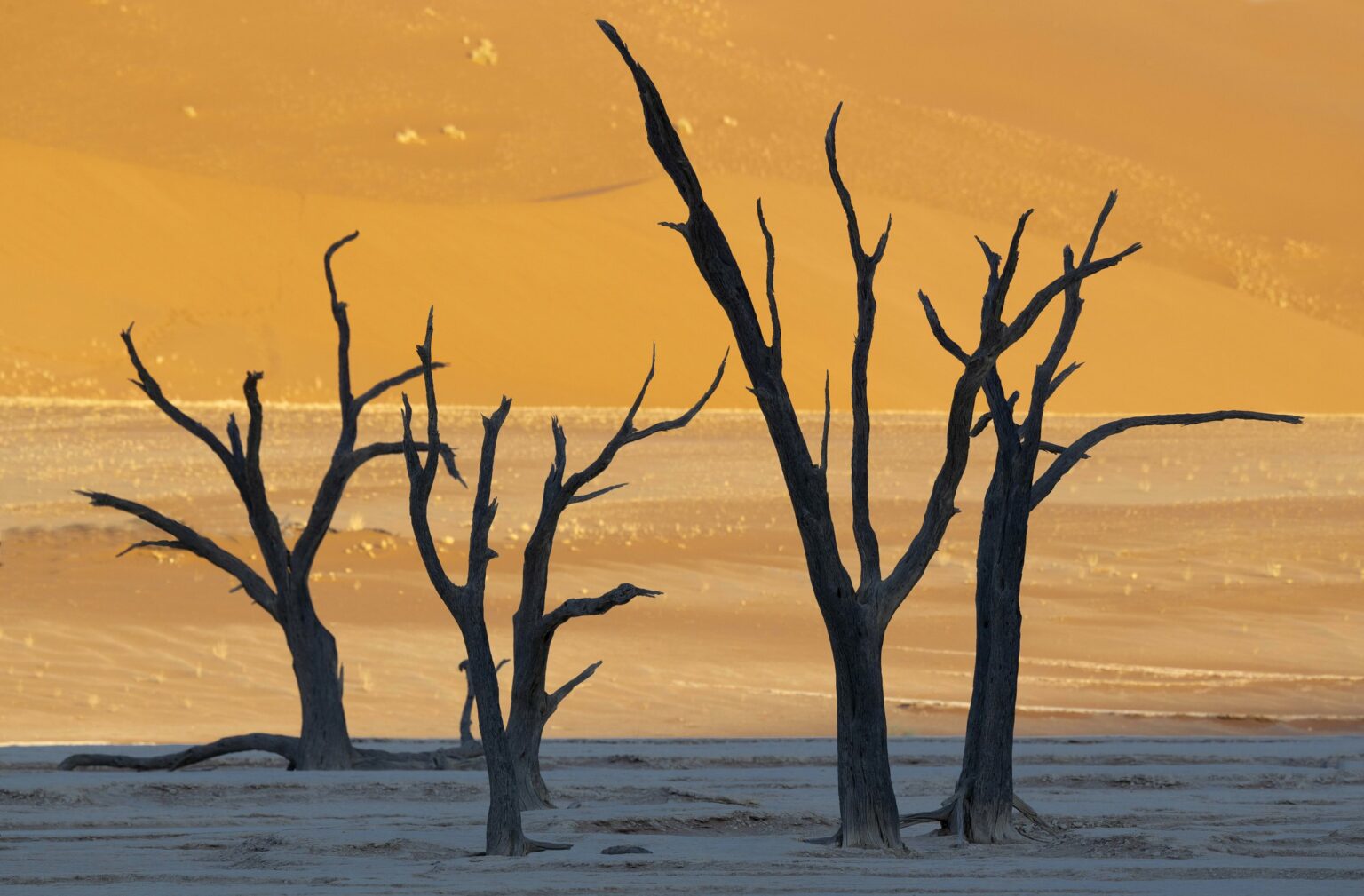
Deadvlei Is All About Angles, and Angles Are Harder in Big Groups
Deadvlei is one of the great landscape photography locations in the world.
The cracked white clay, the black camelthorn trees, the orange dunes, and the hard, clean light all come together in a way that is immediately recognizable. It is dramatic, graphic, and endlessly rewarding for photographers who know how to look past the obvious.
That last part matters.
Deadvlei is not just about arriving there. It is about finding the best angle. It is about paying attention to spacing between trees, background dune lines, shadows, and visual balance. A step to the left can improve a frame. A few more minutes can completely change the light. Sometimes the best image is not where everyone first stops.
That becomes difficult with a larger group. People naturally bunch up. The strongest vantage points get crowded. It takes longer to move. Photographers feel rushed. And suddenly a location that should feel expansive starts to feel oddly cramped.
Small groups let us work Deadvlei properly. We can move with purpose. We can explore. We can help each participant refine compositions without forcing everyone into the same patch of ground. The result is not just a better experience. It is better photography.

Small Groups Matter Even More for Wildlife
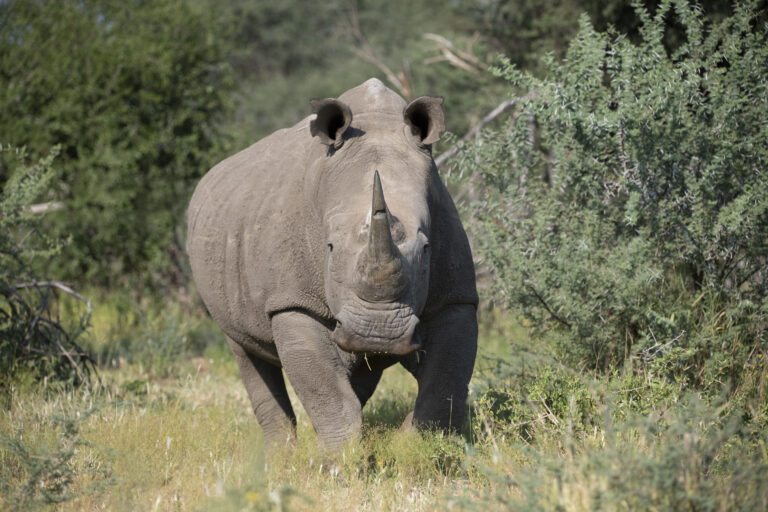
Namibia is not only about landscapes. It is also a fantastic wildlife destination, and small groups matter just as much there.
Whether we are photographing from a vehicle or spending time on walking safaris, flexibility is everything. Wildlife photography is built around timing, behavior, and light. You need room to react. You need space for gear. You need the ability to shift your body, change your angle, and work quickly when something starts to happen.
In a packed vehicle, that gets harder fast.
With a small group, there is more room to spread out. More room for long lenses. More room to move from one side of the vehicle to the other when the action changes. More comfort during long drives. More freedom to actually photograph, instead of worrying about whose elbow is in your ribs or whose lens hood is now part of your personal space.
And on walking safaris, smaller groups simply work better. The experience feels quieter, safer, and more responsive. We can stay together more easily, communicate better, and make thoughtful decisions as conditions change. When the light shifts or wildlife appears in a promising position, small groups give us the flexibility to respond well.
That flexibility often separates a decent sighting from a memorable photographic opportunity.
Small Groups Also Mean Better Places to Stay
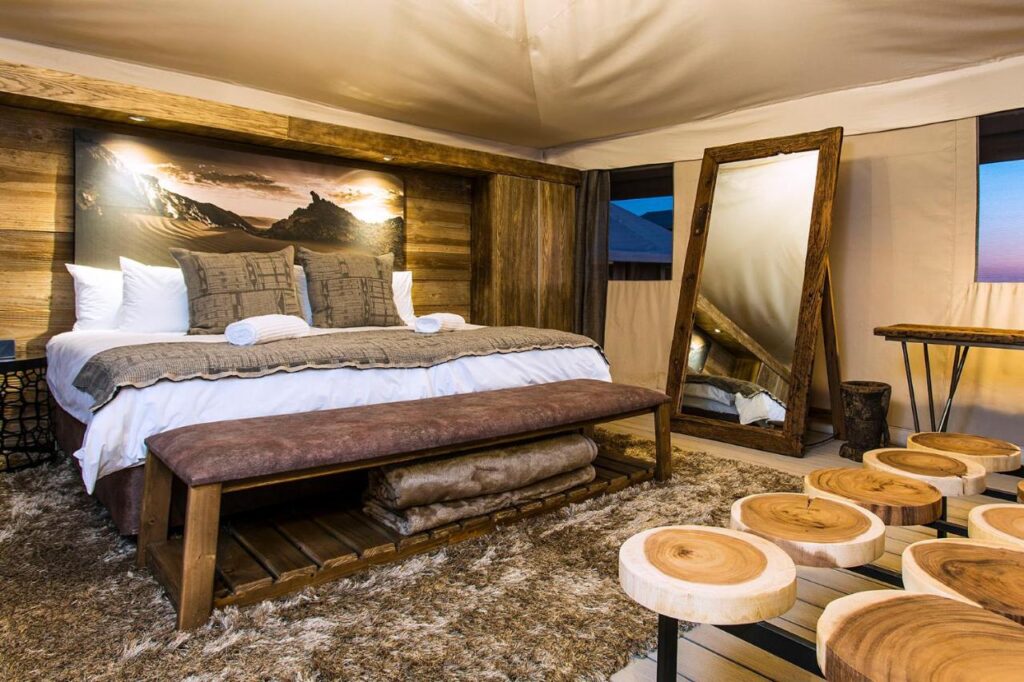
One of the less obvious benefits of a small group workshop is accommodation.
In Namibia, some of the most memorable properties are not giant hotels built to handle tour buses. They are smaller, more personal lodges and boutique properties where the rooms, service, atmosphere, and food all elevate the trip.
These places make a difference.
After a long day of photography, where you stay matters. A comfortable room matters. Good service matters. A peaceful setting matters. Thoughtful hospitality matters. These things shape how rested you feel, how well you recover, and how much you enjoy the overall experience.
Large groups often push operators toward larger hotels because they need the room inventory. Smaller groups give us more freedom to choose character over capacity. That means better stays, better service, and a more refined experience overall.
Namibia is too special a destination to reduce to “a bed is a bed.” We do not believe in that approach, and our guests feel the difference.
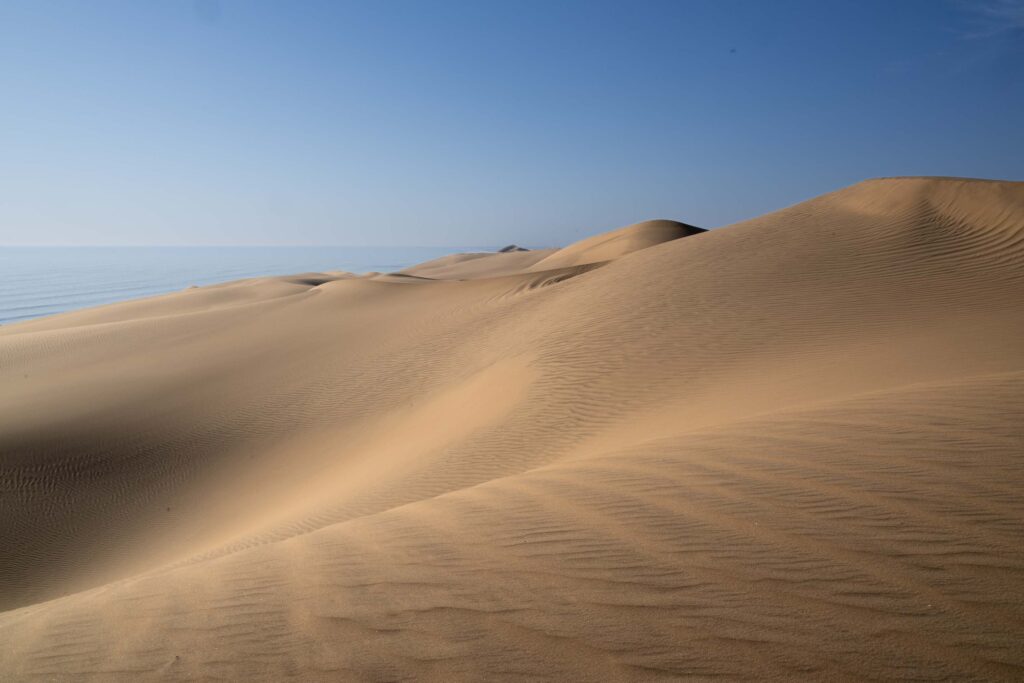
Even along the Water, Small Groups Have an Advantage
This also holds true during our sand dune harbour excursions.
When we are photographing along the coast, being able to stay close together matters. It helps with communication, timing, and keeping the group in the right position as photographic opportunities unfold. Smaller groups are simply easier to manage in a way that feels smooth and enjoyable rather than hectic.
It keeps the experience personal. It keeps instruction easy. And it keeps everyone closer to the action.
That may not sound dramatic on paper, but out in the field it matters.
Why We Believe So Strongly in Groups of 4 or 5
All of this is why Akari keeps our Namibia groups small, often just 4 or 5 photographers.
We do it because it leads to stronger images. We do it because it protects the experience. We do it because Namibia is a country that rewards careful photography, not crowded logistics.
A smaller group gives us more freedom in the field, more comfort in the vehicle, more quality in our accommodations, more access to the best rooms and angles, and more flexibility when conditions change. It also allows us to stay close as a group, teach more effectively, and give each guest more personal attention throughout the trip.
That matters whether you are standing in the silence of Deadvlei at sunrise, threading your way across the granite at Spitzkoppe under the stars, or trying to create a clean composition inside one of Kolmanskop’s sand-filled rooms.
Bigger groups may lower the headline price. But in a destination like Namibia, they often lower the quality of the experience too.
And when people are traveling halfway around the world for a bucket-list workshop, that tradeoff is not worth it.
Join Us in Namibia
At Akari Photo Tours, our Namibia workshops are built around the idea that great photography trips should feel personal, comfortable, and thoughtfully designed from start to finish. That is exactly why we keep our groups small.
Our Namibia Photography Workshop is perfect for photographers who want to experience the full variety of this remarkable country, from desert landscapes and iconic locations to desert-adapted wildlife and coastal adventure. Our Namibia Night Skies and Landscapes Workshop is designed for photographers who are drawn to bold scenery, graphic composition, and some of the darkest skies on earth.
Both workshops are built the Akari way: small groups, strong instruction, beautiful places, and enough room to actually enjoy the photography.
Because in Namibia, space is not a luxury.
It is part of the picture.