Why TimBila Nature Reserve Is One of Our Favorite Places to Stay in Namibia
By Kevin Pepper |
After more than a decade of leading photography workshops through Namibia, we have become fairly opinionated about where we stay.
That tends to happen after enough early mornings, dusty roads, long drives and days when your camera bag somehow feels twice as heavy by dinner.
For us, a lodge needs to do more than provide a bed.
It should put us in a good location. It should give our photographers a comfortable place to recharge. The food should be something we look forward to. And, when possible, the experience should continue even after we park the safari vehicle.
TimBila Nature Reserve checks all of those boxes.
Set on 33,500 hectares of protected land in central Namibia, TimBila combines a serious wildlife reserve with several levels of accommodation, excellent dining and a conservation story that gives the property more meaning than simply being another beautiful safari lodge.
That combination is exactly why it has become one of our favorite places in Namibia.
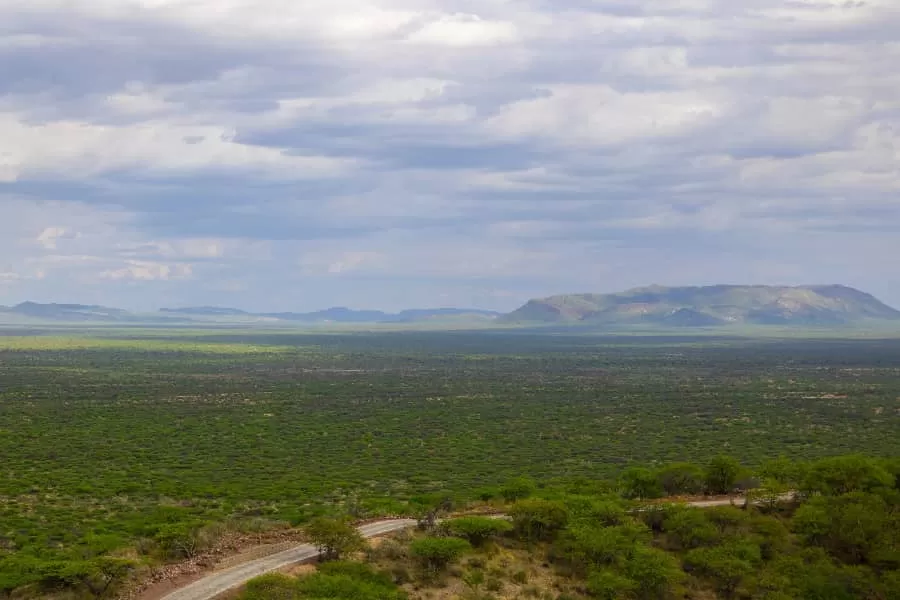
First, There Is the Setting
TimBila sits in the thornbush savanna near Omaruru, north of Erindi and centrally positioned between Windhoek and Namibia’s coast. The reserve describes itself as being about 60 kilometres from Omaruru.
That location matters.
Anyone who has traveled through Namibia knows that this is a country where distances have to be respected. Namibia does not look particularly intimidating on a map until you start driving it.
Then the map has a little laugh at your expense.
One of the things we consider carefully when building our photography workshops is how the lodging fits into the route. We don’t want beautiful hotels that require us to sacrifice half a day getting to them.
TimBila gives you the feeling of being deep in the Namibian bush while remaining well positioned within the central part of the country.
But once you enter the reserve, the road trip feeling disappears pretty quickly.
Now you are on safari.
A 33,500-Hectare Wildlife Reserve
This is the biggest reason TimBila stands apart from simply choosing a comfortable lodge near Omaruru.
You are staying inside a working wildlife reserve.
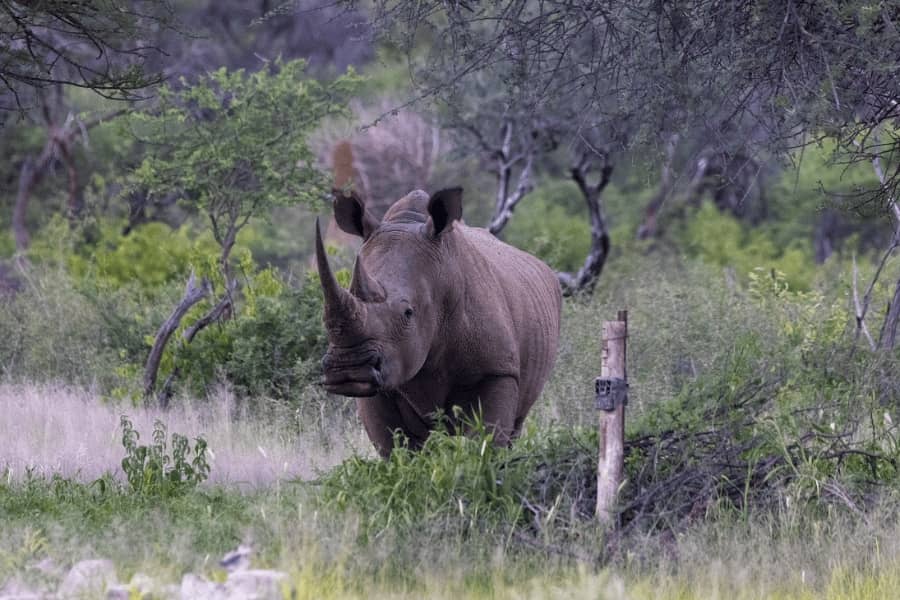
TimBila is home to four of Africa’s traditional Big Five species—lion, leopard, elephant and rhino, with buffalo being the one member of the Big Five not found here. The reserve offers wilderness drives, guided nature walks and tracking experiences focused on wildlife including lions, elephants and rhinos.
That creates some interesting possibilities for wildlife photographers.
Instead of driving somewhere to begin the wildlife experience, you wake up surrounded by it.
The reserve is large enough to create that feeling of space we love about Namibia. You are not driving around a small fenced property looking for animals that everyone already knows are behind the next bush.
You are exploring.
You are watching.
You are waiting.
And that suits the way we like to photograph wildlife.
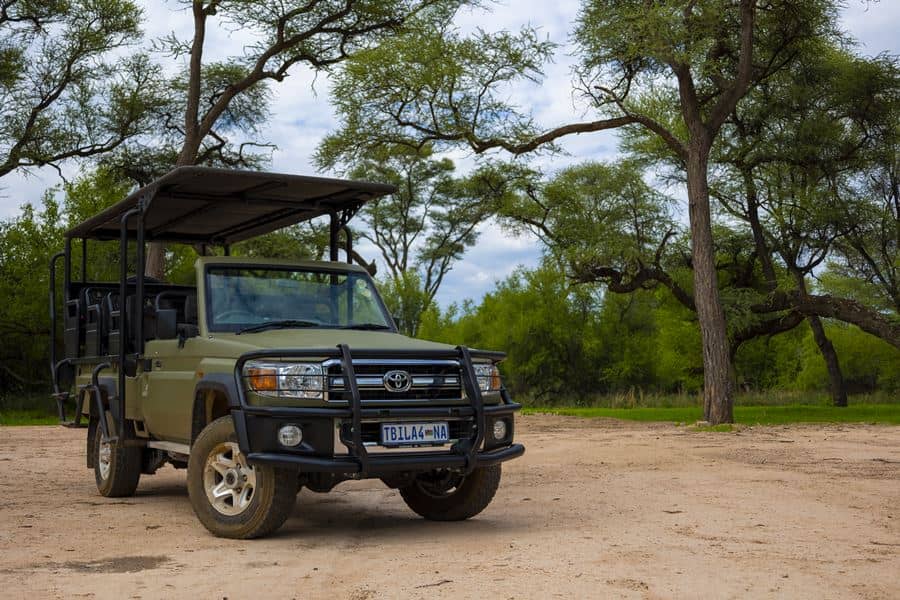
Wildlife With a Conservation Story
There is another part of TimBila that we appreciate.
Many of the animals here have a story.
TimBila calls itself the “Home of Second Chances.” The reserve was developed in partnership with the Naankuse Foundation as protected habitat for wildlife, including animals affected by human-wildlife conflict. Naankuse says conflict lions, elephants, rhinos and African wild dogs have all found protected territory at TimBila.
For photographers, I think knowing that story changes the experience.
We certainly come to Africa wanting to photograph wildlife.
But the longer you spend around these animals, the more you begin to appreciate that conservation is far more complicated than simply drawing lines around a national park.
People live beside wildlife.
Farmers need to make a living.
Predators move.
Elephants move.
Conflict happens.
Places like TimBila are working on what happens next.
The reserve also uses scientist-led guiding and wildlife monitoring as part of its conservation model, with experiences designed to teach guests about reserve management and human-wildlife conflict mitigation.
That adds another layer to the visit.
You aren’t simply photographing a lion.
You may also learn why that lion is there.
The Wildlife Photography Opportunities
From a photography perspective, TimBila offers something we always value: variety.
Lion.
Elephant.
Rhino.
Leopard.
African wild dogs.
And a broad range of other wildlife moving through the reserve.
But the photography isn’t only about compiling a species list.
Namibia produces a different type of wildlife image than many other African destinations.
There is space here.
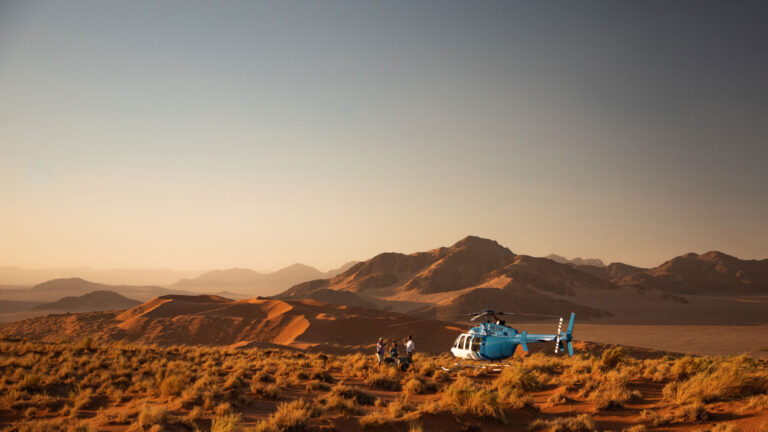
There are rocky ridges, thornbush, open plains, dust and big skies.
That allows us to work on more than tight portraits.
We can photograph animals within their environment.
We can think about backgrounds.
We can use the landscape.
We can wait for the light instead of simply trying to get as close as possible.
TimBila also offers sunrise and sunset wilderness drives, which is exactly when photographers want to be outside. Its wildlife-tracking experiences use tracking technology to help guides locate species including lions, elephants and rhinos across the reserve.
For us, that is far more interesting than a safari schedule built around convenient breakfast hours.
Photography first.
Breakfast will forgive us.
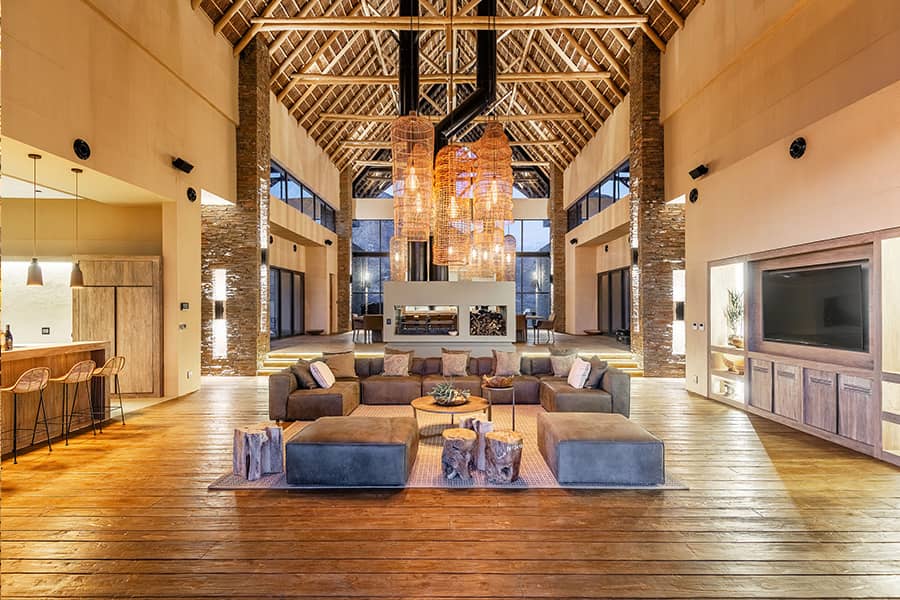
TimBila Safari Lodge: This Is Our Kind of Roughing It
Let’s address the accommodations.
There are people who believe a proper African safari requires sleeping on the ground.
We respect those people.
We also enjoy hot showers, good mattresses and cold drinks.
TimBila gives visitors several accommodation levels, ranging from traditional camping and self-catering glamping at Camp Namibia to the Farmstead, a private villa and the high-end TimBila Safari Lodge.
That range is unusual and gives the reserve flexibility for very different types of travelers.
But the TimBila Safari Lodge is where things move firmly into the category of safari luxury.
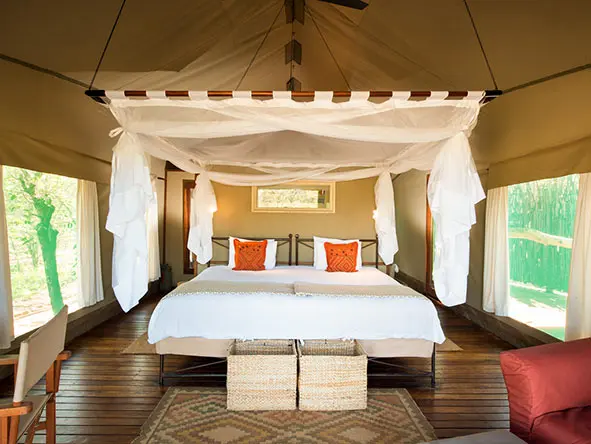
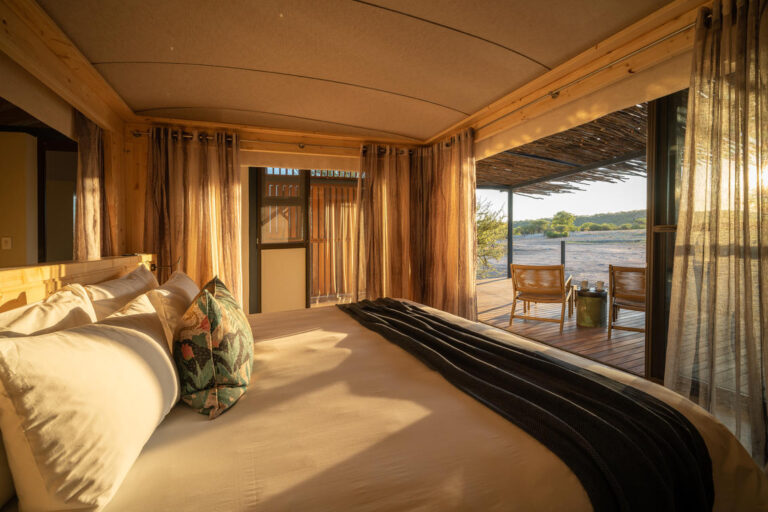
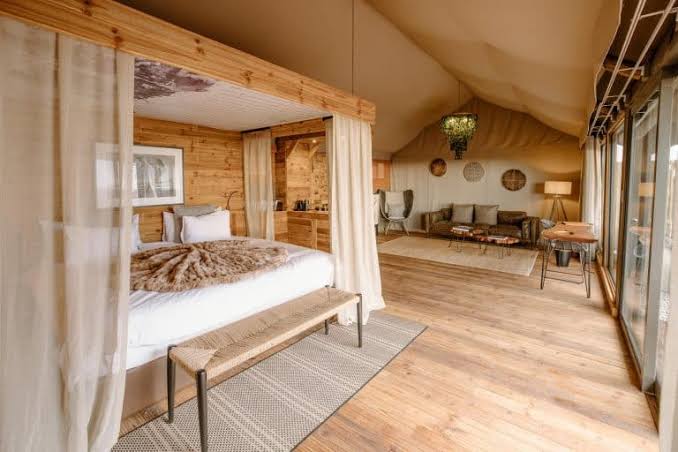
The lodge sits on the slope of Osera Mountain overlooking the plains of the reserve. Its 12 spacious tented suites include private decks, wood-fired hot tubs and outdoor stargazing beds.
Yes.
A wood-fired hot tub.
After several hours bouncing around a safari vehicle with a 600mm lens, suddenly conservation isn’t the only thing being rehabilitated.
Your back may be too.
Luxury That Still Feels Like Africa
What I like about TimBila Safari Lodge is that the comfort doesn’t remove you from the environment.
That is important.
Sometimes luxury safari properties become so polished that you could almost forget where you are.
We don’t want that.
We want the comforts, but we still want to look out and see Africa.
The suites at TimBila are designed around views over the plains, and even binoculars are provided so guests can continue watching the landscape from their rooms.
There is also a heated infinity pool overlooking the reserve, along with a wellness centre and gym.
For our photographers, those things matter more than you might think.
Photography workshops can be long days.
We may leave before sunrise.
We may stay out through sunset.
We may spend hours concentrating through a viewfinder.
Having somewhere genuinely comfortable to return to allows everyone to reset before we do it again the next morning.
And we will do it again the next morning.
Probably earlier.
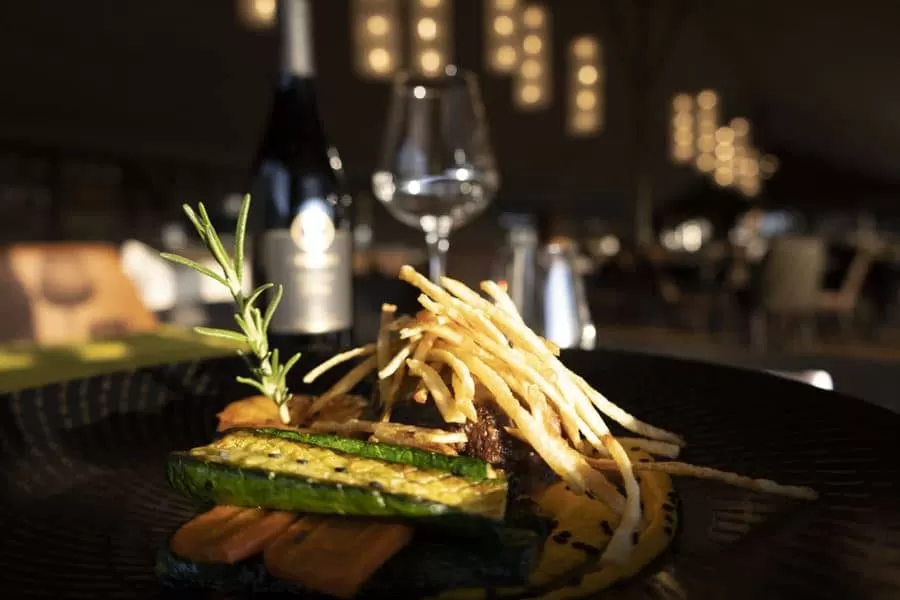
Then There Is the Food
A great safari day should end with a good meal.
TimBila takes that part seriously.
The Safari Lodge’s main restaurant has an interactive kitchen and focuses its menu around locally sourced ingredients. There are indoor and outdoor lounge spaces overlooking the plains, along with a full bar serving everything from juices and smoothies to cocktails.
There is also The Cellar, a dedicated wine cellar below the main lodge that can be transformed into a private dining space in the evening. Its wine selection includes Namibian wines from Neuras Wine and Wildlife Estate along with other sustainably produced wines.
This is one of those details that matters after a long day.
You come back from the evening drive.
The cameras start getting passed around.
Someone saw the lion first.
Someone else caught the elephant in better light.
Someone claims their rhino photograph is sharper than yours.
The stories get slightly better with every glass of wine.
That’s safari.
The meals and evenings aren’t separate from the experience.
They are part of it.
Different Accommodation Levels for Different Travelers
Another thing we like about TimBila is that the reserve isn’t built around one type of guest.
At the top end is TimBila Safari Lodge.
The TimBila Private Villa offers five bedrooms, a swimming pool, waterhole views and a fully serviced stay that can include a private chef, butler and safari guide.
For travelers who prefer something more casual, Camp Namibia has 12 self-catering glamping tents along the Omaruru River bed as well as four private campsites. There is a pool, firepit, nearby waterhole and even a pizzeria bar.
And the TimBila Farmstead offers yet another experience, built around a luxury farm-style stay.
In other words, TimBila understands something we have learned after years of traveling through Namibia:
There isn’t one correct way to experience the country.
But for our photography workshops, comfort, location and access usually win.
We have a lot we want to accomplish during the day.
Sleeping badly isn’t on the itinerary.
Why TimBila Works for Photographers
After years of leading photographers through Namibia, we judge accommodations a little differently than most travelers.
A beautiful room is nice.
But we ask different questions.
Where are we when we wake up?
How quickly can we get into good photographic situations?
Can our guests rest properly between long days?
Does the property itself add something to the experience?
Will we remember staying here?
TimBila answers those questions well.
The reserve gives us wildlife.
The landscape gives us photographic possibilities beyond tight animal portraits.
The guides and tracking opportunities help us understand what is happening around us.
The lodge gives everyone somewhere comfortable to recharge.
And the food gives us something to look forward to when the cameras finally get put away.
That combination is difficult to beat.
More Than Somewhere to Sleep
We have always believed the accommodations on a photography workshop should be part of the trip rather than simply places where we leave our luggage.
TimBila is a good example of that philosophy.
You can spend the morning tracking wildlife.
Photograph elephants or rhinos against the Namibian landscape.
Return to the lodge and cool off in the pool.
Watch the plains from your suite.
Head back into the reserve for evening light.
Then finish the day over a good meal while everyone relives what happened.
And tomorrow?
We do it again.
That is why TimBila Nature Reserve has become one of our favorite places in Namibia.
It gives us the things we care about most: wildlife, location, comfort, good food and an experience that still feels connected to the land around us.
For photographers, that’s a pretty good combination.

Experience Namibia With Us
Choosing the right places to stay is just one part of how we build our Namibia photography workshops.
After more than a decade of returning to this country, we have learned that the quality of a trip often comes down to details that never appear in a list of photography locations—where you sleep, how far you have to drive, when you can get into position and whether you have enough energy left when the light finally becomes spectacular.
Those details matter to us.
If Namibia has been sitting on your photography bucket list, take a look at our upcoming Namibia photography workshops and come experience this remarkable country with us.
We’ll handle the logistics.
You concentrate on the photography.
And if there happens to be a wood-fired hot tub waiting at the end of the day, we aren’t going to complain.