Why We Created a Namibia Flying Photography Safari
By Kevin Pepper |
Namibia is enormous. That is part of what makes it such an extraordinary country to photograph. It is also one of the biggest considerations when designing a photography workshop here.
Some of Namibia’s best wildlife reserves, desert landscapes and iconic photographic locations are separated by hundreds of kilometres. On our traditional driving safaris, those journeys are part of the experience. You watch the country change in front of you, stop for unexpected wildlife and landscapes, and gain a real sense of just how vast Namibia is.
We love that way of travelling, and we will continue to operate those safaris.
But we also wanted to create something different.
So we developed our Namibia Flying Safari.
The idea was not to replace the traditional Namibia experience. It was to create another option for photographers who want to cover great distances more quickly, spend additional time with wildlife, and experience Namibia from the air as well as from the ground.
More Time With Wildlife
One of the biggest advantages of flying is time.
By replacing some of the longer overland transfers with chartered fixed-wing flights, we can arrive at wildlife areas sooner and put those saved hours back into photography.
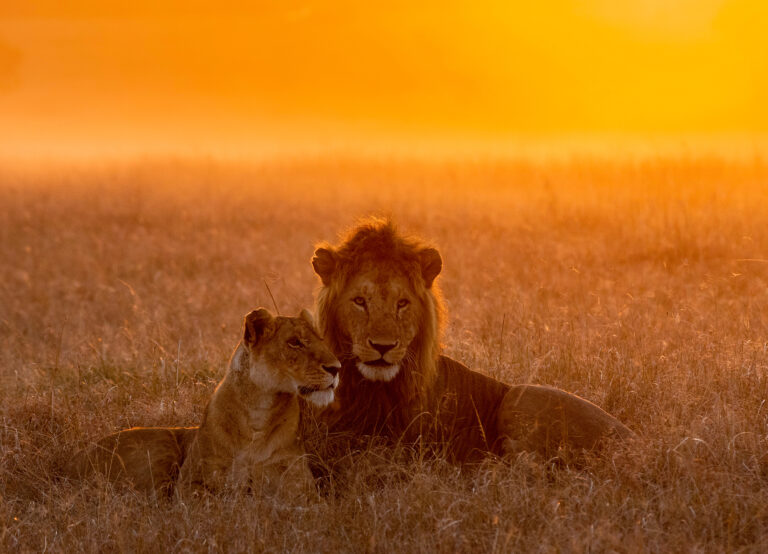
That can mean more game drives, more time around waterholes and more opportunities to stay with a good sighting.
Wildlife photography has never been predictable.
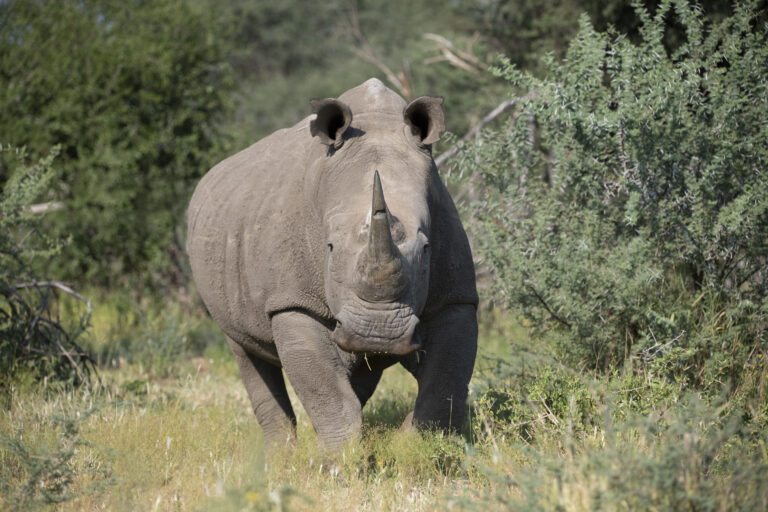
You cannot schedule when elephants will arrive, when a lion will move into better light or when a rhino will appear from the bush.
The best thing we can do is give ourselves more time in the field.
This itinerary was designed with that in mind.
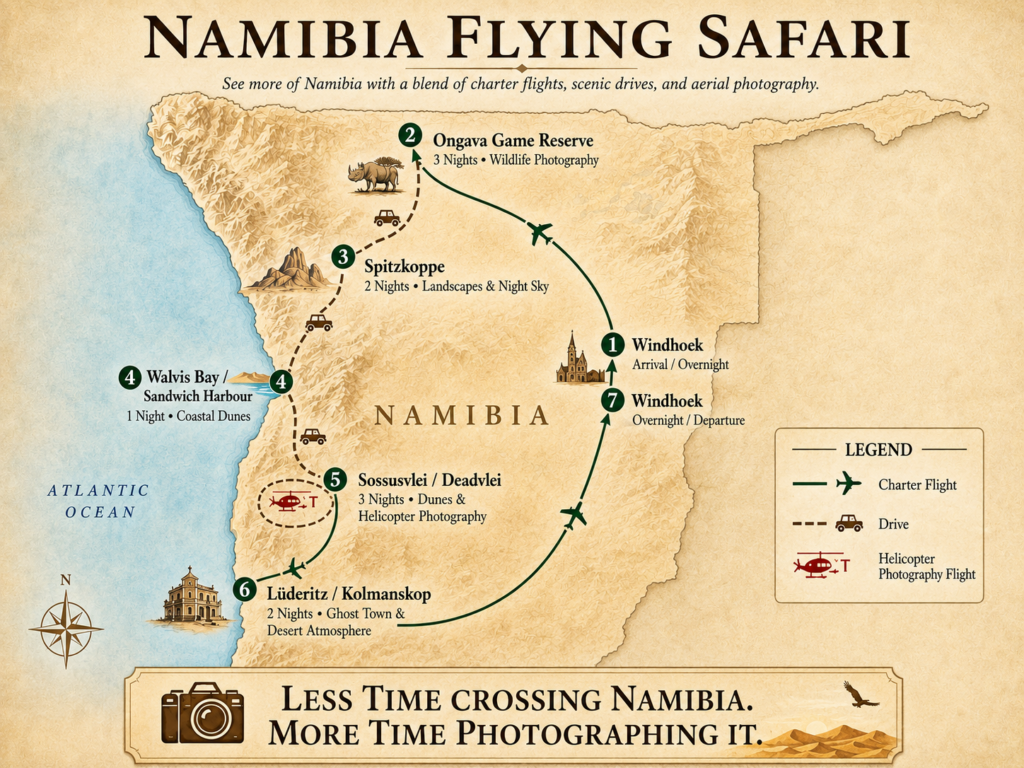
Photographing Namibia From a Fixed-Wing Aircraft
The flights themselves are also part of the experience.
Namibia is one of those countries that takes on an entirely different character from above.
From a fixed-wing aircraft, the scale becomes much easier to understand.
Dune systems stretch toward the horizon. Dry riverbeds snake through the desert. Mountains, salt pans and wildlife habitats form patterns that are difficult to appreciate from ground level.
The flight is not simply transportation.
It becomes another way to photograph and experience the country.
Adding Helicopter Photography
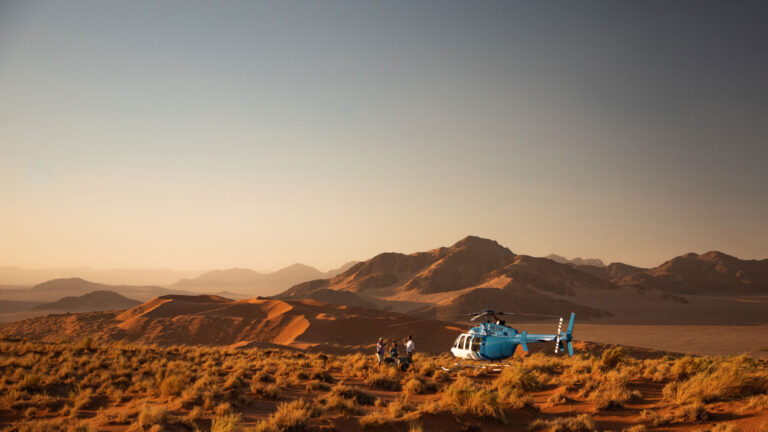
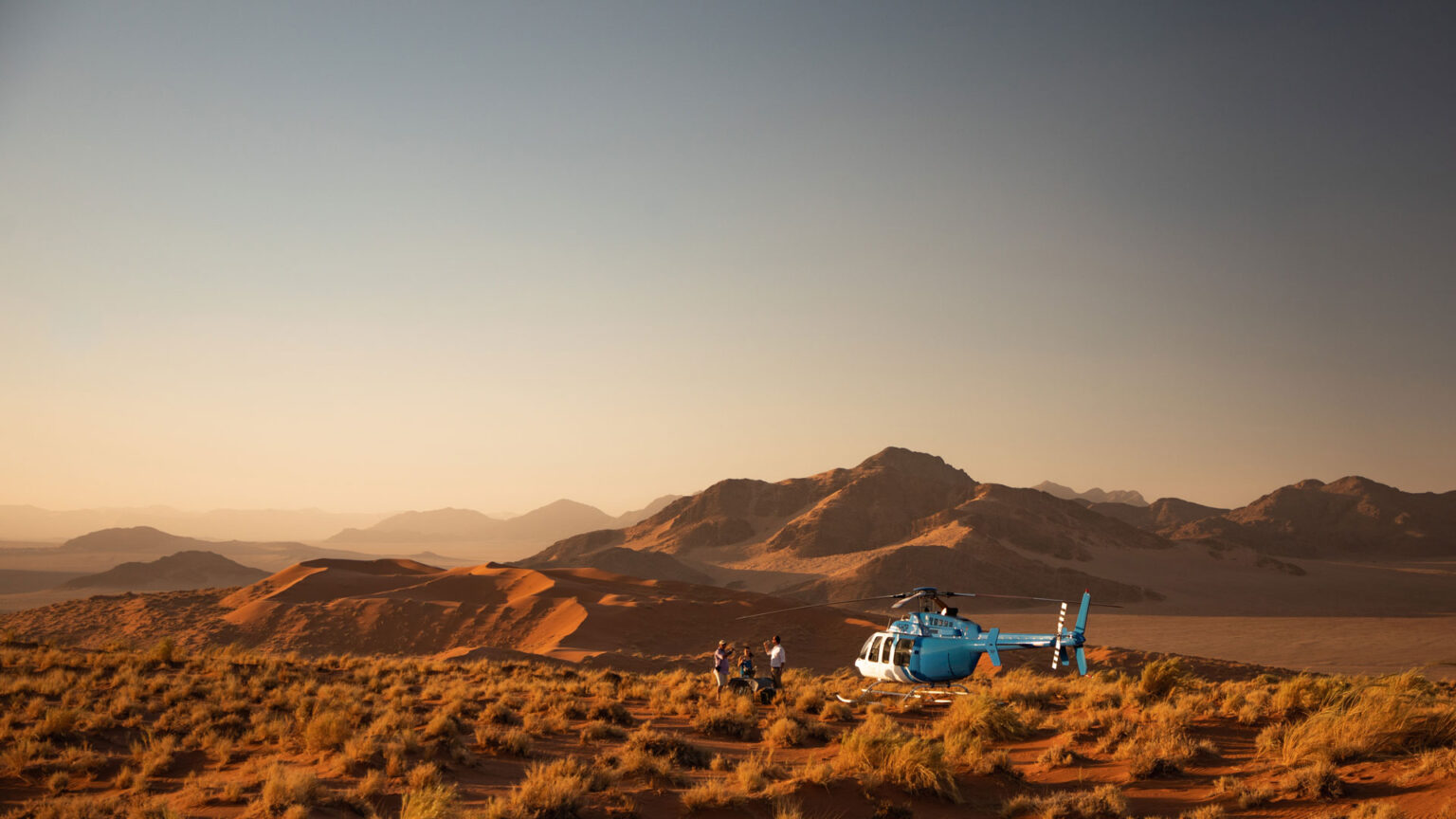
We are also including helicopter photography in the safari. On our other safaris we offer it as an option.
That gives us a completely different aerial perspective.
Helicopters allow us to work lower and closer to the landscape, creating opportunities to photograph dunes, shadows, geological formations and wildlife in its environment.
From above, Namibia often becomes abstract.
Shapes become more important.
Patterns appear.
Light and shadow become the subject.
And landscapes you may already know from the ground can suddenly look completely different.
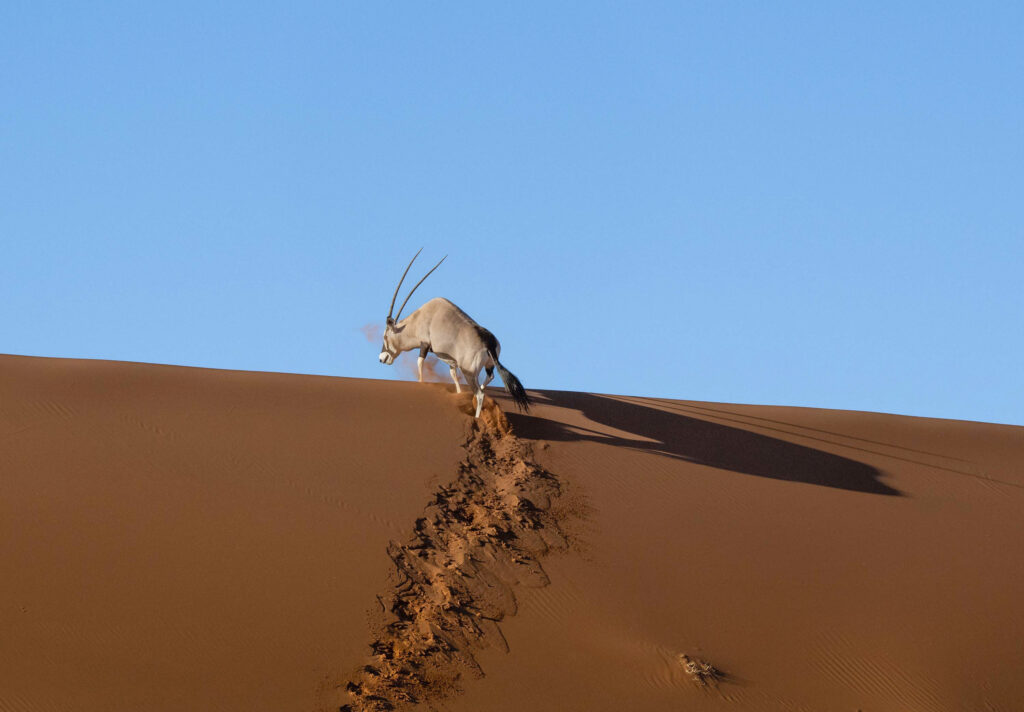
Two Very Different Ways to Experience Namibia
Our driving safaris and our flying safari each offer something unique.
On a driving safari, the journey between locations is part of the story.
You experience the changing terrain. You stop for wildlife along the way. You see small towns, remote roads and landscapes that most visitors simply drive past without noticing.
There is a sense of exploration that comes from travelling across Namibia by road, and we would not want to lose that.
The flying safari simply approaches the country differently.
It prioritizes efficiency between major photography locations and uses the time saved to increase our opportunities in the field.
Neither experience replaces the other.
They are two different ways to photograph one of our favourite countries.
Why We Decided to Offer This Safari Now
After leading and photographing in Namibia for 10 years, we felt there was room for a workshop that combined several things we already love about the country.
Wildlife photography.
Desert landscapes.
Small groups.
Fixed-wing travel.
And helicopter photography.
Bringing all of those elements together allows us to create a very different Namibia experience from anything else we currently offer.
It also gives returning Namibia clients another reason to come back.
You may have photographed Deadvlei from the ground.
You may have watched rhinos walking across a private reserve.
You may have driven through the Namib Desert.
But seeing those same landscapes from the air changes your understanding of the country.
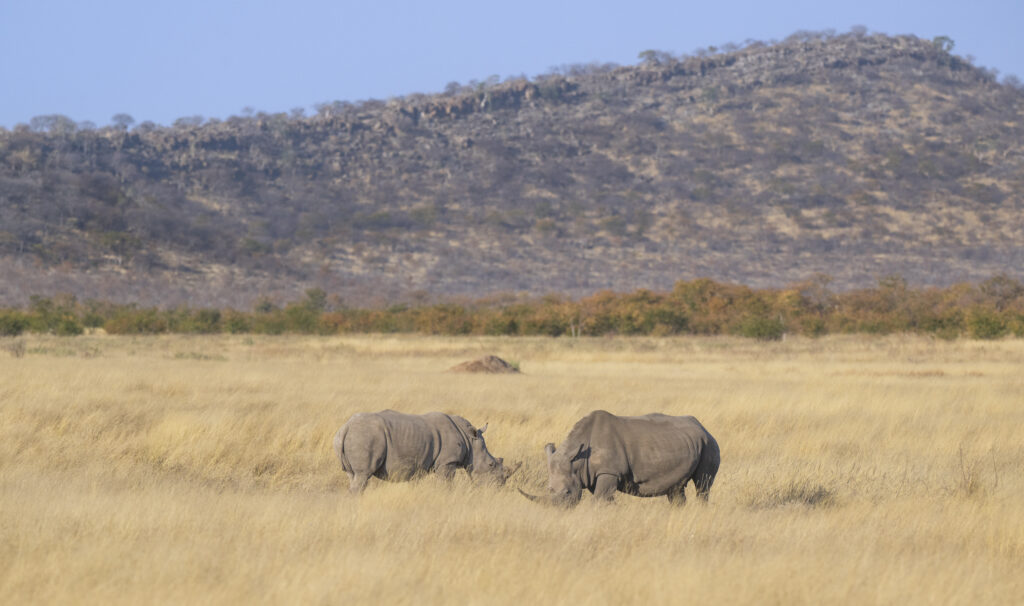
A Safari We Cannot Simply Make Bigger
Flying safaris also come with limitations.
Aircraft have limited seating.
Helicopters have limited capacity.
Lodges and private reserves have limited availability.
And we intentionally keep our photography groups small.
That means there are only so many spaces we can offer on a safari like this.
Once those seats are filled, adding another vehicle is not the solution.
The aircraft capacity simply does not change.
That is one of the reasons we wanted to announce this safari early.
For photographers who have always wanted to see Namibia, this is a very different way to do it.
For photographers who have already travelled Namibia with us, it offers a chance to return and experience the country from an entirely new perspective.
More wildlife time. More aerial photography. Less time spent on the road.
And perhaps most importantly, the opportunity to photograph Namibia from both the ground and the sky.
Read the details of this Namibia Photography Workshop