2025 Namibia Photo Workshop Trip Report: Towering Dunes, and Dusty Laughter
By Kevin Pepper |
Namibia isn’t just a destination—it’s a feeling. It’s waking up to golden light spilling over endless plains. It’s standing alone on a dune with wind whispering in your ear, and realizing silence can be deafening in the best way. It’s photographing ghost towns at sunrise, elephants in the shimmer of heat, and the Milky Way blazing overhead like a private light show.
In July of 2025, I traveled back to Namibia with four photographer friends on back-to-back workshops. They were equal parts photo adventure, road trip, and stand-up comedy tour—minus the stage and with a lot more dust.
The truth is, the longer I do this, the more I enjoy not racing for the shot. I’ve photographed these locations before (and yes, with much flimsier tripods back then). These days, I’d rather sit beside the people who travel with me—teaching, laughing, and making sure they’re getting their best shots, not worrying about adding another photo to my Instagram grid.
The shift to Akari Photo Tours has been good—not just for me, but for everyone who joins us. Our trips now feel more like reunions than tours. Most of our groups are made up of repeat clients who trust that I’ve got the logistics locked down. And when new folks join us, they’re folded into the fun like they’ve always been part of the crew.
Here’s how our two workshops in Namibia unfolded this year—and a few of the lessons we picked up along the way (both photographic and otherwise).
Touchdown in Windhoek, Namibia

Our groups landed in Namibia’s capital a bit jet-lagged but already swapping gear tips and lens envy. Our hotel was a quiet oasis, and after a hearty meal at Joe’s Beerhouse, we did the classic “unpack everything, then repack it better” ritual. Tomorrow is day two… the real adventure would begin.
Never been to Joe’s Beerhouse? Let me explain this place to you. Think safari-lodge-meets-German-beerhall, with kudu steaks the size of camera bags and décor that looks like a garage sale collided with a hunting lodge (in the best way possible). We grabbed an outdoor table under the thatched roof, swapped stories, laughed way too loud, and during one of the workshops, we tried to outdo each other with who had ordered the weirdest meat. Between the zebra schnitzel, the bushman sosaties, and the steins of Windhoek Lager, it was the perfect start to our Namibian adventure.
Etosha National Park & Ongava Game Reserve in Namibia
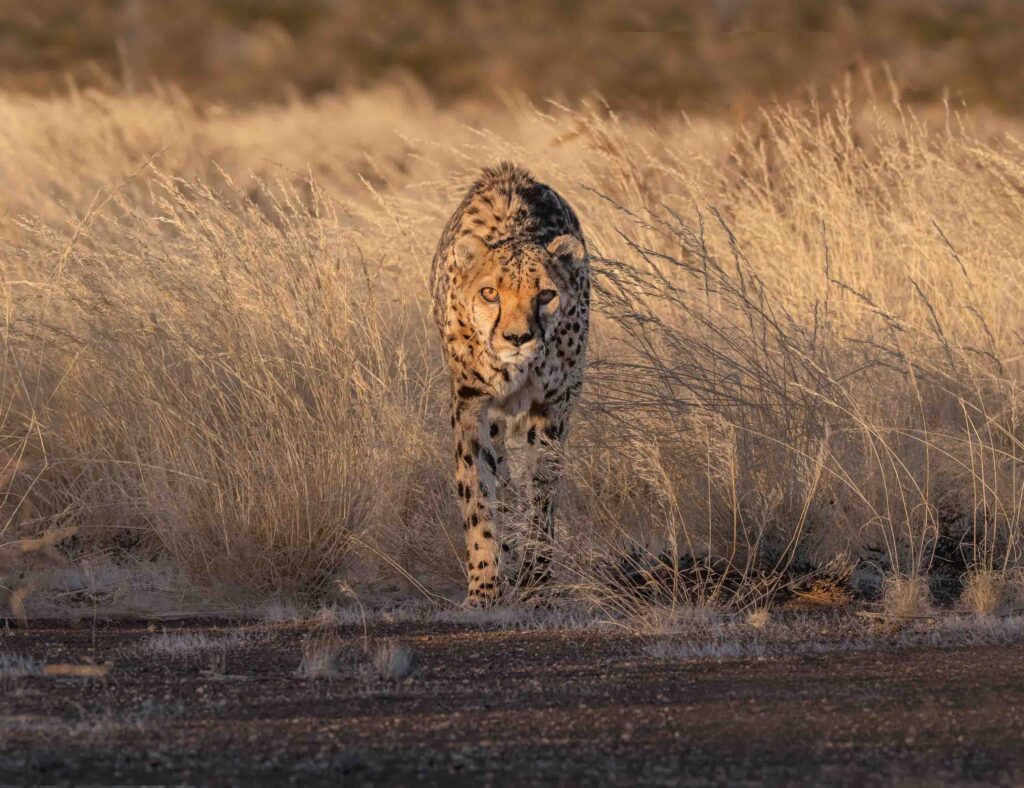
We kicked off the wildlife portion of our adventure in the iconic Etosha National Park, where the animals seem to run on their own schedule, and the best thing you can do is show up early, stay quiet, and be ready. Herds of elephants strutted into frame, giraffes struck Vogue-worthy poses at waterholes, and lions snoozed like they owned the place—which, let’s be honest, they do.
Then we crossed over into the Ongava Private Game Reserve, which shares a border with Etosha but offers something extra: fewer people, exclusive access, and the kind of close-up experiences that have you whispering “wow”. We had a moment where a white rhino and her baby strolled right past us in golden light during a walking safari—and yes, someone forgot to breathe… that someone being me.
What it’s like to be on safari in Namibia:
This region of Namibia is big, open, and buzzing with wild energy. The salt pans stretch to the horizon. The bush is quiet until it isn’t. One minute it’s still and silent, the next, a herd of springbok explodes into view or a lion roars from the thicket. And the light? It does half the work for you.
What we taught here:
- How to shoot action, where animals come and go fast—requiring fast shutter speeds and quick reactions.
- Understanding animal behavior, so you’re ready before the moment happens.
- Using long lenses for compression and storytelling without disturbing your subject.
- Techniques for dealing with harsh midday light, including exposure compensation and strategic use of shadows.
- Low-angle shooting when possible, to create more intimate wildlife portraits—even from a vehicle.
Bonus lesson: Take a walking safari if you can. Its exhilerating!
Himba Culture & Spitzkoppe Skies
Our visit to the Himba village wasn’t a staged tourist stop—it was the real thing. A functioning, living village filled with women and children, while the men were away tending their livestock, just as they have for generations.
We didn’t walk in with cameras blazing. In fact, the cameras stayed in their bags at first. We sat down, introduced ourselves, and simply talked. The Himba women shared stories of their culture—how they prepare ochre paste for their skin and hair, how their homes are built, what daily life looks like in the rhythm of the desert.
Then came a moment I won’t forget—some of us were invited to join in a dance. And yes, some of us danced. Badly. But with open hearts and a lot of laughter.
Only after all that—after the laughter, the listening, the connection—we started to to photograph. And by then, it wasn’t just about getting “the shot.” It was about telling a story with them, not just about them.
These are the moments that stick. Not because the light was perfect or the setting was dramatic (though both were true), but because we earned the image by earning the trust first, then slowly raise our cameras.
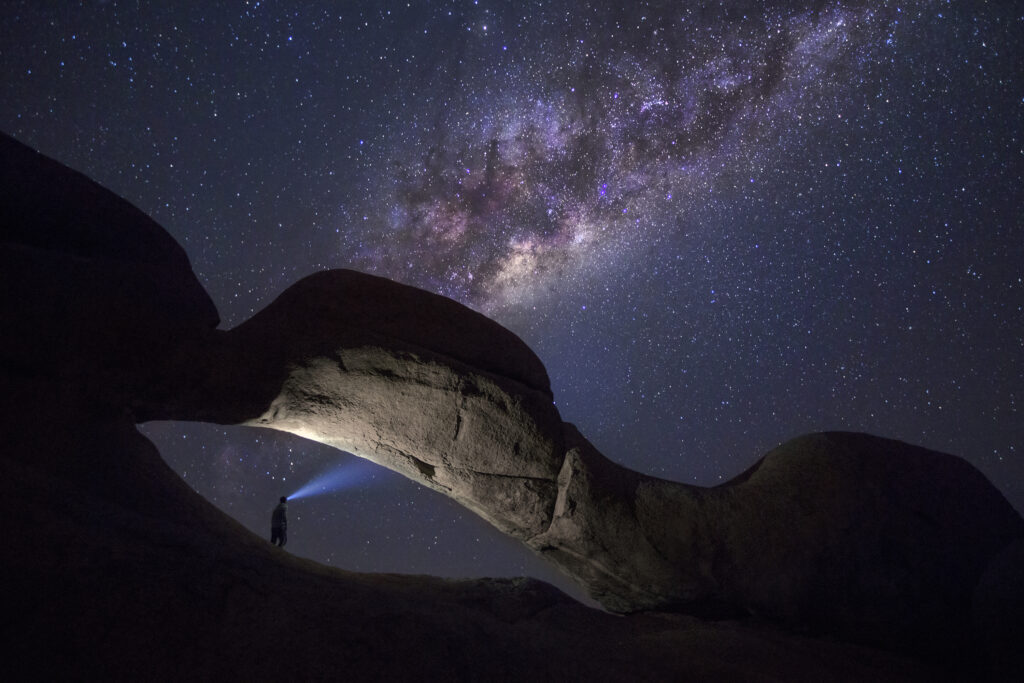
Later, at Spitzkoppe, those massive granite boulders glowed under a velvet sky. It’s hard to explain how small you feel here—but in the best, most soul-centering way.

What it feels like to be at these locations:
Standing in Spitzkoppe at night feels like being on Mars if Mars had stars that hung close enough to touch. The rock radiates stored heat, and your boots crunch quietly on dry earth. Every whisper feels loud, every shadow deep.
What we taught here:
Techniques for shooting both wide landscapes and compressed abstract compositions in granite fields.
Environmental portraiture: blending people and place for a more meaningful story.
Night sky photography, including Milky Way exposures, star stacking, and light painting.
How to use natural framing, especially at the famous rock arch.
Walvis Bay: The Sandwich of Dreams
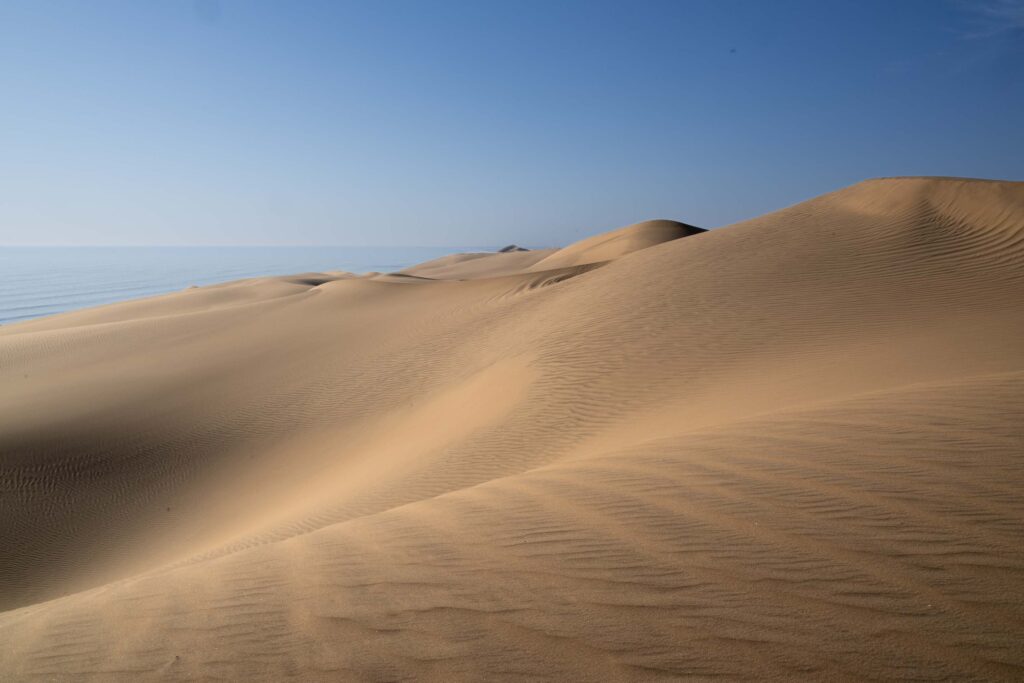
There are very few places in the world where the desert shakes hands with the sea, and Sandwich Harbor in Namibia is one of them. Standing atop a towering dune as the Atlantic rolls in below you feels like witnessing two titans meeting at the edge of the earth. The sand glows in the late afternoon light, rippling like golden silk, while the waves crash in a steady rhythm that seems almost too perfect to be real. It’s a place that makes you pause, take a deep breath, and realize just how small you are in the best possible way.
Our sunset dune cruise here was an experience that blended adrenaline with tranquility. The drive itself was an adventure—our vehicle climbing and descending the steep dunes with the kind of precision that makes you grateful for an expert driver. Every crest revealed a new panorama—shifting shadows on the dunes, seabirds tracing the coastline, and the shimmering meeting point of sand and sea. When we finally stopped, it was at the perfect vantage point to watch the sun dip toward the horizon, bathing the landscape in deep golds and soft pinks.
The sundowner at Sandwich Harbor was the perfect exhale at the end of the day. With the cool Atlantic breeze on our faces and a drink in hand, we watched the last light fade while the dunes and ocean seemed to merge into a single, endless horizon. It wasn’t just a toast to another day of photography—it was a moment to appreciate the privilege of being in such a rare and remarkable place.
Photography techniques we focused on during this outing:
- How to balance exposure when photographing bright sand against a darker ocean.
- Using leading lines in dune ridges to guide the viewer’s eye through the frame.
- Capturing scale by including people or vehicles in wide landscape shots.
- Working with golden-hour light to enhance texture and shadow detail in the dunes.
- Composing to show the dynamic contrast between water and sand.
The Great Crumble Stop in Solitaire
Before heading to the dunes, we stopped in Solitaire—home to one gas station, one bakery, and what should probably be a UNESCO heritage site because of its apple crumble.
Solitaire isn’t so much a town as it is a beautifully random desert fever dream. It’s the kind of place where you can fuel up your truck, buy a belt, mail a postcard, and eat world-famous apple crumble—all within 20 feet of each other.
The air smells like a strangely comforting mix of cinnamon, diesel, and forgotten road trips, and the centerpiece is a shaded picnic table next to a rusted-out car that looks like it gave up trying to leave… decades ago.
You grab your plate of warm apple crumble—flaky, buttery, dusted with just the right amount of cinnamon—and suddenly, everything slows down. There’s no cell service, no rush, no worries. Just good company, strong coffee, and dessert so good it makes you reconsider what qualifies as a “religious experience.”
It’s weird. It’s wonderful. And somehow, it’s perfect.
Bonus Tip: Apple Crumble does pair nicely with wine and Gin and Tonics in the middle of the desert.
Sossusvlei & Deadvlei: Dune Drama & Aerial Awesomeness
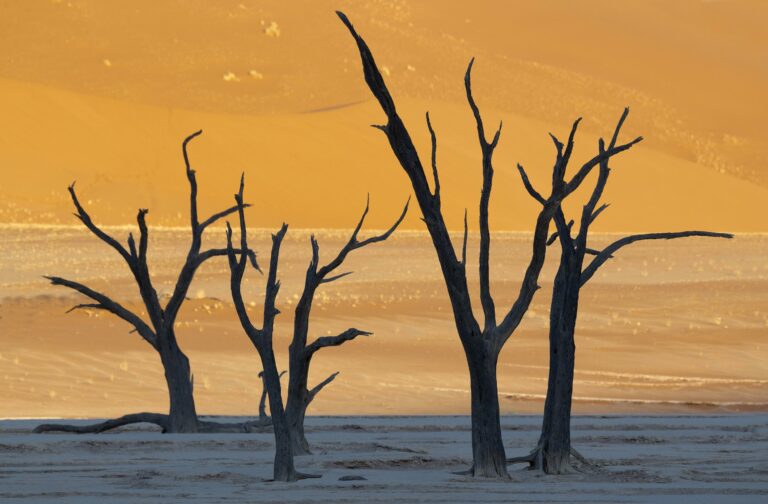
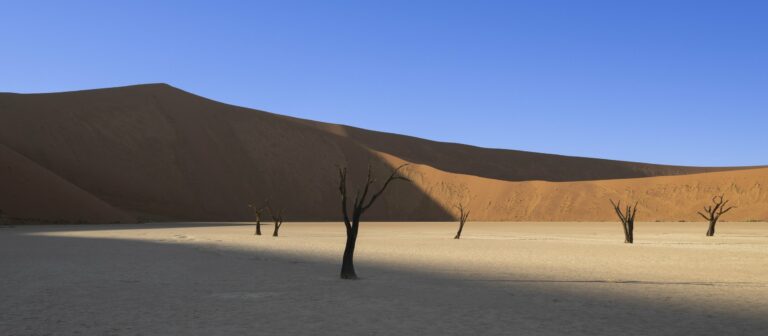
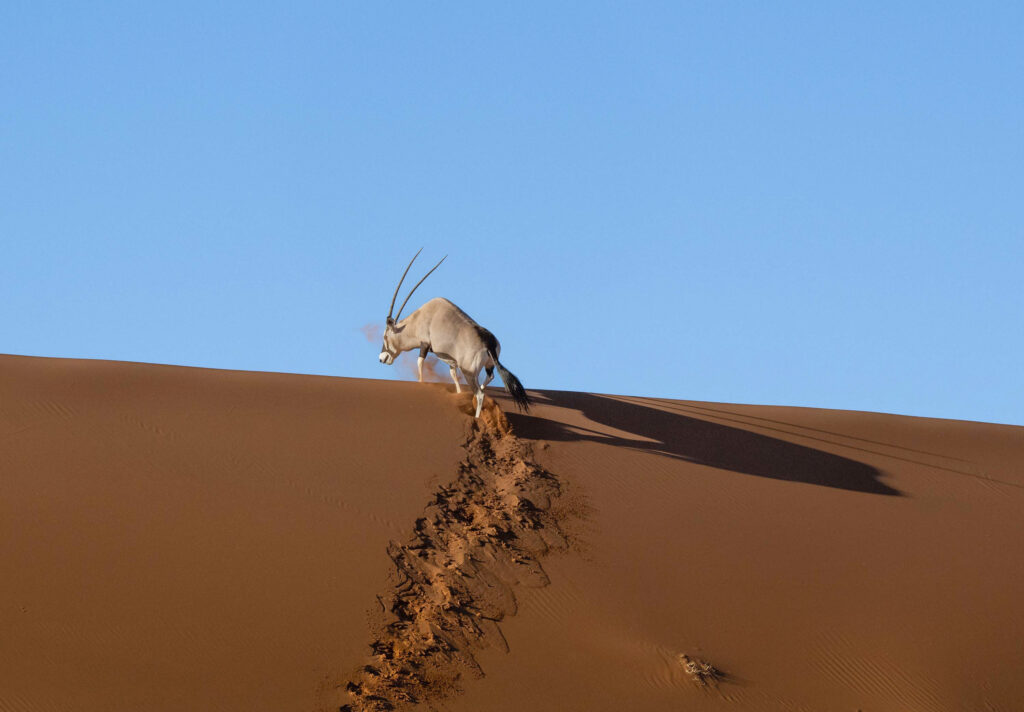
We arrived at dawn and hiked into Deadvlei, a surreal basin of dead trees, white clay, and surrounding dunes that glow like embers. No one speaks much out here—not out of reverence, but because they’re too busy shooting and soaking it in.
What it feels like to be here:
Unreal. The silence is absolute. The dunes feel alive. Your heart pounds—not from the hike, but from the sheer visual overload. You stand among 900-year-old trees and realize you’re photographing a place completely untouched by time.
One of my groups decided to do a doors-off helicopter ride. Flying in a doors-off helicopter over Namibia’s sand dunes is the kind of experience that makes you forget to breathe—in the best way possible. As the rotors roar, the world below turns into an abstract canvas of wind-sculpted ridges, razor-sharp shadows, and rippling waves of orange and gold. With no doors between you and the Namib Desert, every gust of wind, every tilt of the chopper, makes it feel like you’re riding a desert dragon. You line up your shot, heart pounding, camera clicking, trying to do justice to a landscape that looks too surreal to be real. It’s wild, it’s raw, and it’s one of the most thrilling ways to photograph the oldest desert on Earth.
What we taught here:
Optional aerial photography tips: camera settings for doors-off flights, shooting patterns from above, and keeping gear secure in windblown helicopters.
Dune composition techniques—how to shoot shadows, curves, and ridges.
Shooting silhouettes and stark minimalism.
Using early and late light for color contrast and mood.

Kolmanskop: Where Light and Dust Tell Stories
We explored this abandoned diamond mining town in Namibia twice—and every room looked different each time. Light pours in, spills across sand-covered floors, and reveals stories of a vanished era.
Visiting Kolmanskop multiple times at different times of day is one of the smartest moves a photographer can make—and here’s why:
In the early morning, soft light filters through the shattered windows and open doorways, casting gentle shadows and illuminating the dust in the air. The tones are cool, pastel, and moody—perfect for creating quiet, atmospheric images that tell the story of abandonment and decay. This is when the texture of the sand is crisp and untouched, and the low-angle light gives everything dimension without blowing out the highlights.
By afternoon, the sun shifts and the mood changes completely. Harsh, directional light beams into the rooms at steep angles, creating bold, dramatic contrast and strong geometric compositions. Shadows stretch through doorways like stage lighting, and the warm tones of the sand, walls, and peeling paint come alive. These are the moments where color and contrast become the hero of your frame.
Each visit reveals something new—a room you missed, a light beam you didn’t expect, or a composition that wasn’t there the day before. The sand shifts, the shadows move, and the story evolves with every hour. Multiple visits give photographers the time to scout, plan, and then execute more thoughtfully. It’s not just about capturing a beautiful ruin—it’s about telling the story of light, texture, and time in a place that changes with the sun.
What it feels like to wander through Kolmanskop in Namibia:
Like walking through a dream you don’t want to wake from. Wind whistles through broken windows. Footsteps echo softly. The sand moves slowly, like time itself is pausing for you to make your frame.
What we taught here:
Patience and timing, waiting for dust to settle, or that one sunbeam to line up just right.
How to scout light and shadow for interior work.
Controlling exposure in high contrast scenes, including bracketing and HDR techniques.
Compositional layering, using doors, lines, and depth to create dimensionality.
Working without flash to preserve natural light.
Quiver Tree Forest: Stars, Silence & Final Shots
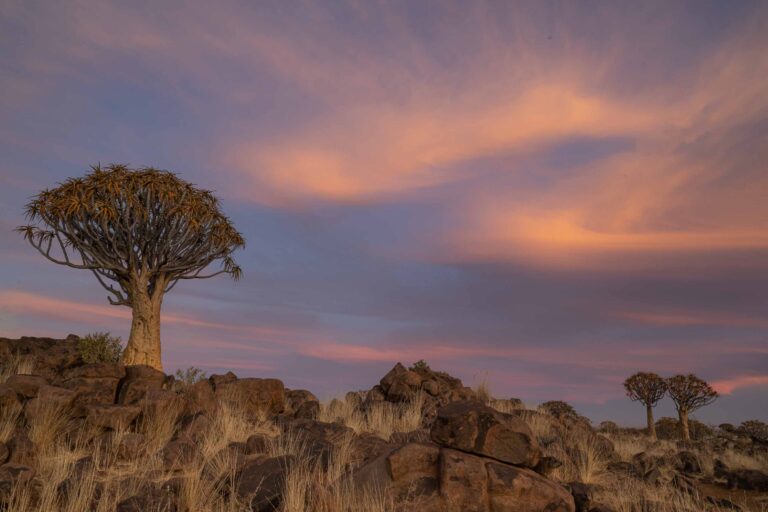
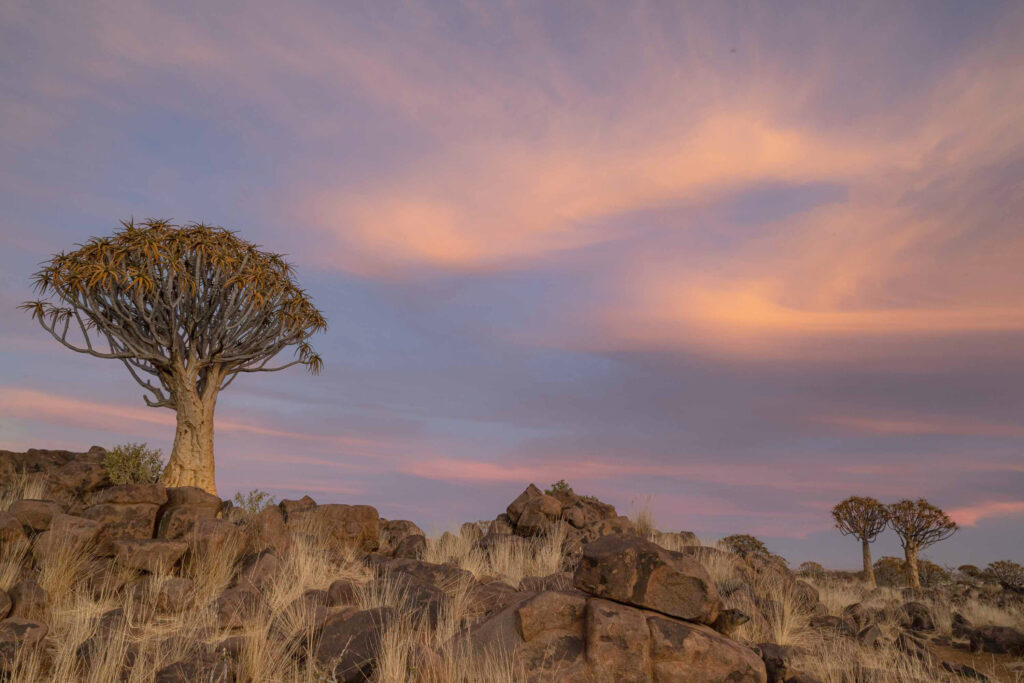
Our last night was spent among the haunting beauty of the Quiver Tree Forest. As the sun dipped low, golden light painted every branch. When the sun fell below the horizon, we stared at the sky as the clouds were painted pink.
What it feels like:
Like being the only person on the planet. The wind stops. The Milky Way rises, then stretches across the horizon. You take a 30-second exposure and still feel like it’s not long enough to capture how it feels to stand there.
What we taught here:
- Photo stacking techniques and isolating trees in a busy forest area.
- Foreground interest with night skies—balancing light sources with long exposures
Our group sat on the rocks in silence afterward. Not because we were tired, but because it felt right to just be still in that space, one last time.
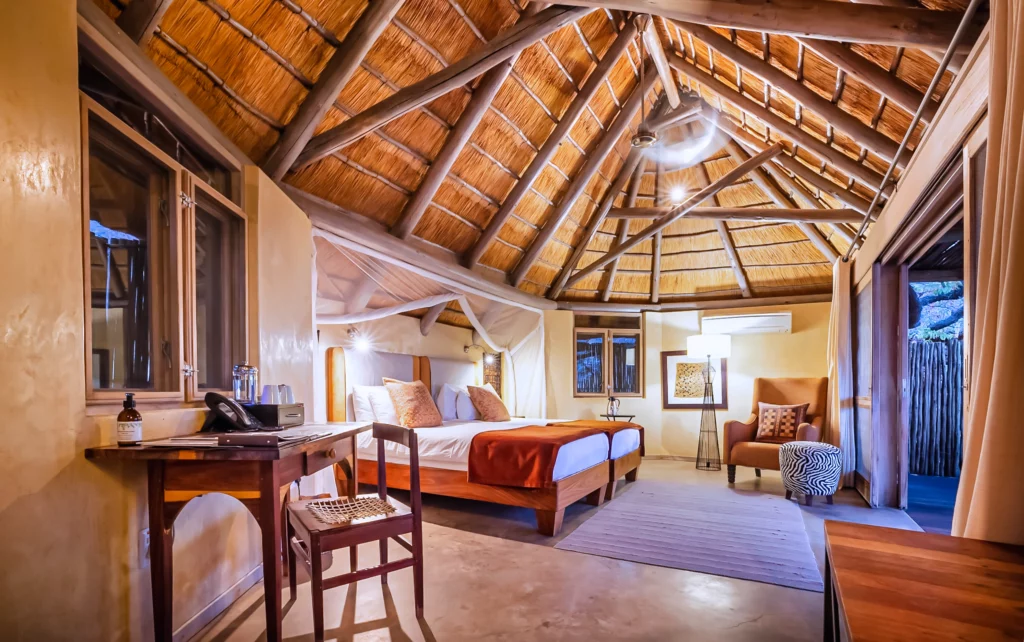
Wrapping Up in Windhoek
Back in Windhoek, we dumped cards, swapped favorite shots, and toasted one last time to a trip that had everything: wildlife, culture, landscapes, starscapes—and enough stories to fuel the next group chat for months.
Final Thoughts
These two trips were proof that:
- Four friends + four cameras = double the fun in Namibia (and quadruple the memory card storage).
- Namibia rewards patience and curiosity at every turn.
- The best crumble in Africa is hidden in Solitaire, and yes, it is worth the detour.
Want to Join the Next Namibia Adventure?
Our 2026 Namibia workshop is already in the works. If you’re dreaming of giant dunes, haunting ghost towns, and the kind of skies that make you feel small in the best way—this one’s for you.
Bring your gear. Bring your friends. Bring your appetite (for apple crumble and otherwise). We’ll take care of the rest on your holiday in Namibia.