A Behind-the-Scenes Look at Our Snow Leopard Tour in Mongolia
By Kevin Pepper |
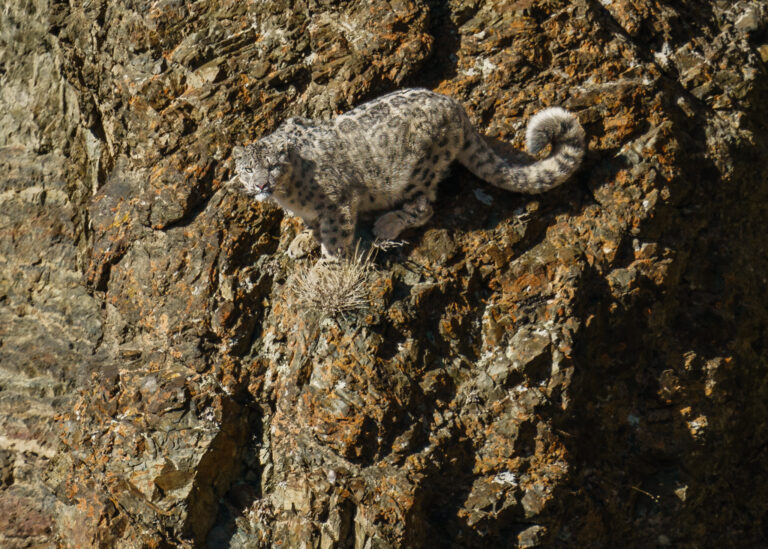
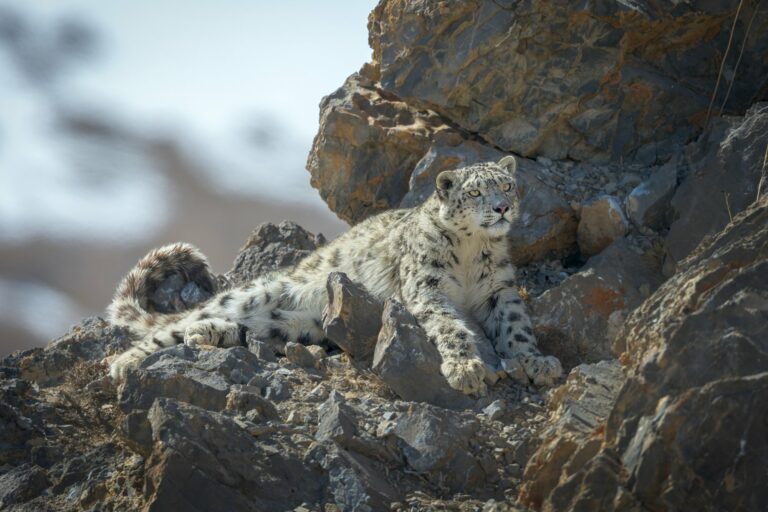
There are few wildlife experiences like our Snow Leopard Tour that match the thrill of photographing a snow leopard in the wild. In the dramatic cliffs of Mongolia’s Altai Mountains, these elusive cats live largely unseen by the world. But if you know where to look—and go with the right people—you might just get the shot of a lifetime.
This is the essence of Akari Photo Tours’ Snow Leopard tour in Mongolia. It’s not a zoo experience. It’s not easy. But it’s worth every frozen finger and every ounce of patience.
Why This Trip Is So Special
Let’s be honest—Snow Leopards don’t pose for headshots. But we’ve worked hard to increase your odds. Our local partners are among the top Snow Leopard researchers in Mongolia. They scout the area long before we arrive, reviewing trail camera data, tracking prey movement, and identifying recent kills or sleeping dens.
When Akari Photo Tours brings you here, you’re stepping into years of built trust and local expertise. The result? Real opportunities to photograph Snow Leopards behaving naturally in one of the most remote corners of Asia.
The Truth About Wildlife On Our Snow Leopard Tour—and Our 100% Success Rate
Wildlife is never predictable. But our success rate for Snow Leopard sightings and photographs is 100%—and that’s no accident.
Our trackers are out in the mountains for weeks in advance, scanning the mountains around our base camp. They study patterns, find dens, and monitor activity across vast areas. We’ve even invested in thermal monoculars to help spot the well-camouflaged cats from a distance, even while they’re tucked into rocky ledges or curled up in shadowy dens.
It’s all done for one reason: so you come home with Snow Leopard images you’ll be proud of.
Let’s Talk Gear—and the Images That Matter
We won’t get hung up on distances. What matters is what you see when you load your files onto your computer.
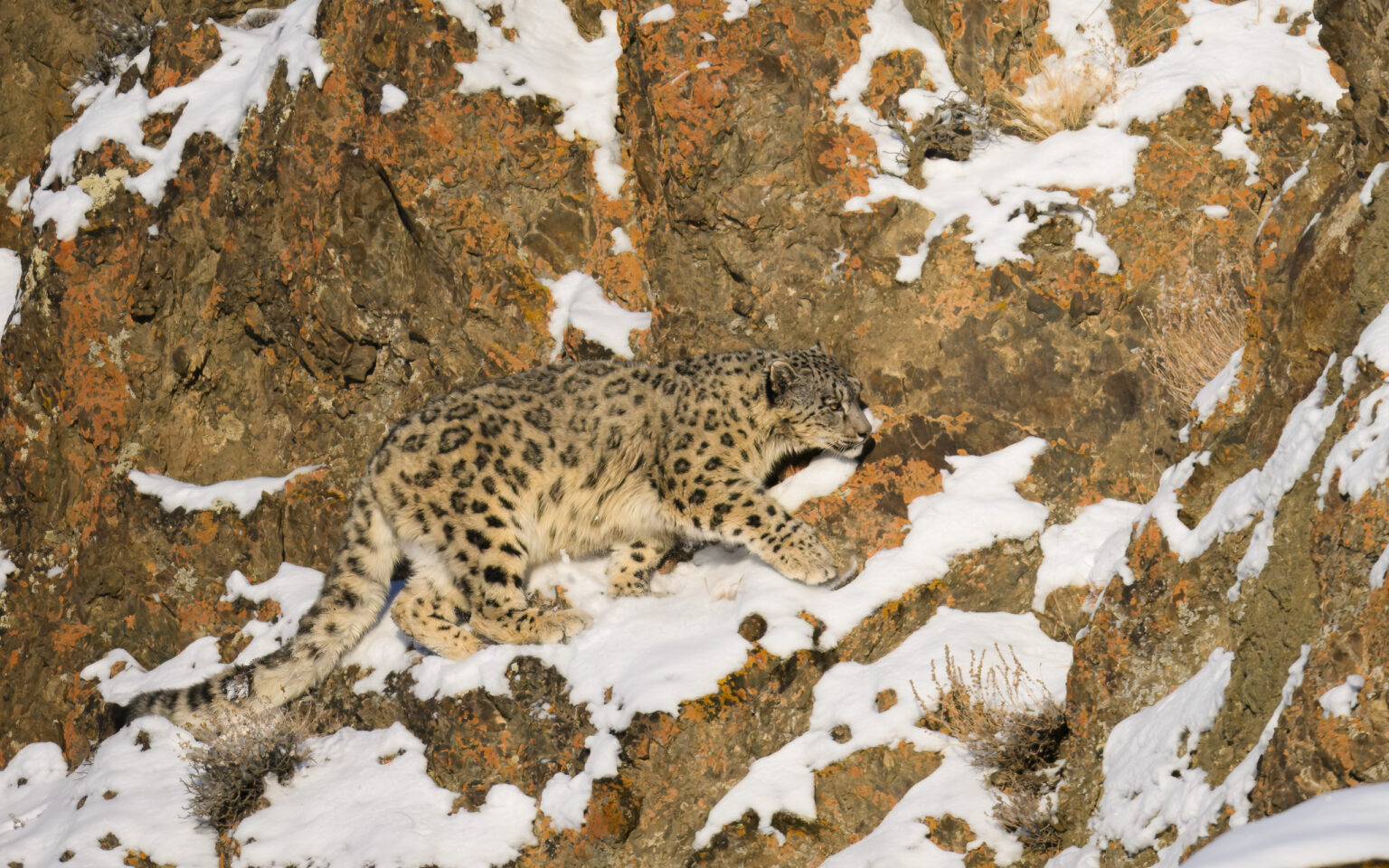
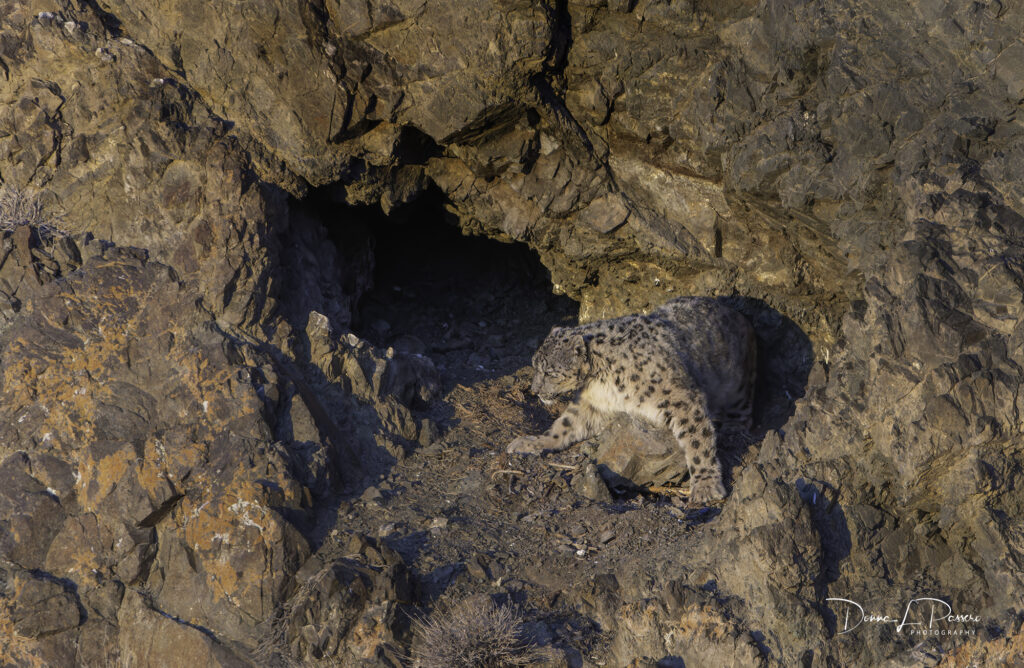
Every image shared from this tour—whether Akari’s or past guests’—was shot with a 600mm or 800mm lens, most cropped to about 50%. That’s the average. We’ve had sightings closer. We’ve had sightings farther. But with the right gear and the right team, you get results like this.
Some guests bring teleconverters to stretch their focal length even further and reduce the need for cropping. And if you’re up for hiking into more rugged terrain, your odds of a closer encounter go up dramatically.
So yes—pack your longest lens. But also bring your patience and curiosity. Because the images you’ll create out here won’t just show what you saw—they’ll capture how it felt to be there.

A Day in the Life of a Snow Leopard Photographer (a.k.a. You)
Your day starts while you’re still warm in bed—but our trackers are already miles ahead, scanning ridgelines, looking for tracks, and checking trail cams. The moment they spot something, we mobilize. It’s “go time,” and that’s when the magic happens.
Between those high-energy moments? We don’t just wait—we keep things interesting. Wildlife photography presentations, editing sessions, card games, and one very serious Oreo taste-test challenge (current camp favorite: the elusive and dramatic “Fabio” cookie).
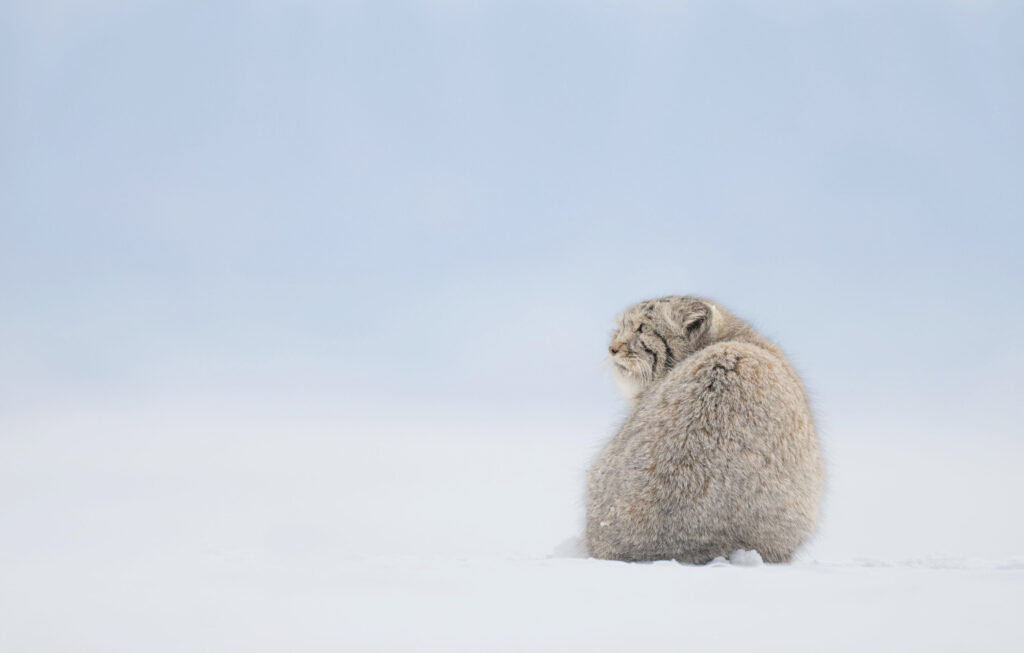
But make no mistake—our focus is always the wildlife. From snow leopards to ibex, argali, golden eagles, saiga antelope, and the grumpy genius of the Pallas’s cat, we’re here to shoot and share stories.
You’ll eat home-cooked meals, warm up by the fire in your ger, and stay fueled with coffee and trail snacks during treks. Some days are intense. Others unfold slowly. But every day is a chance to witness something unforgettable.
Breathe Easy: The Advantage of Lower Elevation in Mongolia
Many snow leopard expeditions around the world take place at extreme altitudes—12,000 to 15,000 feet in regions like Ladakh and the Indian Himalayas. At that height, just walking can feel like a workout, and altitude sickness is a real concern.
That’s where our Mongolia tour has a major advantage. We operate at a comfortable 6,500 to 8,000 feet, giving you:
- Fewer altitude-related health risks
- Better sleep and energy
- Sharper focus for those long telephoto shots
When you’re photographing one of the world’s most elusive predators, you want your body and mind operating at 100%. Our lower elevation means you’ll feel better, shoot longer, and recover faster. It’s one of the most overlooked—but most important—benefits of this trip.
The Final Word
Photographing a Snow Leopard isn’t easy. But it’s real. It’s earned.
This photo tour isn’t about chasing animals—it’s about waiting, reading the land, and trusting the people who live alongside these cats year-round. And when the moment comes—when the ghost appears—you’ll be ready.
You’ll also be surrounded by good company, strong coffee, a couple of cracked jokes, and maybe an empty pack of Fabio cookies.
Ready to Join Us On Our Snow Leopard Tour?
Whether it’s been a lifelong dream or a new adventure calling your name, this is your chance to photograph one of the rarest cats on Earth—with the team that makes it happen.
Spots are limited. Check out our Snow Leopard tour in Mongolia here, and come see why people are calling this one of the most rewarding wildlife photography trips in the world.