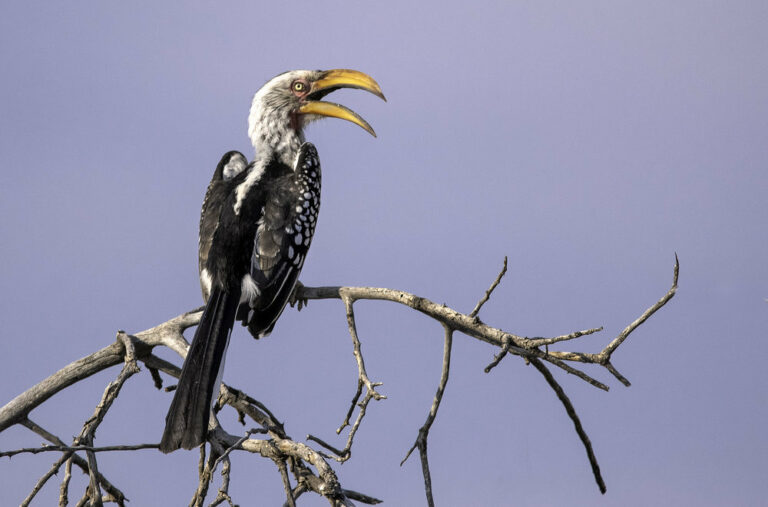
Species Spotlight: Red-billed Hornbill
By Kevin Pepper |
Introduction of the Species
If the Red-billed Hornbill looks familiar, you’re probably thinking of Zazu from The Lion King. But in real life, these birds are smart, vocal, and a joy to photograph—especially when the light hits that bright scarlet bill just right.
Physical Description of the Red-billed Hornbill
Slightly smaller than their cousins, the Red-billed Hornbill has a long, curved red bill, greyish-white body, and black-spotted wings. Their expressive eyes are often highlighted by bare skin patches, and they walk with a slightly comedic, purposeful strut.
Native Habitat
These hornbills are found across savannas and open woodlands of East and Southern Africa. They’re particularly common in areas like the Serengeti, the Okavango Delta, and Kruger National Park—often seen perched in acacias or foraging along the ground.
Migration Patterns in Africa
Red-billed Hornbills are non-migratory, sticking to their territories year-round. Their activity varies with the seasons, becoming more vocal and visible during breeding season.
Food/Eating Habits of the Red-billed Hornbill
Omnivorous and opportunistic, they eat insects, small reptiles, fruits, and seeds. You’ll often see them hopping around safari camps or near vehicles, especially after a light rain brings bugs to the surface.
Known Lifespan of Red-billed Hornbill
In the wild, they typically live around 10 years. Their cleverness and adaptability have helped them thrive in a range of environments.
Join Us on Our African Photo Safaris
These birds are just one of the characters we photograph on our Africa safaris. Whether perched in morning light or darting between acacias, the Red-billed Hornbill adds life, humor, and color to your safari portfolio. Join us on one of our Africa Photo Safaris.
Read Other Species Spotlight articles
If you’re as passionate about wildlife as we are, take a moment to explore our Species Spotlight series. Each article dives into the fascinating lives of the animals and birds we love to photograph on our workshops—whether it’s a puffin perched on a cliff in Newfoundland, a leopard draped across a tree in Tanzania, or an Adelie penguin waddling through the snow in Antarctica. It’s a growing library of stories, facts, and inspiration for anyone who dreams of capturing the wild through their lens. Come see the world the way we do—one species at a time.