Frequently Asked Questions From Our Guests About Visiting the Great Bear Rainforest
By Kevin Pepper |
The Great Bear Rainforest is one of the wildest and most remarkable places in North America. For photographers and wildlife lovers, it holds a kind of pull that is hard to explain until you have been there yourself. Ancient rainforest, quiet inlets, salmon-rich rivers, black bears, spirit bears, coastal wolves, whales, and the constant feeling that something special could appear around the next bend.
Because it is remote, many people have questions before they decide to go. That is understandable. This is not the kind of trip you casually throw together on a long weekend. It takes planning, local knowledge, and the right expectations.
Below are some of the most common questions people ask about visiting the Great Bear Rainforest.
What is the Great Bear Rainforest?
The Great Bear Rainforest is a vast coastal temperate rainforest on the central and northern coast of British Columbia. It is one of the largest remaining intact temperate rainforests in the world and is known for its old-growth forests, rugged shoreline, remote waterways, and extraordinary wildlife.
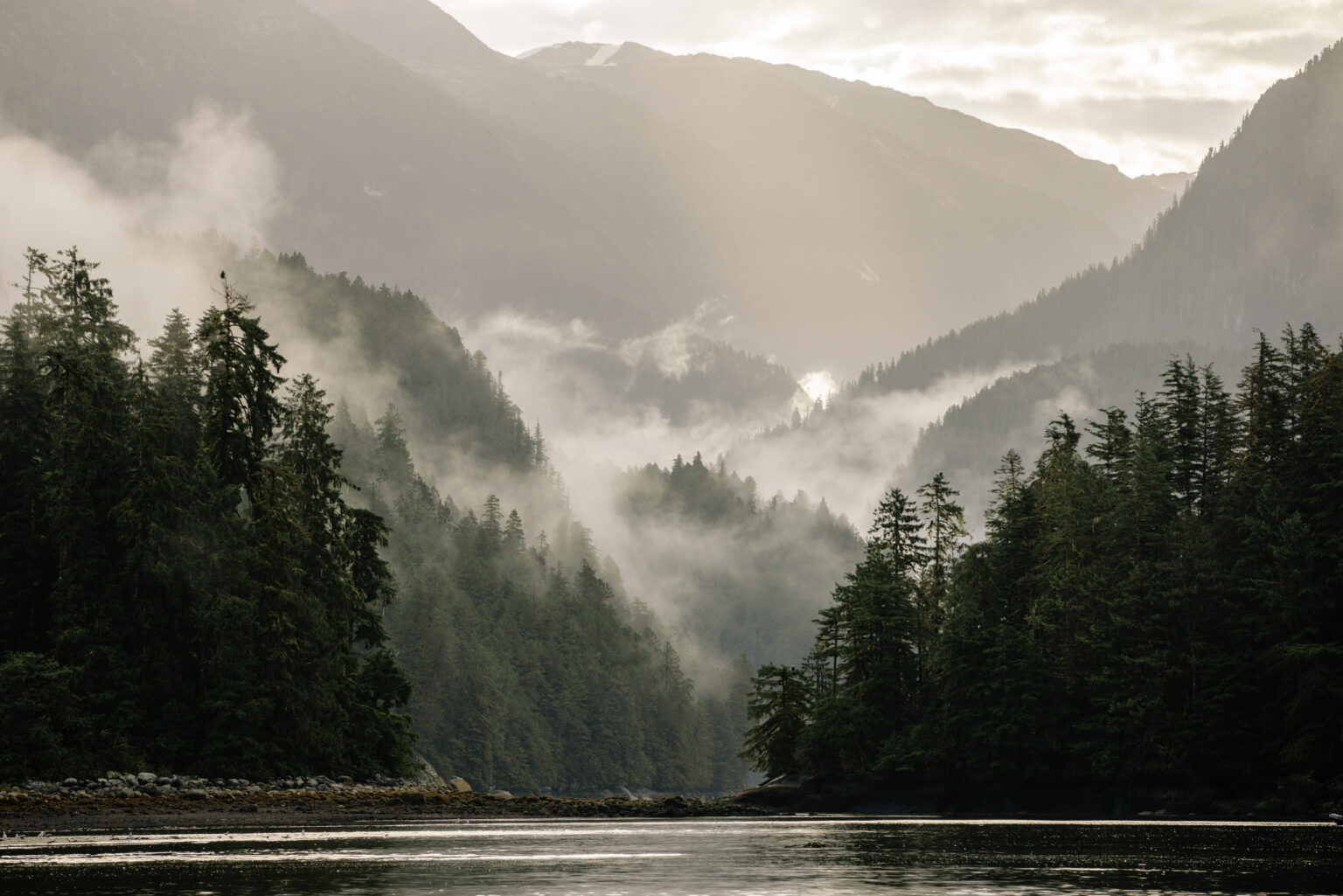
For photographers, it is one of the most exciting places in Canada because the setting itself is as powerful as the wildlife. The forest is thick and ancient. The rivers are alive with salmon at the right time of year. The coast is moody, wild, and endlessly photogenic. It feels like a place that still belongs to nature first.
Where is the Great Bear Rainforest?
The Great Bear Rainforest is located on the coast of British Columbia, north of Vancouver Island and stretching along a remote section of mainland coastline and islands. It includes a network of inlets, fjords, river systems, and Indigenous territories that are not connected by a simple road system.
This is part of what makes the region so special. It is not overbuilt. It is not crowded. It is a place you reach with intention.
Why is the Great Bear Rainforest famous?
The region is best known for its rare spirit bears, also called Kermode bears, which are a white-coated form of black bear found only in this part of British Columbia. It is also famous for coastal wolves, black bears, humpback whales, bald eagles, and some of the most spectacular coastal wilderness in Canada.
Beyond wildlife, it is a place people care deeply about because of its ecological importance and the stewardship of the Indigenous communities who have lived here for generations.
Can you see spirit bears in the Great Bear Rainforest?
Yes, the Great Bear Rainforest is one of the only places in the world where you have a chance to see spirit bears in the wild. That said, wildlife is never guaranteed, and anyone who promises otherwise is either selling fairy tales or has spent too much time breathing boat fuel.
Seeing a spirit bear depends on timing, salmon activity, weather, local conditions, and a fair bit of luck. The best trips are the ones built with flexibility, patience, and experienced local guides who understand the area well.

Are spirit bears albino?
No. Spirit bears are not albino. They are black bears with a rare recessive gene that gives some of them a white or cream-colored coat. They still belong to the same species as black bears.
That distinction matters because spirit bears are not just unusual-looking animals. They are part of the ecological and cultural identity of this region.
Can you see coastal wolves in the Great Bear Rainforest?
Yes, coastal wolves live in this region, and for many people they are every bit as exciting as the bears. These wolves are highly adapted to life along the coast and are known to travel shorelines, swim between islands, and feed on a variety of marine and land-based food sources.
Photographing them is never easy. They are elusive, intelligent, and constantly moving. But when the timing lines up and a wolf appears along a beach or shoreline, it is one of the most memorable wildlife encounters you can have in Canada.
What other wildlife can you see in the Great Bear Rainforest?
Depending on the season and location, visitors may see black bears, spirit bears, coastal wolves, humpback whales, orcas, porpoises, sea lions, seals, bald eagles, ravens, and a wide variety of seabirds and shorebirds.
One of the strengths of this destination is that it offers more than one signature subject. Even when a specific wildlife moment does not happen, the place itself still gives you atmosphere, scenery, and the sense that you are working in a truly wild environment.
When is the best time to visit the Great Bear Rainforest?
That depends on what you hope to experience.
If your main goal is to maximize your chances of seeing spirit bears and black bears near salmon streams, the fall is typically the best time. This is when salmon runs bring bears into predictable feeding areas and create some of the most exciting wildlife opportunities.
Other times of year can be excellent for whales, coastal scenery, and the broader rainforest experience. The right timing depends on your priorities, but for bear-focused photography, fall is usually the standout season.
Is the Great Bear Rainforest hard to get to?
Yes, it is remote, and that is part of the appeal. Reaching the Great Bear Rainforest usually involves a combination of commercial flights, regional flights, boat transfers, and lodge logistics. This is not a drive-up national park where you toss a cooler in the back seat and hope for the best.
For that reason, many travelers find it far easier and more enjoyable to visit with an organized trip that handles the transportation, timing, and coordination. The region rewards planning and punishes improvisation.

Can you visit the Great Bear Rainforest on your own?
It is possible, but for most people it is not the best approach. Access is limited, logistics are more complicated than they first appear, and wildlife opportunities often depend heavily on local knowledge, boats, tides, timing, and relationships in the region.
A well-run guided trip makes a big difference here. It helps with access, safety, efficiency, and understanding where and when wildlife activity is most likely to happen.
Is the Great Bear Rainforest worth visiting for photographers?
Without question. For wildlife photographers, it offers the chance to photograph subjects that are difficult or impossible to find elsewhere in North America, especially spirit bears and coastal wolves. For landscape and travel photographers, the setting is dramatic, atmospheric, and full of mood.
This is also the kind of place where patience matters. You do not visit only for a checklist of species. You visit for the full experience of being in a remote coastal wilderness where every day feels honest and unpredictable.
What kind of photography is possible in the Great Bear Rainforest?
Wildlife photography is the obvious draw, but it is not the only opportunity. Depending on conditions, photographers may come home with wildlife portraits, animals in habitat, coastal landscape scenes, rainforest details, river scenes, reflections, moody weather images, and storytelling images that capture the feel of the place.
It is a strong destination for people who enjoy creating a varied portfolio rather than returning home with 400 nearly identical frames of one animal looking mildly annoyed.
Do you need to be an advanced photographer to enjoy a trip there?
Not at all. Beginners and intermediate photographers can have an excellent experience, especially on trips where photography instruction is included. What matters most is not being an expert. It is being open to early mornings, changing conditions, patient wildlife viewing, and learning as you go.
This is one of those destinations where the environment does a lot of the heavy lifting. You still need guidance and timing, of course, but the place has a way of making people slow down and pay attention.
What gear should you bring to photograph the Great Bear Rainforest?
Most photographers will want a telephoto lens for wildlife, a shorter lens for environmental scenes and landscapes, extra batteries, memory cards, rain protection, and a dry bag or waterproof case. Waterproof outerwear and good boots are also important because this is coastal British Columbia, where the weather does enjoy keeping people humble.
A long lens is valuable for wildlife, but it is also worth bringing something wider. The rainforest, shorelines, and weather often create beautiful scenes that deserve more than a tight animal portrait.
Is the weather difficult in the Great Bear Rainforest?
It can be. This is a coastal rainforest, which means rain, mist, overcast skies, and changing weather are part of the experience. But that is also part of what makes the region so visually rich. The fog, wet forest, soft light, and moody atmosphere are part of the magic.
The key is to arrive prepared rather than surprised. Good rain gear and realistic expectations go a long way.
Is it safe to visit the Great Bear Rainforest?
Yes, when visited responsibly and with experienced local operators or guides. Wildlife safety, boat safety, weather awareness, and respect for the land all matter here. This is not a place to treat casually, but it is absolutely a place that can be visited safely with proper planning and local expertise.

Why do guided trips matter so much in the Great Bear Rainforest?
Because access, timing, wildlife activity, and local conditions all shape the experience. A guided trip does more than transport you from one point to another. It helps you make the most of a remote and complicated destination.
For photographers, that matters even more. The best guides help position you for wildlife opportunities, understand the light, adapt to weather and tides, and keep the trip moving smoothly so you can focus on the experience and your photography rather than wondering where your duffel bag went.
What makes the Great Bear Rainforest such a meaningful place to visit?
It is one of the few places left that still feels truly wild. That matters. You feel it in the scale of the forest, the silence of the inlets, the movement of salmon, and the possibility of seeing an animal like a spirit bear in its natural environment.
It is also a place that deserves respect. Visiting well means understanding that this is not just a scenic destination. It is an ecologically important region and home to Indigenous communities whose stewardship has helped protect it.
Is the Great Bear Rainforest a good choice for a wildlife-focused trip in Canada?
Yes. If someone is looking for one of the most distinctive wildlife experiences in Canada, it belongs near the top of the list. The combination of rare wildlife, dramatic coastal scenery, remoteness, and photographic potential makes it a destination that stays with people long after the trip is over.
For many photographers, it is not just another destination. It is the kind of place that reminds you why wild places still matter.


