Best Time to Visit the Great Bear Rainforest for Spirit Bears, Coastal Wolves, Grizzly Bears, Whales, and Orcas
By Kevin Pepper |
One of the first questions people ask when planning a trip to the Great Bear Rainforest is simple:
When should I go?
It is a fair question, but it is not one with a one-size-fits-all answer.
The best time to visit the Great Bear Rainforest depends on what you hope to see and photograph. Some people come because they dream of seeing a Spirit Bear. Others are fascinated by Coastal Wolves. Some have Grizzly Bears high on their list. Some are just as excited by Humpback Whales and Orcas moving through the channels. And many photographers want the full package: bears, wolves, marine life, beautiful atmosphere, and the feeling of being in one of the wildest places left on the coast of British Columbia.
That is the right instinct.
The Great Bear Rainforest is not a one-subject destination. It is a rich coastal ecosystem, and the wildlife opportunities change with the seasons. So rather than starting with the calendar and working backward, it makes more sense to begin with the animals people care most about.
Because in a place like this, wildlife should drive the timing, not the other way around.

Best Time to See Spirit Bears in the Great Bear Rainforest
For many people, the Spirit Bear is the reason they first start looking into the Great Bear Rainforest.
And understandably so.
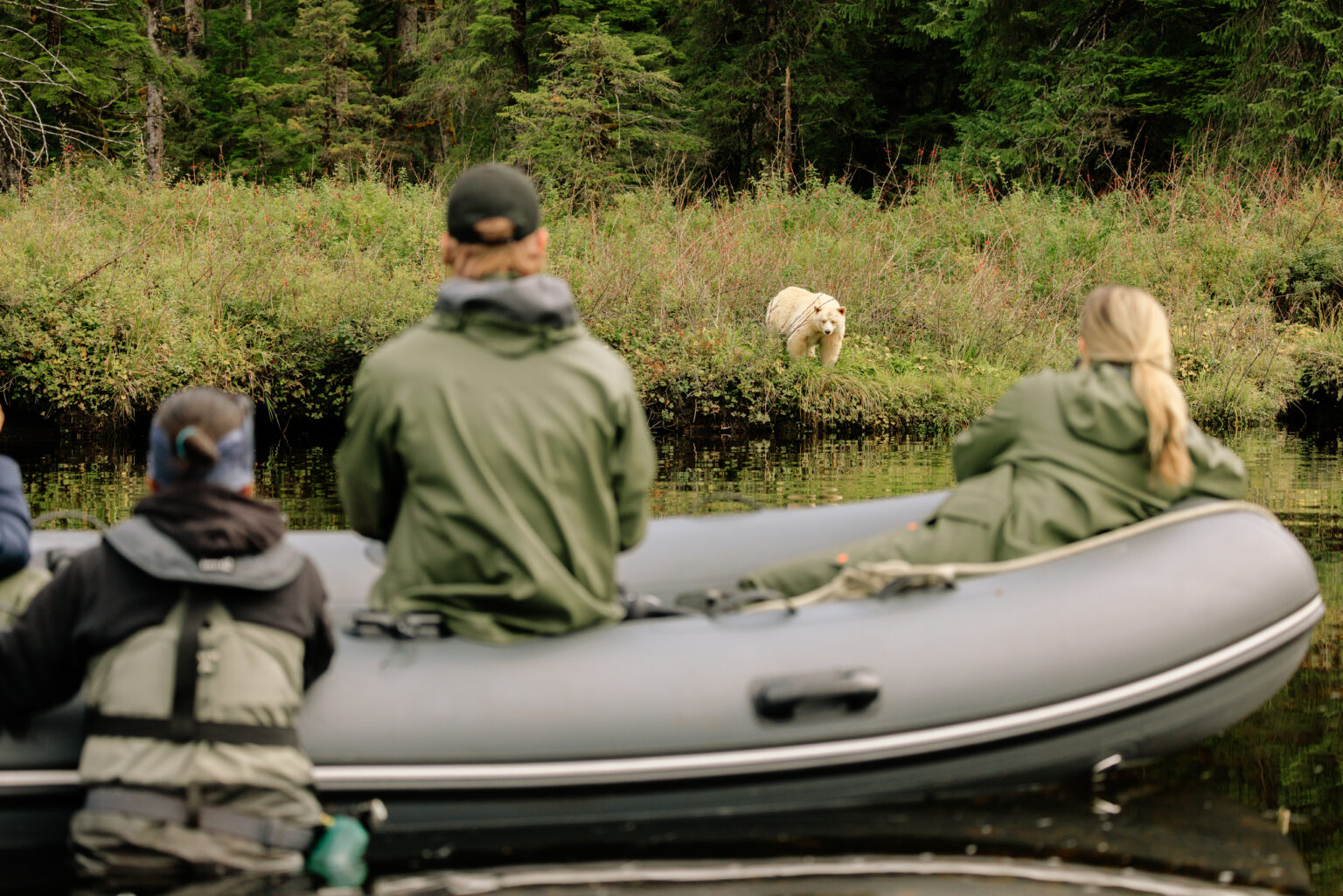
The Spirit Bear, the white-coated form of the Kermode bear, is one of the most iconic animals in Canada. Seeing one in the wild is not just exciting. It feels rare in a deeper way. There is a stillness that comes over a group when one appears. Even people who never stop talking usually find a reason to be quiet for a minute.
The general viewing season for Spirit Bears runs from spring into fall, but for photographers, the strongest window is usually late August through October.
Why then?
Because this is when the broader rainforest ecosystem starts to feel more charged. Salmon become more important in the rivers, bears become more focused on feeding, and the landscape itself begins to offer the kind of atmosphere photographers love. The forest feels richer. The weather often adds mood. The rivers and shorelines feel more alive.
That matters.
Because photographing a Spirit Bear is not only about seeing the animal. It is about seeing it in a setting that feels wild, atmospheric, and true to the place.
Can Spirit Bears be seen earlier in the season? Yes. You can see Spirit Bear as early as May
But if your goal is to give yourself the best chance at a powerful photographic experience, late August, September, and October are usually the months I would pay closest attention to.
That is when the whole scene tends to come together.

Best Time to See Coastal Wolves in the Great Bear Rainforest
Coastal wolves are one of the great wild cards of the Great Bear Rainforest.
They are not always the reason people first look at this destination. But they are often one of the reasons people leave talking about it for years.
A wolf on a beach in the Great Bear Rainforest feels different than a wolf almost anywhere else. It feels more mysterious, more coastal, more tied to tides, shoreline, and mist. These are not Wolves moving through some inland valley. These are wolves shaped by the sea.
And yes, that is every bit as special as it sounds.
For photographers, the best time to visit for coastal wolves is often May through early July.
Why?
Because this is when den sites can be more identifiable, pups may be around the dens, and the opportunity to photograph family behavior becomes especially compelling. For wildlife photographers, that is gold. It is not just about seeing a Wolf. It is about the possibility of photographing interaction, curiosity, movement, and the kind of storytelling moments that make an image feel far more meaningful.
That early-season window can offer something truly special.
It gives photographers the chance to focus on wolves in a way that feels more intimate and behavior-driven, rather than simply hoping for a brief encounter along the shoreline.
That said, late summer through fall is still an excellent secondary time to look for coastal wolves, especially August through October, with September and October standing out as particularly exciting for the broader Great Bear Rainforest experience.
Why keep that season in mind?
Because this is when the whole ecosystem feels especially alive. Shorelines, estuaries, salmon systems, and the broader food web all seem to tighten together. Even when wolves are not the only focus of the trip, this is the season when they feel most naturally woven into the larger Great Bear story.
And that matters.
Because the best wolf encounters are not just sightings. They are moments that feel connected to the place itself.
So if your main goal is to photograph coastal wolves with pups and den activity, I would look first at May through early July.
If your goal is to experience wolves as part of the full seasonal drama of the Great Bear Rainforest, then late summer and fall remain a very strong secondary window.

Best Time to See Grizzly Bears in the Great Bear Rainforest Region
This is where a little clarity helps.
When people say “Great Bear Rainforest,” they often imagine one giant area where every species is equally common everywhere. That is not really how it works.
Grizzly bears are part of the broader Great Bear Rainforest region, especially in some mainland coastal areas and estuaries, but they are not equally common in every part of the Spirit Bear zone. So if grizzlies are high on your wish list, it is worth understanding that location matters just as much as season.
That said, if you are looking at the region more broadly, late summer and fall are very strong, especially where salmon become a major part of bear activity. In some areas, spring can also be productive, particularly around estuaries where bears emerge and begin feeding after winter.
For photographers, though, I would still give the edge to late August through October if the goal is to combine grizzlies with a broader Great Bear wildlife experience.
Why?
Because that window gives you more than just bears. It gives you the possibility of rich coastal scenery, better overall wildlife variety, stronger atmosphere, and a better chance to come home with a portfolio that feels like it tells the story of the region rather than just one animal.
And that is usually the better result.
Best Time to See Whales in the Great Bear Rainforest
The Great Bear Rainforest is not just about what happens in the forest.
It is also very much about what happens on the water.
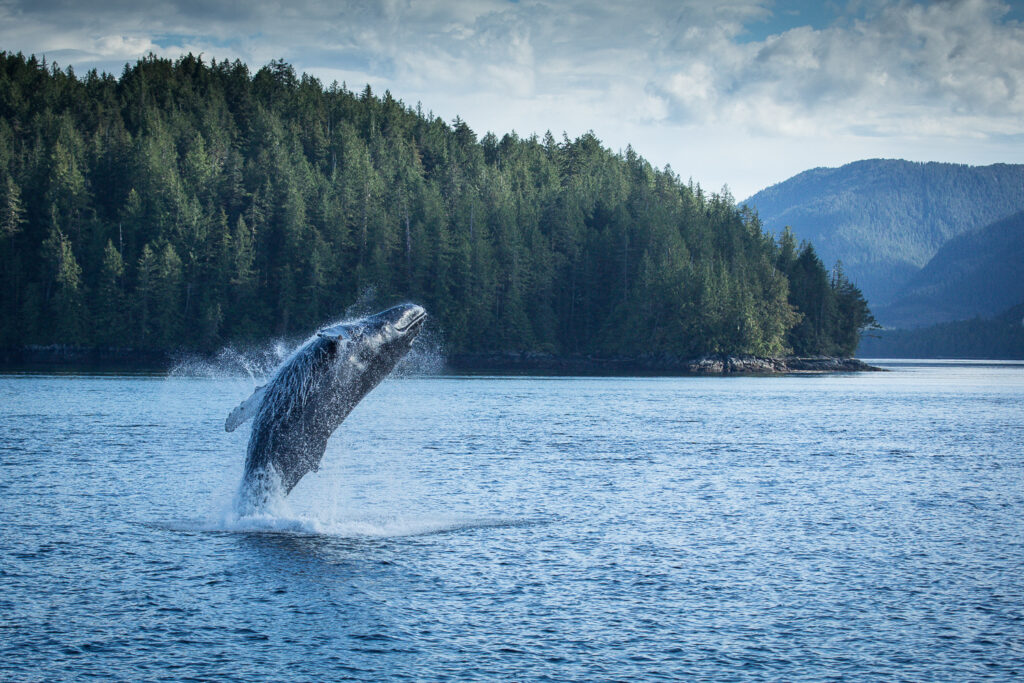
That is one of the things that makes this destination so special for photographers. On many wildlife trips, the ocean is just scenery. Here, it is part of the main event. Humpback whales, along with other marine mammals, are an important part of the coastal experience.
If whales are a major priority for you, summer through early fall is generally the best time to visit. In practical terms, that usually means June through September, with July, August, and September often giving photographers a particularly strong overlap between marine wildlife and the rest of the Great Bear experience.
That overlap is the key.
Because many photographers are not planning a whale trip or a bear trip, they are planning a Great Bear Rainforest trip, which means they want the possibility of both.
Whales add energy to a workshop in a different way than bears do. A bear encounter tends to slow people down. A whale encounter tends to jolt everybody awake in a hurry. Heads turn. Cameras rise. People who were calm five seconds ago suddenly start behaving like they need two more hands.
As wildlife experiences go, it is a nice problem to have.
Best Time to See Orcas in the Great Bear Rainforest
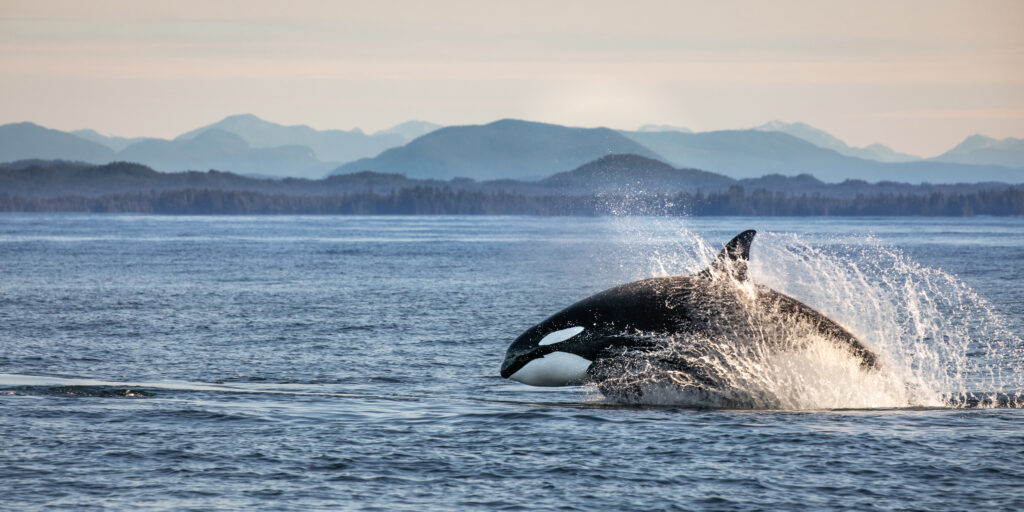
Orcas are another reason the marine side of the Great Bear Rainforest matters so much.
Seeing orcas in this setting adds another layer to the trip. It reminds people that this region is not just a rainforest. It is a complete coastal ecosystem, where channels, inlets, islands, and shorelines are all connected.
If orcas are high on your list, I would again point to summer through early fall, especially July through September.
That is not because orcas read calendars and become impossible outside those months. It is because this is the season when the broader Great Bear trip tends to align most nicely for photographers who want variety. You can be out in the channels with a real chance at marine wildlife while also visiting in a period that still works well for bears and the rest of the coastal experience.
And that is the beauty of this destination.
You do not always have to choose one thing.
Sometimes you can build a trip around the possibility of many.
So, What Is the Best Time to Visit the Great Bear Rainforest?
If you want the shortest possible answer, here it is:
- Best time for Spirit Bears: May and June, then late August through October for best viewing.
- Best time for Coastal Wolves: May through early July for den activity and pups; August through October as a strong secondary window
- Best time for Grizzly Bears in the broader region: late summer through fall, with some spring opportunities depending on location
- Best time for Whales: June through September
- Best time for Orcas: July through September
- Best overall time for photographers: late August through October That is the season when the Great Bear Rainforest feels most complete.
You have the possibility of bears in meaningful settings, marine wildlife in the channels, richer seasonal atmosphere, and the kind of experience that tends to stay with photographers long after they get home.
Which is really what people are looking for.
Not just a sighting.
Not just a checklist.
A real experience in a place that still feels deeply wild.
Final Thoughts
The best time to visit the Great Bear Rainforest depends on what you hope to see, but for most photographers, the strongest answer is not one species or one month in isolation.
It is the overlap.
It is that sweet spot where Spirit Bears, wolves, marine life, weather, light, and atmosphere all begin working together.
That is why this place is so special.
You may begin planning your trip around one dream animal.
A Spirit Bear, maybe.
A coastal wolf, perhaps.
A humpback or an orca in the channels.
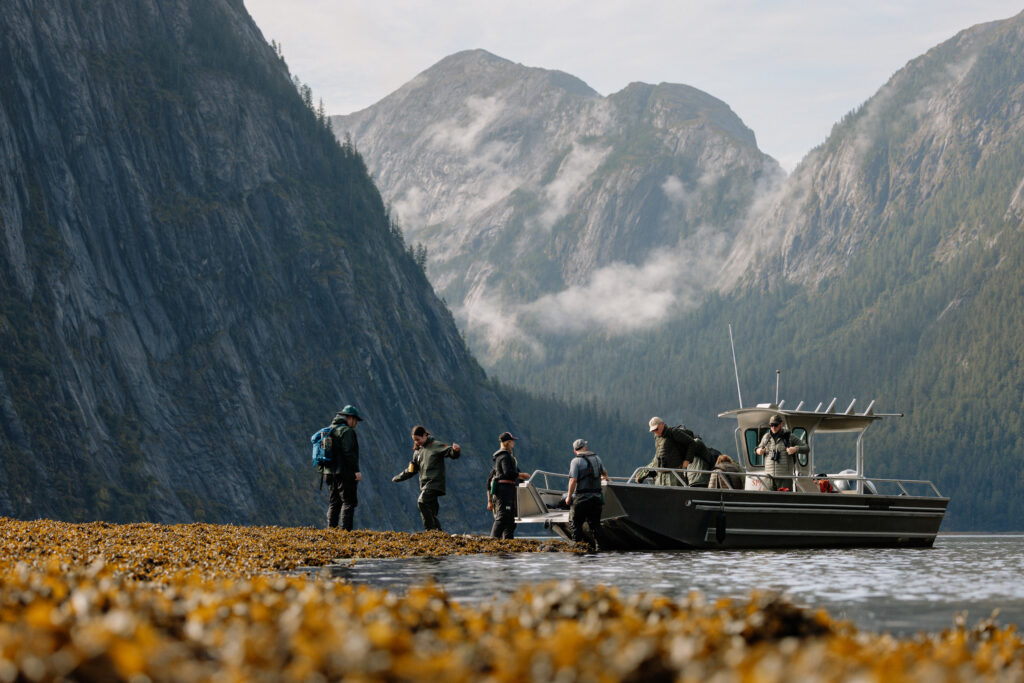
But once you get there, you realize the real magic is the whole system. The whole coast. The whole feeling of the place.
And that is exactly why so many people come home wanting to return.
Join us in the Great Bear rainforest on one of our two workshops. We offer two different tours. One in the fall, one in the spring. Now all you need to do is decide what works into your calendar, and what species you want to photograph.


