The Coastal Wolves of the Great Bear Rainforest: Why Seeing One Changes You
By Kevin Pepper |
People talk a lot about Spirit Bears in the Great Bear Rainforest. And they should.
But ask someone who has seen a coastal wolf there and watched it move along a beach, and you will usually get a different sort of answer. A quieter one. A more personal one.
Because there is something about coastal wolves that gets into your chest a little.
The wolves of the Great Bear Rainforest are part of a unique coastal population shaped by one of the most extraordinary landscapes in British Columbia. These are not inland wolves that simply happen to be near the water now and then. Their lives are tied to islands, estuaries, tidal flats, beaches, salmon systems, and the marine edge of the rainforest.
That alone is fascinating.
But what makes them unforgettable is not just biology.
It is how they feel in the landscape.
What Makes Coastal Wolves Different?
These are wolves of a coastal environment.
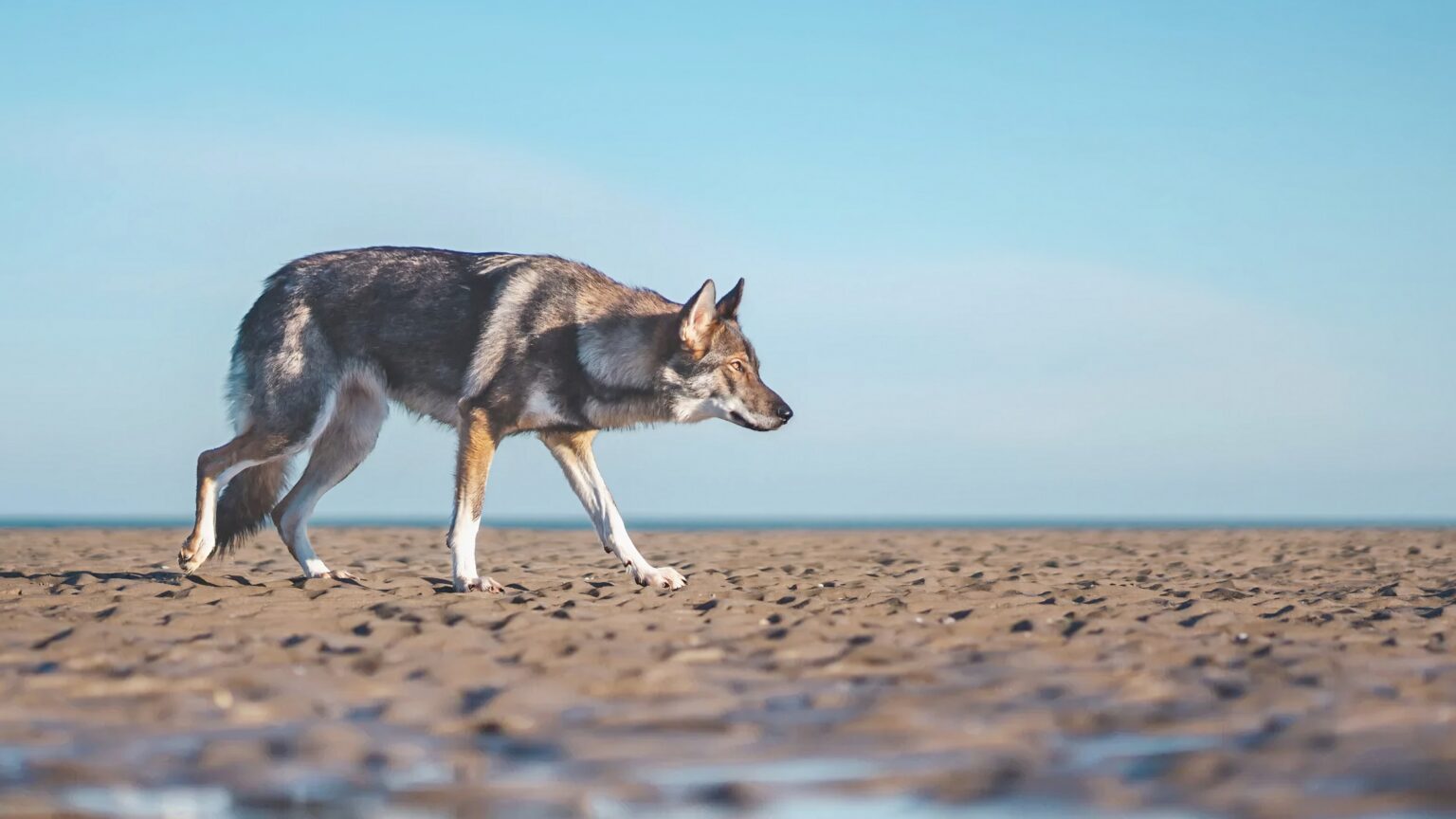
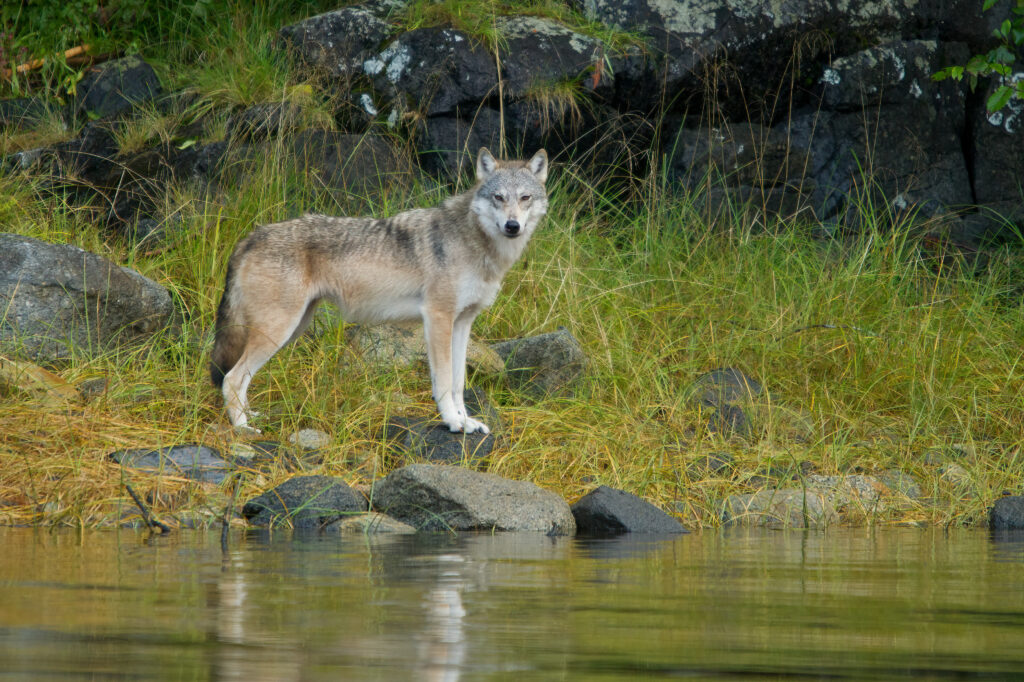
They swim between islands. They patrol beaches. They move through estuaries, driftwood, tidal flats, and old-growth forest. Their lives are tied to tides, salmon, shellfish, marine carrion, and shoreline ecosystems in a way that makes them feel almost like another creature entirely.
That is what makes seeing one so different. You are not just seeing a wolf. You are seeing a wolf in a world that seems to have reshaped it.
And that changes the encounter.
For many travelers, wolves are creatures of mountain valleys, snowy forests, and northern silence often seen through a spotting scope. Coastal wolves rewrite that picture. They belong to sea air, wet sand, kelp-lined edges, and dense rainforest. They make you realize how much more adaptive and surprising the natural world really is.
Why Seeing a Coastal Wolf Feels So Powerful
Part of it is rarity.
Part of it is surprise.
And a large part of it is the setting.
A coastal wolf does not usually announce itself. It appears in fragments. A flicker of movement near the driftwood. A shape coming down the beach. A figure working the tide line while the forest watches from behind.
Then all at once it is there.
And the whole shoreline feels different.
That moment tends to rearrange people a little.
Because wolves already carry weight in the imagination. Add mist, sea air, old forest, and isolation, and the sighting becomes something more than a normal wildlife encounter. It feels ancient. It feels private. It feels like you have briefly been allowed to witness a life that was never meant to perform for you.
That is why people remember it.
Not because a wolf showed up.
Because the whole world around it suddenly felt bigger.
Best Time to See Coastal Wolves in the Great Bear Rainforest
Coastal wolves are one of the great wild cards of the Great Bear Rainforest.
They are not always the reason people first look at this destination.
But they are often one of the reasons people leave talking about it for years.
A wolf on a beach in the Great Bear Rainforest feels different than a wolf almost anywhere else. It feels more mysterious, more coastal, more tied to tides, shoreline, and mist. These are not wolves moving through some inland valley. These are wolves shaped by the sea.
And yes, that is every bit as special as it sounds.
For photographers, the best time to visit for coastal wolves is often May through early July.
Why?
Because this is when den sites can be more identifiable, pups may be around the dens, and the opportunity to photograph family behavior becomes especially compelling. For wildlife photographers, that is gold. It is not just about seeing a wolf. It is about the possibility of photographing interaction, curiosity, movement, and the kind of storytelling moments that make an image feel far more meaningful.
That early-season window can offer something truly special.
It gives photographers the chance to focus on wolves in a way that feels more intimate and behavior-driven, rather than simply hoping for a brief encounter along the shoreline.
Why June Is a Special Month for Photographing Coastal Wolves
June is an especially interesting month for photographing coastal wolves in the Great Bear Rainforest because it sits in a very sweet spot of the season.
By June, den activity can still be relevant, pups may still be near den areas, and there is often a stronger feeling of family life shaping wolf behavior. For photographers, that creates the possibility of something much more meaningful than a simple sighting. You are not just hoping to see a wolf pass through a shoreline scene. You may have the opportunity to witness interaction, curiosity, and the kind of behavior that helps tell a fuller story.
That is what makes June so special.
The landscape is also working in your favor. Early summer in the Great Bear Rainforest feels lush, fresh, and alive. Beaches, estuaries, and forest edges have that rich coastal look that suits wolf photography so well. Everything feels a little greener, a little softer, and a little more full of promise.
And from a photographic standpoint, June can be incredibly rewarding because the images have the chance to feel both intimate and wild at the same time.
You may be photographing wolves in a season shaped by family behavior, but you are still doing it in one of the most dramatic coastal ecosystems on the continent. That combination is hard to beat.
If May through early July is the broader prime window for coastal wolves, June often feels like the month where that opportunity becomes especially compelling.
That said, late summer through fall is still an excellent secondary time to look for coastal wolves, especially August through October, with September and October standing out as particularly exciting for the broader Great Bear Rainforest experience.
Why keep that season in mind?
Because this is when the whole ecosystem feels especially alive. Shorelines, estuaries, salmon systems, and the broader food web all seem to tighten together. Even when wolves are not the only focus of the trip, this is the season when they feel most naturally woven into the larger Great Bear story.
And that matters.
Because the best wolf encounters are not just sightings. They are moments that feel connected to the place itself.
So if your main goal is to photograph coastal wolves with pups and den activity, I would look first at May through early July.
If your goal is to experience wolves as part of the full seasonal drama of the Great Bear Rainforest, then late summer and fall remain a very strong secondary window.

Why Coastal Wolves Matter So Much to the Great Bear Rainforest
The Great Bear Rainforest is one of the last places on this scale where land and sea still feel stitched tightly together.
It is not just forest.
It is not just coastline.
It is a living system where salmon, rivers, estuaries, beaches, islands, marine waters, and old-growth habitat all overlap.
Coastal wolves are one of the clearest examples of that connection.
They are a species that makes the Great Bear Rainforest feel different from inland wilderness. If Spirit Bears are the animal many people recognize first, coastal wolves are often the deeper heartbeat of the place. They make the coast feel less predictable, more connected, and more fully alive.
You begin to understand that this is not a collection of wildlife highlights.
It is an ecosystem.
And wolves are one of the strongest expressions of that truth.
Why Photographers Become Obsessed With Them
Because coastal wolves offer something many wildlife subjects do not.
They offer mystery.
People may arrive focused on bears, but they often leave talking about wolves because wolves create images that feel full of story. A wolf against driftwood. A wolf moving along wet sand. A wolf at the edge of dark forest with tidewater beside it. Those photographs do more than show an animal. They show a whole life shaped by a very specific place.
For wildlife photographers, that is the dream.
And when family behavior or pups enter the picture, the experience becomes even more compelling. That is why early-season timing can be so interesting. Den activity, interaction, curiosity, and movement create photographs that feel less like simple sightings and more like windows into a life few people ever get to witness.
That is gold.
Why Seeing One Changes You
That line is not just marketing.
Well, not only marketing.
Seeing a coastal wolf changes you because it shifts your understanding of what wildlife can be and what a landscape can hold. It makes the world feel a little larger and a little less familiar in the best possible way.
It reminds you that wolves are not locked into one version of themselves. They are not only animals of snow and mountain silence. They can belong to salt air, beaches, tide lines, and rainforest too.
That realization does something to people.
It expands their sense of the natural world.
And in a time when so much travel is built around predictability and comfort, a coastal wolf reminds you that the most meaningful experiences are often the ones that still feel slightly out of reach.
Join Us in the Great Bear Rainforest
If the idea of seeing a coastal wolf in the Great Bear Rainforest has lodged itself in your mind a little, there is a good reason for that.
This is one of the most emotional and visually powerful wildlife experiences on the coast of British Columbia. Our small-group Great Bear Rainforest photography workshop is built to give guests the chance to experience this coast with patience, intention, and real photographic purpose.
This is not a rushed sightseeing trip. It is a chance to spend meaningful time in one of the wildest coastal ecosystems in North America, photographing Spirit Bears, coastal wolves, and the full atmosphere of this remarkable place.
If you want more than a checklist trip, and you want to photograph the wild soul of the Great Bear Rainforest in a meaningful way, join us for our coastal wolves photo workshop, and the wild soul of this place in a meaningful way, come with us.


