How to Photograph Wildlife When the Light Is Harsh
By Kevin Pepper |
Every wildlife photographer loves soft light. But they don’t love wildlife photography in harsh light
Early morning and late afternoon give us the kind of light we dream about. Warm tones. Gentle contrast. Soft shadows. Beautiful atmosphere. It is flattering, forgiving, and often ideal for wildlife photography.
Midday light is none of those things.
It is bright, hard, contrasty, and often coming from straight overhead. It can create ugly shadows, burn out highlights, flatten detail, and make even a wonderful wildlife sighting feel visually disappointing. It is the kind of light that makes photographers squint, complain, and start saying things like, “Well… maybe it will get better later.”
Sometimes it will.
But wildlife does not wait for better light. A leopard may climb the tree at noon. A bear may step into the river in full sun. A heron may catch the fish at the exact moment the light is least cooperative. And when that happens, you have two choices: complain about the conditions or learn how to work with them.
At Akari Photo Tours, this is something we often talk about in the field. Good wildlife photography is not only about recognizing beautiful conditions. It is also about adapting when the conditions are less than ideal. Midday light may not be your first choice, but it does not mean the photography is over. It just means your approach needs to change.
And if you know how to work with it, harsh light can still produce strong, graphic, and memorable wildlife images.
Why Wildlife Photography in Harsh Light Is So Difficult
The biggest problem with midday light is its direction.
When the sun is high overhead, light tends to fall straight down onto the subject. That creates deep shadows under the eyes, chin, wings, or body, while also producing very bright highlights on the top of the animal. The result is often harsh contrast with very little subtlety.
This kind of light can cause a few common problems:
- bright highlights that lose detail
- dark shadows that block up too easily
- flat or unattractive color
- distracting backgrounds with bright patches
- less shape and depth than side light or low-angle light
It also tends to make scenes feel less atmospheric. Early and late light often add emotion. Midday light tends to strip that away and leave you with something more direct and unforgiving.
That sounds like bad news, and sometimes it is. But harsh light also has strengths. The key is knowing when to stop fighting it and start using it for what it does well.

When Harsh Midday Light Can Actually Work
Midday light is rarely soft or romantic, but it can still be useful.
In some situations, harsh light creates a bold, graphic look that works especially well for certain wildlife images.
Strong Shapes and Clean Lines
Harsh light can simplify a subject when the shape is clear and the background is uncluttered. Birds standing on a bright shoreline, animals on open sand, or subjects silhouetted against clean surroundings can all benefit from the crisp definition that hard light provides.
Subjects With Contrast Built In
Zebras, elephants, giraffes, polar bears in snow, dark animals against bright backgrounds, or pale birds against deep water can sometimes handle harsh light better than more subtle-toned subjects. The image becomes more about form, pattern, and contrast than soft beauty.
Behavior Over Beauty
Sometimes the moment matters more than the light.
If two animals are interacting, a predator is hunting, or a bird is landing with something in its beak, you take the shot. Every time. A great moment in bad light is usually worth far more than empty grass in perfect light.
This is where photographers get stuck. They reject good opportunities because the light is not ideal. That is a mistake. The image may not become a portfolio favorite, but it may still become an important storytelling frame.
Adjust Your Expectations and Shoot for a Different Kind of Image
One of the smartest things you can do in harsh midday light is stop expecting golden-hour results.
That sounds obvious, but many photographers keep shooting as though the light is soft when it clearly is not. They try to make every image feel warm, elegant, and glowing, and then wonder why the files feel disappointing.
Midday light usually requires a different visual strategy.
Instead of chasing softness, think about:
- shape
- contrast
- gesture
- clean backgrounds
- simple compositions
- behavior
- graphic patterns
- isolation
This is less about forcing harsh light to behave like beautiful light and more about recognizing what kind of photographs this light naturally supports.
That mental shift helps a lot. It keeps you from fighting the conditions and starts pushing you toward images that actually suit the moment.

Use Shadows Intentionally For Wildlife Photography in Harsh Light
One of the best ways to make harsh midday light work is to pay close attention to shadows.
Shadows are often the problem in bad light, but they can also become part of the solution.
Look for Partial Shade
An animal standing in the open sun is often difficult to photograph well at midday. But an animal standing near the edge of shade, or moving through dappled light, can give you more options.
Shade can soften contrast, reduce blown highlights, and create a more controlled exposure. It can also add mood if the light falls across the animal in an intentional way.
Use Deep Shadow for Drama
Sometimes a scene becomes stronger when you let parts of it fall into darkness.
A bird lit against a dark background, an animal stepping out of shade into a patch of light, or a subject partially concealed by shadow can all create a more dramatic image. This works especially well when the bright areas are limited and the composition stays simple.
Avoid Ugly Mixed Light
Not all shadow is helpful. Dappled light can become messy very quickly, especially in forest environments. Bright blotches across a face or body rarely improve a wildlife image. When light is patchy, be patient and wait for the subject to move into something cleaner.
Isolate the Subject Whenever You Can
Midday light becomes much easier to manage when the composition is simple.
Busy backgrounds and harsh light are a terrible combination. Bright highlights in the background, tangled vegetation, or high-contrast distractions can make the image feel chaotic fast.
This is the time to isolate.
Use Distance to Clean Up the Background
A longer lens and a more distant background can help simplify the image and reduce visual clutter. This matters even more in harsh light, where distractions tend to stand out aggressively.
Change Your Angle
Sometimes a small shift in position is all it takes. Lower your angle. Move a few feet to one side. Look for a cleaner line behind the animal. A simple background can rescue an image that otherwise feels harsh and messy.
Watch the Edges of the Frame
Midday light tends to make bright objects more distracting. Before pressing the shutter, check the edges of the frame for bright rocks, pale branches, blown highlights, or other visual junk pulling attention away from the subject.
Expose Carefully and Protect the Highlights
In harsh light, exposure becomes more important than ever.
Midday scenes often have bright whites, reflective surfaces, and deep shadows all fighting for your attention. If you expose too brightly, highlights can disappear fast. And once they are blown, they are usually gone for good.
That is why I tend to be cautious in this kind of light.
Protect Bright Areas First
If the animal has bright fur, white feathers, reflective water nearby, or sunlit highlights on the body, expose with those areas in mind. It is usually easier to recover some shadow detail later than to rebuild lost highlight detail that is no longer there.
Watch Your Histogram
This is not the time to trust the back screen alone. Midday light can fool you. A histogram gives you a better sense of whether you are clipping important tones.
Accept That Some Shadows Will Stay Dark
Not every shadow needs to be opened. In fact, trying to rescue every dark area can make the image feel muddy and artificial. Sometimes a little darkness is part of the look.
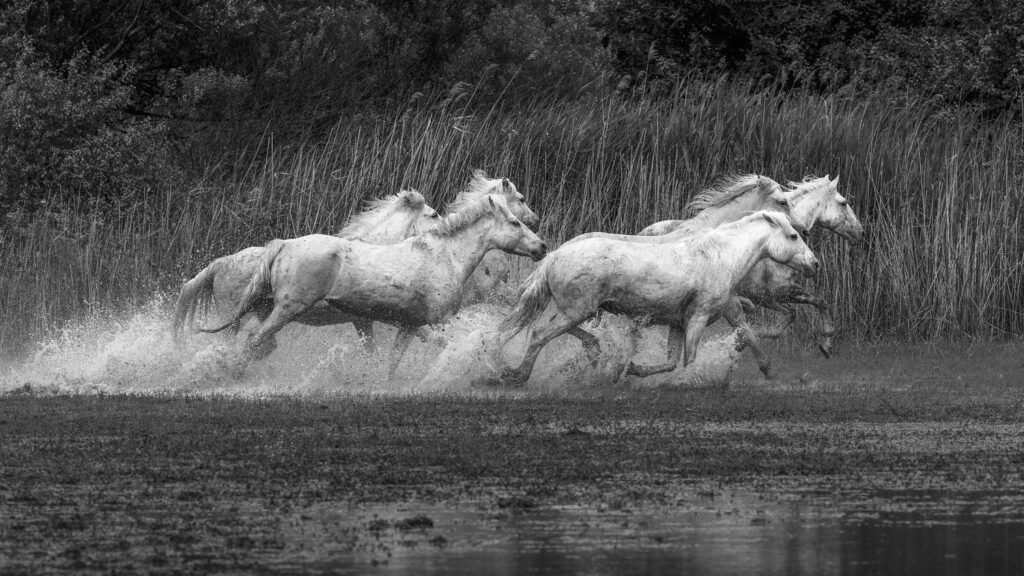
Wildlife Photography in Harsh Light Is a Great Time to Think in Black and White
This is one of the most useful shifts a wildlife photographer can make.
When color is unpleasant, contrast is high, and the scene feels too hard for a graceful color image, black and white can be the answer.
Harsh light often creates exactly what black and white photography likes:
- strong contrast
- graphic shadows
- clean highlights
- bold textures
- shape-driven compositions
A zebra herd in full sun. An elephant with wrinkled texture and bright dust. A bird with strong lines against reflective water. These images can often come alive in black and white even when the color version feels flat or awkward.
Black and white does not rescue every bad wildlife image. But it can turn certain midday frames into something much more intentional and striking.
The key is to look for images built on shape, pattern, texture, and tonal contrast rather than subtle color relationships.

Focus on Behavior, Interaction, and Story
One of the best ways to make peace with harsh light is to stop expecting every midday image to be about beauty.
Some images are about action.
Some are about behavior.
Some are simply about being there when something happened.
That matters.
A yawning lion, two bears sparring, a kingfisher with prey, a fox shaking water from its fur, or a bird landing in a burst of wings may still be compelling even if the light is hard. These are the moments when timing and storytelling outrank elegance.
I would always rather have a meaningful moment in rough light than a perfectly lit animal doing absolutely nothing.
Photography is still about content. Light matters, but it is not the only thing that matters.
Look for Opportunities to Go Graphic
Harsh light often works best when you lean into its boldness.
Instead of trying to soften everything, simplify and strengthen the image.
Look for:
- strong side profiles
- repeating patterns
- shadows cast on sand, snow, or water
- birds against bright sky or reflective surfaces
- animals separated cleanly from background clutter
- lines, shape, and posture
This can produce wildlife images that feel more modern, more editorial, and more intentional. The light may be severe, but the result can still be compelling.
Know When Not to Force It
This matters too.
Not every midday wildlife scene is worth shooting. Some are just ugly. The light is too vertical, the background is too distracting, the shadows are terrible, and the animal is in a terrible spot. Sometimes the most skilled decision is to recognize that the image is not there.
That does not mean the day is lost.
It may mean you wait for behavior. You change subjects. You experiment with black and white. You look for tighter details. You try something more abstract. Or you simply use the time to observe and prepare for when conditions improve.
There is no prize for making bad frames with full confidence.
Part of being a stronger wildlife photographer is knowing when to shoot, how to adapt, and when to hold back.
Final Thoughts On Wildlife Photography in Harsh Light
At Akari Photo Tours, we want photographers to understand light, not just admire it when it is beautiful on our wildlife photo workshops.
Soft sunrise and warm evening light will always be a gift in wildlife photography. But the field does not always hand us those conditions when the best moments happen. Sometimes the subject appears in the middle of the day, under hard sun, with deep shadows and no sympathy for our creative preferences.
That is real wildlife photography.
And learning how to handle those moments makes you a better photographer.
Midday light may never be your favorite. It is not mine either. But it can still produce strong images when you adapt your expectations, simplify your compositions, isolate your subjects, use shadows with intention, and think differently about what the scene wants to become.
Sometimes that means color. Sometimes it means black and white. Sometimes it means going graphic. Sometimes it means focusing on behavior over beauty.
The key is not to give up on the light too quickly.
Because wildlife does not care what time it is.
And some of the moments worth photographing happen long after the good light is gone.