What makes African light so special for photographers?
By Kevin Pepper |
If you’ve photographed wildlife or landscapes anywhere else, you might think you understand golden hour, soft shadows, and directional light. But then you photograph in Africa — and everything changes.
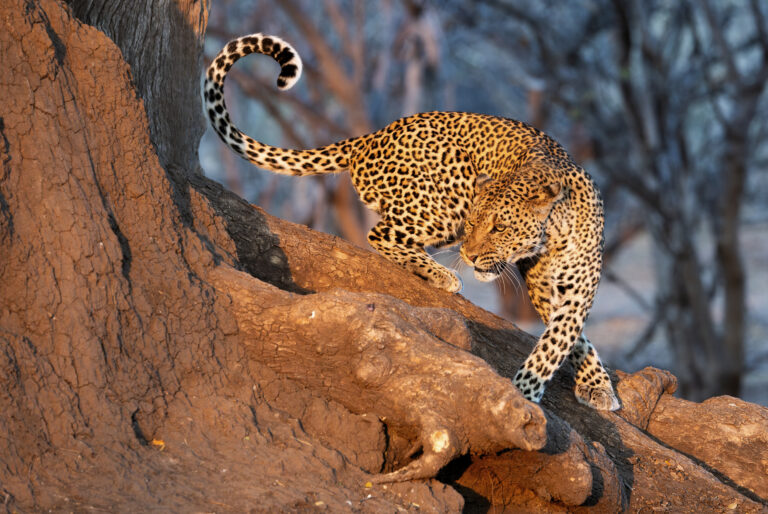
The light in Africa doesn’t just illuminate your subject — it shapes the entire experience. It may sound cliché, but it’s true: African light makes a photo workshop on this continent unforgettable.
I know photographers who have said they return from Africa with a different sense of what light can be — how it feels, shapes a story, and brings out texture and emotion in a way that’s hard to replicate anywhere else.
So what makes African light so unique? Let’s dig in!

The angle of the Sun near the equator
Africa straddles the equator, and that positioning significantly affects the quality and behavior of light. The sun rises and sets quickly but with intense, angled warmth. Compared to higher latitudes, it travels across the sky in a more direct arc, giving us a short but powerful window of low-angle light twice a day.
Why it matters for photography:
- Backlight and rim light are more dramatic. This is especially true when photographing animals with dust in the early morning or late afternoon.
- Silhouettes become bold and clean. The sun drops fast, giving you a few crisp minutes to frame subjects against a glowing sky.
- Highlights stay warmer longer. Even once the sun dips below the horizon, the afterglow lingers — an opportunity often missed in other regions.
Dust, haze, and atmospheric particles
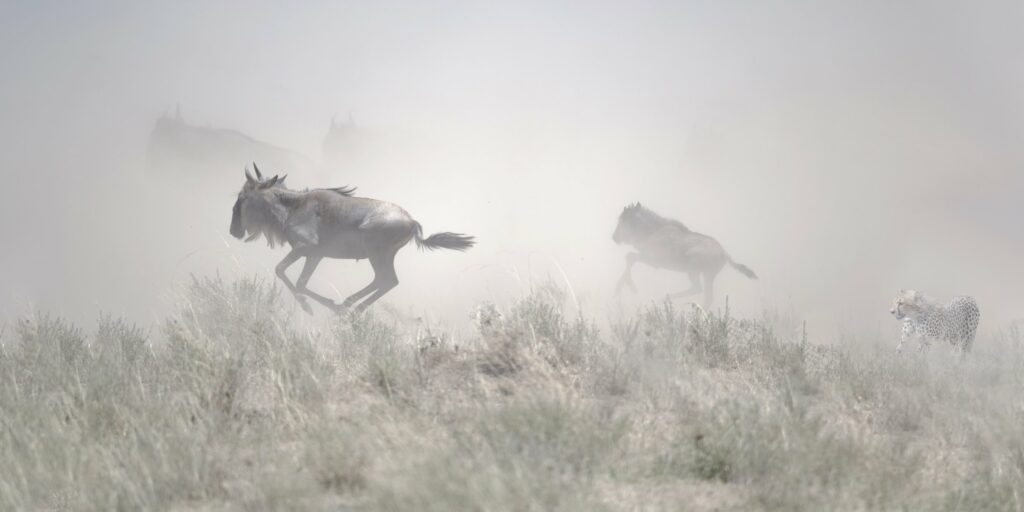
Dry seasons in Africa kick up dust from hooves, wind, and the parched earth. While that may sound like a technical nuisance, it’s a gift for photographers. Dust scatters light, softening harsh rays and creating a glowing, ethereal atmosphere that feels like shooting through golden silk.
The result:
- Sunbeams become visible shafts.
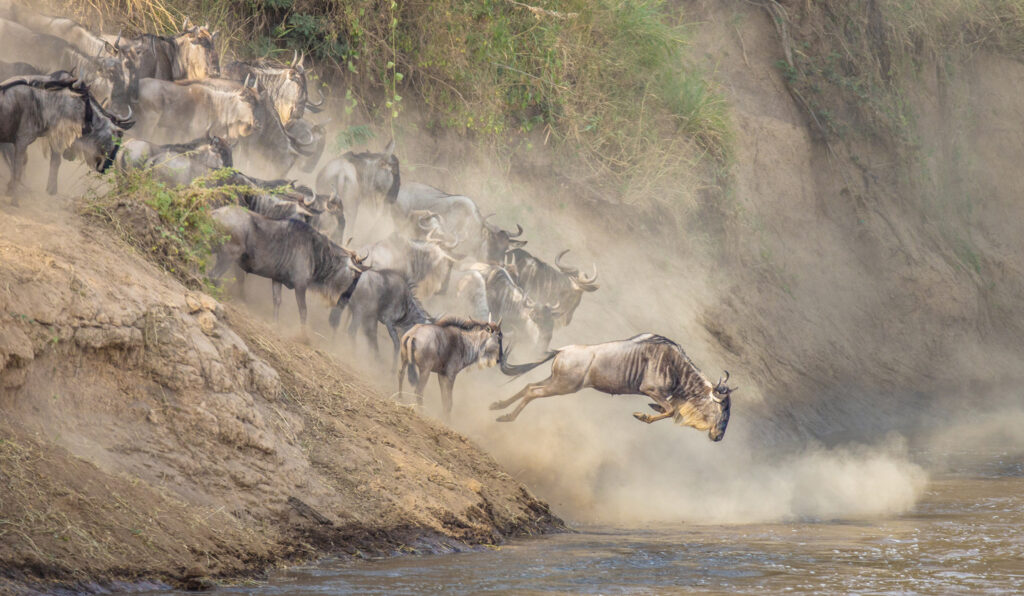
- Backlit dust kicks add drama to action shots — think wildebeest stampedes or elephant marches.
- Even midday scenes can look painterly, especially when smoke from distant fires or haze on the horizon.

The African landscape amplifies the light
African terrain is often open and expansive — savannas, deserts, salt pans, and floodplains — with few visual obstructions. This open geography means light travels longer distances uninterrupted, casting long shadows and creating soft gradients across the land.
What that means for you:
- You see the light coming. You can plan compositions as the scene evolves.
- Subjects are easier to isolate. The directional light against clean backgrounds creates strong subject separation.
- There’s more room to play with layers — distant mountains, scattered trees, animals in the foreground — all reacting to the same dynamic light.

Golden hour on safari feels more intense
It’s not that golden hour lasts longer in Africa — it feels more powerful. The sun’s warmth, the red dust in the air, and the natural contrast between subject and landscape combine to create rich, cinematic light.
The transition from day to night (and back again) happens fast. But within those fleeting minutes, the light is saturated, rich, and forgiving.
Tip for photographers:
- Don’t wait for “perfect” — shoot as the light evolves.
- The minutes before golden hour officially begins often offer some of the best, softest light.
- Adjust your white balance manually to capture the warmth authentically. Let your image reflect what it felt like, not just what it technically was.
African wildlife behaves beautifully in this light
Many African animals are crepuscular — most active at dawn and dusk. This means the best wildlife behavior aligns perfectly with the best light.
You’re not just chasing good lighting — you’re watching elephants bathe, lions stalk, and giraffes silhouette themselves on ridgelines in that light. It’s a rare alignment of subject, timing, and natural conditions.
Unlike other places where the best action might occur in poor light (like deep forest), in Africa, the action often unfolds in sync with optimal shooting conditions.

Night skies in Africa are spectacular, too
Once the sun sets, the drama doesn’t end. In areas far from city lights — like Namibia, Botswana, or Kenya’s northern deserts — the sky becomes another canvas entirely.
- The Milky Way is visible to the naked eye.
- Long exposures reveal star trails over iconic trees or kopjes.
- Astrophotography becomes not just possible, but irresistible.
And because the skies are often dry and clear, your chances of success are much higher than in more humid regions.

Emotional light = Emotional safari images
Let’s be honest: part of what makes African light special isn’t technical. It’s how it feels. The light connects with the land. With the animals. With you.
Photographers often describe a kind of emotional pull here, where light becomes part of the narrative, not just a tool. There’s a warmth that isn’t just color temperature. It’s something you carry home in your images and memory.
Final thoughts: The light is part of the story on a photo safari
You can’t replicate African light in Photoshop. You can’t fake it with filters. You have to be there. You have to feel the sun warm your face as elephants move through morning mist, or watch a lion stretch in the last rays of evening.
That’s why we chase light in Africa — not just for the exposure settings, but for the experience.
And once you’ve seen that light… you’ll spend the rest of your photographic life looking for it again.
Join us in Africa. We always schedule photo safaris a few years in advance to help you with your holiday planning and budgeting.