Looking Back on Over a Decade of Photography Workshops In Namibia
By Kevin Pepper |
Some workshops are born in boardrooms.
This one was born on dusty roads, under desert skies, with four trusting friends who decided to join me on an exploratory journey through Namibia.
When I think back on more than a decade of travelling to Namibia, the first workshop still stands out. Not because everything was perfectly polished. It wasn’t. Not because I had all the answers before we arrived. I didn’t. It stands out because it was the beginning of something that would become one of our most rewarding photography workshops.
That first trip was part workshop, part scouting expedition, and part education for me.
The teaching was there from day one. We worked on light, composition, night photography, wildlife behaviour, cultural portraits, and how to slow down when a scene deserves more time. But I was learning too. I was learning the roads, the distances, the rhythm of the country, the way light moved across the dunes, and where we needed to be at the right time of day.
That is the honest truth about building a good photography workshop. You do not become an expert by reading a brochure. You become one by showing up, making notes, returning again and again, and paying attention when the place teaches you something.
And Namibia has been teaching me something new on every one of the ten workshops I have done over the last ten years.
Why We Scout
This is why scouting matters so much to us at Akari Photo Tours.
Scouting is not just about finding pretty places. Anyone can search the famous locations. The real work is learning how a destination behaves. Where does the light hit first? Which rooms in Kolmanskop are best in the morning? How early do you need to be in Deadvlei before the light becomes too harsh? Which roads in Etosha are worth your time? Which waterholes produce the cleanest angles? Where can a small group actually work without feeling crowded?
That kind of knowledge is earned slowly.
We scout because it makes the workshop better. We learn, refine, adjust, and return with stronger plans. Over time, that experience becomes something our guests can rely on. When you travel with us, you are not just joining someone who has been there once and built an itinerary from a map. You are travelling with a company that have done the work, made the mistakes, found the better angles, and shaped the workshop around what actually helps photographers come home with stronger images.
That first Namibia group helped begin that process.

The Quiver Tree Forest: Our First Lesson in Desert Light
We began with the Quiver Tree Forest, a place that feels like it belongs to another century.
The trees stand like sculptures across the rocky ground, each one with its own shape and character. At sunset, they become silhouettes. After dark, they become foregrounds for the stars.
That first visit taught me how important timing would be in this location. It was not enough to simply arrive and hope for the best. We needed to know which trees separated cleanly from the background, where the Milky Way would rise, and how to help photographers build compositions in the dark.
Night photography here is slow, thoughtful work. There is a little stumbling, a little adjusting, and usually at least one person wondering why their camera suddenly seems to have 47 buttons they have never seen before.
But when it comes together, it is unforgettable.

Kolmanskop: Learning to Slow Down
Kolmanskop was one of the places I was most excited to photograph on that first trip.
An abandoned diamond mining town being slowly reclaimed by the desert is almost unfair to photographers. Sand-filled rooms, old doorways, peeling paint, strong lines, soft light — it has everything.
But Kolmanskop also taught me a valuable lesson: this is not a place to rush.
One room may look ordinary at one moment and remarkable twenty minutes later. A doorway that seems simple from one angle can become a layered composition from two steps to the left. The best images are often not the obvious ones. They come when you slow down and let the building reveal itself.
That first workshop helped me understand which rooms deserved early attention, which buildings worked better later, and how to teach photographers to see beyond the “classic” Kolmanskop image.
It also taught me a valuable lesson that the size of the group matters, not the student-to-teacher ratio. Limit the people, allow them to explore… guide them to the right rooms at the right time so no one misses out.
It remains one of the great creative stops on our Namibia route.
Sossusvlei and Deadvlei: The Desert Takes Over
Then came Sossusvlei and Deadvlei.
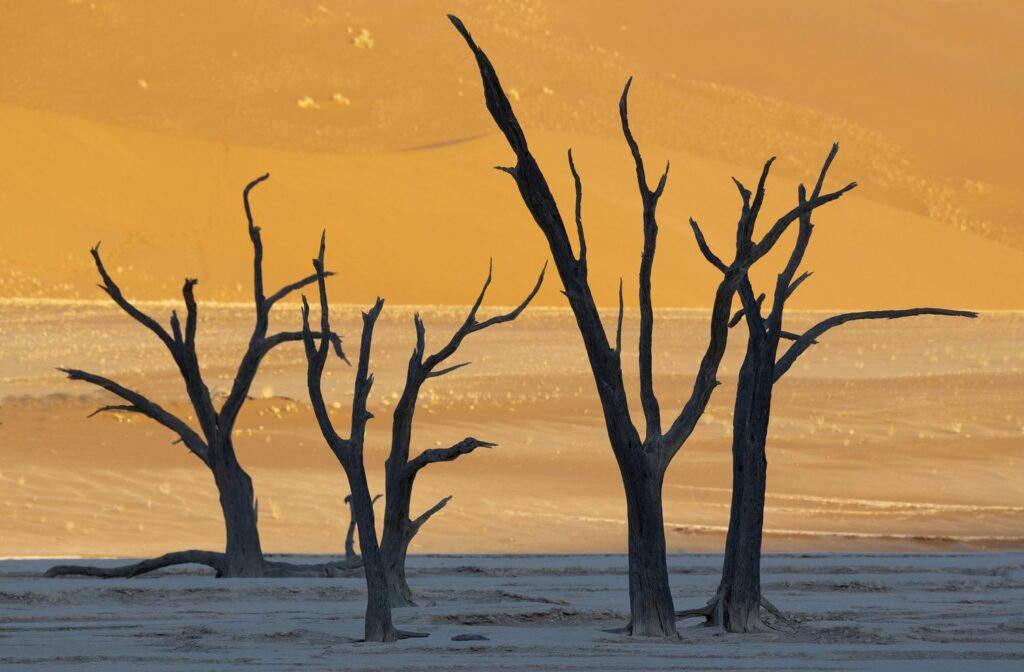
There are places that are famous because they have been photographed too often. Deadvlei is famous because it deserves to be.
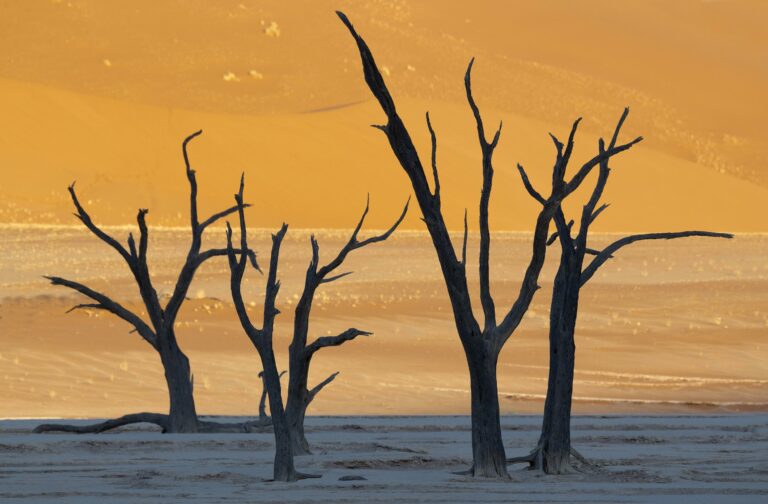
The white clay pan. The dark camel thorn trees. The red dunes. The blue sky. It is one of those locations where the landscape looks almost too clean, too graphic, too perfect.
But famous places can fool photographers. It is easy to arrive, take the postcard shot, and move on.
That first visit taught me that Deadvlei rewards patience. The light changes quickly. The shadows move across the dunes. The trees separate differently depending on where you stand. Small decisions matter.
Over the years, we have refined how we photograph this area. We now understand how much time guests need, where to begin, when to move, and how to help people make images that feel personal instead of simply repeating what has already been done.
The desert is not subtle. It demands respect, water, early starts, and a full commitment to keeping sand out of your camera bag. Good luck with that last part.
Walvis Bay and Sandwich Harbour: Namibia Changes the Story
One of the great gifts of Namibia is how quickly the landscape changes.
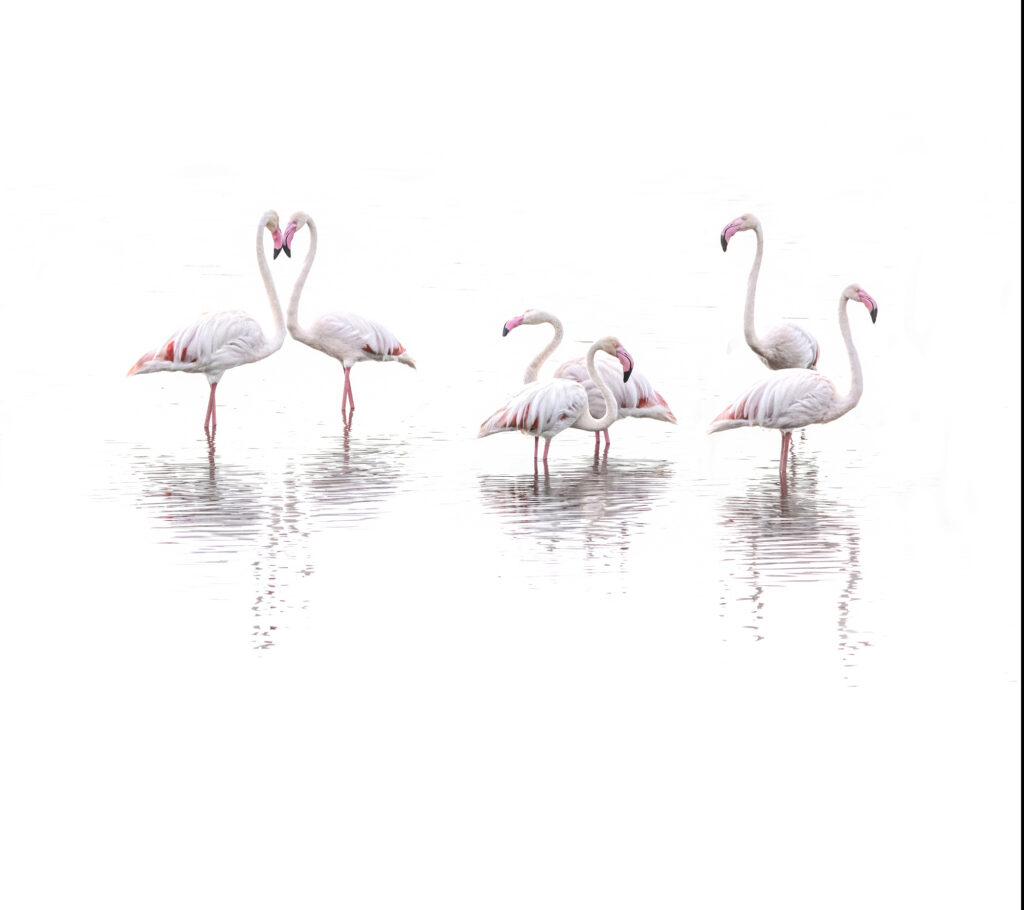
After the heat and vastness of the desert, Walvis Bay brings a different feeling. Cooler air. Coastal light. Birds. Dunes meeting water. Flamingos. Texture. Space.
This stop helped me understand that the workshop needed contrast. Namibia is not just one visual story. It is a series of them.
Walvis Bay gave the group a change of pace and gave us different photographic problems to solve. How do you simplify bird scenes? How do you work with coastal atmosphere? How do you use soft light when the desert has trained your eye to look for strong lines and bold colour?
Those transitions matter. A strong workshop needs rhythm, not just a list of locations.
Etosha: Where the Wildlife Lessons Began
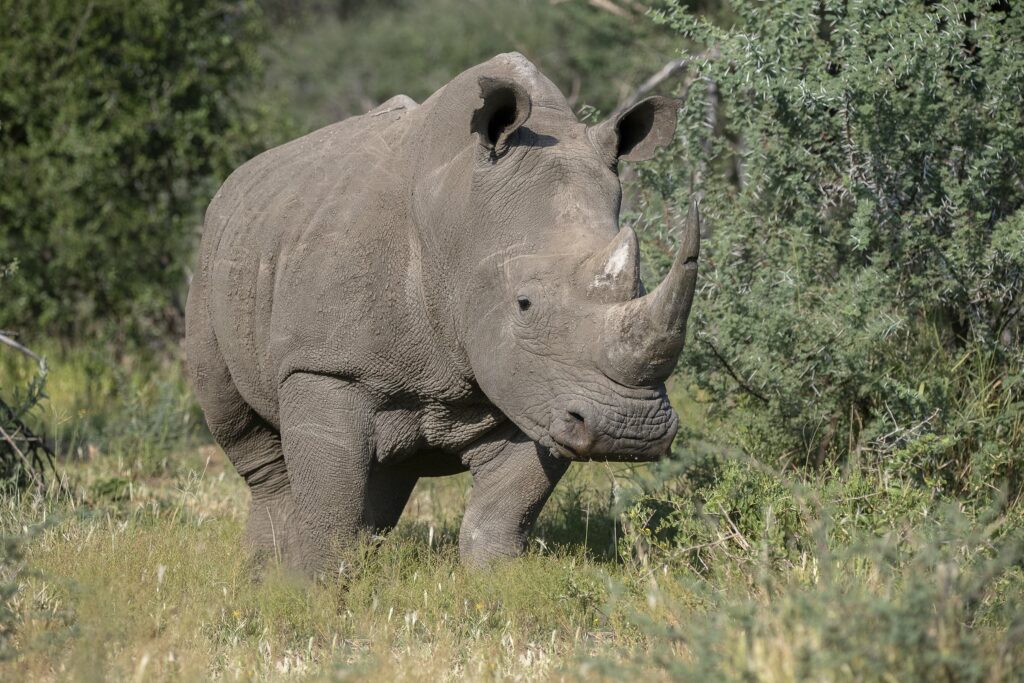
Etosha was the biggest learning curve for me on that first exploratory trip.
Wildlife photography in Etosha is different from many other parts of Africa. The landscape is open, dry, bright, and often unforgiving. The white pan can create clean backgrounds, but it can also challenge exposure. The roads, waterholes, animal movement, and timing all matter.
This was where I started paying close attention.
Which waterholes were productive in the morning? Which roads gave us better angles? Where could we position the vehicle for clean backgrounds? When should we wait? When should we move?
That is the real work of scouting a wildlife destination. It is not just about finding animals. It is about finding opportunities for better photographs.
Over the years, Etosha and Ongava have become one of the strongest parts of our Namibia workshop because we understand it better now. We know where to spend time. We know how to work the light. We know how to help photographers look for behaviour, dust, gesture, and separation.
And we know that wildlife still enjoys making fools of all carefully made plans. That is part of the charm.

Photographing the Himba: Respect Comes First
Our time with the Himba was another important part of that first workshop.
Cultural photography requires a different kind of attention. It is not just about settings, sharpness, or lens choice. It is about respect. It is about slowing down, watching body language, and making portraits that feel human.
That first visit helped shape how I teach cultural photography in Namibia.
We talked about backgrounds, gesture, light, and environmental storytelling. But we also talked about how we behave as photographers. The camera should never become an excuse to stop being thoughtful.
The Himba experience became an important part of the workshop because it gives photographers a chance to create meaningful portraits while learning how to work with care and intention.
What That First Group Helped Build
I still think about those first photographers who joined me. Kim, Steve, Antony and Chris. They came on an exploratory workshop before the route had been fully refined. They trusted the process. They gave me the space to teach, scout, adjust, learn, and build something better.
Because of that first trip, and because of the many Namibia journeys that followed, this workshop has become far stronger than it was at the beginning.
Today, our Namibia Safari Photography Workshop is the result of more than a decade of experience in the country. It includes the places that proved themselves again and again: the Quiver Tree Forest, Kolmanskop, Sossusvlei, Deadvlei, Sandwich Harbour, Walvis Bay, Spitzkoppe, Ungava and Etosha, and the Himba.
But more importantly, it includes the lessons learned between those places.
The roads. The timing. The light. The lodging. The angles. The pace. The places where photographers need more time and the places where they need better guidance.
That is what experience gives you.
Not just a route.
A reason for the route.
The Workshop It Became
Looking back, I am proud of how our Namibia workshops have evolved.
It began as an exploratory trip with four photographers willing to come along at the start of the story. It has become one of the most complete photography experiences we offer.
Namibia gives photographers almost everything: landscapes, wildlife, culture, night skies, abandoned towns, desert patterns, coastal birds, and some of the most beautiful light in Africa.
But the real value of a workshop is not just where you go. It is how you are guided once you get there.
That first trip reminded me of something I still believe today: the best workshops are built in the field. They are shaped by early mornings, wrong turns, better discoveries, hard-earned timing, and years of returning with a camera in hand and a group of photographers counting on you.
After 10 workshops in Namibia, I can say this with confidence.
We do not just love photographing Namibia.
We understand how to help others photograph it better.
See all our Namibia Photo Workshops at Akari Photo Tours.