Namibia: Why I Keep Returning
By Kevin Pepper |
I’ve circled the earth more times than my suitcase deserves. I’ve taught workshops in places that look like they were designed by a travel brochure writer with no budget limits. And still… Namibia is the country that keeps pulling me back. Not because it’s trendy. Not because it’s easy. Because it’s honest. Wide open. Unrushed. And it gives photographers the one thing we’re always chasing: space to see.
A country that makes you slow down (in the best way)
Namibia doesn’t scream for your attention. It doesn’t need to.
The land just stands there—quiet, confident—like it knows you’ll eventually notice the way the light arrives, how the wind draws lines across sand, how the horizon feels like it goes on forever.
In a world that’s getting louder and more crowded, Namibia is a deep breath.
Night Skies That Reset Your Soul
There are night skies… and then there’s Namibia.
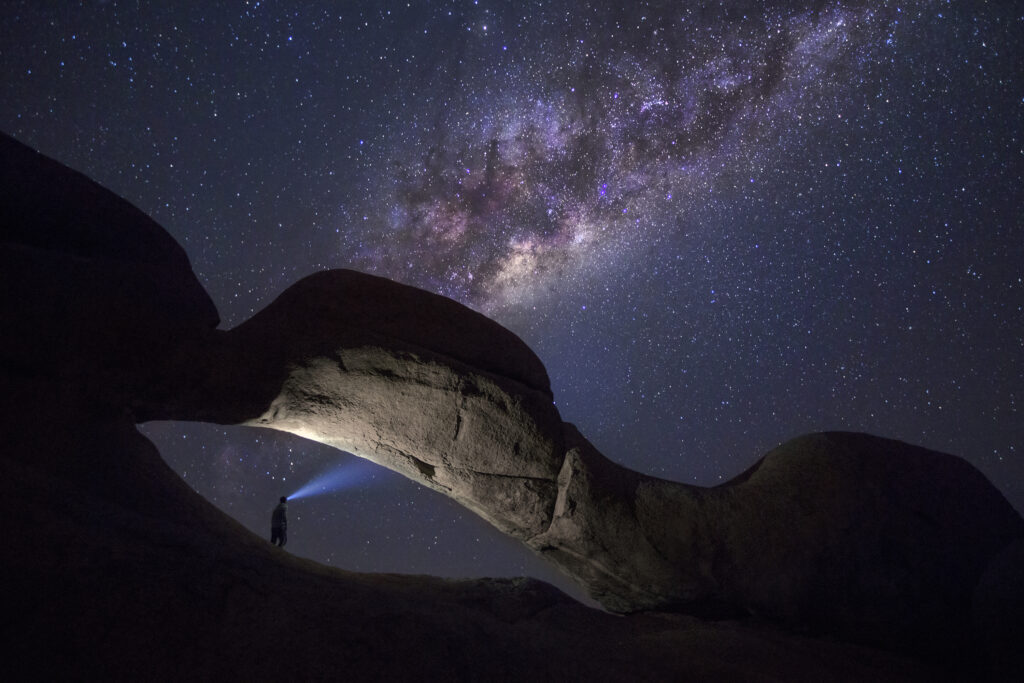
Out here, darkness is real. The kind of dark that makes the stars look close enough to touch. The Milky Way isn’t a “maybe.” It’s a certainty—bright, structured, and so clear it feels like someone turned up the contrast on the universe.
Photographically, it’s a gift: dry air, wide horizons, and skies that don’t fight you. Emotionally, it’s even better. You set up your tripod, you hear nothing but the desert doing desert things, and suddenly all the noise you carried with you gets left behind.
And the best part? Namibia doesn’t give you one night-sky location. It gives you a lineup.
Abandoned buildings near Kolmanskop: ghost stories under starlight
A lot of people think of Kolmanskop as a daytime destination—sand in the rooms, window light, textures, history. But the areas around it have their own magic after dark.
Abandoned structures out in that coastal desert feel like something out of another era. Under starlight, they turn into silhouettes and shapes—perfect anchors for the Milky Way. You can shoot clean and minimal, or lean into the mood: broken walls, dark doorways, and a sky so alive it feels unfair.
It’s the kind of night where you whisper without realizing it… because the scene asks for silence.
Quiver Tree Forests: the cathedral feeling
Then there are the quiver trees—strange, ancient, and sculptural. They don’t just sit in the landscape; they pose in it.
At night, they become these bold silhouettes with branching arms reaching into the stars. You frame one as your subject and suddenly the Milky Way becomes the backdrop to a portrait—something that feels both intimate and epic at the same time.
This is where photographers stop chasing the sky and start composing with it. One tree. One horizon. One clean frame. And it hits.
Spitzkoppe: granite giants and pure scale
Spitzkoppe is where Namibia decides to flex a little.
Those granite peaks and arches give you structure—strong shapes that hold the frame while the sky does its thing. It’s a perfect pairing: ancient rock, endless stars. You can shoot the Milky Way rising behind the spires, or use the arches to create a natural frame that feels almost too perfect to be real.
And the feeling up there at night—standing under rock that’s been there forever, with the sky moving overhead—does something to you. It makes your problems feel smaller. It also makes your shutter finger very happy.
Why it feels like a reset
Night-sky photography in Namibia isn’t just about coming home with a great Milky Way image. It’s about what happens while you’re making it.
You slow down. You breathe. You get patient again. You stop checking the world and start watching it.
If you’ve ever wanted to feel small in a good way—this is where it happens.
Kolmanskop: beauty, decay, and perfect light
Kolmanskop is one of those places where every room feels like a story you’re walking into mid-sentence.
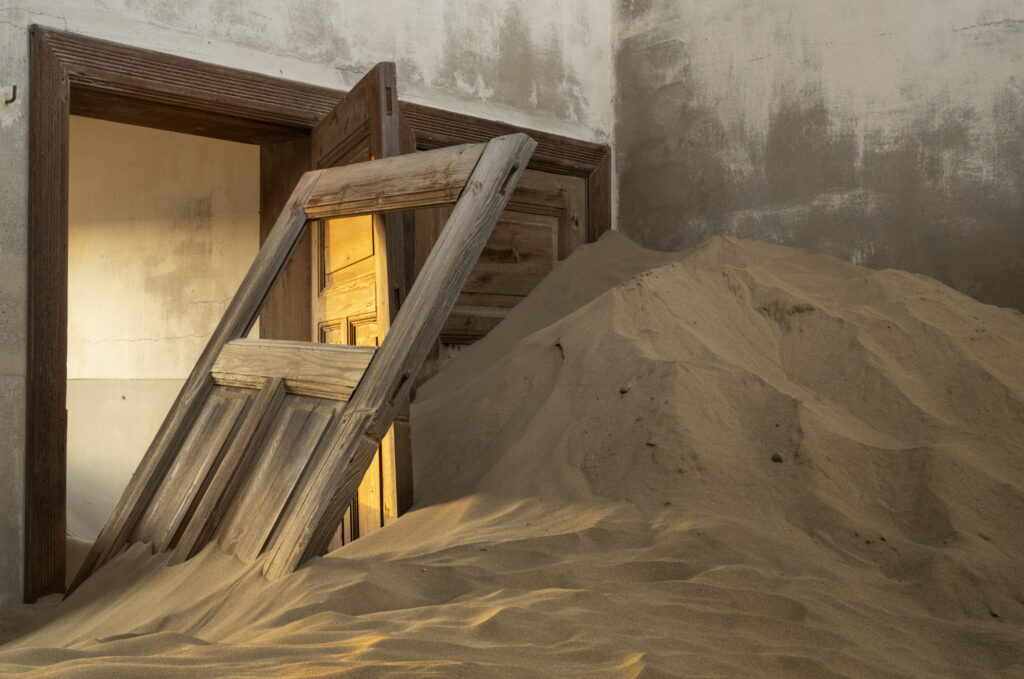
The sand has moved in like it owns the place—soft dunes pouring through doorways, creeping up staircases, swallowing corners of old wallpaper and forgotten frames. It’s eerie, but it’s not haunted. It’s simply time, doing what time does.
And the light in Kolmanskop? It’s a photographer’s lesson in patience.
Windows become softboxes. Shadows cut clean lines. Dust turns into atmosphere. You can shoot it clean and classic, or moody and dramatic. You can go wide and show the whole scene, or go tight and let a single edge of light carry the frame.
You don’t “finish” Kolmanskop. You just leave with a full memory card and the feeling that you missed something—and you’ll be back.
Sand dunes that never repeat themselves
The dunes are why people come. But they’re also why people stay.
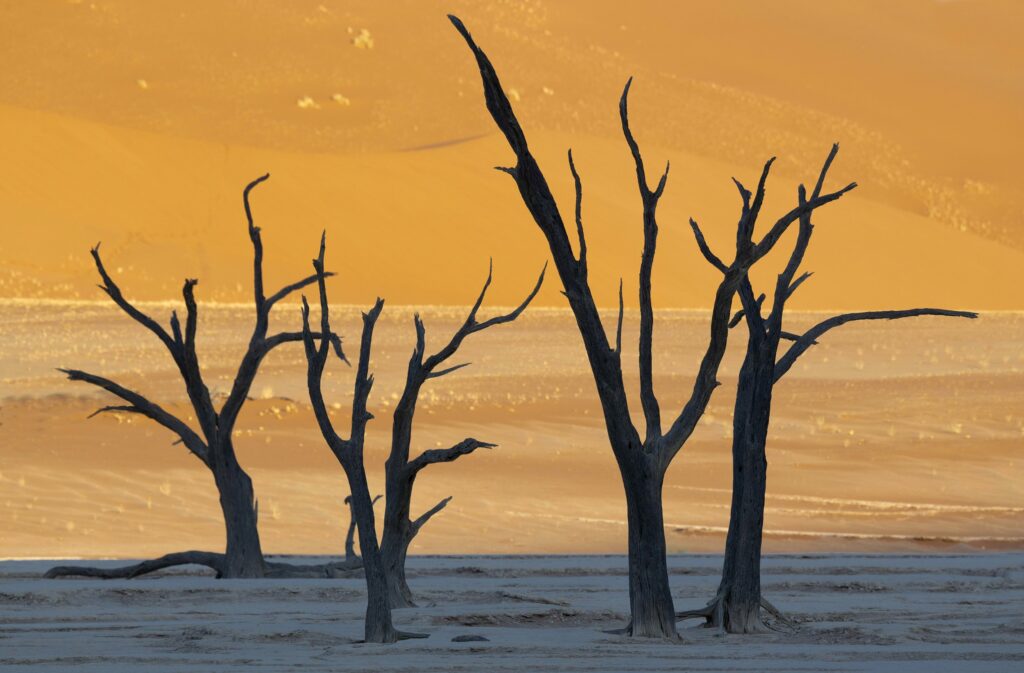
Because the dunes aren’t just dunes. They’re shape and shadow and movement. They’re minimalist compositions one moment, wild texture the next. They can look gentle at sunrise and unforgiving by mid-day. And every time you return, the wind has rewritten the scene.
This is what I love most: Namibia doesn’t give you one version of itself.
The desert is always changing, but it never loses its character. It’s the same place… and it’s never the same place.
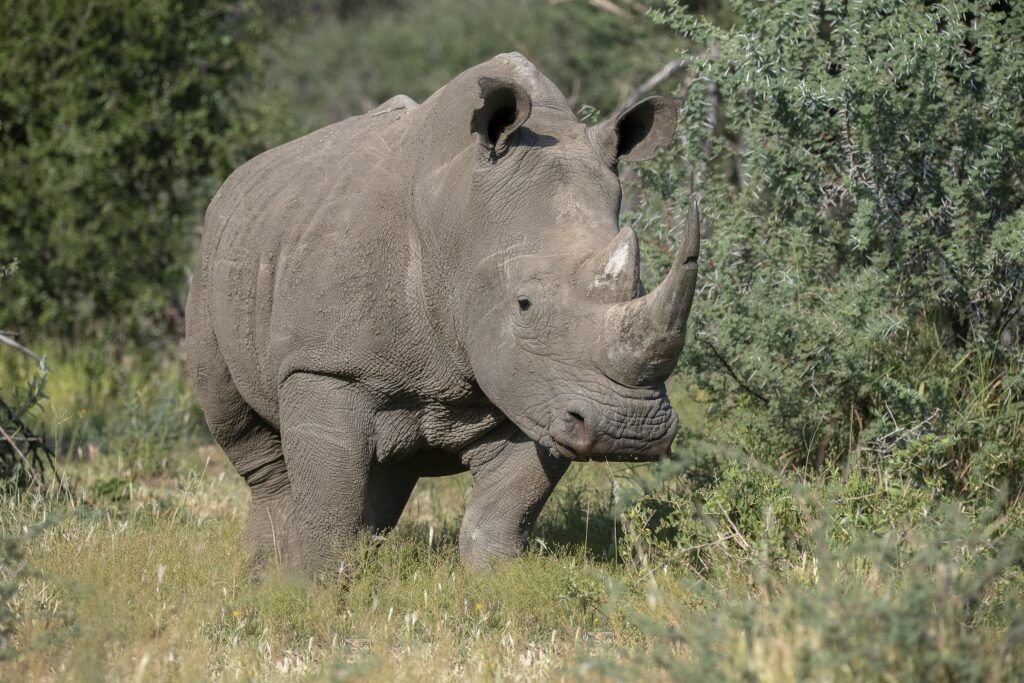
Africa Wildlife That Feels Earned
Namibia’s wildlife photography isn’t a theme park. It’s real.
Out here, animals aren’t placed in front of you like props. They’re living their lives—watchful, wild, and perfectly built for a hard landscape. That means you don’t just see wildlife… you learn to read it.
You work for your frames in a way that makes them mean something.
Sometimes that work is quiet. Long stretches of scanning. Listening. Watching a horizon that looks empty until it isn’t. Learning to notice the small tells—the shift of birds, the way antelope start staring in one direction, the sudden silence that feels like someone turned the volume down.
And then, when it happens, it doesn’t feel like luck. It feels like you earned your seat at the table.
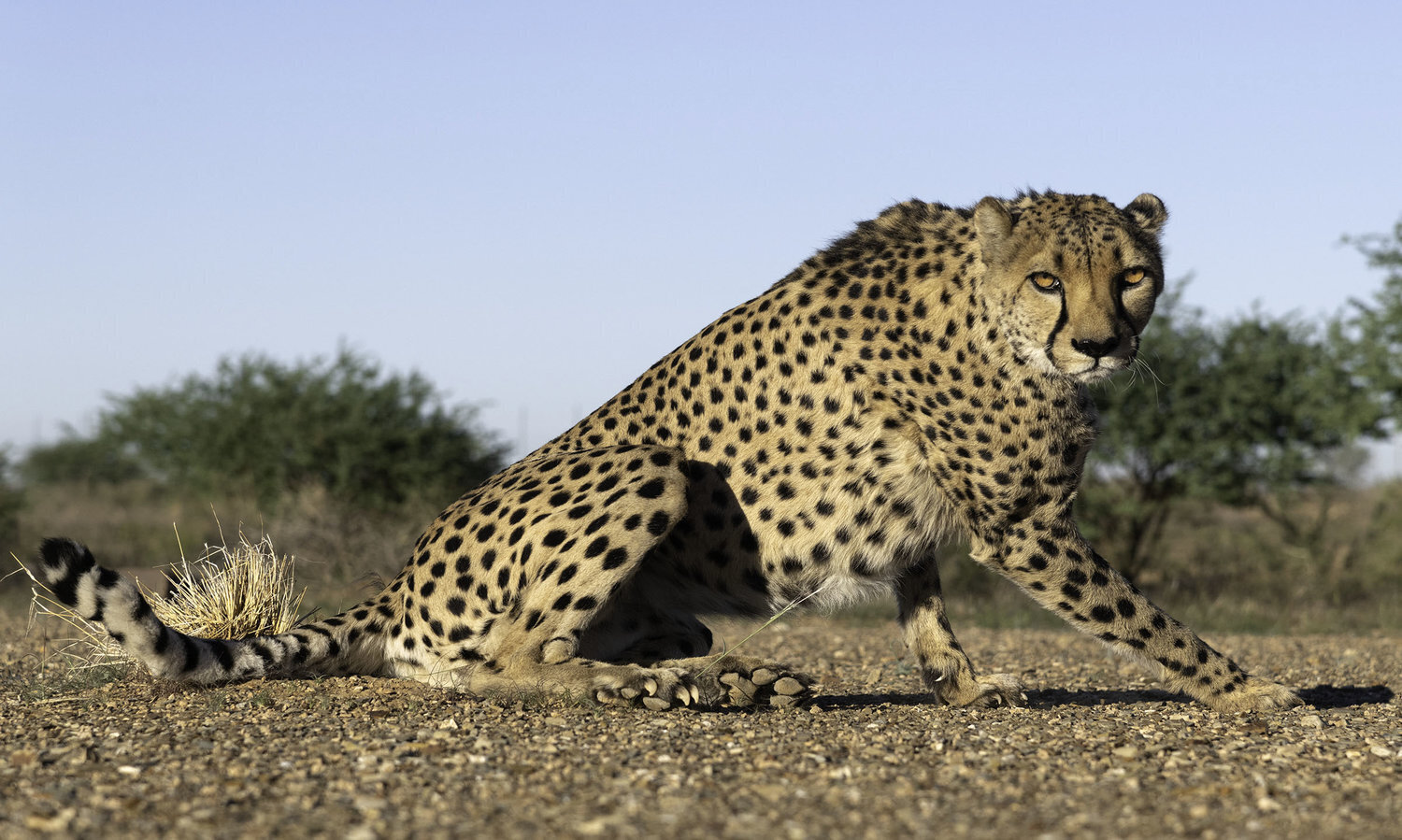
I’ll never forget one morning at sunrise—one of those Namibia mornings where the light is soft and the air still has that cool edge. We were tucked in, waiting, and the tall grass was lit from the side like it had been brushed with gold.
At first, there was nothing. Just texture. Just breath in the cold air. Just that quiet that makes everyone whisper without being told.
Then the grass moved.
Not dramatically. Just enough to make you stop thinking and start watching.
A cheetah appeared—first the head, then the shoulders, then that long, effortless body sliding forward like it was part of the landscape itself. It wasn’t running. It wasn’t rushed. It was walking straight toward us through the grass, using the light like camouflage and confidence at the same time.
You could feel the group tense—not fear, not panic—just pure focus. Cameras came up slowly. No one wanted to be the person who blew it. You could hear shutters start to click, controlled at first, then faster as the moment kept getting better instead of ending.
And that’s the thing about Namibia: it doesn’t just hand you a subject. It gives you a sequence. A build. A story.
That cheetah didn’t feel like a trophy. It felt like permission.
Like the country looked at us and said, Alright. You’re paying attention. Here you go.
And it’s not just cheetahs. It’s the way oryx move like they belong to the wind. The way desert-adapted animals carry themselves with a calm toughness. The way predators and prey aren’t performing—they’re surviving. Everything fits the land. Everything makes sense in the frame because it makes sense in life.
That’s why Namibia sticks with you.
Because the best wildlife moments here aren’t just “good sightings.” They’re moments where you feel completely present—heart steady, eyes sharp, hands doing what they’ve been trained to do.
And that’s the difference between collecting photos and living a photographic experience.
Namibia doesn’t just give you images.
It gives you moments that have weight.
Door-Off at Sunrise: When Namibia Stops Being a Place and Becomes a Feeling
There’s a moment in Namibia that doesn’t just inspire you as a photographer—it rewires you.
You settle into your seat for a door-off helicopter flight, harness snug, camera tucked close like it’s part of your body. The air has that early-morning bite. Cold enough to keep you honest. Cold enough to make the sunrise feel earned.
The rotors spin up and the excitement builds in your chest the way it used to when photography was brand new—before you knew what you were “supposed” to shoot.
Then you lift.
And suddenly, Namibia opens like a book.
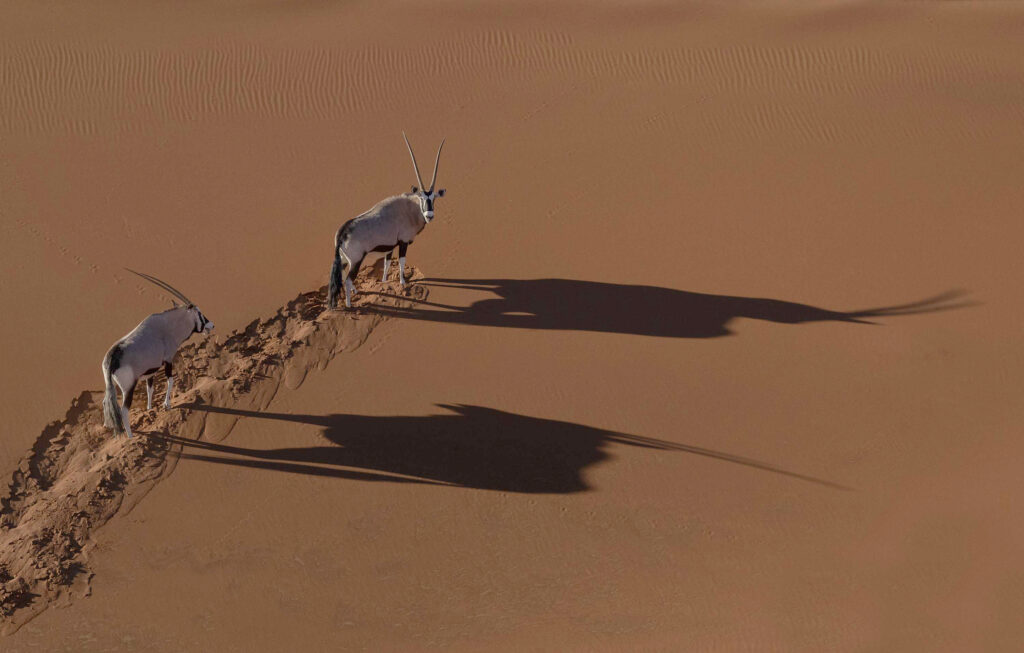
As the sun breaks the horizon, you’re there—floating above the dunes—watching nature paint its palette in real time. The light doesn’t just land on the sand. It reveals it. Every ridge becomes a leading line. Every curve throws a shadow with purpose. The dunes look less like a landscape and more like a living sculpture—clean, graphic, and endlessly unfolding beneath you.
You start firing frames. Of course you do. You try to make sense of what you’re seeing through a viewfinder. Wide. Tight. Abstract. Classic. You think, This is it. This is the dream.
And then—just when you’re convinced you’ve seen it all—the desert stirs.
Movement. Subtle at first. Then unmistakable.
Oryx—steady and unbothered—walking along the dunes like they’ve owned the place forever (because they have). Against those clean lines and fresh light, they don’t look real. They look like a photograph you’ve seen in a magazine… except it’s happening right below you.
That’s when the excitement tips into something else.
Euphoria.
Not the loud kind. The quiet kind that makes you forget to speak. The kind that reminds you why we travel, why we get up early, why we carry heavy gear and chase light across the world.
Because every once in a while, a place gives you more than a photo.
It gives you a memory that stays in your bones.
And Namibia—especially from the air at sunrise—is one of those places.
There Is No Bad Photo Stop in Namibia
I’ve said this a hundred times, and I’ll keep saying it: in Namibia, there’s no such thing as a “filler stop.”
That’s not marketing. That’s experience.
In a lot of countries, you drive between the “big” locations and try to ignore everything in between. Namibia is the opposite. The in between is often the story. The light changes fast, the land is always doing something interesting, and the simplest scenes can turn into portfolio images if you’re paying attention.
Even the places you pull over for five minutes can give you something:
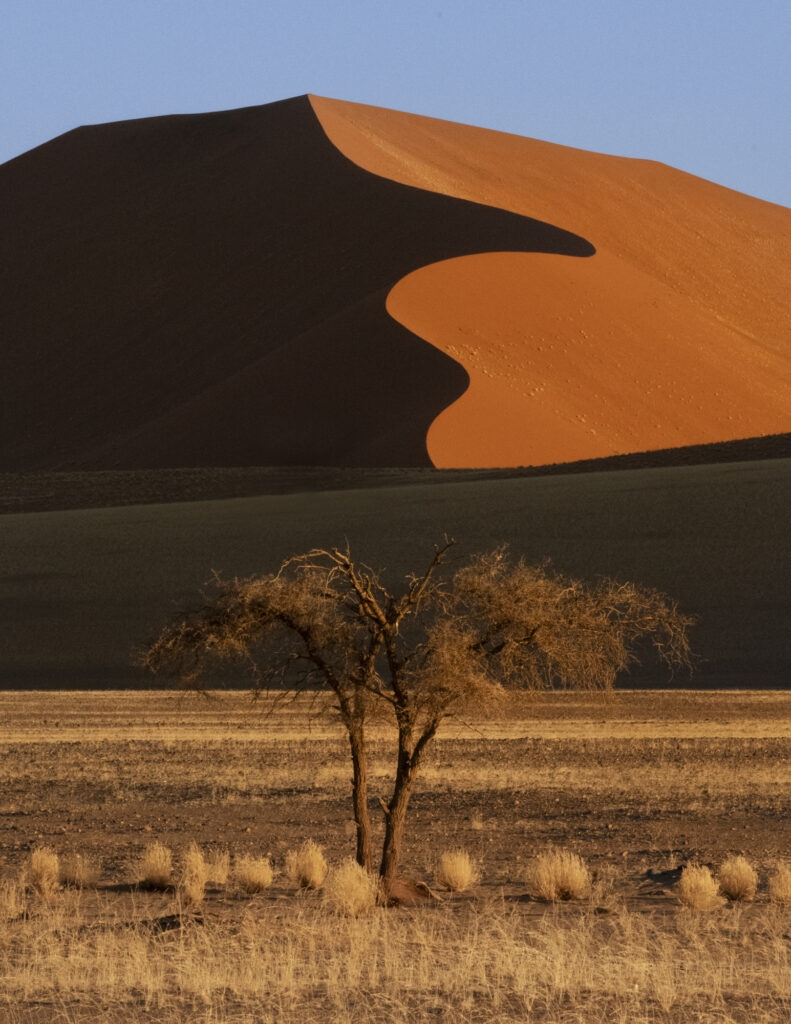
- A lone camelthorn tree in clean negative space, standing like a punctuation mark on the horizon.
- A line of mountains with a razor-thin band of light crawling across the ridges.
- A roadside scene where the textures—gravel, dust, grasses—stack into perfect layers.
- A weathered fence, a windmill, tire tracks, a single cloud doing all the heavy lifting.
- Or the moment your group is laughing in the dust, and you realize the real souvenir isn’t just the photo—it’s the feeling attached to it.
And here’s the part photographers don’t talk about enough: Namibia trains your eye.
It teaches you to see shape before subject. Light before location. Shadow before story. You stop hunting for obvious “things” to photograph and start noticing what actually makes a strong image: clean lines, separation, tone, rhythm, gesture.
One minute you’re stopped for a quick stretch. The next you’re working a scene like it’s a planned shoot—moving a few steps left, dropping your horizon, waiting for the cloud to slide into place, letting the frame breathe. Namibia makes you better because it rewards discipline, not desperation.
It also keeps you humble. You’ll swear there’s “nothing here,” and then the sun dips, the sky turns soft, the wind draws fresh patterns in the sand, and suddenly you’re trying to shoot with the urgency of someone who just found out golden hour has a curfew.
That’s the magic: Namibia doesn’t only deliver at the famous spots. It delivers everywhere—quietly, consistently—if you bring curiosity instead of a checklist.
Because in Namibia, the country doesn’t ask, “Did you arrive at the landmark?”
It asks, “Did you notice what the light was doing on the way there?”

Why I feel safe here
People ask about safety all the time—and it matters. You can’t create good work if you’re tense.
In Namibia, I feel safe because the pace is sane, the culture is respectful, and the places we travel through feel grounded. The country has a calmness to it. You’re not constantly on guard. You’re present. And that changes everything—how you shoot, how you see, how you sleep.
The best guide in the country (and I’m not just saying that)
I’m also grateful—deeply grateful—for the person who makes Namibia even better for my guests: Mr. T.
I’ve worked with guides in a lot of countries. Great ones, too. But Mr. T has something rare: he understands what photographers want without us having to explain it every five minutes.
He knows when to push for the light and when to let the moment breathe. He reads a scene like a photographer. He can spot a situation forming before most people even lift their cameras.
And his personality? Infectious. The kind of humor that keeps a group light and happy—even when we’re up early, covered in dust, and pretending we don’t care about coffee.
Most important: he prioritizes my guests. Always.
That’s not a small thing. It’s the whole thing.
Why Namibia still inspires me after a decade
After ten years of returning, I should be “used to it.”
I’m not.
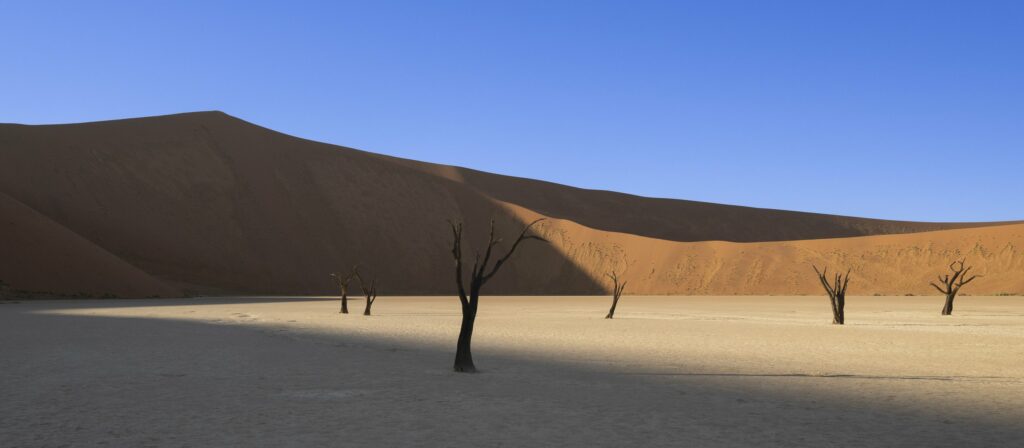
Namibia still gives me that feeling I had early in my career—the one where you wake up before dawn and actually want to go outside. Where you’re excited to see what the light is going to do today. Where you remember why you fell in love with photography in the first place.
Namibia isn’t just a destination.
It’s a reset.
And if you’ve been craving that—quiet, space, real night skies, the kind of landscapes that make you stop talking—then you already understand why I keep coming back.
Join me on a Namibia photo workshop. Fall in love with the country as I have. You will not be disappointed.


