
Photographing in Antarctica: What Makes the Light and Landscapes So Unique
By Kevin Pepper |
After leading photography expeditions on six continents over the past decade, I can tell you this: nothing prepares you for Antarctica. It’s not just the isolation. Or the wildlife. Or the scale. It’s the light — and the silence. The purity of the landscapes. The sense that every frame you shoot is part photograph, part memory, and part reverence. Photographing in Antarctica is unlike photographing anywhere else on Earth. And if you’re lucky enough to go, you’ll find that the challenge isn’t finding a great shot — it’s knowing how to capture the experience without being completely overwhelmed by it.
Light That Doesn’t Obey the Rules
In most parts of the world, photographers use light as a tool—something you shape, chase, and control. You carefully wait for the perfect golden hour glow, rely on shadows to give depth, or patiently hope for clouds to soften harsh midday sun.
But in Antarctica, the rules you thought you knew no longer apply. Here, light is not just a part of your photo—it’s the heart of the scene itself.
So, what exactly makes Antarctic light unlike anything else you’ve ever photographed?
Reflective Snow Acts Like a Giant Softbox
When you first arrive in Antarctica, you’ll immediately notice how the snow and ice alter your expectations of lighting. Imagine standing inside a giant natural studio—every surface, from towering glaciers to smooth, expansive snowfields, reflects the sun’s rays. The sea itself, sometimes mirror-flat, sends even more light bouncing gently upward, eliminating harsh shadows.
This unique phenomenon creates an ethereal softness that’s ideal for photography. It’s almost impossible to find a truly harsh shadow unless you intentionally point your lens straight toward the sun.
Anecdote: On one Antarctic landing, I watched photographers cautiously shooting Gentoo penguins, worried about harsh shadows in midday sun. They quickly realized their shots looked beautifully balanced—almost painterly—thanks to the reflective snow and ice. The moment they realized they could shoot freely in bright conditions without the usual worries was truly transformative.
Suggestion: Use this forgiving lighting to experiment with portraits of wildlife or fellow travelers. This soft, even illumination creates striking, beautifully detailed portraits that require very little post-processing.
Subtle Color Shifts Dominate the Palette
It’s easy to assume Antarctica is simply white—a monochrome wilderness. But anyone who’s photographed here knows it’s far more nuanced than that.
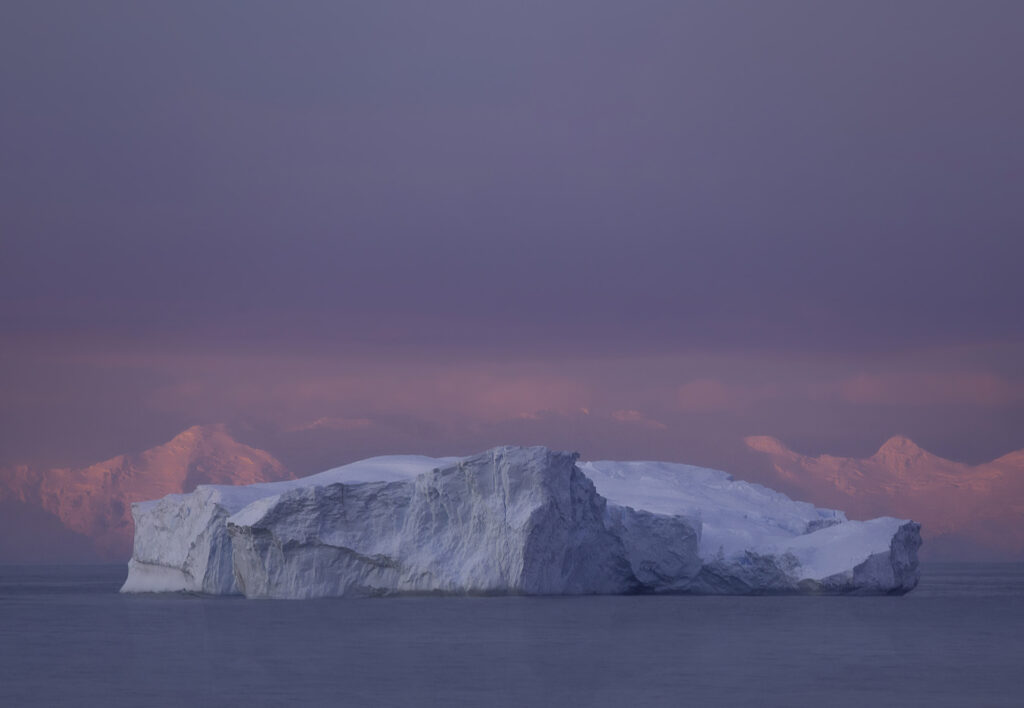
Here, your eyes adjust to subtle, ever-changing shades: endless variations of blues, from icy turquoise to deep cobalt; soft grays that shift with every passing cloud; silvers shimmering across ocean waves. At dawn or dusk, these understated tones give way to warmer pastels—gentle peach, pale gold, soft pink, and muted violet.
Even long after sunset, the landscape holds onto color in an extended twilight that feels almost surreal. These delicate shades offer an emotional quality rarely found in brighter, warmer locations.
Anecdote: I recall photographing along the Antarctic Peninsula as the sun dipped below the horizon. The photographers in my group had stopped shooting, thinking the day was done. Yet the sky slowly filled with subtle lavender and rose, reflecting off towering icebergs. It became one of our most memorable and evocative shoots, purely because we waited and observed how Antarctica’s subtle colors linger.
Suggestion: When photographing these gentle hues, deliberately underexpose slightly to preserve subtle details and pastel tones. Allow your camera to capture how the moment felt—not just how it technically appeared.
Cloud Cover Doesn’t Kill the Shot—It Enhances It
Most photographers dread flat, cloudy days—but in Antarctica, cloud cover becomes one of your greatest allies. Here, overcast conditions don’t diminish your photography—they amplify the drama.
Cloudy skies create mood, emotion, and a sense of mystery. Mist rolls gently across glacier-covered bays, and icebergs seem to take on a deeper, more striking dimension. Penguins wandering out of the fog onto icy beaches become compelling, story-rich subjects, rather than simple wildlife snapshots.
Anecdote: Near the South Shetland Islands, our Zodiac navigated slowly through dense fog. Initially disappointed, photographers soon realized the opportunity. Penguins emerged from the mist, almost ghostlike, giving everyone onboard uniquely powerful and emotionally charged images—far better than a perfectly sunny day ever could.
Suggestion: Use these moody conditions to capture minimalist scenes—wildlife appearing from fog, icebergs fading into mist. Embrace the subtlety. Allow your images to convey the sense of quiet, mystery, and wonder inherent in Antarctica.
Pro Tip: Master Your White Balance and RAW Workflow – One of the most practical yet overlooked secrets to photographing Antarctica’s extraordinary light involves managing your camera’s white balance. Automatic settings typically try to neutralize snow, producing overly warm or dull images that fail to capture the true atmosphere.
Instead, set your camera manually to a cooler white balance or, better yet, shoot exclusively in RAW. RAW files let you fine-tune and preserve the subtle, ethereal blue and silver tones that define Antarctica’s aesthetic.
In post-processing, resist the urge to warm your shots too much. Allow your images to retain the authentic feeling of the cold, surreal beauty of Antarctica.
Photographing in Antarctica Is A Masterclass in Minimalism
As someone who’s guided photography expeditions to nearly every remote corner of the globe over the last decade, I’ve often encouraged photographers to simplify their compositions—to remove distractions and focus on the essence of their subjects. But nowhere has taught me more about minimalism than Antarctica.
Here, minimalism isn’t merely an artistic choice; it’s the natural language of the landscape itself. The vast expanses of ice, the immense open spaces, the absence of visual clutter—everything invites you to slow down, embrace simplicity, and find power in restraint. In Antarctica, less truly is more.
Why Minimalism Thrives in Antarctica
Negative Space Becomes Your Strongest Compositional Element
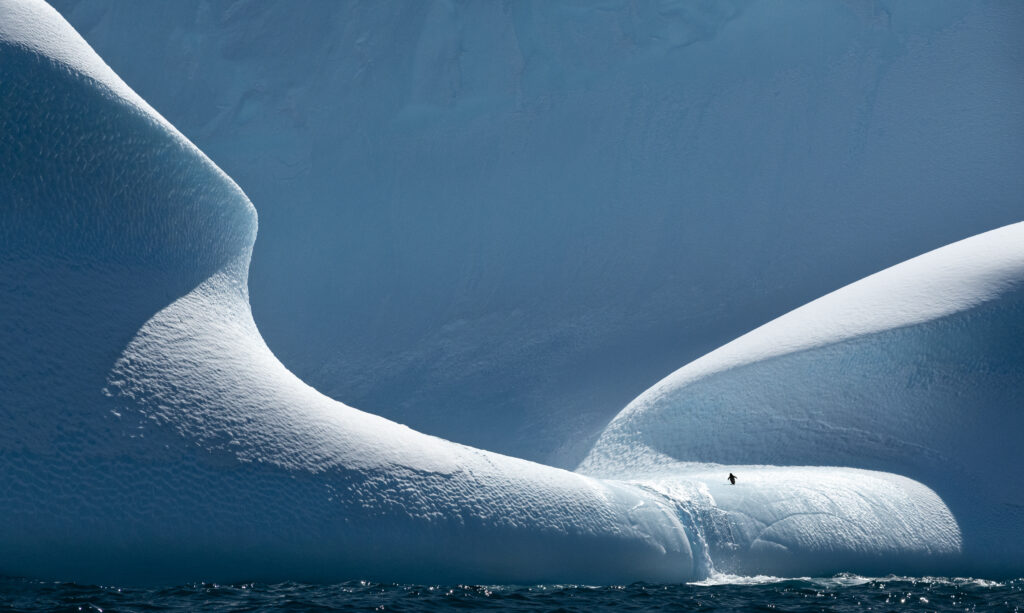
Antarctica’s immense expanses of snow and ice create powerful negative space opportunities that are rarely available elsewhere. Negative space, far from being empty, provides context, emphasizes scale, and evokes powerful emotions of solitude and tranquility.
Imagine photographing a single Adélie penguin making its determined way across an endless white snowfield. Or capturing the peaceful silhouette of a Weddell seal sleeping at the edge of an ice shelf, surrounded only by pristine emptiness. These scenes tell compelling visual stories precisely because of what’s absent—noise, distractions, complexity.
Anecdote: On one Antarctic voyage, we encountered an isolated iceberg, starkly white against a pale gray sky. Atop the iceberg, a single Chinstrap penguin stood motionless, surveying its world. I deliberately framed the penguin small in the composition, using the empty sky and ice as negative space. The resulting image was deeply moving, conveying solitude, resilience, and the fragile beauty of life at the edge of the world.
Suggestion: Be deliberate with your framing. Leave space around your subjects, allowing the emptiness to amplify their presence and storytelling power. Don’t rush to fill your frame—slow down, observe carefully, and let your images breathe.
The Landscapes Naturally Reduce Distractions
In most destinations, photographers constantly battle visual clutter—buildings, roads, signs, or fences that compromise an otherwise perfect composition. Antarctica, in contrast, is utterly pristine. Every scene feels pure, elemental, and inherently balanced.
With no human-made structures or visual interruptions, the landscapes naturally guide your eye toward clear focal points. This purity enables you to compose freely, confident that your subject will stand out clearly against an unspoiled background.
Anecdote: During a landing near Paradise Bay, our group encountered a large iceberg shaped like a graceful arch. With no distractions around it—just flat water and muted sky—the arch seemed suspended in timeless perfection. Every photographer captured this scene differently, yet each composition was powerful precisely because the simplicity of the surroundings let the iceberg’s unique form dominate.
Suggestion: Take your time exploring different angles and viewpoints. Even subtle shifts in perspective can drastically change your composition, using the uncluttered Antarctic landscape to create minimalist images that feel intentional and profoundly peaceful.
It Teaches You to Look for Balance, Not Busyness
Minimalist photography in Antarctica encourages you to seek visual harmony and balance instead of complexity or chaos. Here, you find poetry in simple, repeated shapes: icebergs reflecting perfectly in calm water, gently curving shorelines, symmetrical mountain peaks. These patterns offer serenity and a deeper sense of visual rhythm.
Instead of looking for crowded action, your eye learns to appreciate stillness. Calm, mirror-like reflections become your subject. Repeated patterns in ice formations become abstract compositions, inviting your viewers to pause, reflect, and feel the serenity you experienced firsthand.
Anecdote: One afternoon, we quietly drifted in Zodiacs among ice floes near the Antarctic Peninsula. Photographers initially searched for wildlife—movement and action. But as minutes passed, the real subject revealed itself: graceful, repeating curves of ice, delicately reflected in the water below. Capturing those repeating shapes created deeply compelling and peaceful images, all without a single animal in the frame.
Suggestion: Allow yourself to embrace simplicity by patiently observing repeated patterns and reflections. Don’t be afraid of capturing images that initially seem quiet or still. Trust that balance and visual harmony will speak volumes to your viewers.
Pro Tip for Photographing in Antarctica: Use Telephoto Lenses to Enhance Minimalism – To create powerful minimalist images in Antarctica, telephoto lenses become your strongest tools. Longer focal lengths, such as a 70-200mm or 100-400mm lens, allow you to isolate individual subjects, textures, or abstract shapes, simplifying your compositions dramatically.
Compressing scenes with longer focal lengths enhances simplicity. It helps you focus viewers’ attention exactly where you intend—highlighting intricate textures in ice, emphasizing subtle patterns, and making wildlife stand clearly apart from their backgrounds.
Anecdote: On a particularly calm morning, I encouraged photographers in my group to switch from wide-angle lenses to their telephotos. Initially hesitant, they quickly saw the potential. A single iceberg, intricately textured by weathering, filled our frames. The minimalist abstract images we created that morning—just ice, texture, and subtle color—became some of the most unique and striking images from that expedition.
Suggestion: Always have your telephoto lens at hand, ready to capture these moments of abstract beauty. Use its focal length to carefully select what you exclude from the frame, simplifying your visual story.

Reflections Like Nowhere Else When Photographing in Antarctica
If there’s one thing that consistently surprises and delights photographers on my Antarctic expeditions, it’s the astonishing quality of reflections. Antarctic water isn’t like water elsewhere—here, it’s darker, deeper, calmer, and more mirror-like. When the winds calm down and your Zodiac pauses in a quiet bay, the water transforms into a perfect sheet of glass, offering a mesmerizing reflection that feels surreal.
Imagine icebergs floating silently above and beneath the surface simultaneously, symmetrical and perfectly still. Picture jagged mountain peaks mirrored flawlessly in the water, creating a scene so balanced it feels almost unreal. These moments are why reflections in Antarctica are so uniquely rewarding—they offer visual poetry impossible to replicate anywhere else.
Why Reflection Photography is So Extraordinary in Antarctica
Still Water and Bold Shapes Create Visual Magic
In the sheltered bays and inlets of Antarctica, the water frequently settles into perfect stillness, especially during early morning and late evening. This creates ideal conditions to capture reflections. Bold, geometric shapes of icebergs and mountains appear to float weightlessly, their reflections adding layers of depth, complexity, and artistry to your compositions.
Suggestion: Use a wide-angle lens and carefully position yourself at water level, either from your Zodiac or by kneeling on shore. This approach helps maximize symmetry and captures reflections in dramatic, sweeping compositions that are truly breathtaking.
Muted Color Tones Enhance Contrast and Elegance
The subtle palette of Antarctic landscapes—pale blues, gentle silvers, muted grays—lends itself beautifully to reflection photography. These understated tones accentuate contrast, allowing the crisp reflections to stand out clearly without distraction. Reflections here become minimalist compositions that focus attention purely on form, shape, and the peaceful interaction between elements.
Suggestion: Consider slightly underexposing to preserve detail in brighter snow highlights and reflections. During editing, subtly boost contrast and clarity to emphasize these elegant shapes and subtle tones. Let the gentle mood of the landscape speak through your images.
Wildlife Reflections Double the Emotional Impact
Reflection photography isn’t just limited to landscapes—wildlife images become even more compelling here. Penguins, seals, and seabirds often appear as mirror images, doubling your emotional connection to the subject. Capturing wildlife reflections adds symmetry, balance, and narrative depth to your storytelling.
A lone penguin standing on the shoreline instantly becomes two figures, creating a sense of connection or solitude. A seal gliding through glassy water transforms into a graceful arc, capturing the serene beauty of movement in stillness.
Anecdote: On one memorable morning, while leading a photography expedition near the Antarctic Peninsula, we carefully drifted into a perfectly calm bay just after sunrise. The surface was completely undisturbed, reflecting icebergs, mountains, and clouds with pristine clarity. Suddenly, a gentoo penguin appeared on the shore, hesitated for a moment, then gracefully leapt into the water. In that brief, extraordinary instant, its jump and reflection formed a perfect, symmetrical S-curve across the frame. That fleeting moment of quiet beauty remains one of my most treasured and published images. The magic happened because we resisted the urge to rush, allowing the environment’s stillness to guide our photography.
How to Master Antarctic Reflection Photography
Seek sheltered areas.
Bays, coves, and inlets naturally shield water from winds and currents, increasing your chances of finding perfectly reflective conditions.
Slow down and wait patiently.
Reflections often appear when you pause, settle, and carefully observe your surroundings. Patience is your greatest asset here.
Shoot at lower angles.
Photographing closer to the waterline enhances symmetry, emphasizing the mirrored image.
Check your exposure carefully.
The reflection is typically darker than the scene above the water. Adjust your exposure settings carefully to ensure both above-water subjects and their reflections maintain detail and clarity.

Harsh Conditions That Demand Simplicity and Intent
Antarctica is stunning beyond words—but make no mistake, its beauty is equally matched by its intensity. The conditions you’ll face as a photographer here are challenging: freezing temperatures, biting winds, relentless salt spray, and unpredictable weather shifts. Your camera doesn’t care how excited you are to photograph that perfect iceberg or playful penguin—it only responds to how well you’ve prepared for the realities of shooting in such a demanding environment.
To successfully photograph Antarctica, simplicity and intentionality become essential. Every piece of gear you carry, every technique you apply, and every decision you make needs to be purposeful and thoughtful.
Common Challenges You’ll Face—and How to Overcome Them When Photographing in Antarctica
Batteries Drain Rapidly in Extreme Cold
Cold temperatures drastically shorten your camera’s battery life. What might last you hours at home can drain in minutes when exposed to Antarctic chill, especially when shooting extensively or reviewing images often.
Suggestion: Bring several spare batteries, far more than you’d usually pack. Store them close to your body, tucked inside your inner jacket pockets between landings. Your body heat preserves their charge, ensuring you’re always ready for the next unexpected moment.
Anecdote: On an expedition near the Antarctic Peninsula, one guest ran out of battery power right as a pod of humpback whales appeared. Thankfully, another photographer had prepared carefully, keeping extras warmed inside his jacket. Because of this small, intentional decision, he was ready and captured breathtaking shots of whales surfacing alongside the Zodiac—a moment the unprepared photographer sadly missed.
Condensation Can Sabotage Your Shoot
Moving quickly between warm ship interiors and freezing outdoor temperatures can create instant condensation on your lenses and camera bodies, ruining valuable shooting time or even damaging your gear.
Suggestion: Allow your equipment to gradually acclimate to temperature changes. Before heading outside, place your gear into a sealed, airtight bag—such as a dry bag or even a large Ziploc—to gradually adjust. Once outdoors, wait several minutes before opening the bag, ensuring your camera reaches the ambient outdoor temperature smoothly.
Anecdote: On one voyage, a guest enthusiastically ran from the warm lounge directly onto the cold outer deck during a spectacular iceberg encounter. His lens instantly fogged, rendering his camera temporarily useless. Another photographer, who’d acclimated his gear slowly, captured striking, crystal-clear images of the iceberg glowing softly in evening light—proof that careful preparation is invaluable.
Unsteady Platforms Demand Stability when Photographing in Antarctica
Photography in Antarctica often happens from unsteady surfaces. Zodiac boats bounce through waves; ship decks sway with ocean swells. Without careful stability, sharp, well-composed images become nearly impossible.
Suggestion: Always secure your camera with wrist or neck straps—this prevents accidental drops and keeps your gear safe from salt spray. Dial in your settings beforehand, anticipate movements, and hold your camera firmly with two hands. Slightly faster shutter speeds than usual help offset motion from boat movement and wind.
Anecdote: On a landing near Elephant Island, high seas created challenging conditions aboard our Zodiacs. While many struggled to maintain their balance, one photographer who had carefully preset his shutter speed and ISO managed to capture remarkable shots of seabirds skimming gracefully above the waves. Preparation and intention gave him stability amidst chaos.
Pro Tip: Embrace Imperfect Conditions – Many photographers arrive in Antarctica hoping for pristine weather—blue skies, calm seas, gentle sunshine. But the real truth and beauty of Antarctica often lie in its stormy unpredictability. Dramatic skies, heavy snow, wind-driven spray, and foggy landscapes offer powerful, evocative photographic opportunities rarely matched by picture-perfect weather.
Rather than wishing for idealized conditions, embrace the harshness and unpredictability. Let the sleet, snow, wind, and mist shape your storytelling, bringing authenticity, drama, and emotional depth to your photographs.
Anecdote: During one particularly intense snowstorm, our group sheltered aboard the ship as fierce winds howled around us. Yet when we looked outside, we saw icebergs transformed by swirling snow and waves crashing dramatically against towering ice formations. Braving the weather briefly, we captured images that felt raw, powerful, and genuinely

Emotion Over Exposure When Photographing in Antarctica
After guiding photographers around the globe for over a decade, I’ve seen many remarkable places stir powerful feelings. Yet Antarctica consistently stands apart in its profound emotional impact. It doesn’t just leave visitors impressed—it leaves them changed.
Here, photography becomes about something deeper than perfect exposure, sharpness, or precise technical execution. Antarctica challenges you to move beyond capturing images that merely document your experience. Instead, it asks you to create photographs that convey the depth of your emotional response—images filled with awe, solitude, serenity, and an overwhelming sense of reverence.
Capturing the Essence, Not Just the Scene
In Antarctica, the emotions you feel are just as important as the images you capture. As photographers, our greatest challenge and opportunity is not simply to expose our images correctly—but to expose the soul of the scene, to communicate how it felt to stand at the edge of the world.
Your images should embody Antarctica’s vast emptiness, its powerful stillness, and the humbling scale of its icy wilderness. They should invite your viewers to pause—to imagine themselves standing in your shoes, overwhelmed by the immensity, the silence, and the grace of this untouched landscape.
Suggestion: Slow down before you click the shutter. Ask yourself: How does this place truly make me feel? Let your emotions guide your composition, framing, and storytelling. Aim to create images that move people, making them reflect deeply rather than just glance briefly.
Awe, Silence, and Reflection when Photographing in Antarctica
Antarctica evokes intense, often indescribable feelings. Awe at the immense glaciers stretching as far as you can see. Silence that seems almost tangible, broken only by the soft sounds of ice shifting and wildlife calling. Reflection on our smallness in a place that feels timeless and eternal.
These emotions become your strongest photographic assets. Rather than focusing only on sharpness or technical perfection, strive to convey the quiet beauty, isolation, and emotional impact Antarctica imparts to every visitor who steps ashore.
Anecdote: I’ll never forget leading a group ashore at South Georgia’s St. Andrews Bay. One of my guests—a veteran wildlife photographer who had visited every continent—stood silently in front of the colony of 300,000 King Penguins, stretching endlessly beneath moody, slate-gray skies. Slowly, he lowered his camera, visibly moved. Tears formed as he quietly whispered, “It’s too much.” In that moment, technical concerns faded completely away. We all knew exactly what he meant. Sometimes, the emotional truth of Antarctica is simply too powerful for a camera alone. But when we can capture even a fraction of that feeling, we create something deeply profound and unforgettable.
Practical Suggestions for Capturing Emotion when photographing in Antarctica
- Wait and Observe:
Don’t rush immediately to shoot. Allow yourself to absorb the scene. Pay attention to your emotional responses, and then photograph intentionally. - Include Scale and Context:
Use people or wildlife within vast landscapes to emphasize Antarctica’s immensity. Let your viewer feel the enormity and isolation that struck you. - Allow Space and Simplicity:
Minimalism often conveys emotion more powerfully than complexity. Embrace negative space, calm compositions, and thoughtful framing to communicate serenity or solitude. - Focus on the Quiet Moments:
Don’t only chase dramatic action—seek the quiet, contemplative scenes. A penguin standing alone, a distant glacier softly glowing at dusk, or gently drifting ice can all powerfully evoke emotion.
Final Thoughts: Come for the Photos. Stay for the Perspective.
Antarctica isn’t just another destination. It resets you. As a photographer. As a traveler. As a human.
You learn to listen to silence. You learn to photograph restraint. You learn that not every story is told in action — some are whispered through light and ice and shadow.
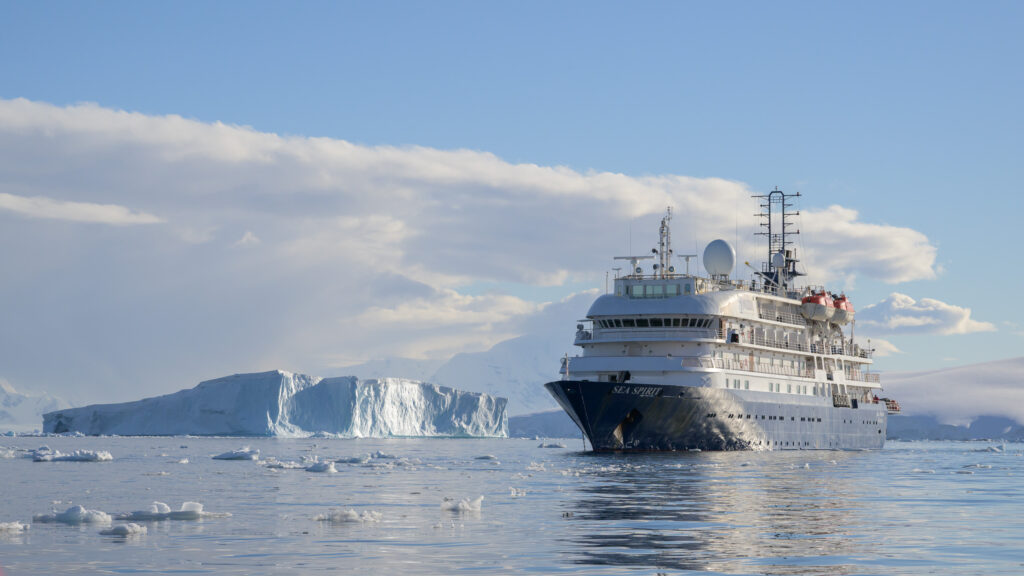
If you’re coming with us on our Falklands, South Georgia and Antarctica Photo Expedition, bring your best gear — but more importantly, bring your patience, your curiosity, and your respect. Antarctica doesn’t give up its magic easily. But if you wait… if you listen… it will show you something no camera can truly capture.
And you’ll spend the rest of your life chasing that light again because you spent time photographing in Antarctica.


