Photographing Lions on a Photo Safari: A Guide from the Front Seat of a Land Cruiser
By Kevin Pepper |
Lions aren’t just Africa’s apex predators—they’re characters in an ancient drama that plays out every day on the savannah. As a photographer and safari leader with over a decade behind the lens, I’ve watched prides rise and fall, cubs take their first steps, and lionesses outwit the odds with quiet brilliance. Photographing lions is about more than sharp focus and golden light. It’s about understanding the rhythm of their lives—and being there when the next chapter unfolds. Here’s how I help photographers go beyond the expected and capture lions with depth, story, and impact.
Know Your Subject: The Life of a Lion
Where They Live and Sleep
Lions live in open grasslands, savannahs, and acacia-dotted plains—basically, places where visibility and prey intersect. During the day, they rest in the shade, flat on their backs with a paw in the air or nestled into golden grass like overgrown house cats. They sleep up to 20 hours a day, especially after a big meal.
But when dusk falls, they switch gears. I’ve watched entire prides go from statues to stealth in minutes as the air cools. And that’s when the magic begins.
Hunting Behavior
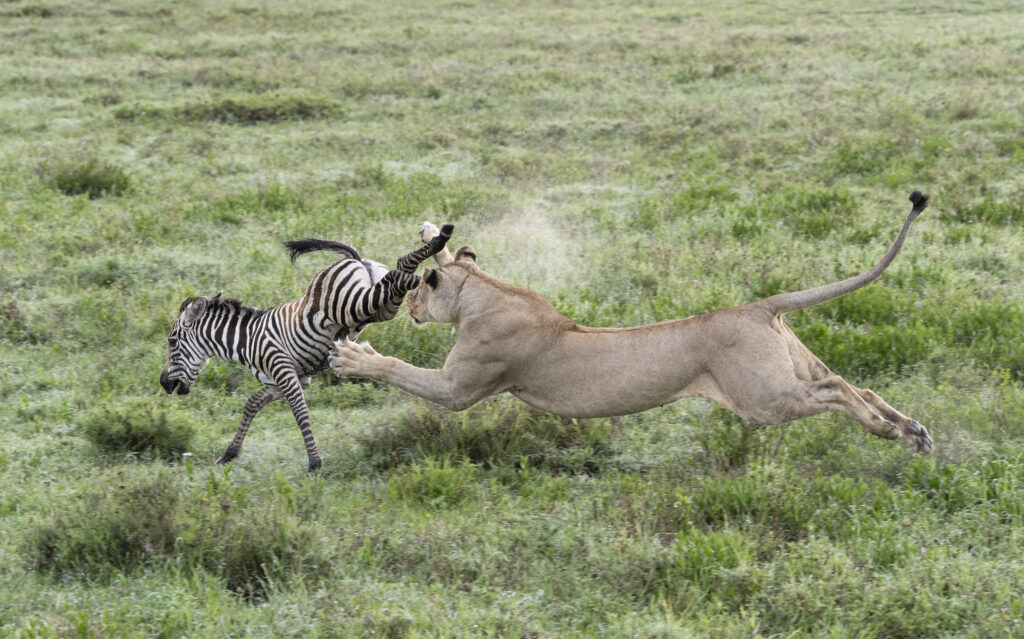
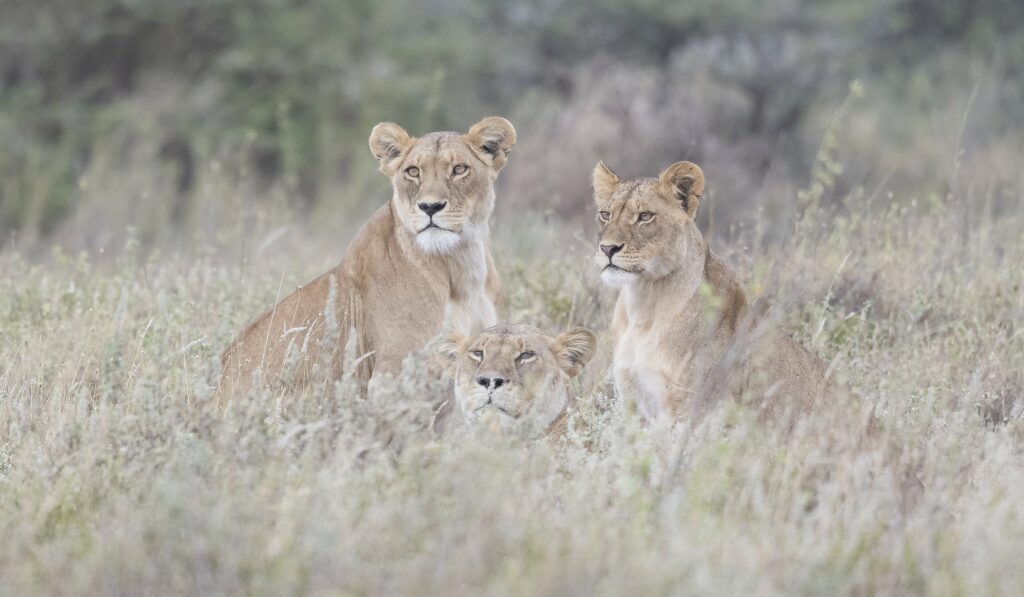
Lionesses are the pride’s hunters, and their teamwork is what makes them lethal. One morning in Ndutu, we watched three lionesses disappear into the tall grass as the light softened. They separated silently, each taking a different approach to a herd of unsuspecting wildebeest.
We shut off the vehicle and waited.
For twenty tense minutes, there was nothing but wind and dust.
Then—an explosion of movement. One lioness charged, funneling the Zebra herd straight toward her sisters. The ambush was textbook. One takedown. A clean kill. The sun rose as the pride emerged from the shadows.
For me, that moment summed up everything about photographing lions: you don’t chase the action—you wait for it. And if you know what to look for, it pays off.
Pride Structure and Territory
Lions live in tightly bonded prides in one specific area, usually made up of related females, their cubs, and up to three adult males. Some of the larger Serengeti prides number 30 or more when prey is abundant.
They’re territorial, too. Prides mark their land with scent and roaring—warning intruders that this area is taken. Males patrol the edges while lionesses care for cubs and do most of the hunting. When food is scarce, the balance shifts and tensions rise.
Infanticide and the Life of a Male Lion
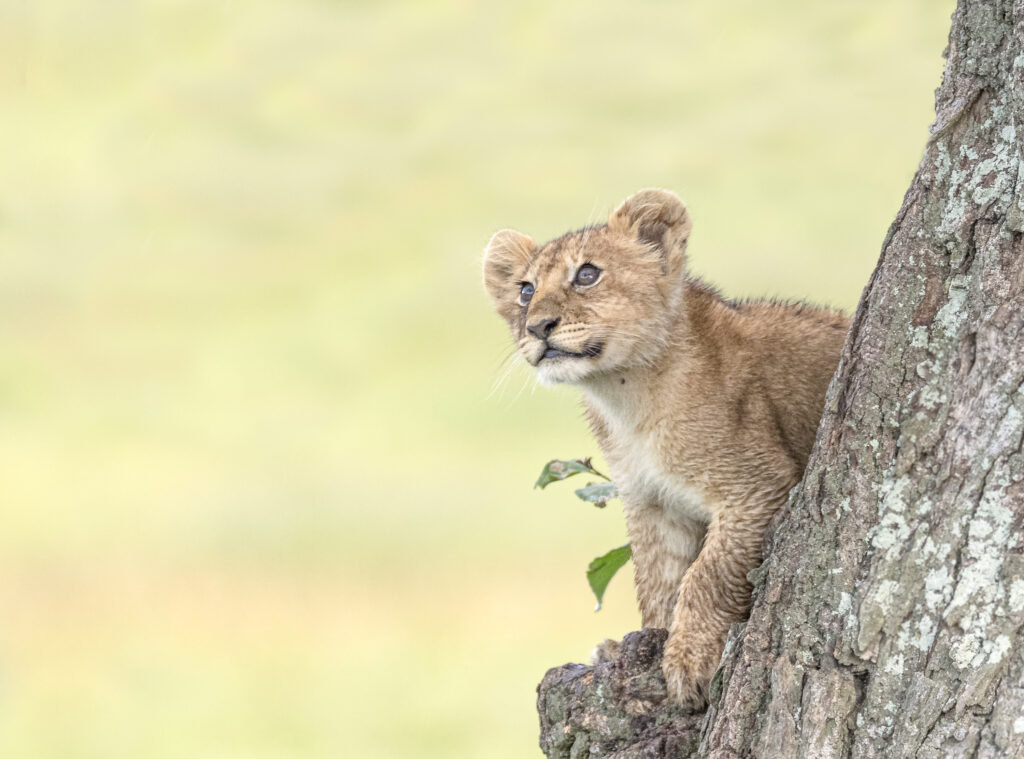
A few years ago, I visited the Serengeti and spent three mornings with a pride that had just welcomed a litter of cubs. I photographed them tucked beneath their mother’s legs, curious and blinking in the early light. It felt like witnessing the beginning of something hopeful.
The following year, I returned, eager to see how they’d grown.
They were gone.
A new male coalition had taken over. The cubs were killed—infanticide. As brutal as it is, this act forces the lionesses back into estrus so the new males can sire their own offspring. It’s hard to witness, but it’s part of the reality out here. And it reminds you that every photo of a cub is a rare and fragile moment.
As for the males—they live a life of violence and risk. They leave their natal pride around age two, travel in coalitions, and if lucky, take over a pride by force. If they can hold it, they rule for two or three years—maybe four if they’re exceptionally strong.
I remember photographing black-maned lions of Namiri. These brutes ruled the area for years—massive, dark-maned males that looked like they were carved from basalt. They held court over a prime section of the eastern Serengeti, siring generations of cubs and fending off every challenger. Photographers, myself included, would detour hours just for a chance to see them.
Then one year, they were gone. A younger coalition took their place. Their legend faded into memory and hard drives.
Best Strategies for Photographing Lions
Lions won’t perform on cue. They’re not waiting for your shutter to fire—they’re living their lives, often in stillness, sometimes in drama, and always on their terms. But if you understand their rhythm and read the signs, you’ll find yourself in the right place more often than not.
This isn’t about chasing adrenaline. It’s about being ready when the story unfolds.
Early and Late: That’s the Rule
Be out before the sun even hints at rising, and stay out until the last usable light fades. Lions are crepuscular, meaning they’re most active during twilight hours—before the sun gets too hot and after it begins to dip.
That hour before sunrise? It’s not just about the golden light. It’s when lions finish feeding, regroup, and move to shade. That movement often creates some of the best storytelling frames—silhouettes on ridgelines, golden light in their manes, cubs trailing behind tired mothers.
Late afternoon into dusk is the other window. I’ve watched lions sleep all day, seemingly lifeless, only to stretch, shake off the flies, and become completely alert once the air cools. The shift is subtle—but if you’re not there early, you miss it. If you leave early, you miss it.
Don’t Just Look—Read the Signs
This is where experience starts to matter.
When a lion yawns, don’t put your camera down. That yawn is often the prelude to action. One lion yawns, another stands, a third starts grooming, and within minutes the whole pride is up. Grooming turns into social bonding, which turns into movement.
Watch their ears. Forward and alert means focus. Flicking tails usually indicate agitation or interest. If they’re all staring in the same direction, odds are there’s prey—or a rival—nearby.
Some of the best hunts I’ve witnessed have started with the smallest cue. A subtle head lift. A ripple of tension in the group. I’ll never forget one afternoon in the Serengeti—dead calm, a pride laid out in the shade. But one make lion suddenly perked up and started sniffing the air. Within seconds, the entire group was in motion. They’d picked up the scent of nearby warthogs, and the hunt was on. Had we looked away, we’d have missed it.
Use Position to Your Advantage when photographing Lions
This is one of the most overlooked parts of lion photography.
Don’t just park and shoot—think about light, angle, and background.
If the lion is facing east, get on the west side and let that morning light pour in behind you. That backlight will catch the edge of the mane and bring depth to your shot.
If the lion is lying down, try lowering your shooting angle. Get your lens level with their eyes, not pointed down from above. This creates intimacy and gives your viewer a sense of presence—like they’re right there on the ground with the cat.
And if the wind is shifting and they start facing into it? That’s not random. They’re scenting. Something is coming. Reposition and be ready.
I’ll often position my vehicle where I think the lion might go, not where they are. If the sun is about to set and the pride is starting to stir, I’ll get ahead of them. Frame up the landscape. Wait. Sometimes they walk right into your frame like they read the script.
Don’t Over-Chase When Photographing Lions
This one’s important.
Lions will sit still for hours. They might not move all morning. And that’s when most vehicles give up, call it a day, and move on.
Don’t.
Some of the most dramatic lion behavior I’ve ever photographed happened after two hours of stillness. The payoff comes to those who wait. If the light’s good, the pride is active, or the cubs are restless, stick around. Let the others chase sightings. You’re here to make images, not collect checkmarks.
A few years ago in the Serengeti, we sat with a pride for nearly four hours. We had passed them over the last few days and I noticed their bellies were empty. The radio crackled with leopard sightings, cheetah sprints, and a pair of mating lions further north. But we stayed. Something about the mood and the tense need for food felt electric. Sure enough, just before sunset, a pride male rose from his shady patch and began roaring—deep, guttural bellows that echoed across the plain. Then the rest joined in. The whole pride walking through gold dust, manes glowing, cubs trotting to keep up.
No one else saw it. But we did. Because we stayed.
Being a great lion photographer isn’t about luck—it’s about patience, instinct, and reading the savannah like a second language.
Stay quiet. Stay alert. And when the moment comes, you’ll be ready.
Best Places in Africa for Photographing Lions
Here are the locations where I consistently get my best lion images—and where I take my clients when they want more than just a record shot:
Serengeti National Park, Tanzania
Big skies, big prides, and the migration to stir things up. Especially good from Jan to March in Ndutu and June to October in Central and Northern Serengeti.
Masai Mara, Kenya
Arguably the easiest place to photograph lions, with wide-open spaces and short grass. I’ve seen full hunts here, including takedowns right next to the vehicle.
Namiri Plains, Serengeti (Eastern)
Once off-limits to tourism, now a hotspot for lion activity. Sparse vehicles, intense lion behavior, and dramatic landscapes. Those black-maned legends? This is their old stomping ground.
Here are a few locations where others have mentioned they have been successful.
South Luangwa, Zambia
Excellent for lion behavior and more intimate sightings—especially with night drive capabilities.
Greater Kruger, South Africa
Relaxed lions, consistent sightings, and private reserves that allow off-roading for better angles.

Camera Gear and Settings for Lion Photography
Gear Recommendations:
- Primary Lens: 100–400mm or 200–600mm
- Second Body/Lens: 70–200mm or fast prime (like 300mm f/2.8)
- Wide-Angle: 24–70mm or 16–35mm for storytelling images
- Two Bodies: Lions don’t wait for lens changes
Settings for Resting or Interacting Lions:
- Shutter Speed: 1/500s minimum
- Aperture: f/4–f/5.6 for shallow depth, f/8 to f/11 for groups
- ISO: 400–1600 depending on light
- Focus: Eye detection or single-point
- Burst Mode: Medium-speed to catch subtle expressions or yawns
Settings for Action Shots:
- Shutter Speed: 1/2500s or faster
- Aperture: f/5.6–f/8 for depth
- ISO: 800–3200 depending on time of day
- Focus Mode: AF-C or AI Servo with tracking
- Drive: High-speed continuous
Final Thought
Photographing lions isn’t about chasing adrenaline—it’s about honoring a species that lives on the edge of power and peril. Every pride tells a story. Every male’s rise and fall is a reminder of nature’s balance.
If you learn to read the signs, understand the hierarchy, and respect the rhythm of the savannah, the photos will come. Not just of lions, but of lion life. I hoped this article helped you go beyond the expected and capture lions with depth, story, and impact
That’s what keeps me going back. I would love it if you considered joining one of our African photo safaris.
Read Other Species Spotlight articles
If you’re as passionate about wildlife as we are, take a moment to explore our Species Spotlight series. Each article dives into the fascinating lives of the animals and birds we love to photograph on our workshops—whether it’s a puffin perched on a cliff in Newfoundland, a leopard draped across a tree in Tanzania, or an Adelie penguin waddling through the snow in Antarctica. It’s a growing library of stories, facts, and inspiration for anyone who dreams of capturing the wild through their lens. Come see the world the way we do—one species at a time.
—Kevin