Private Tanzania Safari Trip Report: A Luxury Wildlife Photography Experience Focused on Predation
By Kevin Pepper |
Some safaris are built around checklists.
Others are built around purpose.
This private Tanzania safari was very much the second kind.
It was designed for a husband and wife travelling together, but each came for something a little different. He came as the photographer, ready to go deep, willing to work hard, and eager to learn. She came to experience the wildlife, enjoy the beauty of Tanzania, and share in the adventure without needing every day to revolve around shutter speeds and autofocus settings.
That kind of safari can be a wonderful balance when it is done right.
And this one was.
Arriving in Tanzania With VIP Customs Service at Kilimanjaro Airport
We landed at Kilimanjaro and were met with VIP customs service, which is one of those details that may not sound exciting until you have traveled enough to know just how valuable it is.
After a long international journey, the last thing most people want is to stand in lines, sort through airport confusion, and feel like the trip has become work before it has even begun. VIP customs changes that. It makes arrival smoother, faster, and far more comfortable. Instead of stress, there is a sense of being looked after. Instead of chaos, there is ease.
For travelers coming to Africa for a high-end safari, that matters.
You are greeted, assisted, and moved through the process with far less hassle. Bags are easier to manage. The airport feels less overwhelming. And by the time you walk out, you already feel the shift from travel mode into safari mode.
When you are investing in a special experience, that kind of arrival sets the tone the way it should.
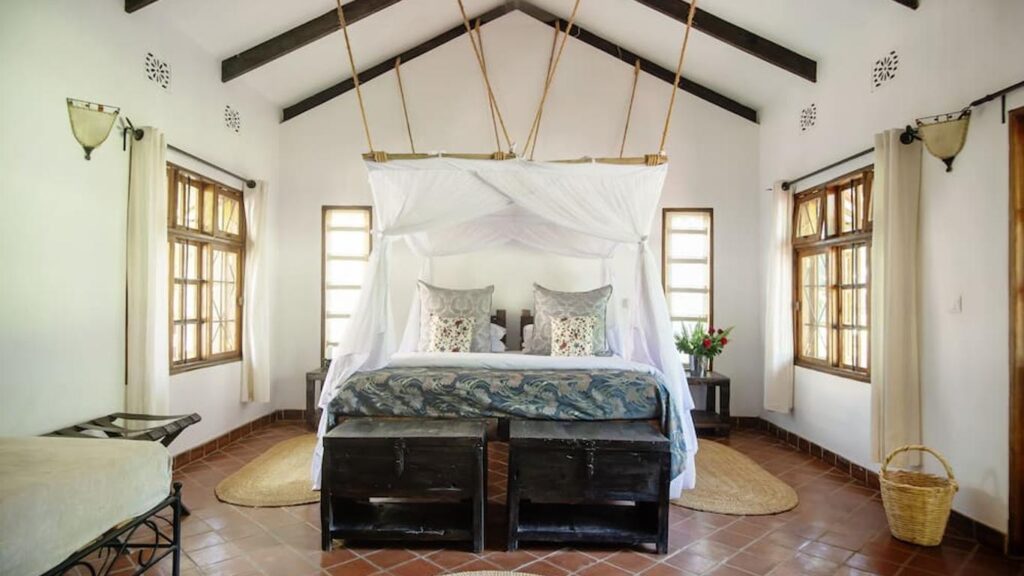
From there, we were transferred to Rivertrees, where we stayed for two nights in one of their private homes. Rivertrees is always a lovely place to begin a Tanzanian safari. It gives people a chance to settle in, take a breath, recover from travel, and ease into the rhythm of East Africa before safari life begins in full.
Staying at Rivertrees Before a Luxury Tanzania Safari
Starting at Rivertrees gave this safari a softer beginning, and I think that was important.
Rather than landing and launching straight into bush flights, game drives, and long days in the field, we had space to relax. The private home gave the couple privacy, comfort, and a chance to get grounded before the more intense photography portion of the safari began.
That kind of transition matters more than many people realize.
When a safari begins well, people are more rested, more present, and more prepared to enjoy what follows. Rivertrees gave us exactly that. It was peaceful, comfortable, and a very fitting first step into what would become a much more hands-on wildlife photography experience.
Why We Visited the Cultural Heritage Center Before Safari
On our second day, we visited the Cultural Heritage Center.
I really like starting this way because it gives us a chance to look at artwork, photographs, and sculptures before heading into the field. For many people, safari begins when they first see an animal. But for me, part of safari begins earlier, when we start thinking about how we see, what draws us in, and what separates a record shot from an image with feeling and intention.
Walking through the artwork allowed me to show firsthand what we were really looking for once we were out on safari. Shape. Gesture. Tension. Simplicity. Story. The emotional weight of a moment. It helped frame the kind of photography experience this would be.
This was never meant to be a casual safari where we would simply see what happened.
This was going to be a hands-on coaching safari from the ground up.
And having the chance to stand in front of great visual work before heading into the field was a surprisingly powerful way to begin. It allowed us to talk about what makes an image memorable before we ever photographed a single lion, cheetah, or wildebeest.

A Hands-On Tanzania Wildlife Photography Safari Focused on Predation
From the beginning, the plan was clear.
This private Tanzania safari would focus on quality over quantity. We were anticipating long days in the field, working from specially designed photography vehicles, staying out regardless of the weather, and putting ourselves in the best possible position to witness and photograph predation.
That kind of safari is not passive.
It is not about driving around until something exciting happens and hoping you are in the right place when it does. It is about understanding behavior, reading body language, predicting movement, and being patient enough to wait for the moment rather than chasing every possible sighting.
That style of coaching is some of my favorite teaching anywhere in the world.
This was not an “Oh look, a pride of lions, let’s check them out” kind of safari.
This was the kind of experience where I talked about how lions hunt, what body language matters, how females work together, where tension begins to build, and why patience often matters more than speed. It was the kind of safari where we discussed what a cheetah sees, what vulnerable prey looks like, and how to reverse engineer a hunt instead of simply reacting once the action explodes.
That is a very different kind of wildlife photography safari.
And for the right client, it is incredibly rewarding.

Four Nights in Ndutu for Off-Road Photography During Calving Season
For this safari, I booked two of my favorite camps in Tanzania during one of my favorite times of year: calving season.
We spent four nights in the Ndutu area and four nights in Namiri Plains.
Ndutu is one of the places I love most for this kind of safari because the area offers the ability to go off-road with the proper permits. That changes everything for photographers. It allows you to move away from the crowds, position with more care, and create stronger images than you ever could from a road packed with vehicles.
When the wildebeest calving season is underway, Ndutu feels alive with possibility. There is new life everywhere, which means there is vulnerability everywhere, and that naturally draws predators into the story. The landscape holds tension in a way that is hard to explain unless you have spent time there during this season.
For a photographer willing to be patient, observant, and selective, Ndutu can be extraordinary.

Four Nights in Namiri Plains During Peak Predator Action
Then came Namiri Plains.
It is hard to put into words what this area feels like during calving season. I have spent enough time in Tanzania to know that some places are excellent and some places are unforgettable. Namiri Plains, during the right time of year, falls into the second category.
The predation there during calving season is epic.
It is one of those rare places where the intensity of the wildlife experience can leave you speechless. There is movement, vulnerability, predator behavior, and a constant sense that something important could happen at any moment. For someone wanting to photograph hunting behavior and understand the rhythm of predator-prey interaction, it is one of the finest places I know.
There are moments in Africa that are beautiful.
Then there are moments that feel raw, ancient, and almost too dramatic to process in real time.
That is what Ndutu and Namiri can feel like during the wildebeest migration calving season.

Specialty Photography Vehicles and Off-Road Permits in Tanzania
We used specialty-designed photography vehicles that allowed for low-level photography, which is a major advantage for serious wildlife photographers. That lower angle creates more intimate images, cleaner backgrounds, and a much stronger connection with the subject. It changes the feel of a wildlife photograph completely.
We had also paid for off-road permits, which meant we were not confined to the roads.
That is one of the defining details of this safari.
Without off-road access, many wildlife experiences become reactive. You wait near a road, hope the action comes close, and often end up watching distance, dust, and the backs of other vehicles. With off-road access, and with the right level of guiding experience, you can work far more intelligently.
You can think ahead.
You can position better.
You can avoid crowds.
You can create the kind of opportunities that serious photographers dream about.
And that is exactly what we did.
Teaching How to Anticipate Predator Behavior on Safari
Some of the best coaching on this safari came from the way we approached predation itself.
Rather than simply trying to follow predators once they started moving, we were often reverse engineering the experience.
When we wanted cheetah predation, we identified newborns that had become separated from the main wildebeest herds. A cheetah is often looking first for vulnerability, for a lonely baby, for an opportunity. By understanding that, we were able to position ourselves closer to the prey and the likely point of tension, rather than watching a predator suddenly sprint in the distance and disappear in a blur of dust and missed focus.
That changes everything.
It turns wildlife photography from reaction into anticipation.
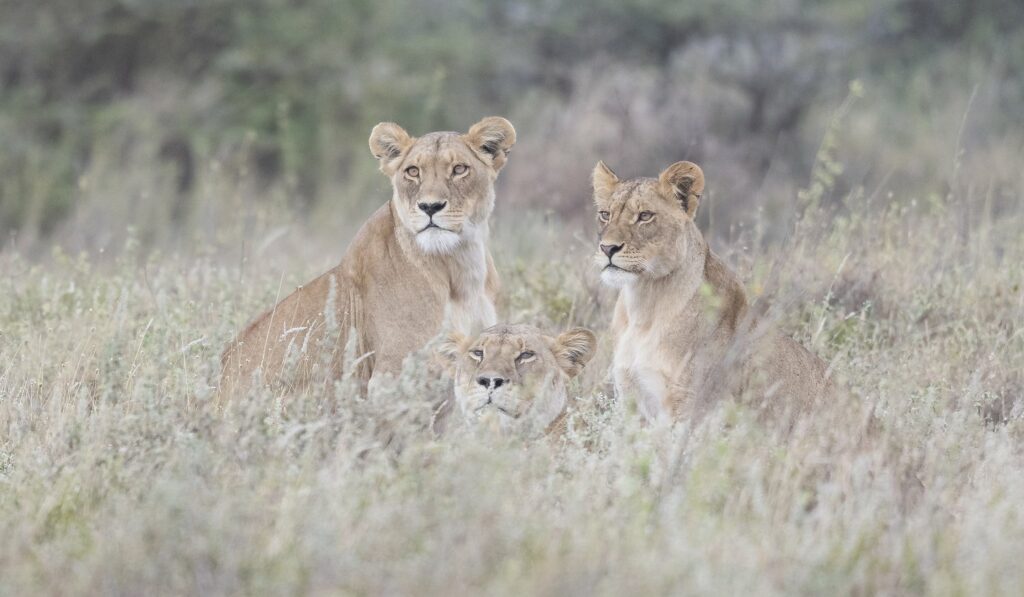
With lions, we often stayed for hours, waiting for the females to begin hunting. We also headed out early in the morning to catch the first hunting opportunities of the day. Again, this is where patience matters. This is where knowledge matters. This is where experience matters.
There is a huge difference between seeing a predator and understanding the sequence that may lead to a hunt.
That is what I wanted this client to learn.
Not just how to photograph action, but how to recognize the build-up before it happens.

Why This Was Not a Typical Group Safari
One of the things that stood out most on this trip was just how focused the photography became.
Over the course of a nine-day safari, I took fewer than 1,000 photographs.
And nearly every one of them was of hunting behavior, the kill, or post-kill behavior.
That is not because there were no other subjects to photograph. Tanzania during calving season is overflowing with beauty, wildlife, and photographic opportunity. It is because this safari had a very specific purpose. We were disciplined. We were selective. We were focused.
We were not there to spray and pray and go home with ten thousand versions of a lion standing in grass.
We were there to read the story, wait for the right chapters, and photograph the moments that mattered most.
For me, that is one of the deepest satisfactions in wildlife photography.
And it is also why this kind of safari simply does not work the same way with a group of six.
Not everyone is on the same page.
Not everyone wants to wait for hours.
Not everyone is willing to pass up easier sightings in pursuit of a better opportunity later.
Not everyone wants to spend an afternoon talking about body language, hunting sequence, and positioning instead of bouncing from one cat sighting to the next.
And that is completely fine.
But this experience was built differently.

Watching a Client Realize a Wildlife Photography Dream
Because this was private, because the client trusted the process, because we had my favorite camps, excellent photo vehicles, off-road permits, and one of the best times of year in Tanzania, we were able to create something far more purposeful.
And the result was not just epic predation.
It was also the chance to watch a client realize a dream.
That may be my favorite part of all of it.
To see someone arrive wanting a certain kind of safari, then leave not only with photographs, but with stronger instincts, better patience, and skills they can carry into every wildlife trip they take from this point forward — that is deeply rewarding.
For me, that is what the best coaching safaris do.
They do not just produce images.
They change how a photographer sees.
Why I Also Lead Private Wildlife Safaris in Canada
This is not the only private safari I have led, and it will not be the last.
I have done private experiences like this in Tanzania, and I have also done them in Canada, including British Columbia. They are different from standard workshops, and for the right traveler, they can be extraordinary.
They allow the experience to be shaped around your goals.
They allow for deeper teaching.
They allow for more flexibility.
And they allow for a style of photography that is often hard to achieve when six people all want six different things.
This Tanzania safari was one of those trips that reminded me just how special that can be.
A husband and wife sharing an unforgettable experience.
A photographer willing to go all in.
A beautiful balance of wildlife, luxury, and learning.
Some of the finest camps in Tanzania.
Hands-on coaching in the field.
And the kind of predation experience that still leaves me shaking my head when I think about it.
Some safaris give you sightings.
The best ones change the way you see.

Interested in a Private Tanzania Safari or Custom Wildlife Photography Experience?
If this is the kind of experience you would like to discuss, I would be happy to talk with you.
I lead private safaris like this in Tanzania and in other locations, including Canada, for travelers who want a more personal, more focused, and more intentional wildlife photography experience.
If you are looking for something beyond a standard group safari — something built around your goals, your pace, and the kind of wildlife photography experience you have always wanted — reach out to me through Akari Photo Tours.
Sometimes the best trips are the ones designed for just one dream at a time.