Trip report: Great Migration Photo Safari in Tanzania
By Kevin Pepper |
Our recent Tanzania photo safari, the “Great Migration Photo Safari in Tanzania,” was one of those trips where the cameras barely got a break—and neither did we, to be honest. For nine days, our group of six photographers, divided into two private pop-up roof vehicles, had front-row seats to one of nature’s greatest spectacles: The Great Migration and the predators that follow the herds, much like groupies at a rock concert.
A VIP welcome to Africa
One of the small but mighty luxuries of this trip was the VIP customs service upon arrival in Tanzania. After a long flight, there’s nothing quite like being met right at the plane door by a smiling face who whisks you past the lines, handles your paperwork, and delivers you to your hotel without the usual airport chaos. It’s a little thing, but it sets the tone for the trip—stress-free, seamless, and with that quiet confidence that everything is being taken care of. It’s like having an invisible hand guiding you through the process, allowing you to focus on the adventure ahead rather than your luggage carousel.
We designed this trip with flexibility and comfort in mind. Two vehicles for six people meant everyone had ample space to move, switch sides, and never miss a shot. When lions are stalking at dawn, or a cheetah launches into a chase, there’s no time to shuffle around politely. Having your own row—and roof—makes all the difference.

Our camp location for the Great Migration Photo Safari in Tanzania
Our adventure kicked off in the eastern Serengeti at Asilia’s Namiri Plains Camp—and “camp” might be underselling it. Namiri is more like a five-star lodge with canvas walls. This camp sits in prime big cat country, and true to its reputation, we had more cheetah and lion encounters in our first two days than some people see in a week. The photography was fast-paced and intimate, and the golden light on those endless plains? Well, that’s why we drag ourselves out before sunrise.
Next, we moved to our mobile tented camp in Ndutu, where the real magic of the migration happens. Ndutu is notable because it’s one of the few places in the Serengeti ecosystem where off-road driving is allowed. That means we weren’t stuck on the roads while the action happened 200 yards away. Here, we followed river crossings, calf births, and the ever-present tension between prey and predator. I’ve always said—if you want predictable wildlife encounters, Ndutu isn’t for you. But if you want raw, unscripted nature, Ndutu delivers in spades.
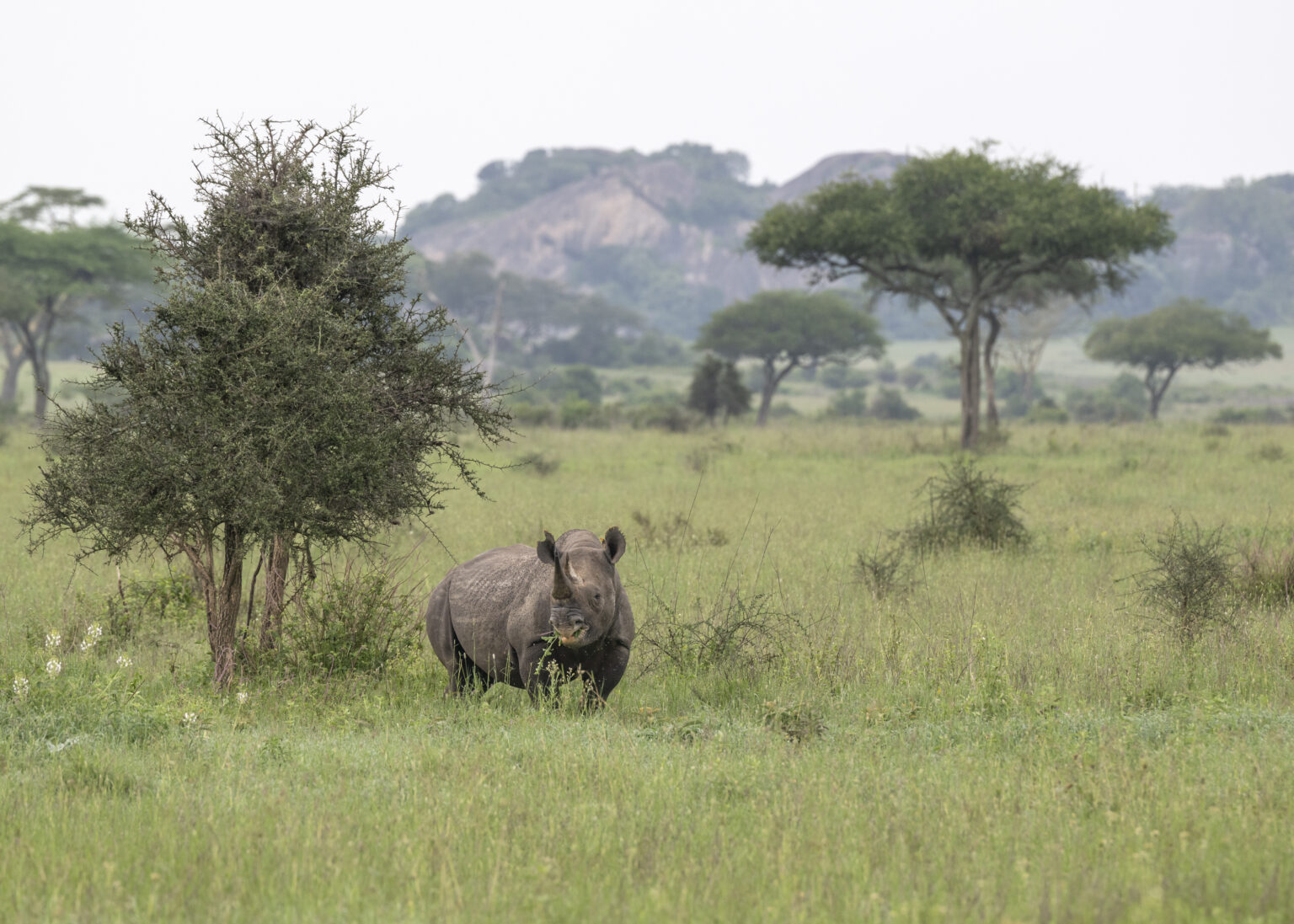
Finally, we headed to the southern Serengeti, where the pace slowed just enough for us to focus on the smaller details—bird photography, landscapes, and a particularly special rhino sighting that caught all of us off guard. Moments like that are why we keep going back. They can’t be promised, but they sure make the trip feel like you’ve been handed a gift.
Throughout the safari, what made this trip special wasn’t just the sightings—it was the combination of smart logistics, small group size, and the freedom to adjust our plan daily. When you travel with Akari, the priority is always on getting the best possible shot, not just checking off animals from a list. Two vehicles, six photographers, and no rush to move on to the next sighting until everyone had the images they wanted.

Some of our highlights from this photo safari in Tanzania
The wildebeest that didn’t get the memo
Every safari has moments that stick with you—and one of mine was a lone wildebeest calf that hadn’t read the migration guidebook. One morning in Ndutu, we watched as a herd poured across the land in a straight line. But this one calf took its sweet time, distracted by a butterfly or its own shadow, while everyone else disappeared over the ridge. Behind it? A pack of hyenas that didn’t miss a beat. It was a harsh reminder that in the Serengeti, hesitation is a luxury you can’t afford. That calf did eventually make it—barely—but not without giving all of us in the vehicles a front-row seat to nature’s unforgiving realities.
The cheetah chase that left us breathless
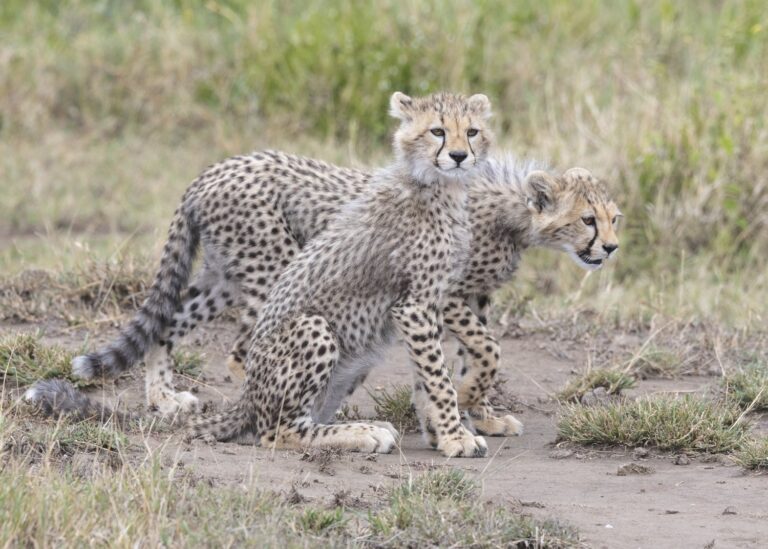
On our third day, we had what I call a “hold-your-breath” cheetah moment. We were parked on the plains near Namiri, quietly photographing a mother cheetah and her cubs, when she locked onto a herd of Thomson’s gazelles. I barely had time to tell the group to check their settings before she exploded into action. The chase lasted less than a minute, but the energy, dust, and tension lingered in the air long after. She missed—but the images we captured? Pure gold. It’s these moments you can’t plan for, but being in the right place at the right time, with the right people, makes all the difference.
The night I had a lion for a doorman
Now, safaris come with their fair share of “you had to be there” stories, but this one tops my list. One evening, after a long day on the plains, I was being escorted back to my tent by one of the camp staff—standard practice since you’re very much not at the top of the food chain after dark. We were chatting about the day when we turned the corner to my tent, and there she was. A female lion, sprawled like she owned the place, yawning right at my front door. You know that feeling when you realize you’ve been bumped down the guest list? That was me. I let out a nervous chuckle. The guide whispered, “Pole pole” (slowly, slowly), and we both took a respectful detour. Let’s say I stayed in the main tent a little longer that night, and I’ve never looked at a doormat the same way again.

Dining in the wild on our Great Migration Photo Safari in Tanzania
Safari meals aren’t just fuel—they’re part of the experience. Forget about roughing it with cans of beans. On our safaris, meals are as much about celebrating the day as they are about filling the tank. Morning game drives often included a bush breakfast, where we’d stop under an acacia tree, lay out a table, and sip fresh coffee while wildebeest grazed in the distance. Eggs, pastries, bacon, and yes—even pancakes—magically appear from the back of the vehicle. There’s something about eating breakfast in the open plains that makes the food taste better. Or maybe it’s just the company.
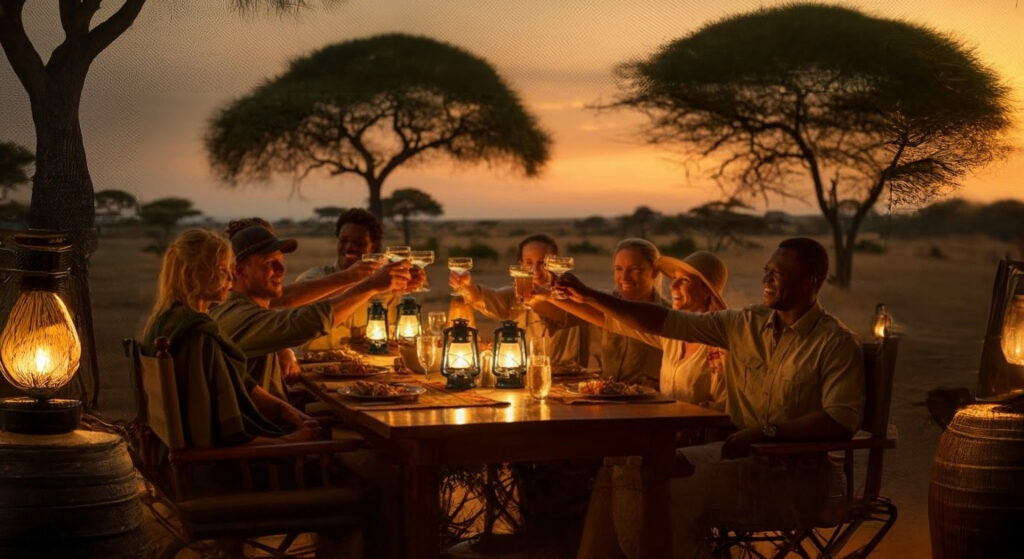
Lunches and dinners at the camp were equally memorable. Think roasted meats, fresh salads, rich stews, and decadent desserts, all served under the soft glow of lanterns in the mess tent or, when the weather allowed, right out under the stars. And no safari day is complete without a sundowner—that cherished moment where we park the vehicle, pour a gin and tonic or Amarula over ice, and toast to the setting sun. It’s a safari tradition that never gets old. After all, there’s no better bar in the world than one that comes with a lion roaring in the distance.
The benefits of traveling with an experienced safari photographer
One of the things that makes these safaris feel seamless isn’t just the logistics—it’s the peace of mind that comes from traveling with someone who’s been leading safaris in Tanzania for over a decade. From the moment you step off the plane and are met with VIP customs assistance to the last sunset toast in the Serengeti, every detail is designed to make the experience feel effortless. Over the years, I’ve learned that what separates a good safari from an exceptional one isn’t just the wildlife sightings—it’s anticipating the little things that can make or break a day.
Whether it’s knowing where to position the vehicles for the best light, understanding animal behavior to predict the action, or choosing the right camp that puts you at the heart of the migration—not on the sidelines—I bring that hard-earned knowledge to every trip. It’s also about reading the group, knowing when to push for one more hour in the field, and when to pull back for a relaxed image review over drinks. My job isn’t just to get you to the wildlife—it’s to make sure you come home with the images you dreamed of, all while feeling looked after, not rushed. That’s the Akari difference—and the reason so many of our guests return year after year.
This trip reminded me why I love leading these safaris. It’s not just the wildlife—it’s the camaraderie, the laughter, and the quiet moments when the light fades, and you know you’ve captured something special. Please join us on a safari. We have a line-up of photo safaris across Africa that you should check out.