Species Spotlight: Atlantic Puffin
By Kevin Pepper |
Introduction of the Species of the Atlantic Puffin
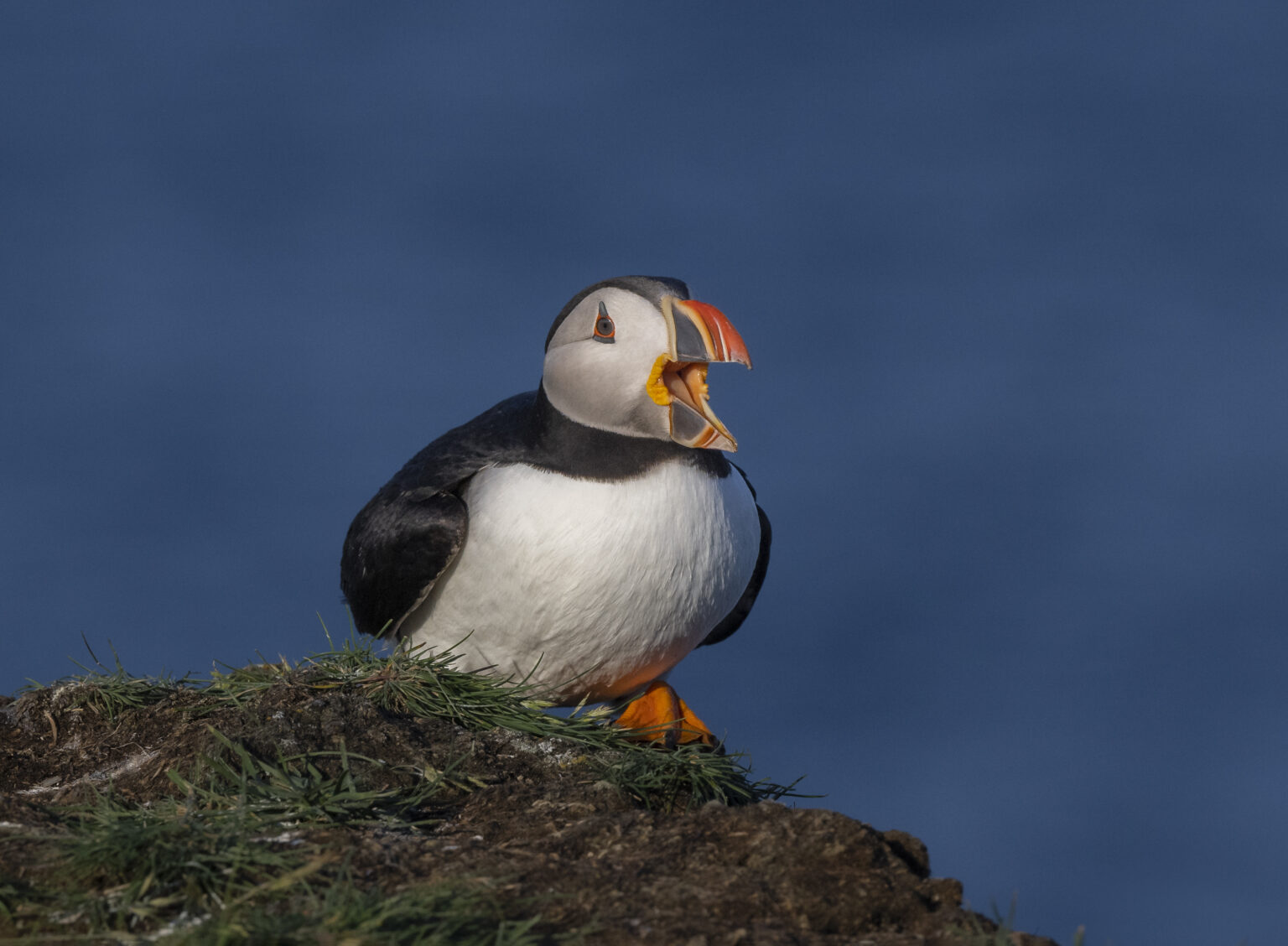
No bird steals the show in Newfoundland quite like the Atlantic Puffin. With its colorful beak, waddling gait, and constant wing-flapping hustle, it’s equal parts charming and comical. But don’t let the clownish looks fool you—these are tough seabirds built for speed, diving, and survival in the North Atlantic.
Physical Description
About the size of a pigeon, puffins are stocky seabirds with short tails, bright orange legs, and unmistakable beaks—triangular, oversized, and striped in red, yellow, and blue during breeding season. Their faces turn a ghostly white each spring, a stark contrast to their sleek black backs and white bellies. When they fly (and yes, they can!), it’s with rapid wingbeats and the urgency of a bird that evolved for swimming.
Native Habitat of the Atlantic Puffin
Atlantic Puffins nest on rocky cliffs and offshore islands across the North Atlantic. In Newfoundland, they favor grassy slopes where they dig burrows to raise their chicks. The colonies at Elliston and Witless Bay are some of the most accessible and dense nesting sites in North America, making them ideal for photography.
Migration Patterns in North America
Puffins spend most of their lives at sea, only coming ashore to breed from late spring through August. After the chicks fledge, adults disappear into the open ocean—some traveling thousands of kilometers in search of food across the cold waters of the Atlantic.
Food/Eating Habits
Puffins are expert divers, using their wings to “fly” underwater. Their favorite food? Small fish like sand lance and capelin, which they often catch in impressive numbers—sometimes holding a dozen crosswise in their beaks while still fishing. This feeding behavior is one of the most rewarding things to photograph, especially when you catch them returning to the colony with a beak full of fish.
Known Lifespan of the Atlantic Puffin
In the wild, puffins can live over 20 years, with many reaching their teens or older. They don’t breed until around age 5, but once paired, they often return to the same burrow with the same mate year after year.
Join Us on Our Newfoundland Seabird Workshop
There’s nothing quite like photographing puffins on the rugged coast of Newfoundland—sea spray in the air, cliffs below, and hundreds of birds soaring past. On our Newfoundland Seabird workshop, we’ll take you to active colonies during the peak of breeding season, where you can capture intimate portraits, flight shots, and classic beak-full-of-fish moments with guided instruction and ideal light.
Whether it’s your first time seeing puffins or your tenth, the magic never fades. And we’ll make sure your images do them justice.
Read Other Species Spotlight articles
If you’re as passionate about wildlife as we are, take a moment to explore our Species Spotlight series. Each article dives into the fascinating lives of the animals and birds we love to photograph on our workshops—whether it’s a puffin perched on a cliff in Newfoundland, a leopard draped across a tree in Tanzania, or an Adelie penguin waddling through the snow in Antarctica. It’s a growing library of stories, facts, and inspiration for anyone who dreams of capturing the wild through their lens. Come see the world the way we do—one species at a time.


