Species Spotlight: Canada Lynx
By Kevin Pepper |
Introduction of the Species
Elusive and built for snow, the Canada Lynx is the silent shadow of the northern forest. Spotting one in the wild feels like stumbling into a whispered secret—fleeting, graceful, and absolutely unforgettable. For photographers, it’s the kind of moment you replay long after the shutter clicks.
Physical Description of the Canada Lynx
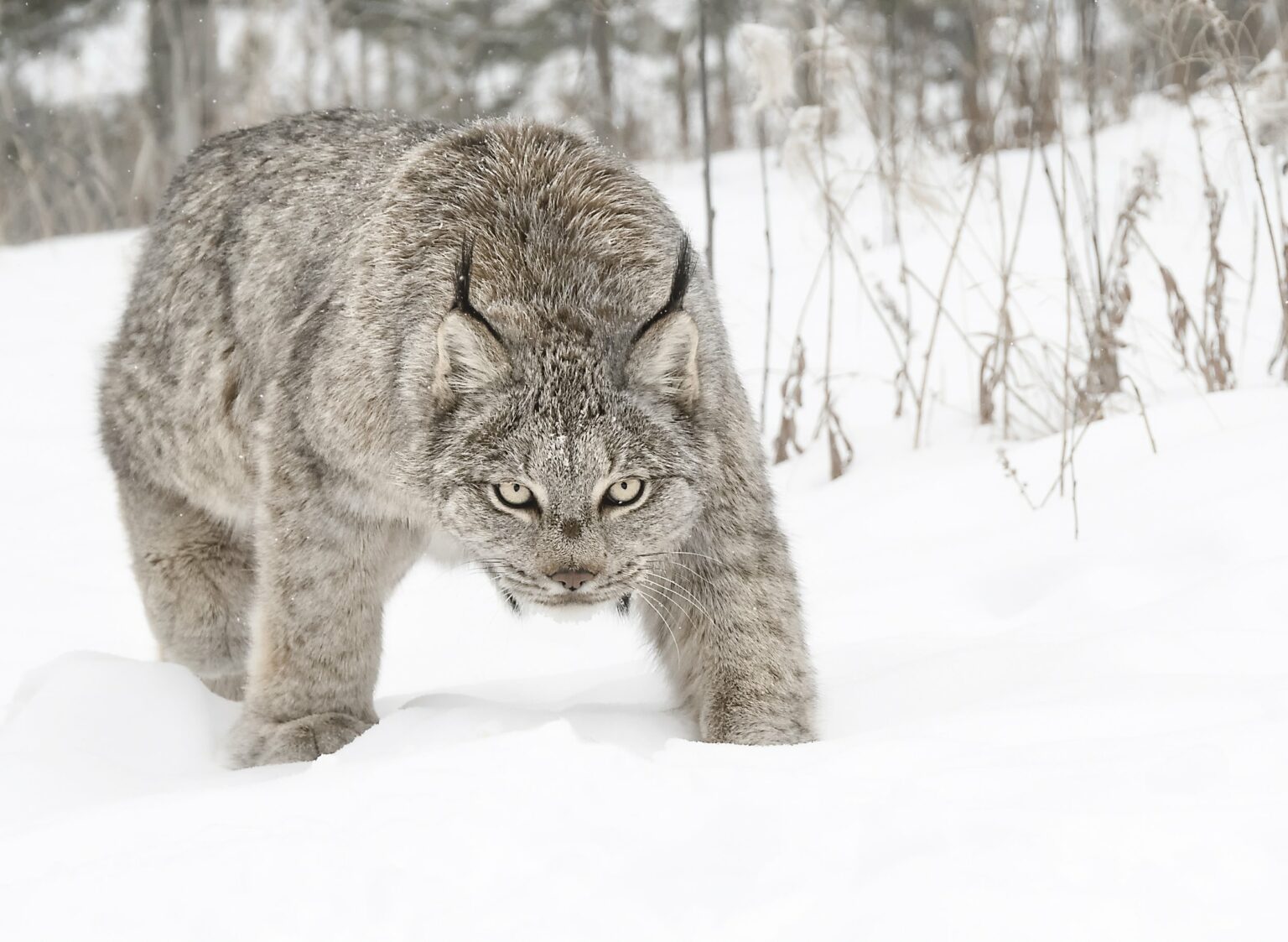
Canada Lynx are medium-sized wild cats with long legs, oversized snowshoe-like paws, and thick, silvery fur that changes slightly with the seasons. Their most distinctive features are the black tufts on their ears and the short black-tipped tail. Their eyes are intense and forward-facing, giving them that unmistakable predator stare every photographer dreams of capturing.
Physical Variations Amongst the Species
While overall appearance remains consistent, individuals may vary in fur tone—from pale grey to slightly tawny, depending on region and season. Their coat becomes thickest in winter, with a denser ruff around the face. Males are typically larger than females, but otherwise, there’s little variation across their range.
Canada Lynx vs. Bobcat
It’s easy to confuse a Canada Lynx with a Bobcat—until you’ve seen both in the wild. Here’s how they compare:
- Size & Build: Lynx are generally larger, with longer legs and huge paws built for walking on snow. Bobcats are stockier with smaller feet—better suited for more varied terrain.
- Tail: Lynx tails are short and entirely tipped in black. Bobcat tails are longer with black only on the top half.
- Ear Tufts & Ruff: Lynx ear tufts are longer and more prominent, and their facial ruff is fuller. Bobcats have smaller tufts and a less defined ruff.
- Fur: Lynx have denser, fluffier fur, especially in winter. Bobcat coats are shorter, often with more visible spots or barring.
- Habitat: Lynx prefer cold boreal forests with deep snow and abundant hares. Bobcats thrive in a broader range of habitats, including deserts and forests.
If you’re lucky enough to photograph both, the difference becomes instantly clear—and both make incredible additions to your portfolio.
Native Habitat Around the World
Canada Lynx are found throughout the boreal forests of Canada and parts of Alaska, with some populations extending into the northern United States (especially in the Rockies and parts of the Northeast). They thrive in cold, snowy environments with dense cover and plenty of snowshoe hares.
Who Preys on the Canada Lynx
As apex predators in their ecosystem, adult Canada Lynx have few natural enemies. However, they may occasionally be killed by wolves, mountain lions, or humans. Kits are more vulnerable to predation from eagles, coyotes, and other carnivores.
Food/Eating Habits of the Canada Lynx
Specialists through and through, their primary prey is the snowshoe hare. Their entire population cycles are closely tied to hare populations, which boom and bust every 10 years. When hares are scarce, lynx will also eat birds, rodents, and even young deer. Their hunting is mostly done at night or during crepuscular hours, stalking through snow with near-silent precision.
Known Lifespan
In the wild, Canada Lynx typically live 10–14 years. In captivity, they can live closer to 20. Their success depends on hare populations, winter severity, and human impact on habitat.
Join Us on a Wildlife Workshop
While sightings are rare, Canada Lynx are occasionally spotted on our northern wildlife photo workshops, especially in remote, snow-covered forests where hares are abundant. Tracking one takes patience, luck, and a sharp eye—but the reward is one of the most captivating wildlife moments you can experience.
We’ll guide you on how to move quietly, watch for signs, and be ready for those brief, magical seconds when a lynx emerges from the trees. Add one to your portfolio, and you’ve captured something truly wild.
Read Other Species Spotlight articles
If you’re as passionate about wildlife as we are, take a moment to explore our Species Spotlight series. Each article dives into the fascinating lives of the animals and birds we love to photograph on our workshops—whether it’s a puffin perched on a cliff in Newfoundland, a leopard draped across a tree in Tanzania, or an Adelie penguin waddling through the snow in Antarctica. It’s a growing library of stories, facts, and inspiration for anyone who dreams of capturing the wild through their lens. Come see the world the way we do—one species at a time.