Species Spotlight: Southern Yellow-billed Hornbill
By Kevin Pepper |
Introduction of the Species
With a beak that looks too big for its head and a personality straight out of a comedy sketch, the Southern Yellow-billed Hornbill is one of Africa’s most recognizable and entertaining birds. Whether perched on a safari vehicle or bouncing through the bush, it brings character, curiosity, and photographic charm in equal measure.
Physical Description
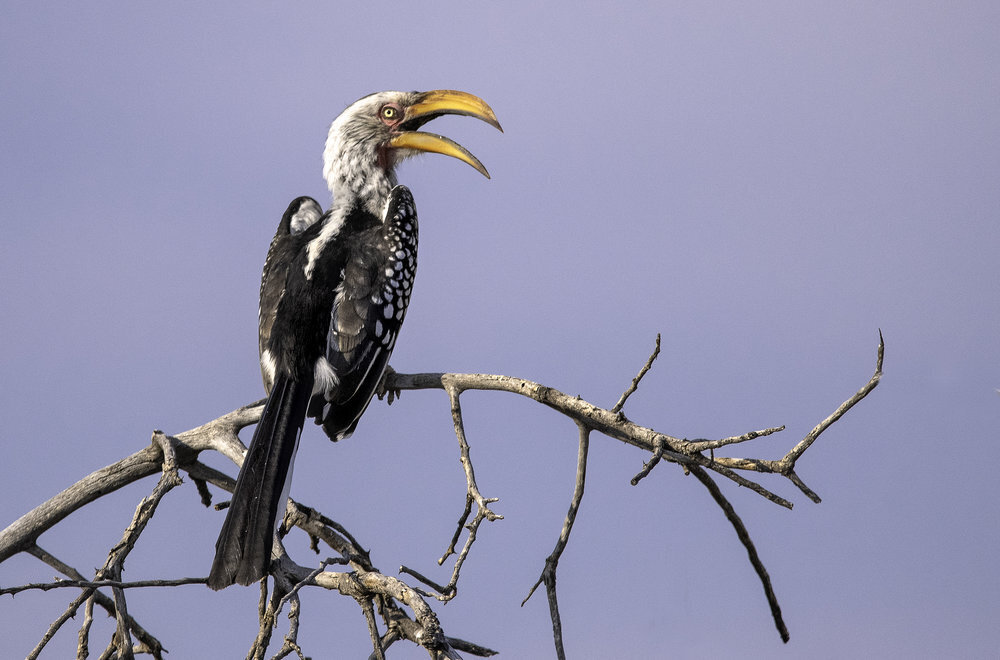
The Southern Yellow-billed Hornbill (Tockus leucomelas) is a medium-sized bird with a bold profile: black-and-white plumage, a long tail, and that unmistakable banana-shaped yellow bill. Males and females look similar, though males typically have a longer bill. Their eyes are surrounded by bare pinkish skin, and their wings are mottled with black and white spots.
On the ground, they walk with an almost comical swagger. In the trees, they perch upright and alert, giving photographers plenty of time to compose portraits or wait for action shots.
Physical Variations Amongst the Species
There are several subspecies across southern Africa, but the variations are subtle—mostly in bill size and minor plumage differences. Some individuals may show a slightly reddish tinge around the eyes or a more curved bill tip. Regardless, they’re easy to recognize and even easier to enjoy through the viewfinder.
Native Habitat Around the World
The Southern Yellow-billed Hornbill is found in:
- South Africa
- Namibia
- Botswana
- Zimbabwe
- Mozambique
- Southern Angola
They thrive in dry savanna, thornveld, woodlands, and arid scrub habitats. These hornbills are especially common in places like Kruger National Park, Chobe, and the Kalahari, where they’re often spotted foraging on roadsides or strutting around picnic sites with no shame whatsoever.
Who Preys on the Southern Yellow-billed Hornbill
Predators include raptors, snakes, and small carnivores that target eggs and chicks. Adults, while bold and visible, are fast and agile flyers and less frequently caught. Their real defense is their awareness—they’re alert, quick to fly, and often vocal when danger approaches.
Food/Eating Habits of the Southern Yellow-billed Hornbill
These hornbills are omnivores. Their diet includes insects, seeds, fruit, and small reptiles. They forage mostly on the ground, using that oversized bill to flip leaves, dig into termite mounds, or snatch up unsuspecting grasshoppers. For photographers, feeding time is gold—watch for moments when they toss a morsel in the air and catch it mid-snap.
One of the most fascinating behaviors? The female seals herself into a tree cavity during nesting, and the male brings her food until the chicks are ready to emerge. It’s a rare but incredible behavior to witness in the wild.
Known Lifespan
In the wild, Southern Yellow-billed Hornbills can live 10–15 years, though exact lifespans vary with region and predation pressure. In protected environments, some have lived over 20 years. Their populations are currently stable, making them one of the more commonly seen and photographed hornbill species.
Join Us on a Wildlife Workshop
We frequently photograph Southern Yellow-billed Hornbills on our African photo safaris in Botswana, South Africa, and Namibia. They’re approachable, expressive, and full of behavior—whether feeding, calling, or displaying courtship antics.
We’ll help you frame clean portraits, capture beak-in-motion shots, and work with early morning or late afternoon light to bring out the soft textures in their plumage. And yes—you’ll likely leave with a few close-up shots of one hopping around your lunch table.