Species Spotlight: Red Panda
By Kevin Pepper |
Introduction to the Red Panda
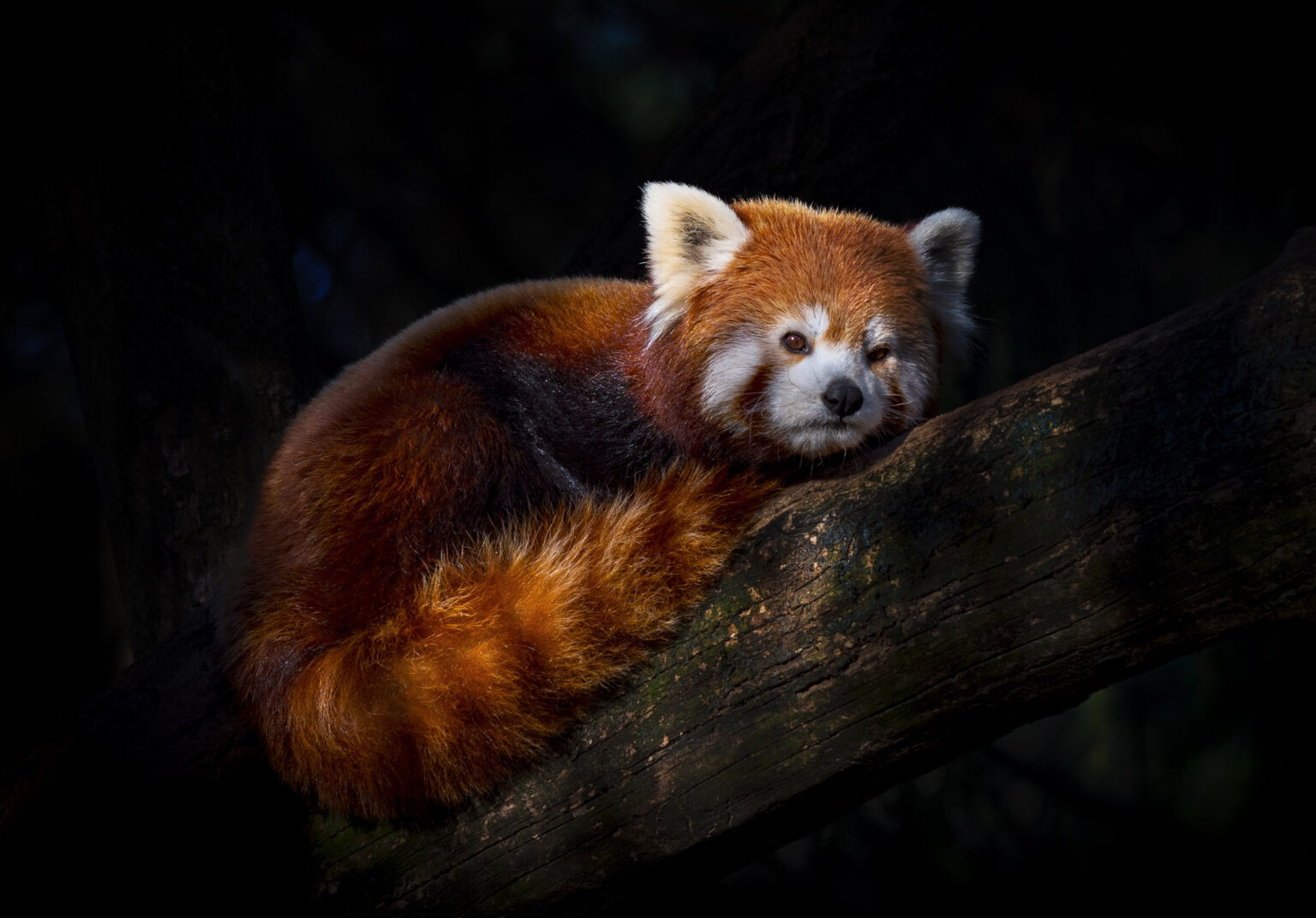
A Red Panda appearing through the branches is the sort of moment that makes a forest walk unforgettable. First comes a patch of reddish fur, then a white-marked face, and finally that long, ringed tail.
Despite sharing a name and a taste for bamboo, Red Pandas are not small versions of Giant Pandas. They belong to a separate family, Ailuridae. For photographers, they offer a very different experience: searching the canopy, finding openings through foliage, and being ready when an animal steps into view.
Physical Description of the Red Panda
Red Pandas have reddish-brown fur, dark legs and underparts, white facial markings, and a bushy, ringed tail. Adults generally weigh around 3.6–7.7 kilograms. Their claws and flexible ankles make them capable climbers, including the ability to descend tree trunks headfirst.
That tail deserves room in the frame. It can add balance and shape to a composition, especially when the panda is stretched along a branch.
Native Habitat and Where They Are Found
Red Pandas inhabit cool mountain forests with bamboo growing beneath the trees. Their range extends across parts of the Himalayas into southwestern China and northern Myanmar.
On our China wildlife workshop, we’ll spend time searching for wild Red Pandas in the forests of Mount Wawushan. These encounters depend on the animals and conditions, and finding one is part of the experience.
The setting matters photographically, too. Moss, branches, and layers of foliage can help tell the story of where the animal lives.
Food and Eating Habits
Bamboo makes up most of a Red Panda’s diet, particularly tender leaves and shoots. They also eat other foods, including fruit and insects. Like Giant Pandas, they have a modified wrist bone that helps them grasp bamboo.
When photographing a feeding animal, watch for a moment when its face clears the leaves. A small turn of the head can change a cluttered photograph into one with a clear point of interest.
Known Lifespan
Wild Red Pandas generally live around eight to ten years. Individuals in human care can live into their teens and occasionally longer.
Why Photographers Love Red Pandas
Red fur against a green forest gives us a strong starting point. The challenge is finding a clear view without losing the sense of place.
We’ll look for openings between branches, watch for distracting patches of bright sky, and keep enough shutter speed for movement. Forest shade often means raising the ISO. A little noise is easier to live with than a blurred face.
There is also value in leaving space around the animal. A Red Panda resting on a mossy branch can tell a richer story than a frame filled entirely with fur.
Join Us on Our China Wildlife Workshop
Searching for wild Red Pandas is one of the experiences we’re looking forward to sharing in China. With local knowledge and photography guidance, we’ll work on making the most of the opportunities the forest gives us.
Some wildlife encounters stay with you because of the photograph. Others stay with you because you remember the moment you first spotted the animal. This has the potential to be both.
Read Other Species Spotlight Articles
Visit our Species Spotlight series for more stories about the wildlife we photograph and the places we travel to find it.