Species Spotlight: The White & Black Rhino
By Kevin Pepper |
Introduction to the White and Black Rhino
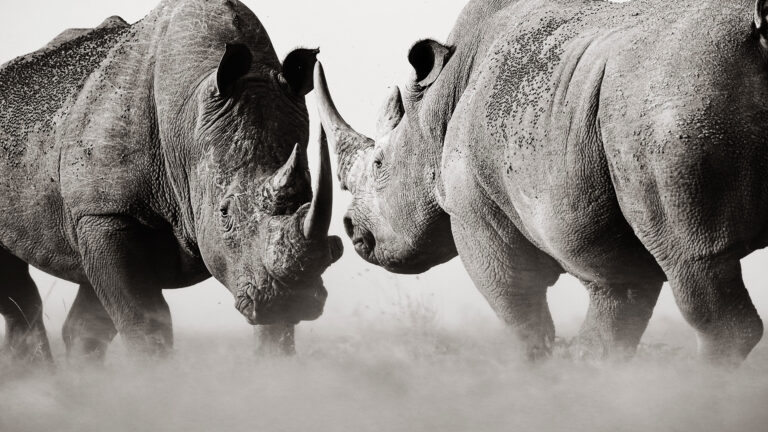
Few animals carry as much presence—or prehistoric weight—as the African rhinoceros. Standing eye-to-eye with one in the wild is a humbling experience. Whether it’s the broad, gentle grazer that is the White Rhino or the stockier, solitary Black Rhino, both are bucket-list subjects for photographers seeking power, texture, and story in a frame.
Physical Description of the White and Black Rhino
At first glance, Black and White Rhinos look similar: large, thick-skinned, grey-colored, and equipped with two horns. But a closer look reveals distinct differences:
- White Rhino: The largest species, with a broad, flat mouth made for grazing. They have a longer head, a pronounced hump on their neck, and tend to hold their heads low to the ground. Their overall posture feels relaxed and sweeping.
- Black Rhino: Smaller and more compact, with a hooked upper lip used for browsing shrubs and trees. Their heads are held higher, and their body shape is rounder and more muscular. Their movements tend to be quicker and more erratic.
Despite the names, both are grey in color. The term “white” is believed to have originated from a misinterpretation of the Dutch word wijde (wide), referring to the rhino’s wide mouth.
Physical Variations Amongst the Species
There are regional subspecies of both rhinos, most notably:
- Southern White Rhino – found in South Africa, Namibia, and Zimbabwe. Most common and widely seen on safari.
- Northern White Rhino – functionally extinct, with only two females remaining in Kenya under 24/7 protection.
- Eastern Black Rhino – found in East Africa, more slender and critically endangered.
- South-Western Black Rhino – found in Namibia, slightly larger with a broader range.
Differences in horn length, body size, and skin folds vary subtly, but the key differences remain mouth shape, head posture, and behavior.


Native Habitat Around the World
Both rhinos are native to sub-Saharan Africa.
- White Rhinos prefer open savanna, grasslands, and lightly wooded areas with nearby water sources.
- Black Rhinos inhabit more rugged terrain, including acacia bushland, scrubby hills, and thickets.
Countries where they are commonly found include:
South Africa, Namibia, Kenya, Tanzania, Zimbabwe, and Botswana.
(White Rhino populations are more concentrated in southern Africa, while Black Rhinos are scattered more widely but in lower numbers.)
Who Preys on the White and Black Rhino
Adult rhinos have no natural predators besides humans. Calves can fall prey to lions or hyenas, but this is rare. The real threat is poaching—driven by demand for their horns in illegal wildlife trade markets. Conservation efforts are intense, involving relocation, dehorning, and 24-hour armed patrols in some reserves.
Food/Eating Habits of White and Black Rhino
- White Rhinos are grazers, feeding on grasses and walking with their heads down, constantly sweeping the ground.
- Black Rhinos are browsers, using their prehensile upper lips to grasp leaves, twigs, and branches from shrubs and trees.
Watching a White Rhino herd quietly graze in golden light offers a feeling of peace and power. Black Rhinos, on the other hand, move with more intensity—giving photographers dramatic body language and expressions, often with dust flying.
Known Lifespan
In the wild, both species can live between 35 and 50 years. In managed reserves and sanctuaries, they may live even longer. Their reproductive cycles are slow, with long gestation periods and years between calves—making each individual critically important.
Join Us on a Wildlife Workshop
We often photograph both Black and White Rhinos on our photo safaris in Namibia, South Africa, and Kenya. Whether it’s a solitary Black Rhino framed against a backdrop of acacias or a White Rhino mother with a calf crossing a sunlit plain, these are the kinds of moments that stay with you.
We’ll teach you how to compose for scale, read body language for behavior shots, and work with dust, light, and shadows to bring out every textured detail in their armor-like hides.
Read Other Species Spotlight Articles
If you’re as passionate about wildlife as we are, take a moment to explore our Species Spotlight series. Each article dives into the fascinating lives of the animals and birds we love to photograph on our workshops—whether it’s a puffin perched on a cliff in Newfoundland, a leopard draped across a tree in Tanzania, or an Adelie penguin waddling through the snow in Antarctica. It’s a growing library of stories, facts, and inspiration for anyone who dreams of capturing the wild through their lens. Come see the world the way we do—one species at a time.