Species Spotlight: Violet Sabrewing
By Kevin Pepper |
Introduction of the Species
The Violet Sabrewing is the kind of bird that stops time. One flash of its iridescent plumage in the filtered light of a cloud forest, and you’re instantly captivated. For photographers, it’s a hummer that offers both challenge and reward—a lightning-fast subject wrapped in electric purple.
Physical Description
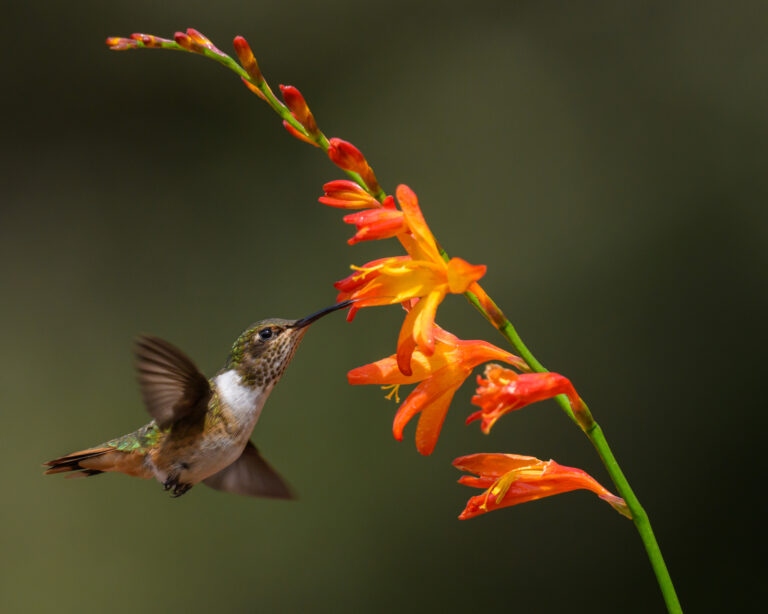
The Violet Sabrewing (Campylopterus hemileucurus) is one of the largest hummingbirds in Central America—about 6 inches long, including the bill. Males are a deep violet-blue with a greenish back and contrasting white thighs. Females are duller but still elegant, with grayish underparts and hints of violet on the throat. Both sexes have a long, slightly decurved black bill and broad, sabre-shaped outer primaries that give the bird its name.
Physical Variations Amongst the Species
There are two recognized subspecies, with slight variations in size and the amount of white on the undertail. While males steal the show with their shimmering blues and purples, the females’ subtler plumage offers more opportunities for clean, soft compositions in natural forest light.
Native Habitat Around the World
The Violet Sabrewing is native to the highland forests of Mexico, Guatemala, Honduras, Nicaragua, Costa Rica, and western Panama. It prefers humid montane forests, cloud forests, and nearby gardens at elevations between 1,000 and 2,400 meters (3,300–7,900 ft). In Costa Rica, you’ll often see them darting between heliconias and perched briefly in shaded clearings.
Who Preys on the Violet Sabrewing
Like most hummingbirds, the Violet Sabrewing faces threats from larger birds such as hawks and jacamars, as well as snakes and tree-dwelling mammals that raid nests. Despite their agility, their size makes them more visible than smaller hummers.
Food/Eating Habits of the Violet Sabrewing
They feed on nectar from a wide range of flowering plants, particularly favoring large tubular flowers like Heliconia and banana plants. They also supplement their diet with small insects and spiders for protein. Males tend to defend feeding territories aggressively, often chasing away smaller hummingbirds with loud buzzing charges and aerial duels.
Known Lifespan
In the wild, most hummingbirds live 3–5 years, though banding records suggest some can live over 9 years. As one of the larger hummingbirds, the Violet Sabrewing may lean toward the upper end of that range.
Join Us on a Wildlife Workshop
We regularly encounter Violet Sabrewings on our Costa Rica photo workshops, particularly in the cloud forests of Monteverde and the Caribbean slope. With their size, color, and dramatic flight behavior, they’re an ideal subject for flash setups, multi-flash systems, or even natural-light shots when timed right.
We’ll work with you on fast shutter techniques, creative backgrounds, and exposure strategies that bring out the metallic purples without blowing out the highlights. Come join us in the tropics—where even the birds wear jewel tones.
Read Other Species Spotlight articles
If you’re as passionate about wildlife as we are, take a moment to explore our Species Spotlight series. Each article dives into the fascinating lives of the animals and birds we love to photograph on our workshops—whether it’s a puffin perched on a cliff in Newfoundland, a leopard draped across a tree in Tanzania, or an Adelie penguin waddling through the snow in Antarctica. It’s a growing library of stories, facts, and inspiration for anyone who dreams of capturing the wild through their lens. Come see the world the way we do—one species at a time.