Why I Believe Akari Offers the Best Way to Photograph Mongolia’s Eagle Hunters
By Kevin Pepper |
When you travel halfway around the world to photograph Mongolia’s eagle hunters, you deserve to know what sits behind the photographs on a workshop company’s website. Who really knows the families, and not just says it on a website… but can back it up with proof? Who has spent years exploring the countryside? Who will be beside you when the light arrives, and you need help making the photograph? And how many people are on the workshop?
Those are the questions I would ask before booking. They are also why I believe our Mongolia Eagle Hunters and Gobi Desert workshops offer the strongest combination of cultural connection, countryside photography and personal instruction you could choose.
My connection with Mongolia began in 2012. Since then, I have led more than 30 photography workshops there. I have returned through different seasons, travelled across the country and built friendships that have become an important part of my life.
That history is the foundation of the experience we offer through Akari.
Experience matters because every return teaches you something. You learn how much time a journey really needs, which locations offer room to work, and how to adjust when conditions change. You learn what helps guests feel comfortable, where they need more support and which experiences stay with them long after they get home.
Our workshops carry those lessons forward. Every group benefits from the years that came before it.
The relationships matter even more.
Some of the eagle hunters you meet are people I have known for more than a decade. I first met Jenisbek in 2014. Since then, I have watched him marry and start a family. Returning to see him means catching up with a friend whose life I have been fortunate to follow.
When I bring guests into those relationships, there is already a foundation of trust. Introductions feel different. People have time to become comfortable with one another. There is room for questions, laughter and the small exchanges that often become your strongest memories.
A company can arrange a visit. Familiarity takes years of showing up.
Our Mongolian partners deserve enormous credit for that continuity. The local guides, drivers, hosts and families help shape these workshops. Their knowledge, introductions and ability to help us understand one another are central to the experience. What we have built together depends on those relationships.
For you, that means spending time with people who welcome us back and having support to understand more of the lives you are photographing.
It also means carefully arranged private photography sessions.
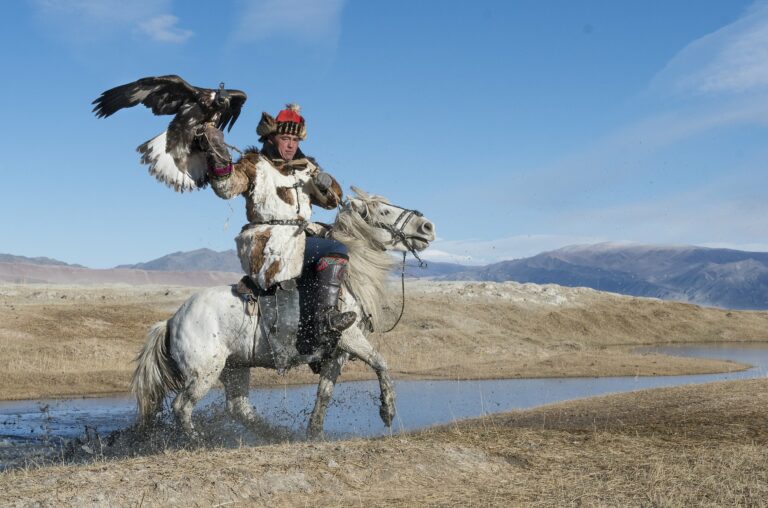
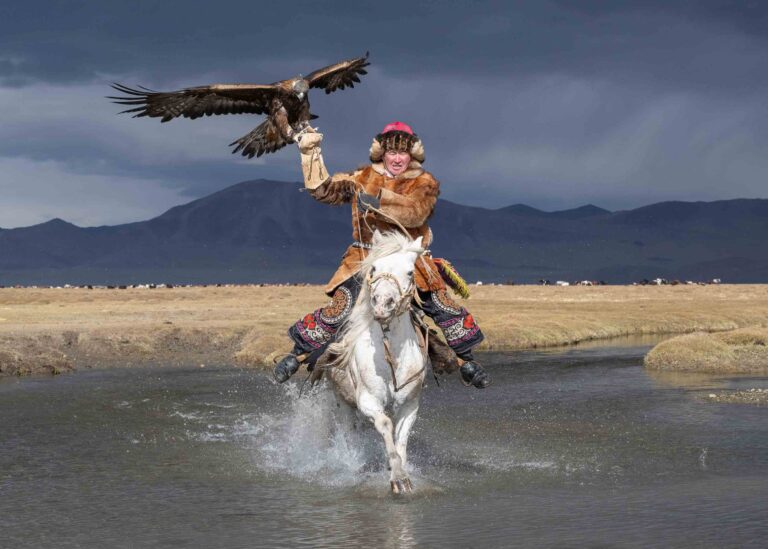
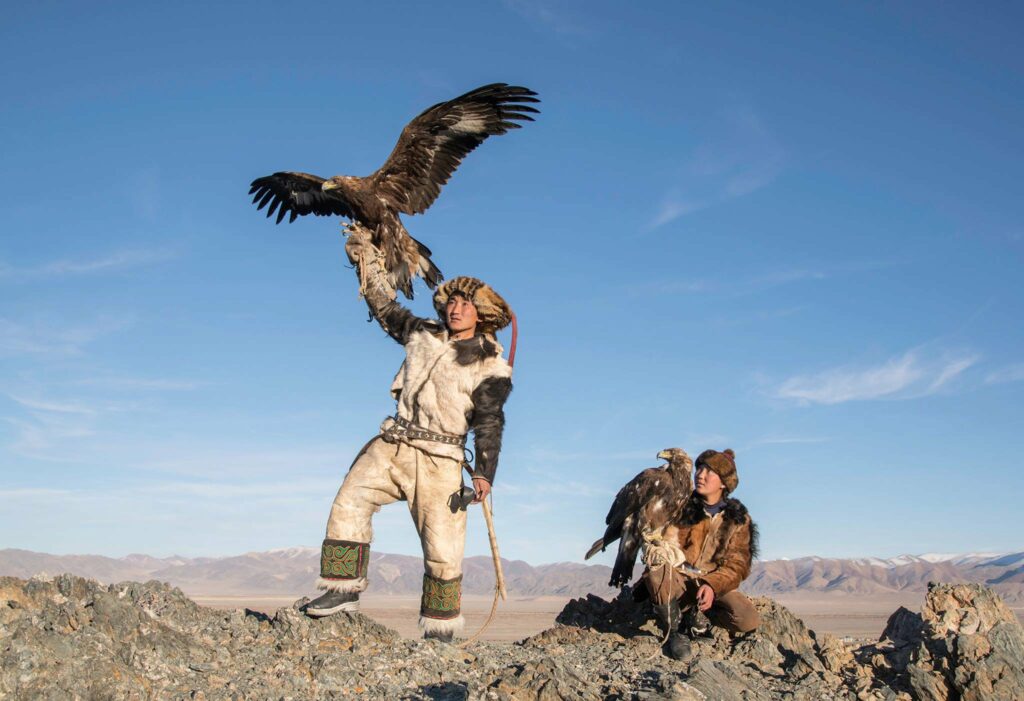
On our recent 2026 workshop, we photographed five eagle hunters at Tolbo Lake. We worked with camel herders on the Gobi dunes at sunrise and sunset, and photographed mounted archers in a rural setting.
These sessions give us time to think about the photographs. Where should you stand? How does the background support the subject? Would a wider view say more about the person and the place? Are you ready for the movement before it begins?
Private sessions allow us to work through those questions together. They create space for instruction, different compositions and another opportunity to apply what you have learned.
We are open about arranging these encounters for photography. The people, skills and traditions are real; the sessions are planned with our hosts. I believe that honesty matters, as does treating everyone we photograph with patience and respect.
Cultural immersion also requires curiosity beyond the viewfinder.
The Kazakh eagle hunters of western Mongolia are a central part of our journey. Spending time with camel herders in the Gobi adds another perspective. Music, dance and horsemanship deepen that experience further.
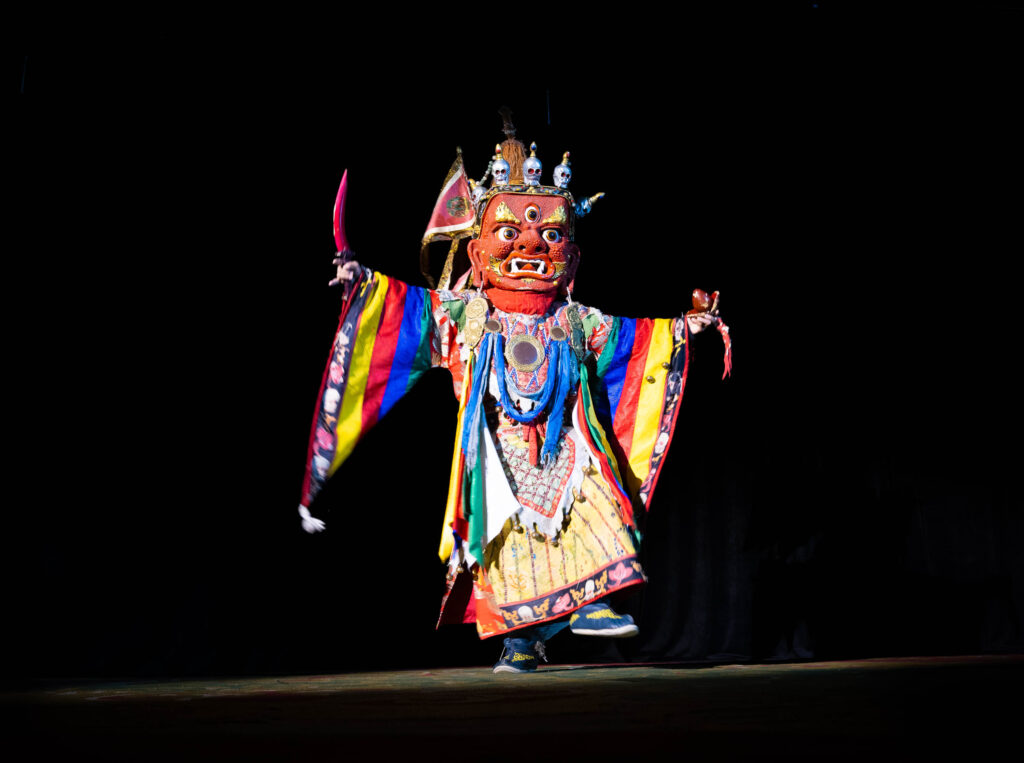
On our recent workshop, we rented a theatre for a private dance performance. We ended the journey with a private visit to the Museum of Natural History, a musical performance and a catered dinner.
Those were deliberate choices. I want our guests to experience the country through its people, its art and its hospitality, as well as its landscapes. The particular arrangements can evolve between departures, but that ambition remains.
I also encourage people to put their cameras down occasionally. Listen to the explanation. Ask the question. Enjoy the performance. Some moments deserve your full attention before they deserve a photograph.
The countryside gives those encounters their setting.
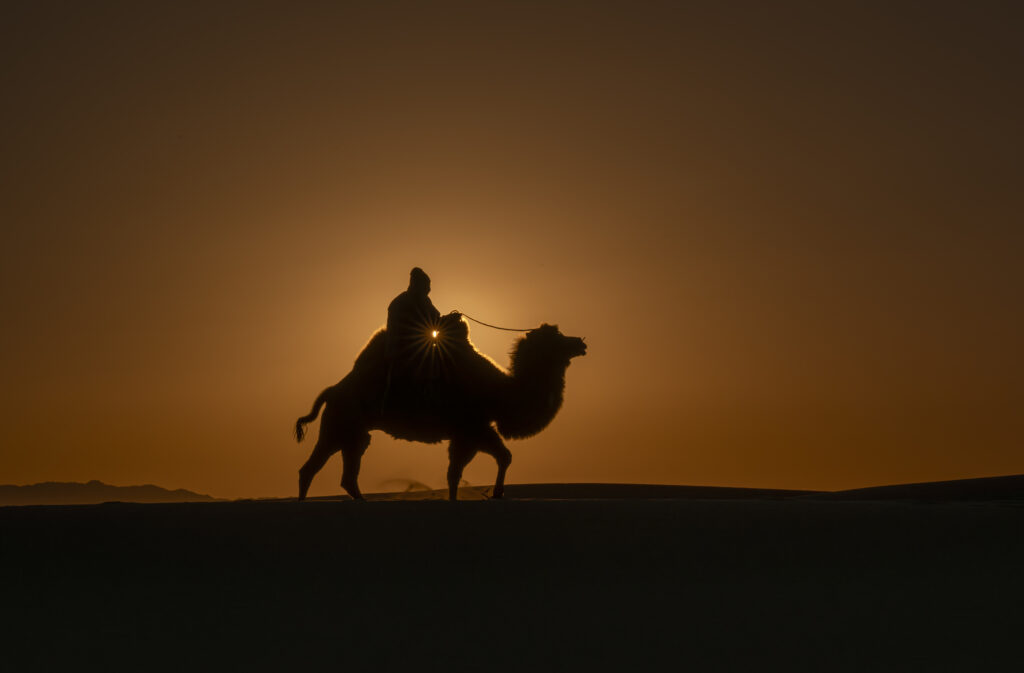
At the Khongor dunes, a camel herder can become a small figure against an immense sweep of sand. At Tolbo Lake, the space around a hunter helps explain the world he lives in. The land belongs in the story.
That is why environmental storytelling is such a large part of how I teach. We work on portraits, but we also explore how distance, light and composition connect a person to their surroundings. You begin to see how a series of photographs can communicate more than a collection of close-ups.
And while you are working on those photographs, our attention belongs with you.
On our recent 2026 departure, eight photographers travelled with three instructors. That gave us time to work individually with guests, answer questions and help people with different levels of experience.
Our guiding philosophy is straightforward: your photographs come first.
If you are struggling with autofocus as a rider approaches, you deserve help then. If your composition needs attention, you deserve someone who takes the time to explain why. If you are already confident, you deserve thoughtful suggestions that push your work further.
Getting you to a beautiful location is part of the job. Helping you make the most of being there is what makes it a workshop.
The company has a responsibility here, too. I believe workshops should be built around a guide’s knowledge of the destination and the subject. As we develop our guiding team in Mongolia, passing on the relationships, local understanding and teaching standards is part of that responsibility.
The experience should feel considered from the first introduction to the final goodbye.
There is another measure of success that never appears in an itinerary: the way a group comes together.
I think about the laughter between shoots, the conversations over dinner and the guests who arrive as strangers and leave exchanging contact information. A shared experience in Mongolia can create friendships that continue long after the bags are unpacked.
That atmosphere matters to me. People learn more freely when they feel comfortable. They ask questions, share ideas and celebrate one another’s photographs.
If you are comparing Mongolia photography workshops, look closely at the experience behind each itinerary. Ask how long the leaders have worked there, what relationships support the trip, how the private sessions operate and how much attention you can expect in the field.
Those are the details that determine the value of your time away.
I believe Akari is the best choice for photographers who want that combination: years of experience, friendships with the people we visit, private opportunities, thoughtful teaching and time to feel connected to Mongolia.
I would love for you to come home with photographs you are proud of, names and stories you remember, and a better understanding of the people who welcomed you.
That is the Mongolia we want to share with you.
Explore our Mongolia Eagle Hunters and Gobi Desert photography workshops.