
Species Spotlight: Coastal Wolves of the Great Bear Rainforest
By Kevin Pepper |
There are few animals in North America that feel as mysterious as the coastal wolves of British Columbia’s Great Bear Rainforest.
They are not just wolves that happen to live near the ocean. They are a unique population shaped by one of the wildest landscapes left on the continent. They move through old-growth rainforest, cross tidal flats, swim between islands, and hunt along shorelines where the forest meets the sea. For photographers, they are one of the most compelling and emotional wildlife subjects you could ever hope to encounter.
Seeing one is unforgettable. Photographing one in the soft light of the rainforest, with water, moss, and mist all around it, feels like stepping into another world.
What Makes Coastal Wolves So Special?
Coastal wolves live in a very different environment from the wolves many people picture in the mountains or on open plains. In the Great Bear Rainforest, their world is built around dense forest, rocky shorelines, estuaries, and islands. These wolves are powerful swimmers and are known to travel between islands in search of food and territory.
Their lives are tied closely to the coast. Depending on the season, they may feed on salmon, deer, small mammals, birds, and marine life found along the shoreline. That connection to both forest and ocean is part of what makes them so fascinating. They are wild, adaptable, intelligent, and perfectly at home in a place that still feels largely untouched.
Physical Description
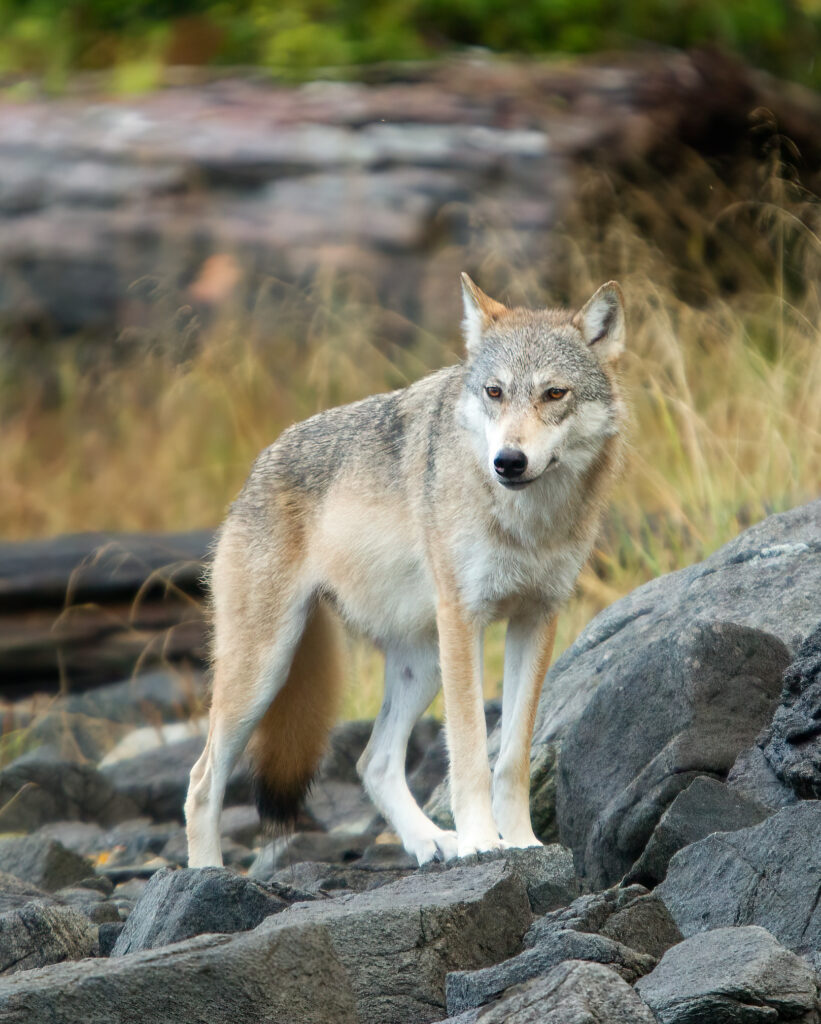
Coastal wolves are lean, athletic, and beautifully built for movement. Their coats are usually a mix of grey, brown, black, and cream tones, though some individuals can appear much darker. In the dim light of the rainforest, their fur often seems to blend into the shadows of the trees and shoreline.
They tend to have long legs, alert ears, and an intense expression that gives them a watchful, thoughtful look. When seen moving through the forest or trotting across a beach, they carry themselves with a quiet confidence that makes them instantly captivating to photograph.
Where Coastal Wolves Live
These wolves are found along the coast of British Columbia, including parts of the Great Bear Rainforest. This region is one of the largest remaining temperate rainforests in the world and is made up of fjords, islands, ancient cedar and spruce forests, salmon rivers, and rich coastal habitat.
It is a landscape that feels built for stories. Fog hangs low over the water. Moss drapes over branches. Bears roam the riverbanks. Eagles watch from the treetops. And somewhere in that vast wilderness, a wolf may step silently onto the shore.
Behaviour and Feeding Habits of the Coastal Wolves
Coastal wolves are opportunistic and highly adaptable. That is one of the reasons they have been able to thrive in such a challenging environment. Their diet changes with the seasons and with what the coast provides. Salmon are especially important when they are running, and wolves may also hunt deer or forage along beaches for marine food sources.
They are intelligent pack animals, but like many wolves, they can be elusive and difficult to see. Some travel in family groups, while others may be encountered alone. Even when they are nearby, they often move quietly and with purpose, appearing and disappearing in a way that keeps every sighting feeling rare.
For photographers, that unpredictability is part of the magic. A coastal wolf encounter is never staged, never guaranteed, and never ordinary.
Why Photographers Dream of Seeing Them
Photographing a coastal wolf is about far more than checking a species off a list.
It is the setting that changes everything.
A wolf on a beach is interesting. A wolf emerging from a wall of rainforest with mist hanging over the shoreline is something else entirely. The habitat adds mood, atmosphere, and a sense of place that makes these images so powerful. Every frame can tell a larger story about wilderness, survival, and the fragile beauty of coastal ecosystems.
They are also a deeply emotional subject. There is something about a wolf’s expression and movement that feels ancient and untamed. When you see one in the Great Bear Rainforest, you do not just admire it. You feel the moment.
Best Time to Photograph Coastal Wolves
June is one of the most exciting months to be in the Great Bear Rainforest for wildlife photography, and it can be a particularly special time for coastal wolves. The rainforest is lush, the days are long, and the shoreline is alive with activity. Wildlife is active, the landscape feels fresh and vibrant, and photographers have the chance to work in beautiful conditions with rich color and soft coastal light.
In a place where every day is shaped by weather, tides, and wildlife movement, June offers a wonderful combination of life, energy, and photographic potential. It is one of those times of year when the rainforest feels fully awake.
A Species That Represents Wild British Columbia
Coastal wolves are one of the great symbols of the Great Bear Rainforest. They represent resilience, adaptability, and the deep connection between land and sea. They also remind us how rare truly wild places have become.
For many photographers, seeing one is not just exciting. It is moving.
It is the kind of encounter that stays with you long after the trip is over.
Join Us in the Great Bear Rainforest
At Akari Photo Tours, our Great Bear Rainforest workshop is designed for photographers who want more than a vacation. It is for people who want to experience one of the wildest places in North America and come home with images that carry real meaning.
The possibility of photographing coastal wolves in this extraordinary setting is one of the great highlights of the trip. Add in the chance to photograph spirit bears, dramatic coastal scenery, and the rich wildlife of British Columbia’s coast, and it becomes the kind of journey photographers talk about for years.
If coastal wolves have ever captured your imagination, the Great Bear Rainforest is one of the most powerful places on earth to see why.


