How to Photograph Wildlife Through Grass, Snow, Mist, and Branches Without Ruining the Shot
By Kevin Pepper |
One of the quickest ways to ruin a wildlife image is to photograph through clutter and convince yourself it looks artistic.
I know this because I have done it. More than once.
There is a fine line between atmosphere and a disaster with fur behind it, and most wildlife photographers cross that line a few times while learning. I certainly did. Early on, I thought anything soft in the foreground automatically made an image feel more creative. Sometimes it did. Other times it looked like I had photographed an animal through a pile of lawn clippings and then asked the viewer to admire my vision.
That is part of the learning curve.
Most amateur photographers are taught to look for a perfectly clear view of the subject. No grass in the way. No falling snow. No mist. No branches. Just a clean animal and a tidy background. And yes, sometimes that is exactly what you want.
But not every strong wildlife image needs a perfectly clear view.
Sometimes a little environmental clutter adds depth. Sometimes falling snow creates mood. Sometimes mist softens the world around the subject and makes the frame feel quieter and more intimate. Sometimes branches help the viewer feel as though they are peering into the animal’s world instead of staring at it on display.
The key is learning the difference between atmosphere and distraction.
Not Every Clear Wildlife Photo Is the Best One
There are times when a perfectly clean wildlife image can feel a little too obvious.
The subject is isolated. Everything is sharp where it should be sharp. The background is smooth. The pose is nice. It is a good image. But sometimes it also feels a bit clinical, as though the animal has been cut out of its world and placed in front of a polite background.
A little foreground can change that.
Soft grass can make the viewer feel low to the ground with the subject. Falling snow can create a sense of weather and hardship. Mist can make the frame feel softer and quieter. A few blurred branches can add depth and create the feeling that you are looking into a hidden scene rather than simply documenting a subject.
These things can add atmosphere. They can add story. They can help the image feel more natural and immersive.
But they only work if they are handled with intention.
The Subject Still Needs to Stand Out
This is the rule that matters most.
You can have grass in the foreground. You can have snow, mist, or soft branches in the frame. But the viewer still needs to know where to look. The animal has to remain the clear subject of the image.
If the eye is lost, if the face is buried, or if the obstruction takes over, the image usually falls apart.
Mood should support the subject, not bury it.
This is where wildlife photographers often get into trouble. A little softness in the foreground can be beautiful. A sharp blade of grass across the eye is usually not. Snow can add life and energy. Snow chunks stealing focus and blocking the animal’s face are a different matter. Mist can simplify the scene. Mist so heavy that the subject loses shape and presence, often leaving you with very little to connect to.
The subject still has to win.
Photographing Wildlife Through Grass
Grass can be one of the most useful foreground elements in wildlife photography, but it can also become a problem quickly.
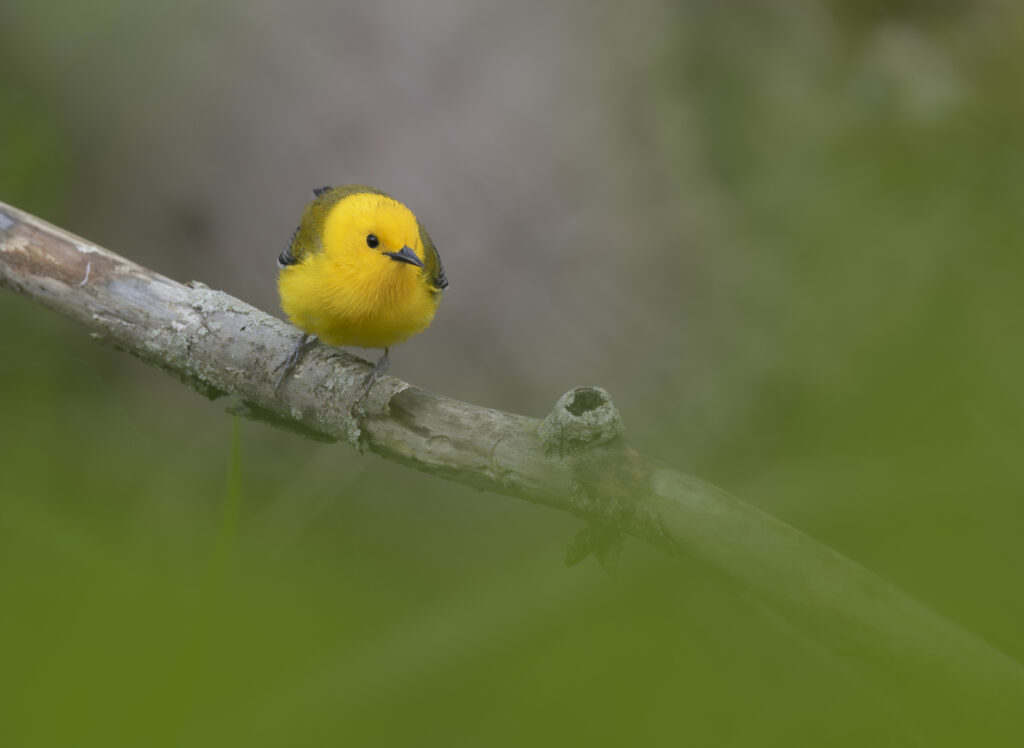
When it works, grass creates softness and depth. It gives the image layers and can help place the viewer into the scene. A fox moving through meadow grass or a deer partly hidden in soft foreground blur can feel much more intimate than a completely unobstructed portrait.
But grass becomes a problem when it crosses the face, pulls autofocus away from the subject, or creates bright, distracting lines through the frame.
When photographing through grass, pay close attention to the eye. If the eye is visible and sharp, the image still has a chance. If the eye is blocked or soft, the frame is usually in trouble.
This is also where small movements matter. A few inches left or right, a slightly lower angle, or a small change in position can completely change where the grass falls in the frame.
In wildlife photography, small movements often fix big problems.

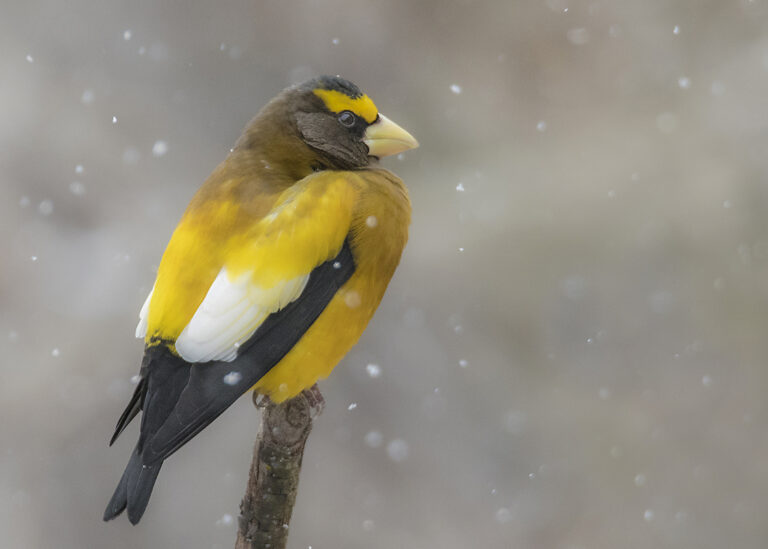
Using Snow to Add Mood to Wildlife Photos
Snow is not the enemy.
Yes, it can make autofocus harder. Yes, it can reduce contrast. Yes, it can interfere with the clean shot you thought you wanted. But snow also adds atmosphere immediately. It tells a story about conditions. It creates texture in the air. It gives the frame motion and energy.
A fox in falling snow feels different than a fox on a clear day. A bison in a snowstorm has a stronger sense of place than the same animal under bright blue skies.
Snow can also simplify a scene by reducing background detail and helping isolate the subject.
The challenge is balance. If the snow becomes more important than the animal, the image starts to struggle. If autofocus keeps grabbing the snow instead of the subject’s eye, frustration usually follows.
The answer is not to panic. It is to watch how the weather interacts with the subject and let the snow become part of the story.
Some of the strongest wildlife images happen in conditions that are far from perfect.
How Mist Can Improve a Wildlife Image
Mist is often one of the best gifts a wildlife photographer can get, especially in busy environments.
Mist softens backgrounds. It reduces visual clutter. It simplifies color. It helps separate the subject from the world around it. It can turn a busy woodland, marsh, or riverbank into a quieter and more elegant scene.
It also changes the emotional tone of the image. Mist can make a frame feel peaceful, mysterious, soft, or even a little haunting.
But once again, the subject still needs to hold its shape and presence. If the mist is so thick that the animal disappears into it, the image may lose too much impact.
The goal is not to erase the subject. The goal is to let the mist simplify everything around it.

How to Photograph Wildlife Through Branches
Forests are one of the trickiest environments to work with because they can either add depth or completely ruin a frame.
A few soft branches at the edge of the image can make the scene feel hidden and intimate. They can suggest that the viewer is peeking into a private moment. They can help place the animal in its habitat and create a more layered composition.
But the moment trees and branches start cutting through the eye, face, or body, the image usually falls apart.
This is where honesty matters. Not every image through branches is creative. Sometimes it is just obstructed.
Ask yourself a simple question: are the branches framing the subject, or are they fighting it?
If they are helping shape the scene, keep working. If they are slicing the image apart, it is usually time to change position, wait for the animal to move, or move on.
Use Shallow Depth of Field With Purpose
A wider aperture can be extremely helpful when photographing through grass or branches because it softens the foreground and turns distracting elements into a gentle blur.
This is often what allows atmosphere to stay in the frame without turning into clutter.
But shallow depth of field is not magic.
If the obstruction is too dense, too badly placed, or too close to the animal’s face, opening your aperture will not fix poor composition. It may help, but it will not rescue a weak frame.
Use shallow depth of field to support the image, not to save a bad one.
The eye should still be sharp. The subject should still feel clear and important. If the camera focuses on the grass or the branch instead of the animal, the image is not working.

Move a Little to Clean Up the Frame
One of the best field tips in this kind of photography is simple: move a little.
Not every scene needs to be abandoned just because a foreground element is almost in the way. A few inches lower may place the grass beneath the face instead of across it. A slight step left may clear a branch from the eye. A small shift right may turn a messy foreground into a soft, useful frame.
Beginners often treat the scene in front of them as fixed. More experienced photographers know that the frame is flexible. They look for small changes in angle, height, and position that improve the image.
Often, the solution is not dramatic. It is just a small adjustment made at the right time.
Know When the Image Is Too Messy
This is an important part of the process.
Sometimes the frame just does not work.
Sometimes the grass is too thick. Sometimes the mist is too heavy. Sometimes the branches are too distracting. Sometimes the snow is so chaotic that the subject disappears. Sometimes the image you hoped would feel moody ends up looking like the animal lost a fight with a hedge.
That happens.
Not every partially obscured wildlife image is artistic. Sometimes it is just clutter.
The hard part is being honest with yourself. If the eye is blocked, if the frame is confusing, or if the foreground keeps pulling attention away from the subject, it may be time to stop forcing it.
Wait for a better position. Wait for the subject to move. Or move on.
There is no prize for defending a weak image just because you worked hard for it.

Atmosphere vs. Distraction in Wildlife Photography
That is really what this whole subject comes down to.
Grass, snow, mist, trees, and branches are not inherently good or bad. They are tools. Used well, they create mood, depth, atmosphere, and a stronger sense of place. Used poorly, they distract from the subject and weaken the image.
The real skill is learning to tell the difference in the field.
That comes with practice. It comes with mistakes. It comes from reviewing your images honestly and recognizing when a little foreground added beauty and when it simply added confusion.
That is the lesson.
Final Thoughts
The goal is not to force every wildlife image through grass, snow, mist, or branches just to make it feel artistic.
The goal is to understand when those elements add something real to the frame.
Used well, they can create mood, depth, atmosphere, and a stronger sense of place. They can help the viewer feel they are inside the scene rather than standing outside it. Used poorly, they can bury the subject and leave you with a frame that never quite comes together.
That is why this kind of wildlife photography is not really about obstruction. It is about judgment.
The next time you find yourself photographing an animal through grass, snow, mist, or branches, do not assume the scene is ruined.
Look more carefully.
Move a little.
Watch the eye.
Let the atmosphere and the environment help.
And be honest about whether the subject is still winning.
That is where the stronger image begins.
If you want to create more thoughtful wildlife images in the field, join us on an Akari Photo Tours workshop. We help photographers do far more than choose camera settings. We teach you how to read a scene, work with light, simplify the frame, and make stronger decisions when conditions are less than perfect. If you are ready to move beyond snapshots and start creating wildlife images with more depth, mood, and intention, we would love to help you get there.