When Not to Press the Shutter: How Patience Creates Better Wildlife Photographs
By Kevin Pepper |
One of the hardest lessons in wildlife photography is learning that not every moment deserves a photo.
That sounds simple enough now. It did not feel simple when I was younger and far more impressed with my own camera’s motor drive. Back then, if an animal moved, I photographed it. If it looked up, I photographed it. If it twitched an ear, I probably photographed that too. Somewhere in an old folder, there are no doubt 47 nearly identical images of an animal doing absolutely nothing important. Sharp? Probably. Memorable? Not even a little.
That is part of the learning curve.
Most of us get into wildlife photography thinking the path to better images is to react faster, shoot more, and hope one frame rises above the rest. Sometimes that works. Wildlife can be unpredictable, and there are moments when speed matters. But many of the best wildlife images are not created by reacting faster. They are created by waiting longer and understanding the animal you are photographing.
They come from holding off for a better head angle. Waiting for the subject to step into cleaner light. Waiting for the background to settle down. Waiting for the pose to feel natural. Waiting for the moment to mean something… all because you might have researched the species.
A sharp photo of a badly timed moment is still a badly timed photo.
Over the years, one of the biggest things I have learned — and one of the biggest things I try to teach on our workshops — is that better wildlife photography is not only about knowing when to press the shutter. It is also about knowing when not to.
The First Look Is Rarely the Best Moment
When an animal appears, the instinct is immediate. Your heart rate jumps. Your brain starts shouting at you. You finally have the subject in front of you, and every part of you feels like it needs to do something right now.
That is normal.
But the first moment is often just the beginning, not the peak.
The animal may still be settling into the scene. Its head may be turned away. The body may look stiff. The light may be flat. A branch might be cutting through the frame. The background might be cluttered. There may be no real gesture yet, no expression, no sense of life in the image beyond the fact that the animal happened to be there.
A lot of photographers fire immediately, then relax as if the job is finished. In reality, the stronger image often comes ten seconds later. Or thirty seconds later. Or after the animal takes a few steps, lifts its head, turns into the light, or shifts into a pose that feels natural and alive.
There is nothing wrong with taking a frame or two right away to lock in your exposure and make sure you are ready. I call it the “safety shot or proof of life image”. But then, in many cases, the smartest thing you can do is stop for a second and actually watch.
That is often when the real photograph begins.

Learn to Recognize “Almost”
One of the biggest differences between average wildlife images and stronger ones is the ability to recognize when a moment is merely close.
This takes time. It also takes missed opportunities, frustration, and more than a few evenings staring at your files, wondering why the images you were excited about in the field now feel flat on the screen.
I have been there.
Early on, I made a lot of images that were technically fine but emotionally empty. The animal was sharp. The exposure was fine. The composition was decent enough. But the image had no pulse. Nothing in the frame made it feel like a moment. It just looked like proof that I had been standing there with a camera.
That is what “almost” looks like.
The head is almost turned toward you. The eye is almost visible. The wings are almost in a pleasing position. The fox is almost clear of the grass. The bear is almost in the patch of cleaner light. The bird is almost lined up with a better perch. The scene is close, but not quite there.
This is where patience becomes so valuable.
Many wildlife photographs are made or broken by small changes. A slight head turn. A catchlight in the eye. A cleaner edge around the body. A foot lifted at the right time. A pause in the stride. These are not tiny details. They are often the difference between a frame you forget and one you come back to years later.
Better Wildlife Photography Often Begins Before the Action Does
One mistake I see often is photographers waiting for behavior before they prepare themselves.
That is backwards.
If you expect something to happen, the time to think is before it happens. Once the action starts, you want to be ready, not fumbling through settings while the moment disappears in front of you.
Before anything interesting unfolds, ask yourself a few questions:
Where is the cleanest background?
How is my exposure looking right now?
Do I want this image tight, or would it be stronger with more space?
If the animal moves left, what happens?
If it steps toward me, am I ready?
Is there anything in the foreground that will add depth, or just create a mess?
Those are the decisions that help you stay calm when the moment finally comes.
I have seen this many times on workshops. Two photographers can be looking at the same animal. One is scrambling, adjusting settings, changing autofocus modes, and wondering why everything is unravelling. The other quietly sets things up ahead of time, pays attention to the scene, and is ready when the behavior happens.
That second photographer is not luckier. Usually, they are just more prepared and more patient.
And yes, sometimes that photographer is still me. Other times, it is a client who has finally started to trust that slowing down is not the same thing as falling behind.
Stop Shooting Every Version of the Same Weak Frame
Now I am going to step on toes a little, but I say this with affection.
Holding the shutter down through an entire mediocre sequence does not improve your odds of creating a strong image. Usually, it just gives you more editing to do later and more chances to convince yourself that one of those frames must be good because you took so many of them.
I have played that game myself. It does not end well.
If the light is poor, the pose is awkward, the background is messy, and nothing meaningful is changing in the scene, making 200 versions of that frame is not persistence. That is just optimism getting out of hand.
Wildlife photographers sometimes confuse activity with progress. We feel busy. We feel productive. The shutter is firing, the buffer is working, and we tell ourselves we are on it. But if the scene is not improving, all we are really doing is recording disappointment at a higher frame rate.
Part of getting better is learning to pause and ask, “Has anything actually changed here?”
If the answer is no, you have choices. You can wait. You can change your angle. You can recompose. You can go wider. You can go tighter. Or you can accept that this particular encounter may not give you the image you hoped for.
That is not failure. That is wildlife photography. And THAT is progress.
Not every sighting becomes a great image. Some moments are there to be enjoyed, learned from, and left behind. That truth hurts a little, but it is also part of what makes the successful images feel earned.
Watch the Animal, Not Just the Back of the Camera
Some of the best timing decisions happen before the moment, and many of them happen when you are actually paying attention to the subject rather than staring only at your viewfinder.
Animals often give clues before they do something interesting.
A bird may shift its balance just before takeoff. A fox may lower its body before it pounces. A bear may pause and lift its head before turning into better light. A lion may change its posture before standing. A puffin may lean forward for the briefest moment before launching off a cliff.
These little signs matter.
If you photograph mechanically — firing because the animal is present rather than because the scene is developing — you miss a lot of what wildlife is trying to tell you. The camera matters, of course. But the subject matters more.
I often tell people on workshops to spend less time machine-gunning every second and more time learning to read behavior. Wildlife photography rewards attention. The more time you spend observing animals, the more familiar you become with the rhythms of movement, body language, and tension before action.
That makes your timing better. And better timing almost always leads to better photographs.
It also leads to fewer nearly identical frames of a bird standing on one leg doing absolutely nothing. I have enough of those already. I do not need you adding to the family collection.
Patience In Wildlife Photography Helps Clean Up the Frame
Sometimes the subject is not the problem at all. Sometimes the problem is everything around it.
The animal may look good, but the frame does not. A branch is crossing the body. Tall grass is cutting through the face. A bright patch in the background is pulling the eye away. Another animal is wandering into the edge of the composition. The scene feels cluttered, messy, and unsettled.
This is where patience pays off in a different way.
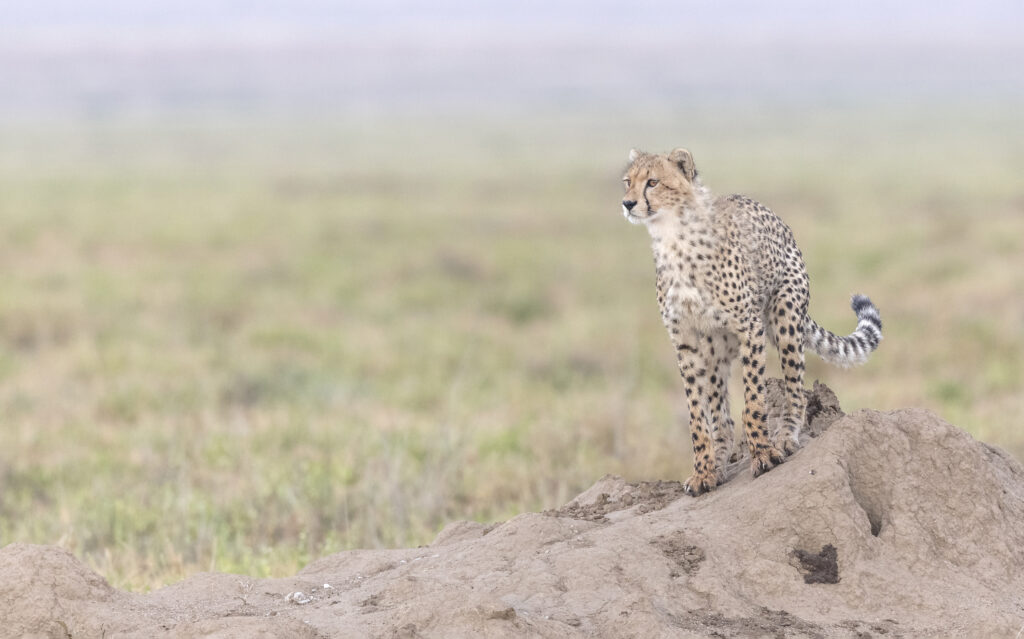
If you wait, the frame often cleans itself up. The animal takes a few steps and separates from the background. It lifts its head above the grass. Another subject moves out of the frame. The light shifts. The scene breathes. What felt chaotic a moment ago suddenly becomes much simpler and much stronger.
Sometimes you can help that process along by changing your own position. A step or two to one side may remove a bright distraction. Lowering your angle may simplify the background. Reframing slightly may solve a problem at the edge of the image. But often, the most important adjustment is not made with your feet or your lens. It is made with patience.
This is a major turning point for many amateur photographers. They stop asking only, “Is the animal sharp?” and start asking, “Is the frame helping the subject?”
That is a much better question.
There Is a Difference Between Missing a Shot and Avoiding a Weak One
This is an important distinction.
Yes, sometimes you wait too long. Sometimes the animal turns, runs, flies, disappears behind a bush, or leaves you standing there feeling like the village idiot with an expensive lens. That happens. It has happened to me more times than I would care to admit.
But missing a potentially strong frame because you were trying to be thoughtful is not the same thing as filling your card with weak images that were never going to work anyway.
I would rather miss one good possibility while waiting for the frame to come together than come home with 300 files I never really liked in the first place. Over time, that mindset improves your photography. It teaches you to make decisions based on quality instead of volume. It sharpens your judgment. It pushes you to recognize what actually makes an image worth keeping.
And here is the funny thing: once you begin working this way, you often miss fewer important moments, not more. You become more aware of what matters. You become better at anticipating behavior. You spend less time reacting wildly and more time seeing clearly.
That is a far better way to work.
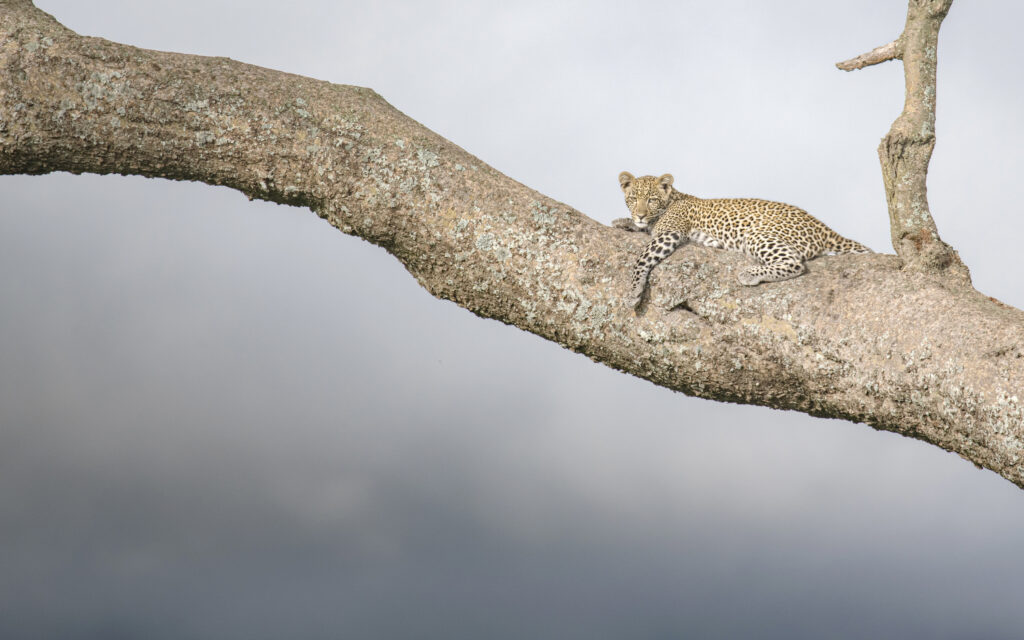
This Is One of the Biggest Things We Help People Learn on Wildlife Photography Workshop
When people think about wildlife photography workshops, they often assume the teaching is mostly about camera settings, autofocus modes, or lens choices.
We absolutely help with those things. They matter.
But some of the most valuable teaching in the field is about judgment.
Should you shoot this now, or wait?
Should you stay low?
Should you move a few feet?
Should you go tighter, or let the scene breathe?
Is the moment building, or fading?
Is the background helping, or hurting?
Is this really the image, or just the first draft of one?
Those are harder questions. They are also the ones that often make the biggest difference.
Experience and research on species before a trip helps with that. So does working beside someone who has made plenty of mistakes and has no interest in letting you repeat all of them the hard way.
I have certainly had my share. I have photographed animals too early, too often, too tightly, and in backgrounds that deserved an apology. That learning curve is part of becoming a better photographer. But it is also why I care so much about helping people improve faster.
You do not need to make every mistake yourself. I have already made a respectable number of them on behalf of the group.
Final Thoughts
Wildlife photography is not just about being fast enough to catch the action. It is about being calm enough to recognize when the image is not ready yet.
That takes patience. It takes discipline. It takes confidence to hold back when every excited part of your brain wants to fire away. But that patience is often what separates a record shot from a photograph with feeling.
The next time an animal steps into view, do not just ask yourself whether you can take the photo.
Ask whether this is the moment worth taking.
Sometimes the answer will be yes.
Sometimes the answer will be not yet.
And learning the difference is where better wildlife photography begins.
Want to create stronger wildlife images with more intention and less guesswork? Join us on an Akari Photo Tours wildlife photography workshop. We help photographers do far more than dial in camera settings. We teach you how to read behavior, simplify the frame, work with light, and recognize the moments that are truly worth photographing. If you are ready to move beyond snapshots and start creating wildlife images with more impact, we would love to help you get there.