Photographing China’s Li River: Limestone Mountains and the Story of the Cormorant Fishermen
By Kevin Pepper |
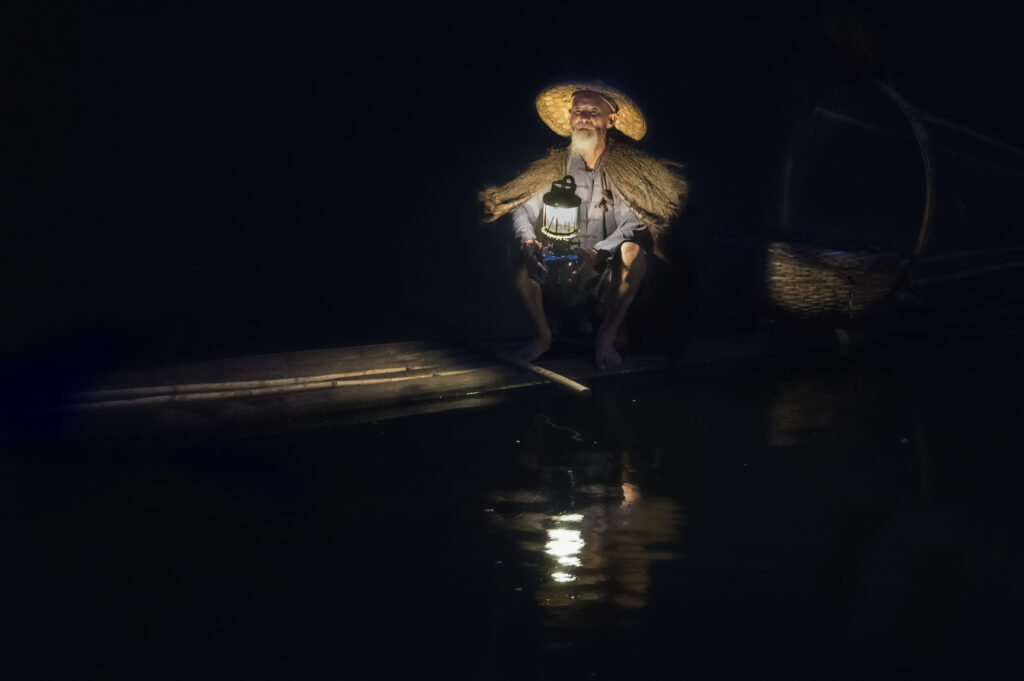
A bamboo raft rests on the water. A fisherman stands beside a lantern, with cormorants perched nearby. Behind him, limestone peaks fade into the evening light.
You may have seen photographs of this scene without knowing much about the place or the tradition behind it. Understanding both gives you more to work with when you arrive with a camera.
The Li River, also called the Lijiang, flows through Guangxi in southern China, linking Guilin with the landscapes around Xingping and Yangshuo. Along this stretch, steep mountains rise beside the water, with villages, farmland, and bamboo along the banks. It is one of China’s most recognizable river landscapes.
For photographers, its appeal begins with the shapes.
The limestone formations are part of a karst landscape, shaped over immense periods by water dissolving the rock. The Guilin karst is included in UNESCO’s South China Karst World Heritage property, recognized in part for its towers and river scenery.
Through a viewfinder, those formations become layers, lines, and relationships. One peak sits behind another. A bend in the river leads your eye into the distance. A small raft gives scale to mountains that might otherwise be difficult to judge.
This is a place where paying attention to what you leave out can make a photograph stronger.
A wide lens can show the river and its surroundings, but I would also encourage you to look through a longer lens. You may find a tighter composition in a few overlapping peaks, a reflection, or a fisherman framed against a patch of lighter water.
Mist, when it appears, can separate the mountains into soft layers. Clear conditions reveal more detail and stronger shadows. Overcast light can simplify the colours and bring attention to shape. Each offers a different way to interpret the same landscape.
The aim is to recognize the photograph the conditions are giving you.
There is also a human story here, and the cormorant fishermen are part of it.
Cormorant fishing has been practised in China for centuries. Its precise origins remain debated, including whether it developed independently in China and Japan or travelled between them. Historical accounts place the practice in China by the Song dynasty, which ruled from 960 to 1279, and describe it as widespread during the later Ming period. Giving it one tidy starting date would suggest more certainty than the evidence allows.
The method relied on trained birds and a fisherman who understood how to work with them. Cormorants are skilled underwater hunters. Fishermen directed them with calls and gestures, then collected the fish they caught. Traditionally, a cord or ring around the lower neck prevented the birds from swallowing larger fish, which the fisherman retrieved. The birds received food as part of the training and working routine.
Behind the familiar photograph was a livelihood built on knowledge: where fish gathered, how the river changed, and how individual birds responded.
That knowledge passed through generations. In a report recorded on the Li River in 2000, one fisherman described a family history spanning six generations. He also explained that tourism had become an important source of income as fishing conditions changed. The transition from catching fish to demonstrating the tradition was already underway decades ago.
Today, many of the cormorant fisherman photographs visitors encounter around Xingping come from arranged sessions. Fishermen pose with rafts, birds, traditional clothing, and lanterns for photographers. These sessions draw on the region’s fishing heritage, but they should be described honestly as arranged portraits or demonstrations.
For me, that context belongs with the photograph. We can appreciate the image while understanding how it was made.
An arranged session also gives us time to work carefully. We can consider where the raft sits against the mountains, whether the fisherman’s face is clearly visible, and whether a bird’s outline disappears into a dark background. Small changes can make a considerable difference.
As the light fades, the technical decisions become more important. A lantern can become the brightest point in the frame while the fisherman’s face falls into shadow. The raft moves, the birds turn their heads, and a shutter speed suitable for a still landscape may no longer be enough.
I would rather see you raise your ISO than come home with a beautifully clean file of a blurred fisherman.
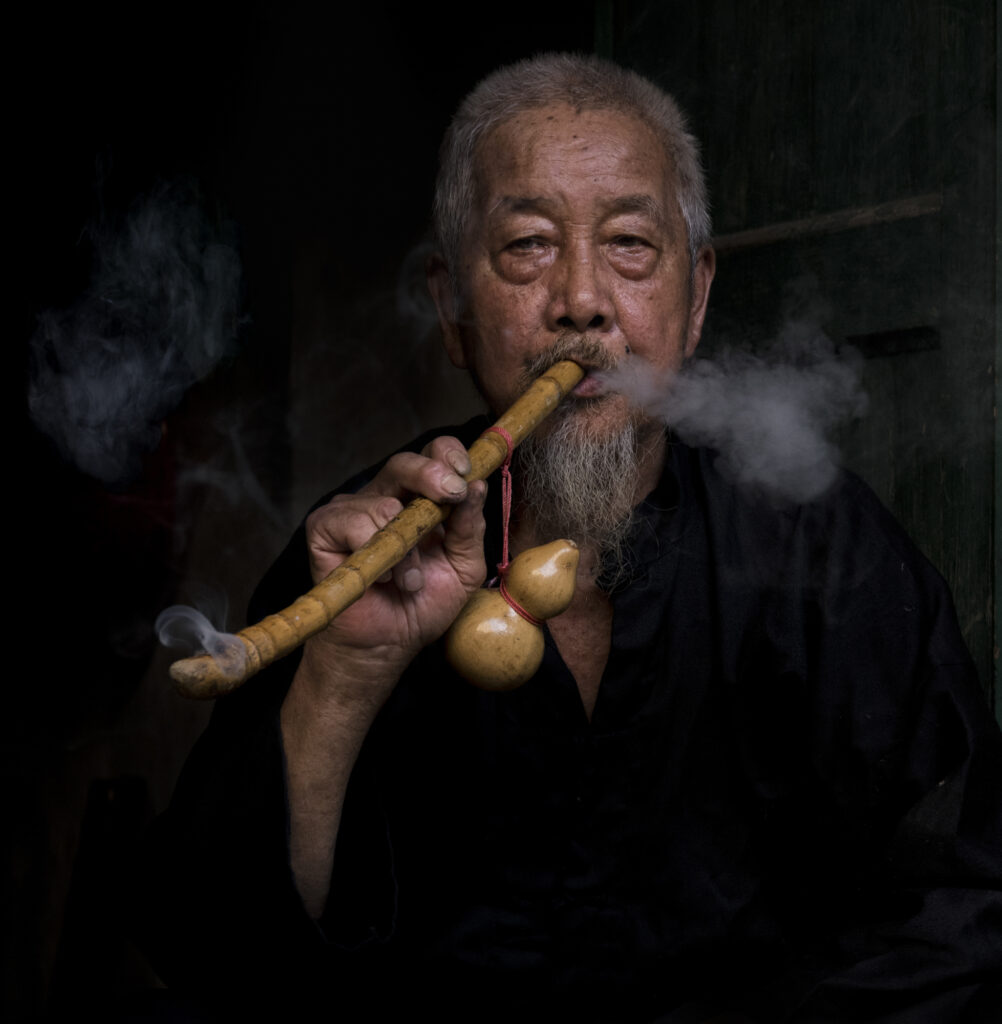
Beyond the wider scene, look for quieter photographs: hands holding a pole, the texture of clothing, a bird beside the raft, or an expression between poses. Give the person in front of you the same attention you give the mountains behind him.
Our planned May 7–22, 2028 China photography workshop includes time around Yangshuo, a sunrise session at Xianggong Mountain, and a private, arranged sunset portrait session near Xingping with a fisherman, cormorants, a lantern, and a bamboo raft.
These experiences give us opportunities to work on landscape composition, environmental portraiture, changing light, and visual storytelling within the same part of China.
What interests me most is how those photographs can work together. The wider landscape shows where we are. The portrait introduces a person. The details help tell the story.
My goal is for you to leave the Li River with photographs that hold your attention long after the trip—and a better understanding of the history behind the scene.
Join us on our China photography workshop to explore the Li River, photograph its landscapes, and spend time creating images of this fishing tradition. Get in touch to learn more.