Photographing Elephants on Safari: Telling the Story of Africa’s Gentle Giants
By Kevin Pepper |
There’s something ancient about photographing elephants. They don’t just walk across the landscape—they carry it with them. They’re massive and quiet, powerful and peaceful. After over a decade of leading photo safaris, I’ve learned that photographing elephants isn’t just about size or spectacle—it’s about patience, presence, and knowing how to capture their emotion and story through the lens.
If you want more than just a trunk-in-the-air snapshot, here’s how I help my guests photograph elephants with meaning and depth.
Know Your Subject: The Life of an Elephant
Social Structure and Behavior
Elephants are intelligent, emotional, and social animals. Female elephants live in tight-knit family herds led by a matriarch, often the oldest and wisest female. These herds include daughters, sisters, and calves, and their bond is strong—grooming, playing, and communicating constantly with low rumbles and subtle body language.
Adult bulls, on the other hand, leave the herd when they hit adolescence. They live solo or form loose bachelor groups, rejoining female herds only for mating.
Elephants mourn their dead, protect their young fiercely, and pass knowledge from generation to generation. Photographing these dynamics—greetings with trunks entwined, a matriarch shielding her calves, an elder leading the way across a dusty plain—tells a far more powerful story than just “big elephant, big lens.”
Daily Rhythms
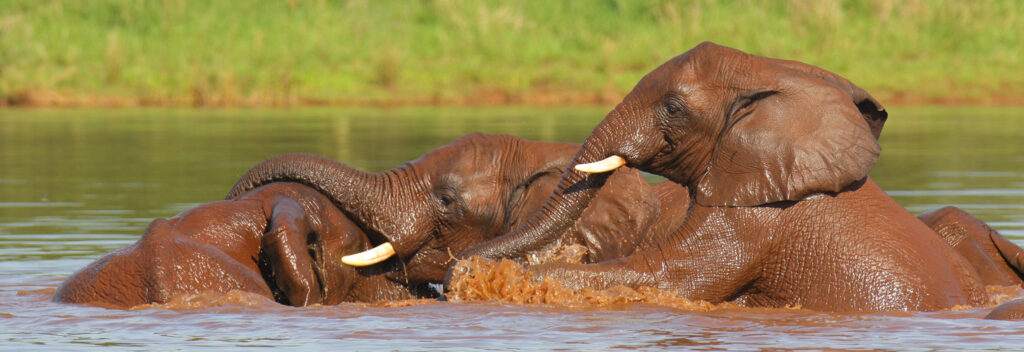
Elephants are most active in the cooler hours—early morning and late afternoon. During the heat of the day, they’ll seek shade or wallow in mud, which not only cools them but protects their skin from insects and sunburn.
Water is everything. They drink often—up to 200 liters per day—and travel great distances to reach it. Waterholes are prime locations to photograph interactions: bathing, drinking, play-fighting, and even the occasional mock charge.
Elephants don’t need to hunt, but don’t let that fool you into thinking they’re slow-paced subjects. When they move, they move, and when they react—especially bulls in musth or protective matriarchs—it can happen fast.
The Strategy: How to Find and Photograph Elephants
Start and End Near Water
If you want to find elephants, find water. Early morning and late afternoon near a river, swamp, or waterhole is your best bet. It’s not just about drinking—elephants socialize, wallow, and cool down here.
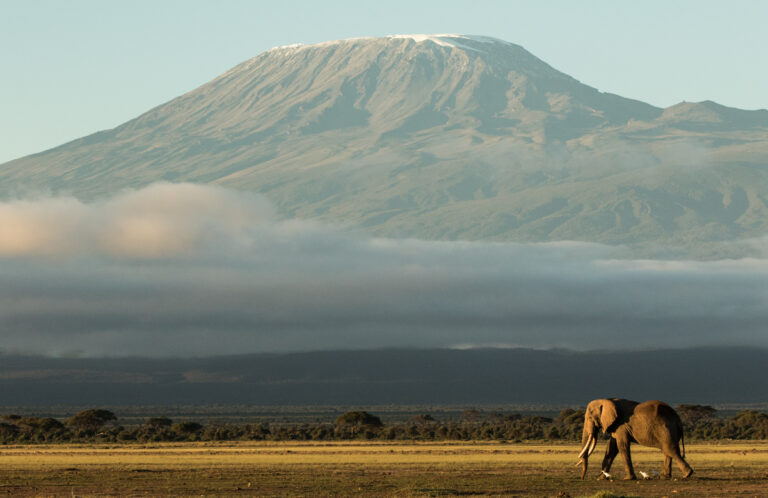
Some of my favorite frames were taken near the swamps of Amboseli, where elephants wade through the water with Kilimanjaro in the background. Others came from Chobe, where entire herds cross the river, trunks raised, in scenes that feel almost cinematic.
Respect the Distance, But Use It Creatively
Elephants are massive, yes—but that doesn’t mean you always need to fill the frame.
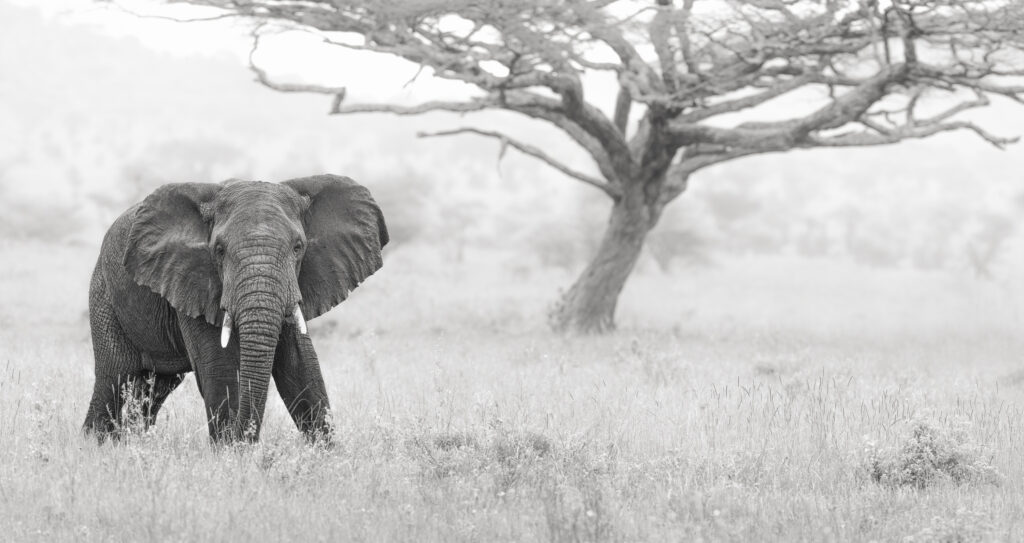
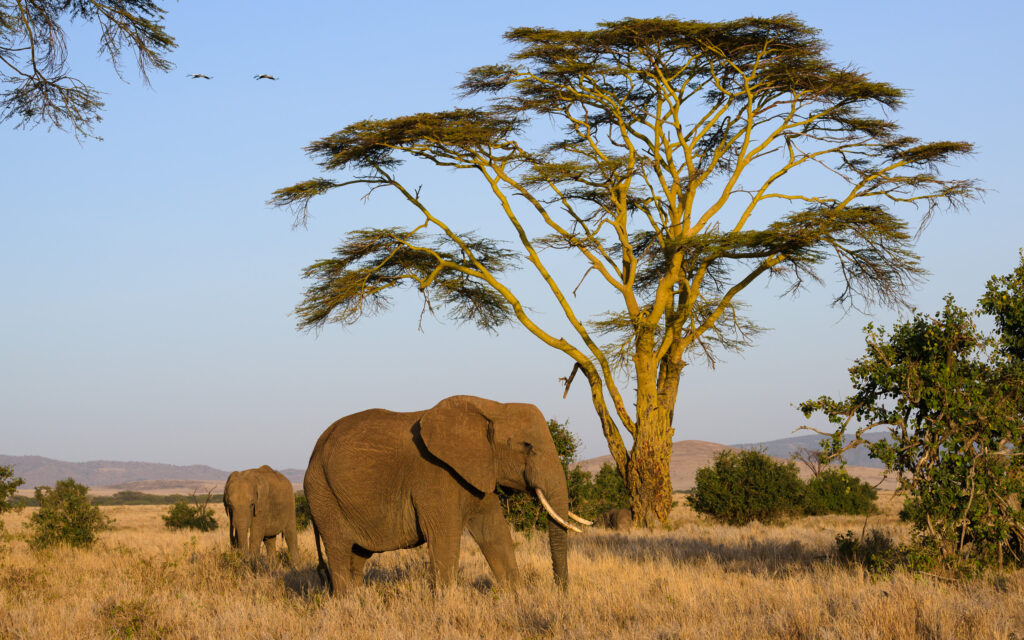
Some of the most powerful elephant images come from context: a herd dwarfed by baobabs in Tarangire, or a single bull silhouetted against the Botswana sky. Give them space, watch how they move, and frame your composition to include the scale of the scene.
That said, if an elephant does walk right by the vehicle—quiet, curious, and close—it can be one of the most thrilling moments in safari photography. Stay calm. Don’t fidget. Let it unfold.
Watch for Behavioral Cues
Ears flared, trunk coiled, eyes locked—these are signs of agitation, especially in bulls. If you’re photographing a large male in musth (a hormonal state of heightened aggression), be cautious. You might get a mock charge. Your guide will know when to back off. Trust them.
More peaceful interactions—like trunk-to-mouth greetings between calves, mothers shielding young, or dust bathing—are quieter but deeply expressive. These are the storytelling shots I look for.

Tuskers: Photographing the Last Giants
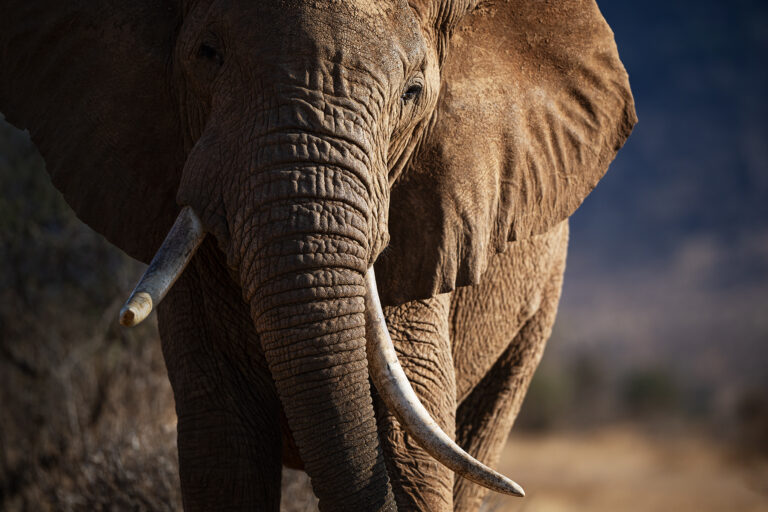
No conversation about elephant photography is complete without mentioning Tuskers—the rare, almost mythical bulls whose tusks are so massive they nearly touch the ground.
What Is a Tusker?
A Tusker is a term used to describe an elephant—usually a mature bull—whose tusks each weigh over 100 pounds (45 kg). These elephants carry the legacy of ancient genetics, when large ivory was common. Today, Tuskers are a vanishing breed. Their genes, combined with decades of natural survival and the fortune of avoiding poaching, make them living relics of a time when elephants were truly monumental.
They are not just rare—they are sacred to many who photograph and protect wildlife. Seeing one is unforgettable. Photographing one is an honor.
Why Are They So Rare?
There are likely fewer than 30 true Tuskers left in all of Africa. Decades of poaching decimated the big ivory gene pool. Elephants with large tusks were targeted first—removing not just individual animals, but their genetics from future generations. Add in habitat loss and human-wildlife conflict, and Tuskers are now ghosts of a wilder past.
What remains are a handful of protected individuals in tightly managed conservancies, monitored around the clock. They are part symbol, part survivor.
Best Places in Africa to Photograph Elephants
Some places just get elephants right. Here are my go-to regions for consistent sightings and fantastic photographic settings:
1. Amboseli National Park, Kenya
Hands down one of the most iconic places to photograph elephants. You get big herds, dry lakebeds, and—on a clear day—Mount Kilimanjaro in the background. The light here in the morning and evening is unreal.
2. Chobe Riverfront, Botswana
Best from a boat. Elephants swim across the river, interact in the water, and drink at the shore. You get low angles and reflections, which is rare and highly effective for strong compositions.
3. Tsavo National Parks, Kenya
This is the last stronghold. Tsavo East and West are home to most of the remaining Tuskers, including some famous individuals like “Lugard”, “Dida” (now deceased), and “Mshale”. These elephants roam massive, open landscapes—offering dramatic, scale-rich photography, but sightings are rare and often distant. You work for your shot here—but when it happens, it’s magic.
4. Tarangire National Park, Tanzania
Baobabs. Dust. Drama. Elephants wind their way between the ancient trees here in late dry season, and it’s like walking into an old myth. Lots of calves, playful interactions, and interesting light.
5. Hwange National Park, Zimbabwe
Huge herds gather at waterholes during dry season, giving you great opportunities for behavioral shots, silhouettes, and backlit dust scenes.
6. Kruger / Greater Kruger, South Africa
Consistent sightings, and the elephants are relaxed around vehicles, making for some close-range photo opportunities.
Camera Gear and Settings for Photographing Elephants
Recommended Gear:
- Main Lens: 70–200mm or 100–400mm is perfect for full-body shots and interactions.
- Secondary: A 24–70mm or wide-angle lens for storytelling compositions and close encounters.
- Optional: A longer prime (like 500mm or 600mm) if you’re photographing isolated individuals in wide-open areas.
Settings and Tips:
- Shutter Speed: 1/500s for slow movement, 1/1600s+ for splashing, dust, or running calves.
- Aperture: f/5.6 to f/8 for group shots; f/4 or wider for intimate portraits or close-ups.
- ISO: Early morning and late evening often mean ISO 800–1600. Don’t be afraid of noise—it’s better than blur.
- Drive Mode: Medium burst. You’ll want multiple frames during dust baths, trunk play, or interactions.
- Focus Mode: Single-point or animal eye-detect if your system supports it. With larger herds, depth of field and placement become more critical.
Pro Tips:
- Use backlight for rim-lit dust scenes—elephants kicking up dirt as the sun drops behind them is pure magic.
- Get low whenever possible. If you’re near a dry riverbed or from a boat, a low angle makes the subject feel even more monumental.
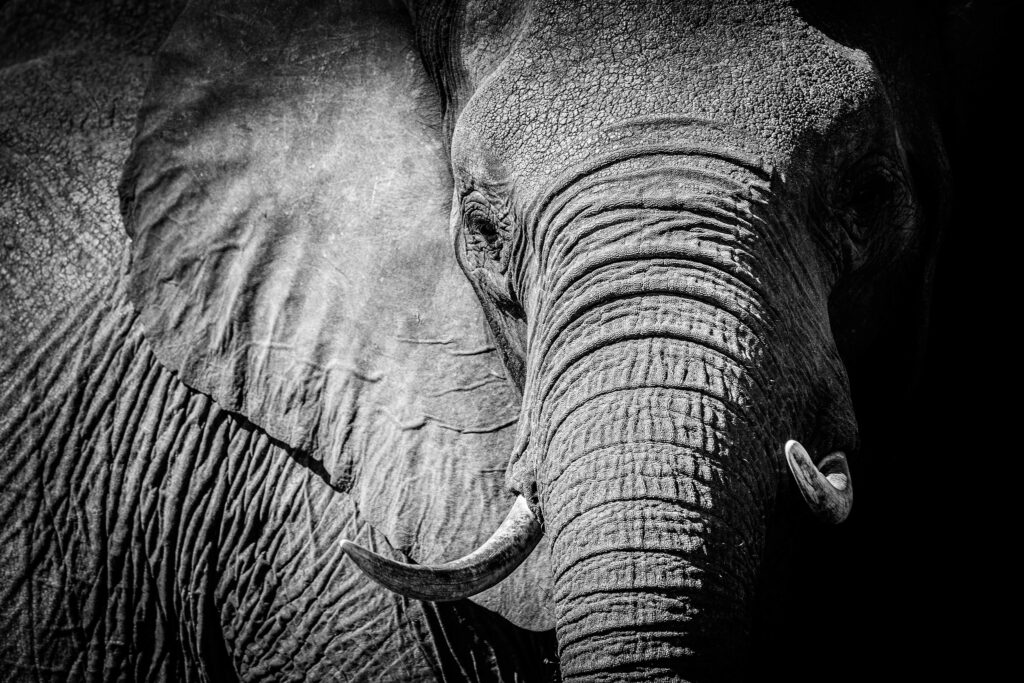
- Capture the small moments: a calf nursing, a trunk twined around a tusk, two siblings playing in the mud. These say more about elephant life than any wide-angle herd shot ever will.
Final Thought
Photographing elephants isn’t just about size—it’s about connection.
They are wise, emotional, and ancient. They teach us to slow down, to be present, and to pay attention to the quiet moments as much as the loud ones. If you approach them with respect and patience, your images will reflect not just what elephants look like—but who they are.
And that’s the kind of photography that lasts. Please consider joining us on an African photo safari.
Read Other Species Spotlight Articles
If you’re as passionate about wildlife as we are, take a moment to explore our Species Spotlight series. Each article dives into the fascinating lives of the animals and birds we love to photograph on our workshops—whether it’s a puffin perched on a cliff in Newfoundland, a leopard draped across a tree in Tanzania, or an Adelie penguin waddling through the snow in Antarctica. It’s a growing library of stories, facts, and inspiration for anyone who dreams of capturing the wild through their lens. Come see the world the way we do—one species at a time.
—Kevin