
Using behavior to anticipate the photo: Wildlife photography secrets from the field
By Kevin Pepper |
Reaction time is everything for wildlife photography, but professional photographers aren’t reacting. They’re predicting. Understanding animal behavior is what separates lucky moments from intentional photographs.
Reading subtle cues can prepare you to press the shutter a fraction of a second before the action unfolds…. it could be the difference between a snapshot and a photograph.
Why behavior matters more than gear
You could have the best camera and fastest lens in the world, but you’re always playing catch-up if you don’t know what the animal is about to do.
Great wildlife photographers aren’t just image makers — they’re trackers, observers, and students of the wild. Gear freezes moments. Knowledge lets you see them coming.
Key behavioral cues that lead to powerful images
Let’s look at some animal behaviors that can tip you off to action before it happens. These signs aren’t always dramatic, but if you learn to read them, you’ll be a step ahead of your subject and not a step behind your shutter.
1. Head position and ear movement
Where the head goes, the body often follows. A predator shifting its gaze or freezing suddenly? Something has caught its attention. Ears are even more telling, especially with herbivores. Antelope and zebra swivel their ears like satellite dishes, zeroing in on movement or sound long before their eyes react.
Example:
A lion may glance toward a distant herd just before it gets up to stalk. If you’re watching the head, not the legs, you’ll know it’s time to raise your camera.
2. Tension in the body
Animals rarely explode into motion from a relaxed state. There’s a moment of coiled energy like a sprinter before the gun. Look for:
- Cheetahs crouched low with their tails stiff.
- Elephants spread their ears and shift their weight.
- Cats are lowering their heads and squaring their shoulders.
These are signals of a pending chase, charge, or interaction. Learn the difference between a relaxed pose and one loaded with intent—it can be the difference between an image that feels alive and one that “just missed it.”

3. Repetition in behavior
Animals love routine. They circle waterholes, follow game trails, and repeat grooming or feeding behaviors. Birds, especially, are creatures of habit — fishing, diving, returning to perches, and shaking off water in predictable sequences.
Example:
If you see a fish eagle repeatedly calling and flying between two trees, you can pre-compose and wait for the flight path. Once you recognize the pattern, you no longer have to guess — you can predict.
4. Vocalizations
Sound often comes before the action. Alarm calls, warning grunts, low rumbles, or contact calls can signal what’s about to unfold — or help you find the action before you see it.
- Baboons barking? Look for a nearby predator.
- Hyenas whooping or giggling? A carcass might be nearby.
- Elephants rumbling softly? Communication happens within the herd before they move or protect their young.
Pro Tip:
When things are quiet, listen harder. The first sign of drama is often sound, not movement.
5. Animal interactions
Tension builds before it breaks — and interactions are where that tension lives. Whether it’s two bull giraffes sizing each other up, lion cubs wrestling, or a predator locking onto prey, the story is written in the body language between subjects.
Instead of isolating one animal in your viewfinder, widen your field of view to include how it relates to others. The prelude to action often lies in the dynamics between individuals—dominance, submission, curiosity, or fear.
6. Birds of prey and the pre-flight poop
This one’s oddly specific — but golden: Raptors often defecate before they take flight.
If you’ve been photographing a perched eagle, hawk, or owl, it suddenly lifts its tail and lets loose… be ready. That’s a classic behavior that clears weight before flying. You’ll usually have just a few seconds to refocus and catch the liftoff.
Pro Tip:
When you see this cue, frame slightly wider— most photographers miss the wings by being too tight. Let the action move through the frame.

Field examples from Africa
Let’s take a look at some of our real-world encounters that we have experienced over the years.
Lion hunt – Serengeti Photo Safari
We watched a lioness stalk a wildebeest herd. Instead of tracking her every step, we pre-focused on where the action would be. When she broke cover, we were already ready. That’s not luck. That’s behavior-based prediction.
Elephant encounter – Namibia Photo Safari
Two bulls approached each other. Relaxed body language told us it wasn’t a fight — yet. When one lifted his trunk stiffly and squared his shoulders, we knew a sparring session was seconds away. We had already dialed in the settings.
Leopard descent – Serengeti Photo Safari
We found a leopard draped across the upper branches of a leadwood tree. Many would’ve fired nonstop, hoping for movement. But we waited. Her breathing shifted, and her gaze locked downward — signs she was about to climb down. We framed the base of the tree before she moved. She descended in perfect light, paws landing exactly where we were focused. Anticipation, not reflex, got the shot.
Giraffe sparring – Tarangire Photo Safari
Two male giraffes stood near each other, necks weaving slowly, like dancers warming up. Most guests thought it was affection. We knew better. The gentle posturing was a prelude to a sparring match. We switched to a wider lens, giving space to show the arcs of their necks. When the fight began — swinging necks, hooves kicking up dust — we were ready, capturing the whole rhythm of the clash.
Cheetah stalk – Masai Mara Photo Safari
A female cheetah crouched low in the grass, tail stiff and body still. We ignored the temptation to zoom in. Instead, we scanned for her target — a lone impala 40 meters ahead. We focused there, not on her. When she exploded from cover, we already had focus locked. The burst caught her mid-leap, mid-hunt. You don’t get that shot by reacting. You get it by reading the signs and thinking ahead.
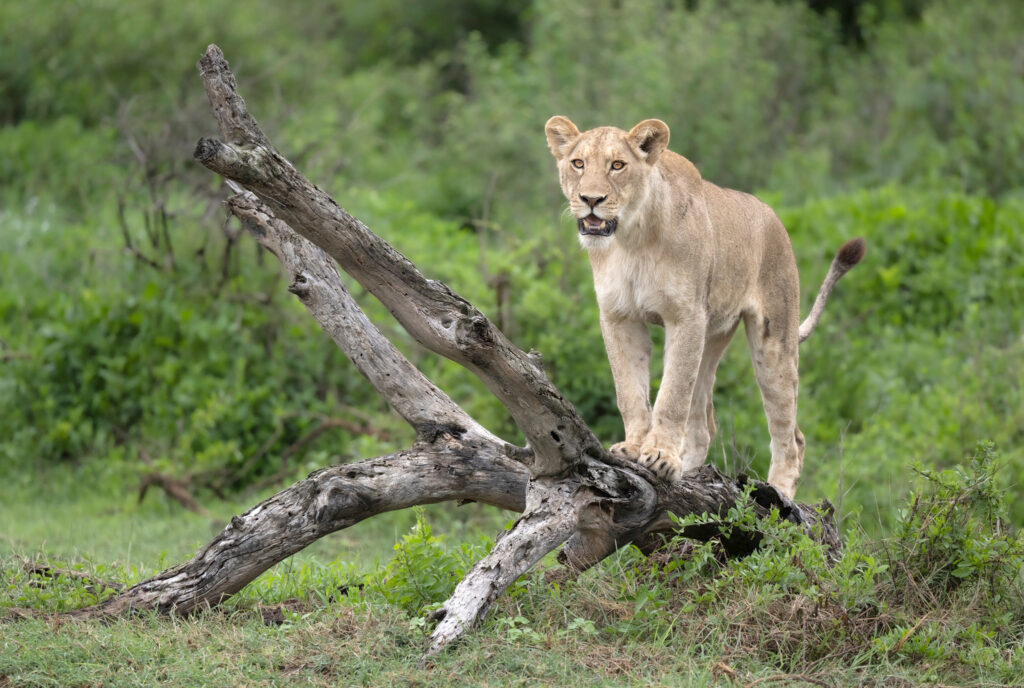
Patience is your sharpest tool
The best shots come when you stop chasing and start waiting. It’s tempting to rush from subject to subject, hoping for something exciting to happen in front of your lens. But wildlife doesn’t perform on cue — it rewards those who are still, quiet, and observant. Sit longer. Watch more. Shoot less. Let the story unfold without trying to force it. That’s the hard part — resisting the urge to react — but it’s also where the real magic lies.
Over time, you’ll develop an instinct. Not the kind that comes from reading a manual, but the kind that’s earned — slowly — by watching the same scene for hours, learning an animal’s body language, noticing the subtle shift before the action. That instinct won’t come from your camera. It comes from patience, presence, and time spent simply watching.
How to build this skill
Learning to anticipate wildlife behavior isn’t something you can rush, but it’s a skill anyone can develop with time, intention, and the right approach. Here’s how to get started:
1. Spend extended time with one species
Depth over variety.
Instead of hopping from subject to subject, focus on a single species for a prolonged period. The more time you spend watching one animal — or one group — you’ll recognize subtle behavioral patterns: feeding routines, alert postures, resting cues, and how they interact with others.
Example:
Spend a morning observing a troop of baboons instead of bouncing between elephants, zebras, and giraffes. You’ll start to notice hierarchy, grooming behavior, play signals in the young, and how tension builds before conflict.
Tip:
If you’re in a national park or on safari, ask your guide if you can return to the same sighting over multiple days. Patience with one subject often leads to your strongest images.
2. Study animal behavior books and field guides
Learn from those who’ve lived in the field.
Biologists, rangers, and trackers have decades of observation behind them. Their insights into specific species behaviors can give you an edge before lifting your camera. Look for books written by people who’ve tracked animals daily — they often include signals to look for just before an animal moves, hunts, or interacts.
Recommended Resources:
- The Safari Companion by Richard D. Estes (great for East African mammals)
- Field Guide to Animal Tracks and Scat (for tracking wildlife in North America)
- Animal Speak by Ted Andrews (understanding animal body language and symbolism)
- Scientific journals, documentaries with field narration (BBC Earth, Nature on PBS)
Pro Tip:
Before a trip, research a shortlist of key species you’ll photograph and study their behavior. You’ll arrive in the field already knowing what to look for. Where can you research the species? Just go searching on YouTube, Google, and any streaming service. I often return to the same wildlife series on African wildlife before one of my safaris.
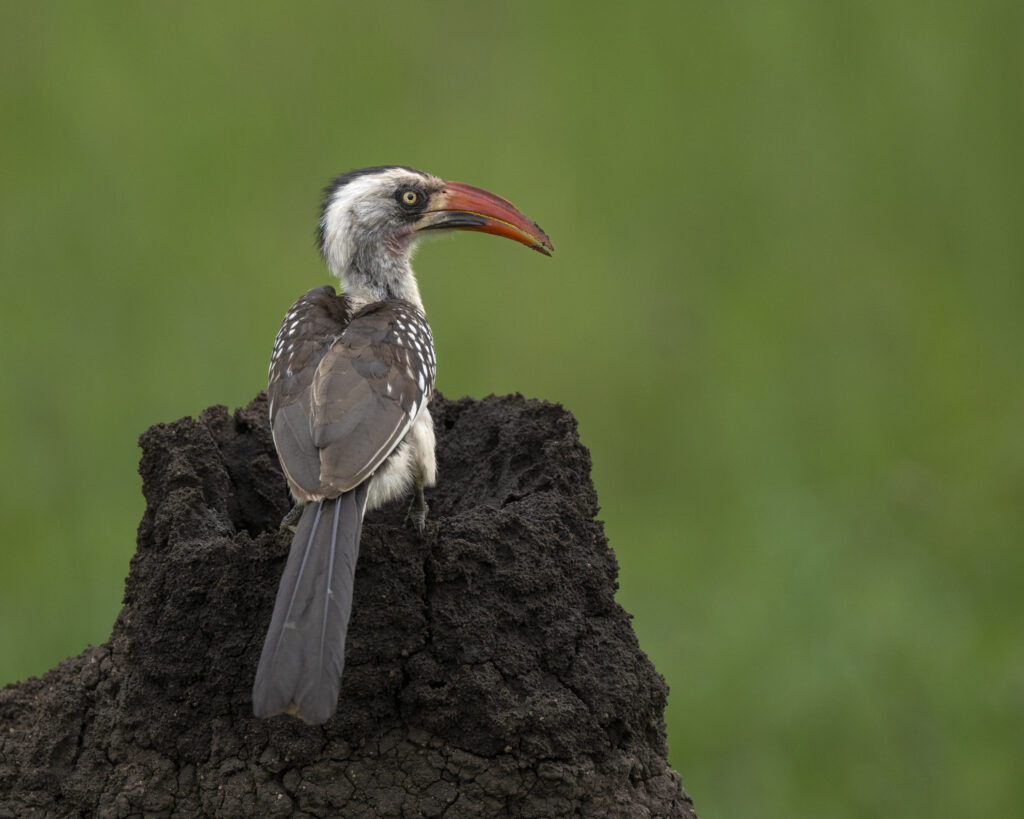
3. Revisit your images and analyze the moments before
Your own Lightroom library is your best teacher.
When reviewing your images, don’t just focus on the hero shots. Look at the 5–10 frames before the peak moment. What was the animal doing? What signs were there? Did you miss a cue, or nail it because you saw one?
What to Look For:
- Was there eye contact before the subject moved?
- Was the body posture showing tension?
- Did you fire too late, or too early?
Suggestion:
Make a folder of “almost” shots — images that nearly worked but missed the timing by a hair. Study those. They are where your growth potential lives.
4. Ask your guides — and listen closely
Local knowledge beats every field guide.
Guides, rangers, and trackers have spent thousands of hours with the animals in their region. They don’t just know what an elephant does — they know what that elephant does. Their ability to read signs, spot tracks, and anticipate behavior is often based on individual animals and specific terrain.
How to Learn:
- Ask questions during quiet moments: “How do you know it’s going to charge?” “What are the warning signs before a lion stalks?”
- Watch where they look — and when they raise binoculars.
- When they stop the vehicle, ask what they see that you might not be.
Build Trust:
When your guide sees that you’re genuinely invested in the animals, not just trying to tick off sightings, they’re more likely to share their deeper insights.
Bonus: Practice at home between trips
If you’re not on safari, you can still develop this skill. Birds in your backyard, deer at the edge of a field, or even urban foxes and raccoons — they all have patterns. Practice reading them. Watch with your camera down. Learn when to shoot and when to wait. The principles are universal.

Final thoughts: From snapshots to storytelling
Anticipation isn’t a technical setting on your camera — it’s a mindset. One that you sharpen over time. It’s built not in fast bursts, but in slow observation. In moments when you stop clicking and start listening. When you stop chasing and start watching.
We encourage you to change your approach from reactive to proactive, from lucky to intentional. We’ve examined how small behavioral cues, like ear flicks, posture changes, and vocalizations, are early warnings of the photo you want. We’ve discussed the value of spending time with a single species, learning from guides, analyzing your images, and drawing from the deep well of field experience written into behavior guides and books.
Because at the heart of wildlife photography isn’t gear — it’s awareness.
You don’t need to be lucky. You need to be present. Patient. Observant.
Photograph with intention, not hope. When you understand what an animal is about to do, you stop relying on spray-and-pray. You start making framing, focus, and timing decisions before the action peaks. That’s when the artistry begins.
And when you finally press the shutter, you’re not just taking a photo of an animal. You’re creating an image with context. With tension. With a story.
That’s the difference between a snapshot and a photograph someone will remember.
Please consider joining us on one of our wildlife photography workshops. We teach you this skill on our wildlife workshops in Asia, Europe, Canada, the USA, Africa, and the Southern Ocean.


